

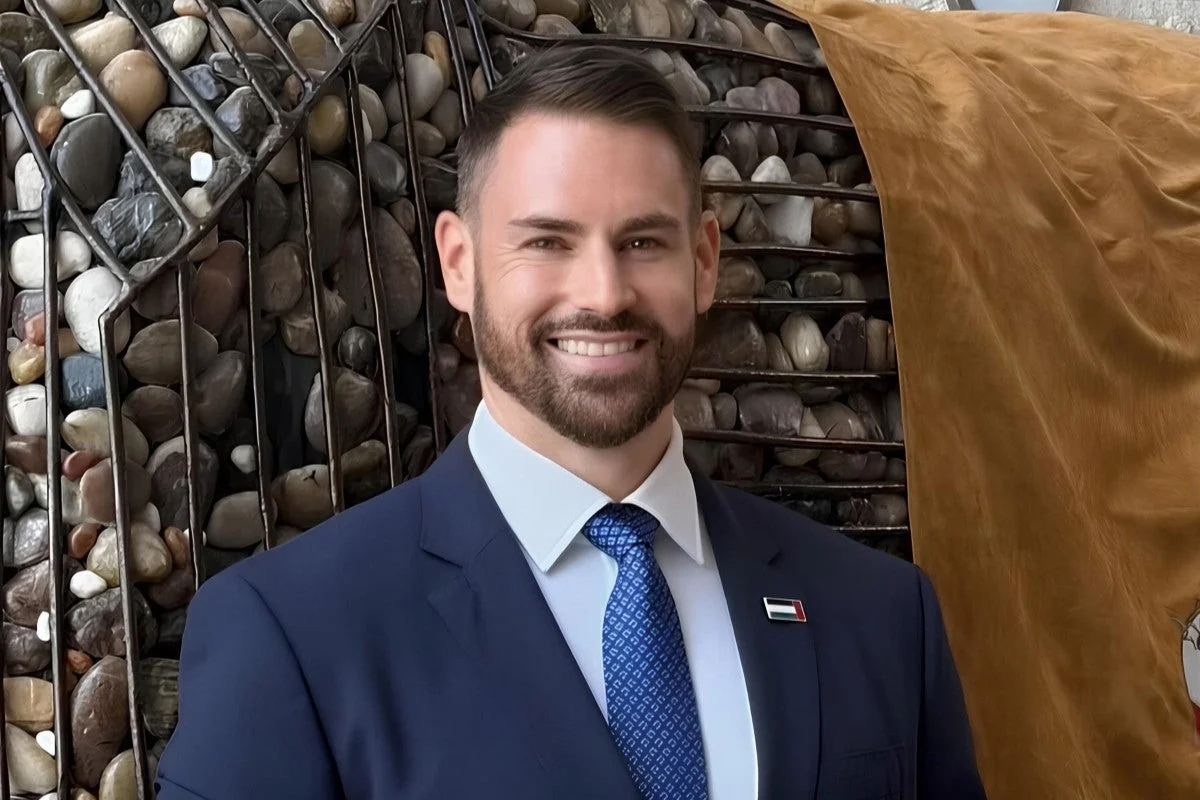
Byron James, a distinguished family law practitioner, has established himself as a leading figure in the United Arab Emirates’ rapidly evolving legal landscape. Relocating to Dubai nearly a decade ago, James has not only found a professional home but has become instrumental in shaping the application of family law for expatriates within the region. His journey from the traditional English bar to the dynamic legal environment of the UAE is a testament to his foresight and adaptability, placing him at the forefront of significant legal reforms.
The Genesis of a UAE Legal Career
James’s decision to move to the UAE in 2017 followed a decade of practice at the English bar. While his career in family law was progressing, he harbored a sense of professional ennui. "Was my future going to be travelling up and down the country to various regional family courts, deciding the same issues over and over again?" he mused. This introspection led him to seek a jurisdiction that was dynamic, forward-thinking, and open to innovation. The UAE, with its reputation for ambition and rapid development, presented itself as an ideal alternative. "It was an obvious place to move because it represents a lot of the very progressive and modern aspects of the world in one place," James stated.
His arrival coincided with a period of unprecedented legal reform in the UAE. The nation embarked on a comprehensive overhaul of its legal systems, most notably establishing civil family courts. This seismic shift, occurring within a few years of James’s relocation, was particularly significant for non-Muslim residents. For the first time, these individuals gained the ability to navigate divorce, asset division, and child custody arrangements under legal principles derived from Western law, rather than being exclusively bound by Sharia law. This reform created fertile ground for legal professionals specializing in expatriate family law, a niche James has expertly cultivated.

Navigating Landmark Financial Cases
As a partner at Expatriate Law, James has been involved in some of the most substantial financial remedy cases in the UAE’s history. He estimates his involvement in the five largest such cases, with the most significant exceeding one billion dirhams (approximately £203 million). This level of involvement underscores his expertise in complex financial disputes, often involving high-net-worth individuals with intricate international asset portfolios. The ability to navigate these high-stakes cases successfully has cemented his reputation as one of the most sought-after family lawyers in the Gulf. "I’ve found myself, in some ways, at the forefront of that [legal] revolution," he commented, reflecting on his role in this transformative legal era.
A Groundbreaking Custody Case: The Digital Footprint of Children
A recent case handled by James highlights the evolving challenges in family law, particularly concerning the intersection of technology and parental rights. Acting for a German father in Abu Dhabi, James represented his client in a custody dispute aimed at preventing his children from appearing in social media content created by their mother, his ex-wife and a prominent influencer. This case brought together the fast-developing legal jurisdiction of the UAE with the increasingly prevalent issue of children’s digital presence.
The legal framework in the UAE added a unique layer of complexity. Current laws stipulate that no photograph may be taken of an individual without their informed consent. Furthermore, a new law, effective from June 2026, defines anyone under 18 as a child, meaning parental consent is required for their appearance in social media content. James articulated the situation by drawing an analogy: "It’s like if a child needs an operation, their parents can consent to it on their behalf."
James’s argument, however, ventured into uncharted legal territory. He contended that when parents are separated and disagree on matters concerning their child’s online presence, neither parent should be able to unilaterally consent on behalf of the child. He posited that a child, by virtue of their age, cannot provide informed consent because they lack the capacity to fully comprehend the long-term implications of online publication. His submission to the court, a detailed 25-page memo, argued, "A child cannot provide informed consent because they aren’t able to comprehend the wide-reaching nature of publishing online."

He further elaborated on the profound implications for the child, stating, "The mother might have a brand association, using the child to model that brand. But hypothetically let’s say that brand has associations with something [the child] wouldn’t want to be linked to. What happens if that child grows up and wants to work for an organization that strongly disapproves, but their picture is all over the internet endorsing it? Is that fair?"
In June 2026, the Abu Dhabi court delivered a landmark judgment. It ordered both parents to cease publishing photographs of their children on social media and to remove existing content deemed potentially harmful to the children’s interests. The ruling included a stark warning that any breach could result in the termination of joint custody arrangements or even imprisonment.
Broader Implications and Global Reach
The ramifications of this ruling extend far beyond the immediate parties involved. Within the UAE, parents who wish to post images of their children to a wide public audience may now require the explicit consent of the other parent. Alternatively, they may need to refrain from featuring their children in public or commercial content altogether. While the ruling holds no binding force outside the UAE, it has the potential to serve as a precedent for other jurisdictions grappling with similar issues. "I’ve had a lot of lawyers reach out to me about it from all over the world," James noted. "This isn’t just a UAE issue. It’s a global issue and I think it’s a global parenting problem."
This case exemplifies the UAE’s progressive approach to family law, adapting to the complexities of the digital age. It reflects a growing global concern for the protection of children’s privacy and long-term digital footprint in an era of pervasive social media. The ruling provides a critical legal precedent that could influence how other courts worldwide approach the delicate balance between parental rights, children’s well-being, and the ever-expanding digital landscape.

A Critical Perspective on the English Legal System
James’s experiences in the UAE have also led him to critically evaluate the family court system in his home country, England. He argues that the flaws in the English family courts run deeper than mere underfunding or understaffing. "The ‘real problem’ is that the system is built to be adversarial," he explained. He questioned the necessity of a high-conflict, forensic process for the average person, involving extensive legal representation and the disclosure of extensive financial documentation. "Does the everyday person really need a forensic, high-conflict situation where you both have lawyers, you both have to do a Form E [to declare finances], you both have to provide all these documents? Or are people better served with a more efficient system that gets things done quickly, which means the animosity between the parties is much less?"
Despite this critique, James acknowledges the unparalleled sophistication of English law in handling the most complex cases, particularly those involving intricate trust structures, third-party interventions, and the treatment of pre-marital wealth. He credits this to "decades of extremely impressive and clever people who deserve tremendous credit for really thinking about these problems." However, he remains unconvinced by the reflexive assertion by some English lawyers that their system is a global gold standard. "If anyone has walked into a court building anywhere in England and described that as a gold standard, they’ve got a very low bar," he remarked.
The Passion for Timepieces and Professional Synergy
Beyond his demanding legal career, Byron James is a dedicated collector and enthusiast of luxury watches. His collection spans esteemed brands such as Richard Mille, Patek Philippe, Audemars Piguet, and Rolex, accumulated over 12 years. He navigates the acquisition process through both authorized dealers, with whom he has cultivated long-standing relationships, and the secondary or "grey" market for rare pieces, often at significant premiums. "I’m a proper geek about watches, to be honest," he admitted.
This passion, however, is not merely a personal indulgence; it serves a strategic professional purpose. James utilizes his LinkedIn profile to share images of his watches, often accompanying them with commentary aimed at divorced fathers in the UAE, encouraging them to prioritize time with their children. For instance, one post featured a Patek Philippe Aquanaut with the caption: "It has been 16 weeks, 4 days since I last saw my children, a dad told me today. Time lost, never recovered." This approach demonstrates a unique synergy between his personal interests and his professional advocacy, using his platform to highlight important family law issues.

James observes that many timepieces he acquired before the market surge in the early 2020s have appreciated significantly in value, a testament to his astute timing and market understanding. This parallels his career trajectory in the UAE, where he entered a burgeoning legal market at a propitious moment, capitalizing on its rapid growth and reform. His story is one of strategic foresight, professional excellence, and an unwavering commitment to navigating and shaping the evolving landscape of international family law.
