

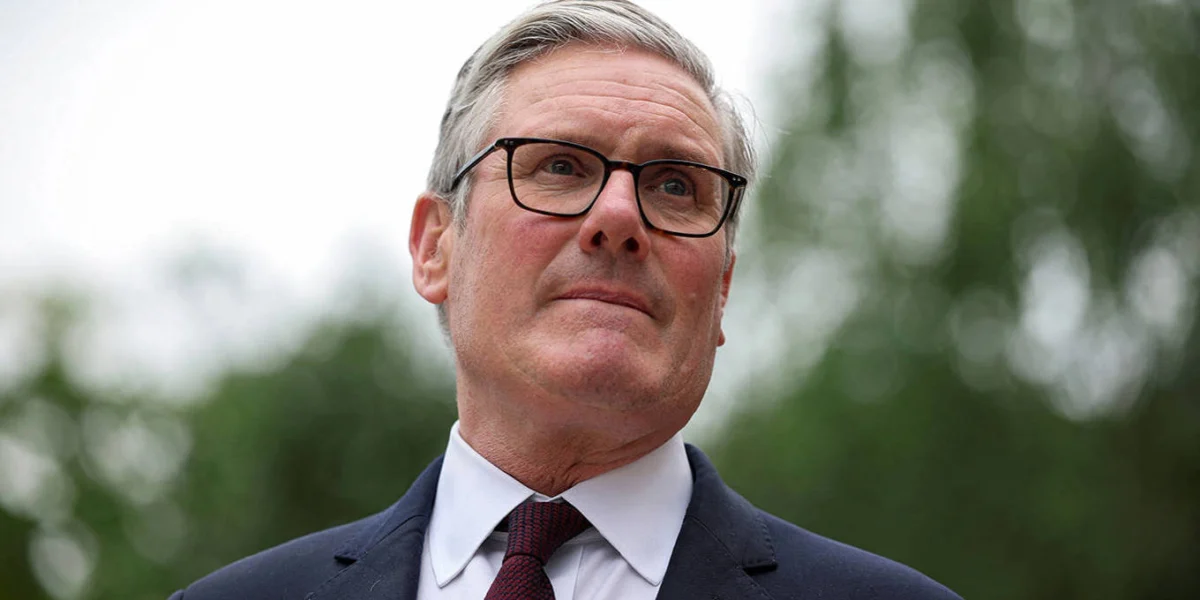
LONDON – The United Kingdom stands at a pivotal juncture, with the ruling Labour Party poised to elect a new leader in the coming weeks, a transition that has, thus far, failed to ignite widespread optimism for a significant political or economic resurgence. The prevailing sentiment within both the British media landscape and, crucially, global financial markets, is one of apprehension. The consensus suggests that any alterations to the embattled policies of the current, deeply unpopular Prime Minister Keir Starmer, are unlikely to herald an improvement; indeed, they may well exacerbate existing challenges. This prevailing mood evokes the sentiment of the arch-conservative Victorian-era prime minister, Lord Salisbury, who famously questioned, “Change? Change? Aren’t things bad enough already?” This echoes a sentiment of inertia, a reluctance to confront deeply ingrained issues, particularly the enduring ramifications of the United Kingdom’s departure from the European Union.
The impending leadership contest within the Labour Party, while a significant domestic political event, is overshadowed by a broader, more fundamental question that continues to shape the nation’s trajectory: the future of the UK’s relationship with the European Union. Political expediency and undeniable economic logic, for a growing segment of the British electorate, are increasingly pointing towards a singular conclusion: that Brexit, as currently configured, was a strategic misstep. This sentiment is manifesting as a palpable desire for a leader who will courageously place the re-evaluation of this relationship back onto the national agenda.
The Shadow of Brexit: Shifting Public Opinion and Economic Realities
The initial euphoria and partisan fervor that characterized the Brexit referendum campaign of 2016 have long since dissipated, replaced by a more sober and often critical assessment of its consequences. While precise polling data fluctuates, a consistent trend has emerged in recent years: a majority of British voters now express regret or at least significant doubt regarding the decision to leave the European Union. Surveys conducted by prominent polling organizations, such as YouGov and Opinium, have consistently shown a plurality, and often a majority, believing that Brexit has been detrimental to the UK economy and its international standing. For instance, YouGov’s tracking polls throughout 2023 and early 2024 have frequently indicated that around 50-55% of Britons believe Brexit was a mistake, with only 20-25% maintaining it was the right decision.
This shift in public sentiment is not merely an abstract opinion; it is underpinned by tangible economic data. The Office for Budget Responsibility (OBR), the UK’s independent fiscal watchdog, has repeatedly projected that Brexit will reduce the UK’s long-term productivity by 4% and trade intensity by 15%. These are not marginal adjustments but significant structural impacts. Data from the Office for National Statistics (ONS) has shown a decline in UK trade with the EU since 2016, particularly in goods, with businesses grappling with increased customs checks, regulatory divergence, and non-tariff barriers. The agricultural sector, manufacturing, and service industries have all reported challenges in adapting to the new trading relationship. While the COVID-19 pandemic and global economic headwinds have complicated direct attribution, the OBR’s analyses provide a robust framework for understanding the specific economic costs associated with leaving the EU’s single market and customs union.
A Leadership Vacuum and the Echoes of Past Discontent
The current Labour leadership, under Keir Starmer, has adopted a cautious stance on the EU. While acknowledging some of the economic difficulties, the party has largely committed to maintaining the current post-Brexit settlement, emphasizing a desire to "make Brexit work" rather than to reverse it. This position, while aimed at avoiding alienating voters who supported Brexit, has left many feeling that their concerns about the negative impacts of leaving are not being adequately addressed. The prospect of a new leader, therefore, carries the weight of expectation for a potential recalibration of this stance.
The quote attributed to Lord Salisbury, though originating from a different era and political context, resonates with the current mood of cautious inaction. It speaks to a deep-seated reluctance to confront uncomfortable truths and to embark on potentially disruptive but necessary change. In the current political climate, this sentiment can be interpreted as a fear of reopening the deeply divisive Brexit debate, a fear of antagonizing segments of the electorate, and perhaps a lack of a clear, compelling vision for a different future relationship with Europe.
Historical Context: The Long Road to and from the EU
To understand the current predicament, it is essential to recall the historical arc of the UK’s relationship with the European project. The UK joined the European Economic Community (EEC) in 1973, after a protracted political debate and a referendum in 1975 that confirmed its membership. For decades, the UK participated in the evolving European Union, benefiting from frictionless trade within the single market and playing a significant role in shaping EU policy.
However, a strain of Euroscepticism had always been present within British politics, a sentiment that gained significant traction in the early 21st century, fueled by concerns over sovereignty, immigration, and bureaucracy. This culminated in the 2016 referendum, where 51.9% of voters chose to leave the EU. The subsequent negotiation and implementation of the Withdrawal Agreement and the Trade and Cooperation Agreement were fraught with political turmoil and economic uncertainty, leaving a legacy of unresolved issues and ongoing adjustments.
The Inevitable Re-evaluation: Political Expediency Meets Economic Imperative
The core argument presented is that both political expediency and economic logic are converging to necessitate a re-evaluation of the UK’s relationship with the EU.
Political Expediency:
As noted, public opinion has demonstrably shifted. A significant portion of the electorate, including many who voted Leave in 2016, now perceive Brexit as having had negative economic consequences. This creates a political opening for a leader who can credibly address these concerns. The current Labour leadership’s caution, while understandable from a tactical perspective, risks alienating a growing segment of voters who are disillusioned with the status quo. A new leader, unburdened by the direct legacy of the current government’s approach, might find it politically more feasible to propose a more pragmatic and potentially closer relationship with the EU. This could involve seeking closer alignment on regulatory matters, exploring new trade facilitation measures, or even, in the longer term, considering a path towards rejoining aspects of the EU’s framework. The key would be to frame such a re-evaluation not as a capitulation, but as a pragmatic response to evolving economic realities and public sentiment, a demonstration of responsible governance.
Economic Logic:
The economic data is increasingly unambiguous. The OBR’s projections, alongside analysis from organizations like the Centre for European Reform (CER), consistently highlight the economic costs of Brexit. These costs manifest as reduced trade, lower investment, and a drag on economic growth. The UK’s departure from the EU’s single market and customs union has erected barriers that were previously non-existent. For businesses, this means increased administrative burdens, higher costs, and reduced competitiveness. The argument for re-engagement, or at least closer alignment, is rooted in the desire to mitigate these economic disadvantages.
Consider the specific sectors:
- Manufacturing: UK manufacturers face tariffs and regulatory hurdles when exporting to the EU, their largest trading partner. Harmonizing standards or securing a bespoke trade agreement that reduces these barriers would significantly boost the sector.
- Services: While the Trade and Cooperation Agreement largely excluded services, UK service providers, particularly in finance, face increased complexities in operating within the EU. A closer relationship could facilitate mutual recognition of professional qualifications and reduce barriers to market access.
- Agriculture: Farmers have faced significant disruptions to their export markets and labor supply. A more streamlined customs process and potential for regulatory alignment could ease these pressures.
The economic argument is not necessarily about full re-entry into the EU, but about finding pragmatic solutions to the barriers that have emerged. This could include seeking a veterinary agreement to facilitate food exports, negotiating mutual recognition of professional qualifications, or exploring a closer customs arrangement. The "political expediency" arises from the fact that these economic imperatives are now being recognized by a significant portion of the electorate.
Potential Responses and Broader Implications
The prospect of a new Labour leader facing this reality presents several potential avenues:
- Cautious Engagement: The most likely immediate step would be a more vocal acknowledgment of the economic challenges posed by Brexit and a commitment to "deepening" the existing trade relationship through pragmatic agreements. This might involve seeking closer alignment on specific regulatory areas without formally rejoining the single market.
- A Mandate for Re-evaluation: A more ambitious leader might seek a mandate to explore a significantly closer relationship, potentially including membership in the customs union or even the single market, albeit with specific opt-outs. This would undoubtedly be a politically contentious path, requiring careful navigation of public opinion and parliamentary debate.
- Continued Status Quo: The least likely, but not impossible, scenario is a continuation of the current government’s policy of maintaining the existing relationship, hoping that time and external factors will resolve the economic challenges. This, however, risks further alienating voters and allowing economic disadvantages to persist.
The implications of any shift in the UK’s approach to the EU are far-reaching. Economically, a closer relationship could lead to increased trade, investment, and potentially higher economic growth. Politically, it could restore the UK’s influence on the European stage and strengthen its alliances. However, any move towards closer integration would likely face opposition from staunch Brexit supporters and require significant political capital to implement.
The Road Ahead: A Nation at a Crossroads
The upcoming leadership change within the Labour Party, therefore, is more than just an internal party matter. It represents a potential inflection point in the UK’s post-Brexit journey. The nation is faced with a stark choice: to continue navigating the complexities of its current relationship with the EU, accepting the economic trade-offs, or to embark on a path of re-engagement, seeking to mitigate the consequences of its departure.
The sentiment captured by Lord Salisbury’s quote – “Change? Change? Aren’t things bad enough already?” – can be seen as a reflection of the current national mood. However, for a growing majority, the answer to that question is increasingly becoming “yes, things are bad enough, and change is necessary.” The challenge for the next Labour leader, and indeed for the nation as a whole, will be to articulate a vision for that change, one that balances the desire for national sovereignty with the undeniable realities of economic interdependence and the evolving sentiment of the British people. The conversation about the UK’s future in Europe is far from over; it is, in many ways, only just beginning to grapple with its most profound implications.
