

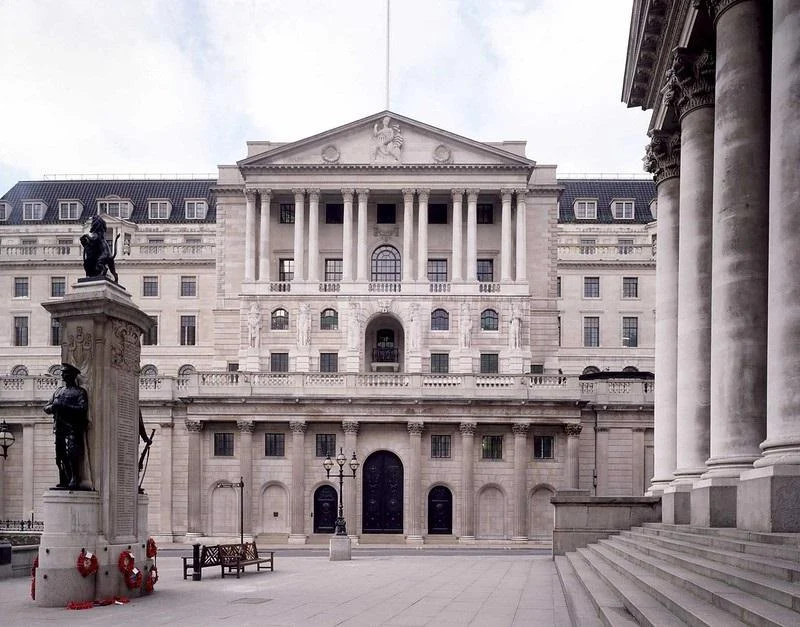
The Bank of England has officially updated its Market Notice to incorporate climate-related transition risks into its collateral eligibility framework, marking a transformative shift in how the United Kingdom’s central bank manages financial risk associated with the global shift toward a low-carbon economy. This new methodology, which introduces specific "haircut add-ons" for corporate bonds issued by carbon-intensive entities, represents one of the most significant steps taken by a major central bank to align monetary policy operations with the goals of the Paris Agreement. By adjusting the valuation of assets pledged by commercial banks as collateral, the Bank of England (BoE) is signaling that the financial risks of the net-zero transition are no longer theoretical but are now a core component of its risk management strategy.
The Mechanism of Collateral and Haircuts
To understand the impact of this policy, it is essential to define the role of the collateral framework in central banking. When commercial banks require liquidity, they borrow funds from the central bank. To secure these loans, banks must pledge assets—typically government or high-quality corporate bonds—as collateral. However, the central bank does not value these assets at their full market price. Instead, it applies a "haircut," which is a percentage reduction in the asset’s value to protect the central bank against potential price fluctuations or defaults.
Under the newly announced framework, the BoE will apply additional haircuts to corporate bonds issued by companies in sectors deemed highly susceptible to transition risk. Transition risk refers to the financial uncertainty resulting from the shift toward a net-zero economy, including changes in regulation, carbon pricing, technological shifts, and evolving consumer preferences. If a company fails to adapt to these changes, its bond value could plummet. By increasing the haircut on these bonds, the BoE reduces the amount of cash a bank can borrow against them, effectively making "brown" assets less attractive for banks to hold on their balance sheets.
The BoE’s new methodology will specifically target issuers in "relevant sectors" that contribute significantly to greenhouse gas emissions. This granular approach ensures that the central bank’s balance sheet is insulated from the volatility of industries that may struggle to maintain profitability in a decarbonizing world.
Chronology of the Bank’s Climate Integration
The integration of climate risk into the BoE’s framework is the culmination of a decade-long evolution in the bank’s thinking. The journey began in earnest in 2015 when then-Governor Mark Carney delivered his seminal "Tragedy of the Horizon" speech at Lloyd’s of London. Carney argued that the catastrophic impacts of climate change would be felt beyond the traditional horizons of most actors, including central banks, and that financial stability was at stake.
In 2021, the BoE’s mandate was formally updated by the UK government. The Chancellor of the Exchequer at the time, Rishi Sunak, revised the bank’s remit to include supporting the government’s economic strategy for "achieving strong, sustainable and balanced growth that is also environmentally sustainable and consistent with the transition to a net-zero economy." This mandate provided the legal and policy foundation for the BoE to begin greening its Corporate Bond Purchase Scheme (CBPS).
By June 2024, the BoE issued its first comprehensive set of disclosures regarding its climate-related financial risks, setting the stage for the current Market Notice. The October 2026 implementation date for the new haircut methodology provides a two-year window for financial institutions to adjust their portfolios and for corporate issuers to enhance their decarbonization strategies before the new rules take effect.
The Specific Exclusion of Thermal Coal
One of the most stringent aspects of the new notice is the total exclusion of bonds issued by companies deriving revenue from thermal coal mining. While the "haircut add-on" approach allows for the continued use of some carbon-intensive assets at a discounted rate, thermal coal has been identified as an asset class with no long-term viability in a net-zero scenario.
Thermal coal is the single largest contributor to global temperature increases, and international energy benchmarks suggest that its use must be phased out rapidly to meet the 1.5°C goal. By declaring these bonds ineligible as collateral, the BoE is effectively removing a key layer of liquidity support for the coal industry. This move follows similar divestment trends in the private sector, where major institutional investors and insurance companies have increasingly blacklisted coal-related assets.
Comparison with Global Peer Institutions
The Bank of England is not acting in a vacuum. Its latest move closely mirrors actions taken by the European Central Bank (ECB). In 2023, the ECB announced its own plans to integrate climate change considerations into its collateral framework. The ECB’s approach includes limiting the share of assets issued by entities with high carbon footprints that can be pledged as collateral and applying climate-related haircuts.
In contrast, the United States Federal Reserve has taken a more cautious approach. While the Fed has acknowledged that climate change poses a risk to financial stability, it has generally focused on stress testing and research rather than directly altering its collateral framework to favor green assets. The divergence between the BoE/ECB and the Fed highlights a growing debate over the extent to which central banks should use their balance sheets as tools for environmental policy. Proponents argue it is a necessary part of risk management, while critics suggest it could lead to "mission creep" and politicize monetary policy.

Economic Implications and Sector Impacts
The introduction of transition risk haircuts is expected to have a ripple effect across the UK economy. The most immediate impact will be on the "cost of capital" for high-carbon firms. As banks find it more "expensive" to hold bonds from carbon-intensive sectors (because they provide less liquidity at the central bank window), they may demand higher interest rates from those issuers to compensate for the reduced utility of the bonds.
Sectors likely to be impacted by the haircut add-ons include:
- Oil and Gas: Companies involved in extraction and refining face significant transition risks as renewable energy adoption accelerates.
- Aviation and Shipping: Hard-to-abate sectors that rely heavily on fossil fuels.
- Heavy Industry: Steel, cement, and chemical manufacturing, which require massive capital investment to transition to green hydrogen or carbon capture technologies.
- Utilities: Specifically those that still maintain significant natural gas or coal-fired power generation.
Conversely, this policy creates a relative advantage for "green" bonds and companies with credible transition plans. As the haircut on low-carbon assets remains low, these bonds become more valuable to commercial banks as a source of liquidity, potentially lowering borrowing costs for environmentally sustainable enterprises.
Official Responses and Stakeholder Reactions
While the Bank of England’s notice is a technical document, it has elicited responses from various sectors of the financial community. Climate advocacy groups have largely welcomed the move, viewing it as a necessary step to align the financial system with climate science. Many argue that the BoE’s role in maintaining financial stability necessitates a proactive stance on climate risk, as a "disorderly transition" could lead to systemic shocks.
However, some industry groups have expressed concerns regarding the data used to determine these haircuts. The methodology for assessing a company’s "transition risk" is complex and relies on forward-looking disclosures that are not yet fully standardized. There are calls for the BoE to provide greater transparency on how the "add-on" percentages are calculated to avoid market confusion.
Financial analysts also note that the October 2026 start date is crucial. It gives the market time to digest the news and prevents a "fire sale" of carbon-intensive bonds. By providing a clear timeline, the BoE is attempting to steer the market toward a gradual realignment rather than a sudden disruption.
The Role of the Network for Greening the Financial System (NGFS)
The BoE’s policy is also informed by its membership in the Network for Greening the Financial System (NGFS), a group of over 100 central banks and supervisors committed to sharing best practices for climate risk management. The NGFS has developed various climate scenarios that central banks use to model the impact of different temperature pathways on the economy.
The BoE’s decision to apply haircuts based on transition risk is a practical application of NGFS recommendations. It acknowledges that the financial system is currently "under-pricing" climate risk and that central banks must take the lead in correcting this market failure to ensure long-term resilience.
Future Outlook and Strategic Analysis
Looking ahead, the integration of climate risk into collateral frameworks is likely to become more sophisticated. The initial phase focuses on "transition risk," but future iterations may also incorporate "physical risk"—the risk of damage to assets from extreme weather events like floods, wildfires, and rising sea levels.
For the Bank of England, this move reinforces its position as a global leader in sustainable finance. By treating climate risk as a financial risk rather than a social or ethical preference, the bank maintains its commitment to price and financial stability while supporting the broader national goal of achieving net-zero emissions by 2050.
The ultimate success of this policy will be measured by its ability to incentivize corporate decarbonization without compromising market liquidity. If the "haircut add-ons" successfully encourage companies to accelerate their transition plans to avoid higher borrowing costs, the BoE will have demonstrated that monetary policy can be a powerful lever in the global fight against climate change. As the 2026 deadline approaches, all eyes will be on the UK bond market to see how investors and issuers adapt to this new era of climate-conscious central banking.
