

STOCKHOLM – Bosnia and Herzegovina finds itself at a critical juncture, facing the persistent threat of renewed dependency following what sources describe as a recent, potentially corrupt intervention by the Trump administration. The intervention, aimed at influencing the country’s political trajectory, appears to have jeopardized a long-sought opportunity for Bosnia and Herzegovina to fully embrace its sovereignty and chart its own independent future after more than three decades under the significant stewardship of the international community. Instead of fostering genuine self-determination, the actions risk perpetuating a cycle of external influence and hindering the nation’s capacity to bear the full weight of its destiny.
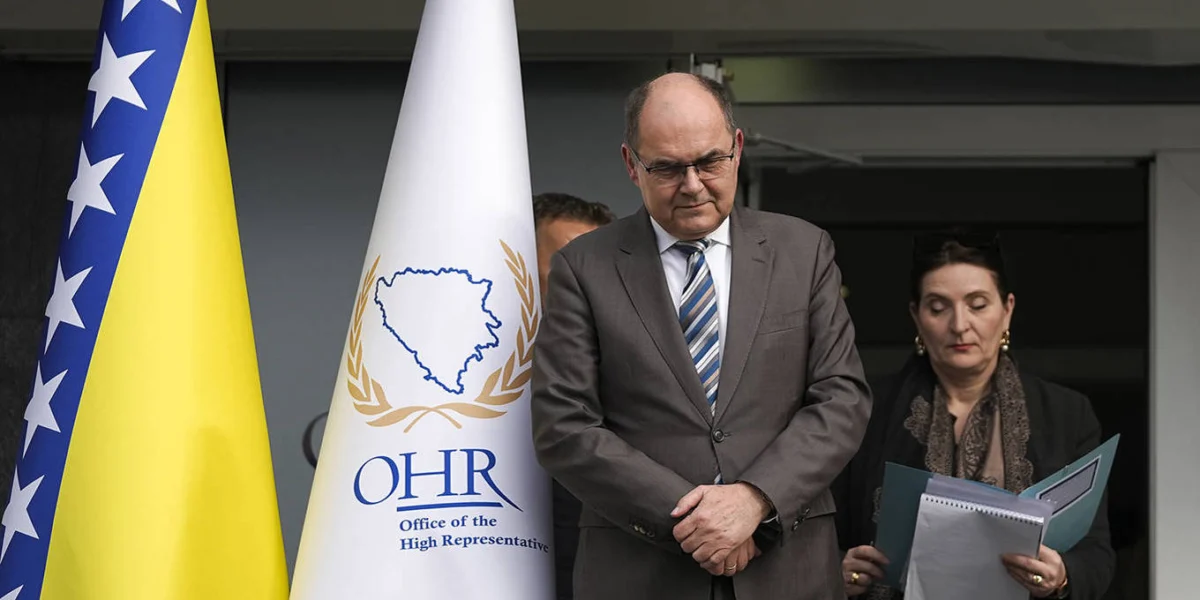
More than thirty years have elapsed since the signing of the Dayton Accords in November 1995, which brought a brutal end to the devastating war that ravaged Bosnia and Herzegovina between 1992 and 1995. The accords, brokered by international mediators, established a complex political framework designed to ensure peace and prevent further conflict. This framework, while credited with ending the hostilities, also created a unique and intricate governance structure that has, for decades, necessitated substantial international oversight and engagement. The Office of the High Representative (OHR), established under Annex 10 of the Dayton Agreement, was vested with extensive powers, including the authority to impose laws and dismiss officials, effectively acting as a de facto executive and legislative authority in certain circumstances. This level of international involvement, while crucial for post-war stability, has inherently limited the extent to which Bosnia and Herzegovina could independently steer its own affairs.
The recent developments, reportedly involving the Trump administration, have cast a shadow over the nation’s aspirations for full independence. While specific details remain subject to ongoing scrutiny and are not fully public, the alleged nature of the intervention suggests an attempt to exert undue influence over internal political processes. Such interventions, particularly when perceived as self-serving or driven by external agendas rather than the genuine needs of the host nation, can undermine democratic institutions, erode public trust, and create a climate of instability. The historical context of external meddling in the Balkans, while different in nature, looms large, and any perception of continued external control can be deeply detrimental to a nation striving for self-governance.
A Chronology of Dependency and the Quest for Sovereignty
The journey of Bosnia and Herzegovina towards full independence is intrinsically linked to the aftermath of the war and the subsequent international efforts to rebuild and stabilize the country.
- 1992-1995: The Bosnian War, a brutal conflict resulting from the breakup of Yugoslavia and ethnic tensions, leads to widespread destruction and loss of life. An estimated 100,000 people perished, and millions were displaced.
- November 1995: The Dayton Peace Agreement is signed, ending the war and establishing the current political structure of Bosnia and Herzegovina, divided into two entities: the Federation of Bosnia and Herzegovina and Republika Srpska, with the Brčko District as a self-governing unit. The Office of the High Representative (OHR) is established.
- 1996-Present: The OHR actively oversees the implementation of the Dayton Agreement, wielding significant "Bonn Powers" to impose laws and remove officials deemed to be obstructing peace or democratic progress. International military forces (IFOR, followed by SFOR and later EUFOR) maintain security.
- 2000s-2010s: Bosnia and Herzegovina gradually takes on more responsibilities, with the OHR’s direct interventions becoming less frequent as domestic institutions mature. However, the underlying constitutional framework, with its complex ethnic power-sharing arrangements and the continued presence of the OHR, signifies a persistent state of tutelage.
- Recent Period (leading up to the reported intervention): As the country approaches the three-decade mark since the war’s end, there have been increasing calls, both domestically and internationally, for a transition away from direct international oversight and towards greater national ownership of governance. This period has also seen heightened political tensions and differing visions for the country’s future among its constituent ethnic groups.
- Reported Trump Administration Intervention: The alleged actions by the Trump administration, occurring in the recent past, are seen by some as a disruptive force that has potentially derailed the ongoing process of emancipation. The exact timing and nature of this intervention are crucial to understanding its immediate impact.
Data Illustrating the State of Governance and International Involvement
The intricate governance structure of Bosnia and Herzegovina, born out of the Dayton Accords, is reflected in various indicators of its political and economic landscape.
- Decentralized Governance: The country is composed of two highly autonomous entities, the Federation of Bosnia and Herzegovina (which itself has ten cantons) and Republika Srpska, along with the Brčko District. This tripartite structure, while intended to reflect ethnic demographics, often leads to bureaucratic complexity and inefficiencies.
- OHR’s Role: The Office of the High Representative, though its direct legislative interventions have diminished over time, remains a significant institutional presence. Its mandate is to ensure the full implementation of the Dayton Agreement and to assist in the country’s integration into Euro-Atlantic structures. The number of international staff and the annual budget allocated to the OHR are indicators of the sustained level of international engagement.
- Economic Dependence: While Bosnia and Herzegovina has made economic progress since the war, its economy remains reliant on foreign aid, remittances, and foreign direct investment. The World Bank has consistently highlighted the need for structural reforms to foster sustainable growth and reduce unemployment, which has historically been high. In 2023, Bosnia and Herzegovina’s GDP per capita was approximately $7,000, significantly lower than many of its European neighbors, underscoring its ongoing development challenges.
- Political Stagnation: Progress towards European Union membership has been slow, with the country facing numerous hurdles related to rule of law, corruption, and institutional reform. The complex political system, often characterized by ethnic gridlock, has hindered the implementation of necessary reforms. As of early 2024, Bosnia and Herzegovina is an official candidate for EU membership, but accession talks have yet to formally begin, pending further progress on key reform benchmarks.
Inferred Reactions and Perspectives from Key Stakeholders
While official statements directly addressing the alleged Trump administration intervention may be scarce or carefully worded, the context of international relations and Bosnia and Herzegovina’s political landscape allows for an inference of likely reactions.
- Bosnian Political Leaders: Within Bosnia and Herzegovina, reactions would likely be divided along ethnic and political lines. Those who benefit from or align with the alleged intervention might offer tacit approval or remain silent, while opponents would likely condemn it as an infringement on sovereignty and an attempt to destabilize the country. Leaders advocating for greater national autonomy would view such actions as a direct impediment to their goals.
- European Union: The EU, which has a significant peacekeeping and stabilization presence (EUFOR Althea) and is the primary partner for Bosnia and Herzegovina’s integration aspirations, would likely express concern. Any action perceived as undermining the Dayton framework or interfering with democratic processes would be met with a call for adherence to international law and respect for Bosnia and Herzegovina’s sovereignty. The EU’s High Representative for Foreign Affairs and Security Policy would likely issue a statement urging restraint and adherence to established international norms.
- United States (Current Administration): The current Biden administration, having distanced itself from the policies of its predecessor, would likely reaffirm its commitment to Bosnia and Herzegovina’s territorial integrity and sovereignty. It would likely condemn any external interference that seeks to undermine democratic institutions or destabilize the region, emphasizing its support for the country’s Euro-Atlantic integration.
- International Community and OHR: The Office of the High Representative, tasked with upholding the Dayton Agreement, would likely issue a statement calling for respect for the constitutional order and the avoidance of external pressures that could jeopardize peace and stability. Other international actors involved in the stabilization of Bosnia and Herzegovina would echo these sentiments, emphasizing the importance of internal dialogue and democratic consensus.
Analysis of Implications: The Shadow of Renewed Dependence
The alleged intervention by the Trump administration, regardless of its specific objectives, carries significant implications for Bosnia and Herzegovina’s future.
- Erosion of Trust in Democratic Processes: External interference, particularly when perceived as manipulative or self-serving, can breed cynicism and distrust in the legitimacy of political institutions. This can lead to reduced citizen participation and a weakening of the democratic fabric.
- Perpetuation of External Tutelage: If the intervention aimed to influence internal politics for external gain, it reinforces the notion that Bosnia and Herzegovina remains a ward of external powers, rather than a sovereign nation capable of self-determination. This undermines the long-term goal of full independence and integration into global structures like the European Union and NATO.
- Deepening Internal Divisions: External actors often exploit existing ethnic and political divisions within a country. If the intervention favored one group or political faction over others, it could exacerbate these tensions, leading to further political paralysis and instability.
- Hindrance to EU Accession: The European Union’s accession process is contingent on a country’s ability to demonstrate strong democratic institutions, rule of law, and respect for fundamental rights. Any perception of external interference or a weakening of these pillars would undoubtedly slow down or even halt Bosnia and Herzegovina’s progress towards membership.
- Geopolitical Ramifications: The Balkans remain a region of geopolitical sensitivity. Any destabilization or resurgence of external influence could have ripple effects, attracting attention from other global powers and potentially reigniting dormant tensions. The region’s proximity to the EU and NATO makes stability a paramount concern for Western alliances.
In conclusion, the reported intervention by the Trump administration in Bosnia and Herzegovina represents a critical setback in the nation’s decades-long journey towards full independence. The legacy of the Dayton Accords has been one of fragile peace and sustained international engagement. While the country has made strides, the path to genuine self-governance remains fraught with challenges. Actions that undermine the principle of national sovereignty and interfere with democratic processes only serve to prolong the cycle of dependence, hindering Bosnia and Herzegovina’s ability to forge its own destiny and fully integrate into the European and global community. The international community, alongside the people of Bosnia and Herzegovina, must remain vigilant in safeguarding the nation’s hard-won progress and ensuring that its future is determined from within, not dictated from afar.
