

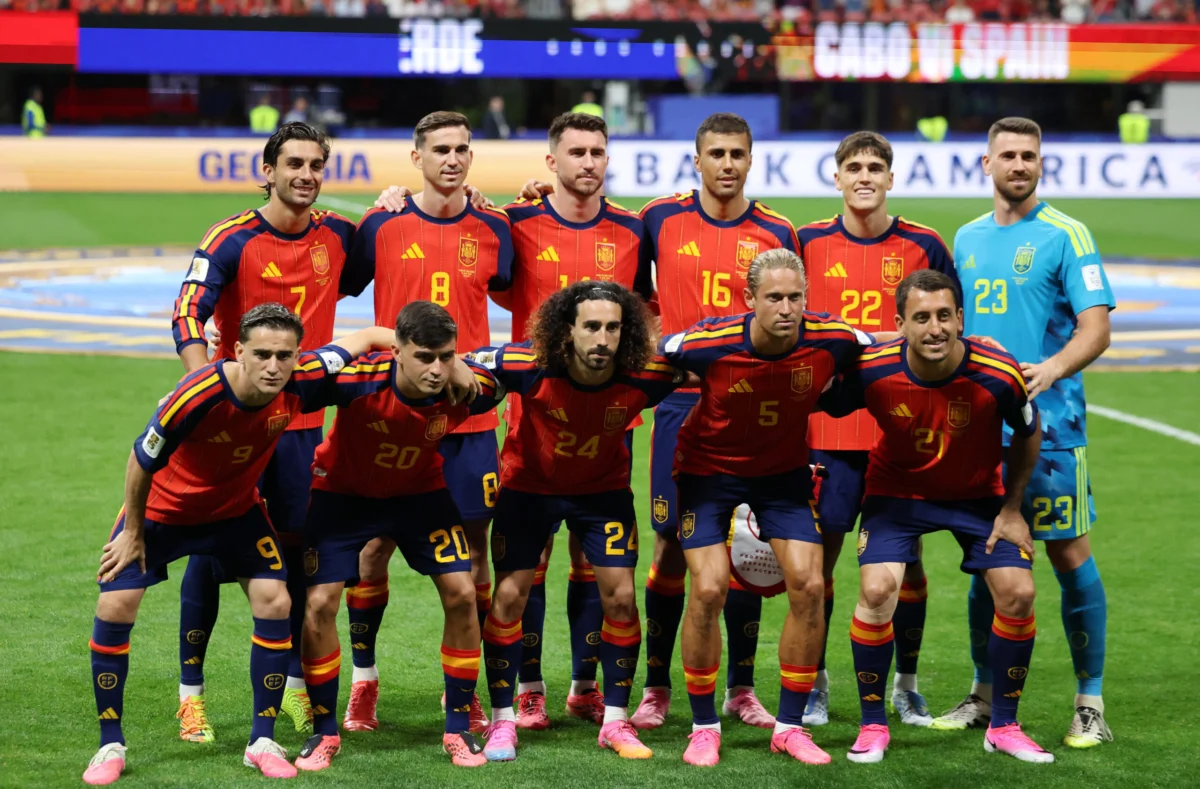
As the FIFA World Cup 2026 continues to captivate audiences across North America and around the globe, Group H prepares for a critical encounter this Sunday, pitting European champions Spain against a resurgent Saudi Arabia at the iconic Mercedes-Benz Stadium in Atlanta. The match, scheduled for 12:00 local time (16:00 GMT), carries immense weight for both nations following their respective opening draws, setting the stage for a potentially defining moment in their campaigns. With a record 13 different kickoff times spread across the tournament’s expansive schedule, fans worldwide can leverage the Al Jazeera Sport widget to precisely track when their favourite teams take to the pitch in their local time zones, ensuring no moment of this unprecedented global spectacle is missed.
A Crucial Juncture for La Roja in Atlanta
Spain, once touted as a pre-tournament favourite, returns to Atlanta under considerable pressure after a surprising goalless draw against tournament debutants Cape Verde in their opening fixture. That result, a stark contrast to expectations for the reigning European champions, has not only raised questions about their attacking prowess but also seen them slip from the bookmakers’ top choice to lift the coveted trophy. The narrative surrounding Spain has swiftly shifted from confident anticipation to cautious optimism, demanding a significantly improved display against a Saudi Arabian side that has already demonstrated its capacity for resilience. The 0-0 stalemate against Cape Verde, despite Spain registering a staggering 27 shots, highlighted a concerning lack of clinical finishing – an issue that head coach Luis de la Fuente will be desperate to rectify. For a team boasting a rich pedigree and a history of dominating possession, converting chances into goals is paramount, particularly in a tournament where every point and goal difference could prove decisive under the new, expanded format.
The weight of expectation on this current Spanish generation, often dubbed a "golden generation" with talents like Lamine Yamal, Pedri, and Ferran Torres, is palpable. Following consecutive round-of-16 exits in recent World Cups, there is a collective aspiration to emulate the glorious 2010 squad that brought home Spain’s maiden World Cup title. The path to achieving that ambition, however, begins with navigating the group stage effectively, and a positive result against Saudi Arabia is non-negotiable to restore confidence and reassert their credentials.
Lamine Yamal: Managing a Young Star’s Return
Central to Spain’s attacking aspirations is the prodigious talent of Lamine Yamal. The 18-year-old winger, widely regarded as one of the world’s most exciting players, finds himself in a delicate situation as he recovers from a hamstring injury. His limited minutes in the World Cup opener against Cape Verde, where he was introduced only in the 71st minute from the bench, have been a subject of intense discussion among fans and pundits alike. While many called for his immediate return to the starting lineup to inject much-needed creativity and goal-scoring threat, Yamal himself has adopted a pragmatic approach, prioritising his long-term fitness and acknowledging the advice of the medical staff.
Speaking to Spanish public television TVE on Friday, Yamal offered a candid assessment of his recovery: "I’m fine, I’m feeling good, but it’s too soon, it’s unnecessary; I’m still settling in – it’s not the right time to play a full match yet – but I can play for as many minutes as the manager wants." This mature perspective from such a young player underscores the careful management strategy being employed by the Spanish national team. Balancing the immediate need for results with the long-term well-being of a generational talent is a challenging tightrope walk for any coaching staff. Yamal further expressed his desire to contribute, stating, "I want to be on the pitch; at the end of the day, even if you know you can’t play for 90 minutes, you always want to get out there and help the team." His presence, even in a limited capacity, offers a psychological boost and a tactical alternative that Spain desperately needs. The coaching staff will need to carefully consider the optimal moment and duration for his deployment, ensuring his impact is maximised without risking a setback that could jeopardise his tournament or future career.

Saudi Arabia: Riding a Wave of Confidence
In stark contrast to Spain’s post-draw introspection, the mood in the Saudi Arabian camp is one of quiet confidence and satisfaction. Their 1-1 draw against former world champions Uruguay in their opening match was an unexpected, yet thoroughly deserved, result that has significantly boosted their psychological state. Coach Georgios Donis, who remarkably took charge of the team just two months before the World Cup, has clearly instilled a sense of belief and tactical discipline within the squad. Despite the limited preparation time, Donis’s men executed their game plan effectively, demonstrating defensive solidity and an ability to capitalise on their chances, securing a vital point that keeps them firmly in contention for a knockout stage berth. Donis himself acknowledged the importance of the result, describing it as a "booster for our psychology," highlighting the mental fortitude gained from standing toe-to-toe with a highly-regarded opponent.
The draw with Uruguay serves as a potent reminder for Spain not to underestimate the "Green Falcons." Saudi Arabia has a history of causing major upsets on the biggest stage, most notably their stunning 2-1 victory over eventual champions Argentina in the opening round of the 2022 World Cup. That seismic result reverberated globally, showcasing their capacity to punch above their weight and disrupt established hierarchies. Making their seventh appearance at the World Cup, the Asian giants will be looking to build on their best performance to date, a memorable run to the Round of 16 in the 1994 edition. Their current squad blends experienced campaigners with emerging talents, capable of both disciplined defending and swift counter-attacks, making them a dangerous proposition for any team, especially one feeling the pressure to perform.
Tactical Battleground and Key Matchups
The impending clash promises a fascinating tactical battle. Spain, under Luis de la Fuente, is expected to adhere to its philosophy of possession-based football, aiming to control the midfield, dictate the tempo, and patiently probe Saudi Arabia’s defensive lines. The midfield trio of Rodri, Pedri, and potentially Fabián Ruiz or Gavi will be crucial in winning the ball, distributing it effectively, and creating openings. However, their struggle to convert possession into tangible goal-scoring opportunities against Cape Verde remains a significant concern. The onus will be on their forwards, such as Ferran Torres, Dani Olmo, and potentially a partially fit Yamal, to find the clinical edge that was sorely missing.
Saudi Arabia, under Georgios Donis, is likely to adopt a more pragmatic approach, focusing on defensive organisation, discipline, and quick transitions. Their ability to stifle Uruguay’s attack and hit them on the counter demonstrated their effectiveness in this strategy. Key players like Salem Al-Dawsari, known for his flair and goal-scoring ability, and the industrious midfielders such as Mohamed Kanno and Abdulelah Al-Amri, will be vital in breaking up Spain’s play and launching rapid attacks. The full-backs, particularly Saud Abdulhamid and Yasser Al-Shahrani (if fit), will need to balance defensive duties with providing width in attack. The battle in midfield, where Saudi Arabia will aim to disrupt Spain’s rhythm, and the ability of the "Green Falcons" to absorb pressure and launch incisive counter-attacks, will be pivotal to the outcome.
Group H Dynamics: A Wide-Open Race to the Knockouts
The Group H standings after the first round of matches present a compelling narrative of parity, with all four teams – Spain, Saudi Arabia, Uruguay, and Cape Verde – sitting on one point each. Currently, Uruguay holds the top spot due to a superior team conduct score, followed by Saudi Arabia, Spain, and Cape Verde at the bottom. This unique situation means that every team enters the second round with an equal chance of advancing to the knockouts, rendering the group wide open and intensifying the stakes for every remaining fixture.

The expanded format of the FIFA World Cup 2026, featuring 48 teams divided into 12 groups of four, introduces a new dynamic to qualification. No longer is it solely about the top two teams. Under this structure, the top two teams from each of the 12 groups will automatically proceed to the next phase, the Round of 32. Crucially, they will be joined by the eight best third-placed teams across all groups. This new rule significantly alters tactical approaches, as even a third-place finish with a decent points tally and goal difference can be enough to secure progression. For teams in Group H, this means that even a draw, while not ideal, might still keep their hopes alive, especially if they can secure a decisive win in their final group match. This added layer of complexity makes every goal scored and conceded, and every point earned, potentially invaluable, urging teams to fight until the final whistle. The current logjam in Group H exemplifies how tightly contested the tournament is expected to be, with no clear frontrunner emerging after the initial round.
Statistical Projections and Tournament Implications
Statistical analysis from Opta’s supercomputer provides an intriguing perspective on the upcoming match. Spain is heavily favoured, with an 86.7 percent probability of securing a victory against Saudi Arabia. The "Green Falcons" are given a mere 4.3 percent chance of winning, with a draw having a 9 percent probability. These figures underscore the perceived gap in quality between the two sides, despite Spain’s opening stumble.
However, the broader tournament predictions have already seen significant shifts following the opening round. Initially, Spain were among the frontrunners for the World Cup triumph. Their goalless draw with Cape Verde, however, has caused them to slip to fourth in Opta’s prediction list, now holding a 12.04 percent probability of winning the tournament. France has emerged as the new most favourite, with a 15.43 percent chance. This recalibration highlights the immediate impact of early results on a team’s perceived strength and prospects, adding another layer of pressure on Spain to perform and regain their status among the elite contenders. For Saudi Arabia, defying these odds would not only be a massive boost for their campaign but also a further testament to their giant-killing potential.
Historical Encounters and Form Guide
Historically, Spain has held a dominant record against Saudi Arabia. The two nations have met three times in total, with Spain emerging victorious on all occasions. Their most recent encounter dates back to September 2012, a friendly match where Spain emphatically thrashed Saudi Arabia 5-0. Sunday’s match will mark only the second time these two teams have faced each other in a World Cup setting; their first encounter was in the 2006 edition, where Spain secured a narrow 1-0 group-stage victory. This historical dominance will undoubtedly be a factor, but Saudi Arabia’s recent performances suggest they are a far more formidable opponent than in previous years.
A review of their recent form provides further context:
Spain (Last five games, latest first): D-W-D-D-W
Spain’s recent form reflects a mixed bag of results. The 0-0 draw with Cape Verde in their World Cup opener was preceded by a 3-1 victory over Peru and a 1-1 draw with Iraq in June friendlies. Earlier in March, they drew 0-0 with Egypt and secured a convincing 3-0 win against Serbia. While they show a tendency for draws, their victories demonstrate their capability when their attack clicks.

Saudi Arabia (Last five games, latest first): D-D-W-L-L
Saudi Arabia’s form, while not as statistically strong as Spain’s, includes crucial positive results. Their 1-1 draw with Uruguay in the tournament opener was a significant achievement. Before that, they played a goalless draw with Senegal and beat Puerto Rico 3-0 in June friendlies. Their two losses came against Ecuador (2-1) in a May friendly and Serbia (2-1) in a March friendly. The draw against Uruguay is a clear indicator of their current competitive spirit and tactical evolution under Donis.
Predicted Lineups and Strategic Considerations
Spain Predicted Lineup (4-3-3):
Simon; Llorente, Cubarsi, Laporte, Cucurella; Ruiz, Rodri, Pedri; Ferran, Olmo, Gavi
This lineup suggests a focus on ball retention and midfield control, with Pedri and Ruiz providing creative impetus, and Rodri anchoring the midfield. The forward line of Ferran, Olmo, and Gavi will be tasked with breaking down Saudi Arabia’s defence, possibly with increased fluidity to create space.
Saudi Arabia Predicted Lineup (4-4-2):
Al Owais; Abdulhamid, Al Amri, Al Tambakti, Al-Harbi; Al Shamat, Kanno, Akhaibari, Al-Dawsari; Al-Buraikan, Al-Juwayr
Saudi Arabia’s predicted 4-4-2 formation indicates a robust defensive structure with two banks of four, aiming to deny Spain space in central areas. The pace and skill of Al-Dawsari on the wing, coupled with the striking partnership of Al-Buraikan and Al-Juwayr, will be crucial for their counter-attacking threat. The central midfield duo will be vital in disrupting Spain’s rhythm and initiating forward moves.
As the countdown to Sunday’s kickoff begins, the encounter between Spain and Saudi Arabia transcends a mere group stage fixture. For Spain, it is an opportunity for redemption and a chance to reignite their World Cup aspirations. For Saudi Arabia, it is a platform to further cement their growing reputation as a genuine threat on the global stage. The stakes are incredibly high, promising a captivating contest that will undoubtedly shape the narrative of Group H and potentially the trajectory of both teams in the FIFA World Cup 2026. The world will be watching as Atlanta prepares to host another chapter in this thrilling football spectacle.
