

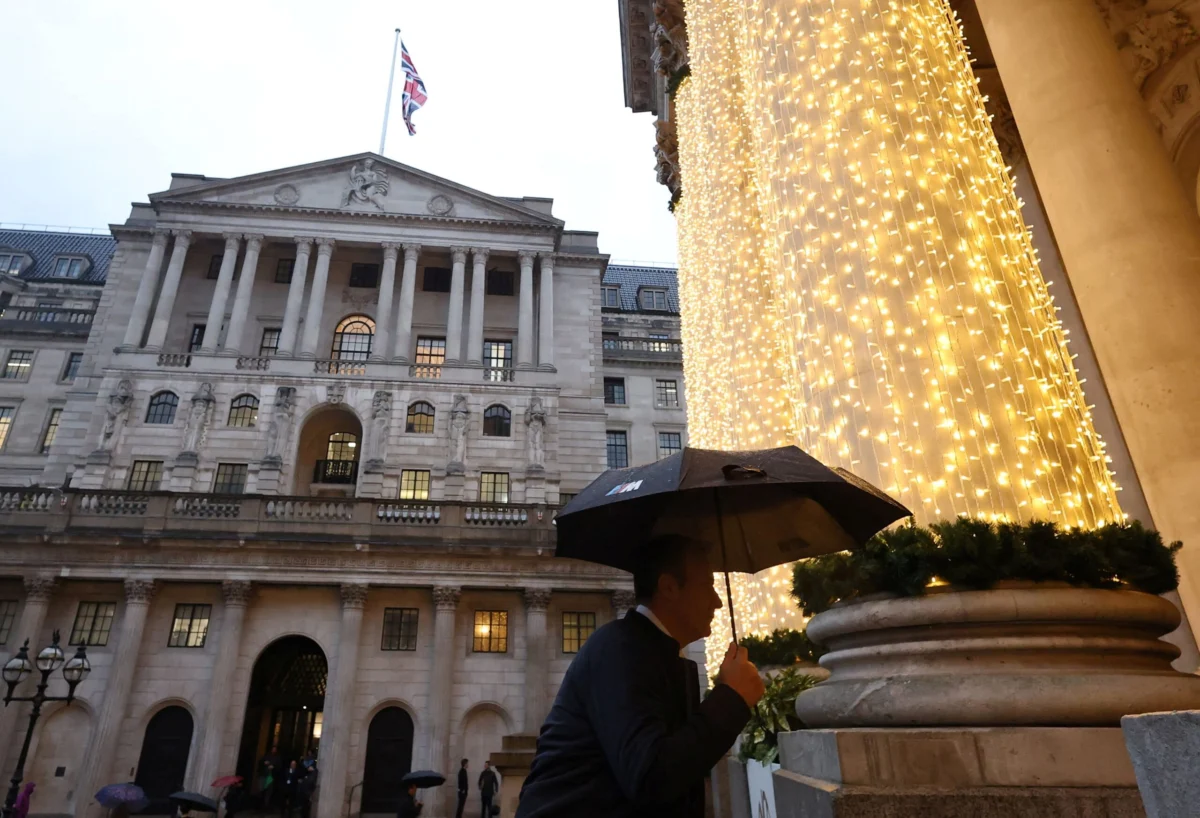
The Bank of England’s Monetary Policy Committee (MPC) has opted to maintain the United Kingdom’s base interest rate at 3.75% on Thursday, a decision that reflects a complex balancing act between taming persistent inflation and supporting a sluggish economy. This widely anticipated hold, confirmed by seven of the nine MPC members during the May meeting, underscores the delicate economic tightrope the UK is currently navigating. The decision comes against a backdrop of global economic instability, exacerbated by geopolitical tensions and their subsequent impact on energy markets.
The hold was not unanimous. Chief Economist Huw Pill and external MPC member Megan Greene were the dissenting voices, both advocating for a 25-basis-point increase in the base rate, which would have pushed it to 4%. This divergence highlights the ongoing debate within the committee regarding the most appropriate path forward for monetary policy in the face of competing economic pressures.
Global Economic Headwinds and the Iran War’s Shadow
The global economic landscape has been significantly shaped by escalating energy costs, a direct consequence of the ongoing conflict in Iran. This has fueled inflation across numerous economies, with net energy importers like the United Kingdom facing particular vulnerability to price shocks. The Bank of England acknowledged this in its summary of the decision, stating that while initial inflation spikes have somewhat subsided, the war "makes it hard to predict what is going to happen with them." This uncertainty surrounding future energy prices poses a significant challenge for policymakers attempting to forecast and manage inflation.
In the UK, the most recent inflation data for May showed a rate of 2.8%, a figure that, while cooler than some forecasts, was primarily driven by rising transportation fuel costs. This uptick in fuel prices is a direct reflection of the global energy market’s volatility. Compounding these concerns, recent economic data revealed that the UK economy contracted by 0.1% in April, indicating a worrying slowdown in economic output. This contraction suggests that the economy is struggling to gain momentum, making aggressive interest rate hikes a potentially damaging prospect.
Inflationary Trends: A Short-Lived Respite?
While inflation had cooled to 2.8% in April, this moderation was largely attributed to adjustments in the UK’s regulated energy price cap. However, the Bank of England had anticipated that this relief would be temporary. Indeed, the price cap is slated to increase by 13% later in the summer, a move that is expected to push energy costs to a two-year high. This impending surge in energy prices is projected to have ripple effects throughout the broader economy, leading the Bank of England to forecast a renewed uptick in inflation.
The central bank explicitly stated that "The impact on the economy and inflation will depend on how long energy prices stay raised." This sentiment underscores the dependence of the UK’s inflationary outlook on external factors beyond the direct control of monetary policy. The MPC reiterated its mandate, noting, "Monetary policy cannot affect global energy prices; our job is to make sure that higher inflation does not persist and have long-lasting effects on the economy. We are monitoring the situation very closely." This statement emphasizes the Bank’s commitment to price stability while acknowledging the limitations of its tools in addressing supply-side shocks.
Market Expectations and Geopolitical Developments
Despite the recent breakthrough in peace negotiations between Washington and Tehran, financial markets continue to price in a potential interest rate hike by the Bank of England before the end of the year. This expectation, according to figures from LSEG, suggests that traders are anticipating further inflationary pressures or a more resilient economic outlook than currently reflected in some data.
The conflict’s impact on oil prices, largely due to the effective closure of the Strait of Hormuz – a vital oil shipping route – has been a significant factor influencing global energy markets. The Memorandum of Understanding signed electronically by U.S. President Donald Trump and Iranian President Masoud Pezeshkian on Wednesday offers a glimmer of hope for a durable peace settlement to the four-month war. This development, if it leads to de-escalation and the reopening of key shipping lanes, could significantly ease energy price pressures, potentially altering the trajectory of future inflation and interest rate decisions.
At its April meeting, the Bank of England’s MPC had also voted to maintain the key interest rate at 3.75%. Ahead of this latest meeting, LSEG data indicated a strong market consensus, with traders pricing in a 96% probability of the central bank keeping its key rate unchanged. This high degree of certainty reflects the prevailing economic conditions and the MPC’s previous communications.
Central Banks Navigating a Global Inflationary Storm
The Bank of England’s decision to hold rates aligns with a broader trend among major central banks grappling with similar economic challenges. The U.S. Federal Reserve also opted to keep its interest rates on hold, maintaining the federal funds rate within the 3.5%-3.75% range, as widely expected. However, the Fed’s meeting was marked by some hawkish signals from newly appointed Fed Chair Kevin Warsh, which reportedly unnerved investors and contributed to market volatility.
In contrast to the Fed and the Bank of England, the European Central Bank (ECB) became the first major central bank to raise its key interest rate in response to the energy crisis stemming from the Iran war. The ECB’s proactive stance reflects a potentially more immediate concern about inflation within the Eurozone. Following suit, the Bank of Japan (BOJ) on Tuesday lifted its policy rate to a 31-year high of 1%, signaling its own commitment to combating rising prices. This divergence in policy responses among major central banks underscores the varying economic circumstances and inflation dynamics in different regions.
Expert Analysis and Future Outlook
Economists are divided on the immediate future of UK monetary policy. Luke Bartholomew, deputy chief economist at Aberdeen, expressed a more optimistic view, suggesting that "the BoE will be able to avoid the kind of monetary tightening that the European Central Bank has already started to deliver and that the Fed hinted at last night." He added that "if energy prices continue to moderate then the debate could once again turn again to rate cuts, but that might have to wait until next year." This perspective suggests that a period of stability might be achievable if external inflationary pressures abate.
However, George Brown, senior economist at Schroders, cautioned against complacency. He stated that "For now, the bank is playing for time rather than going on the attack." Brown believes that "the bar for hikes remains high. A softer labour market and weak growth should help limit second-round effects, and progress on reopening the Strait of Hormuz should also reduce some of the more extreme upside risks to energy prices." This viewpoint emphasizes that the current economic weaknesses may act as a natural brake on inflation, reducing the immediate need for further rate increases.
Suren Thiru, chief economist at the Institute of Chartered Accountants in England and Wales, described the current juncture for UK monetary policy as "at a crossroads." He acknowledged that the U.S.-Iran peace framework has bolstered hopes for inflation to temper without necessitating further tightening. However, he also issued a stark warning: "renewed hostilities could tilt the balance back toward hikes." This highlights the precariousness of the current situation, where a relapse into conflict could swiftly change the economic outlook and the policy response required.
Implications for the UK Economy
The Bank of England’s decision to hold interest rates at 3.75% carries significant implications for various sectors of the UK economy. For consumers, this means that borrowing costs for mortgages, loans, and credit cards are likely to remain at their current levels in the immediate term. This provides a degree of stability for households, particularly those with variable-rate mortgages, offering a respite from the upward pressure on monthly payments that would have resulted from a rate hike.
For businesses, the decision offers a continued environment of relatively stable borrowing costs. This can be crucial for investment decisions and operational planning, especially for those sectors sensitive to financing costs. However, the underlying economic weakness and the persistent threat of inflation could still temper business confidence and investment appetite. The 0.1% contraction in GDP in April serves as a stark reminder of the fragile economic environment.
The Bank’s cautious approach suggests a recognition that the UK economy is not yet robust enough to withstand aggressive monetary tightening. The focus remains on navigating the complex interplay of global supply shocks and domestic economic performance. The MPC’s commitment to closely monitoring the situation, particularly energy price developments, indicates that future policy decisions will be highly data-dependent.
The differing votes within the MPC highlight the inherent uncertainty and the difficult trade-offs faced by policymakers. While some members believe that proactive measures are needed to decisively combat inflation, others prioritize the need to avoid stifling a fragile economic recovery. This internal debate reflects the broader challenges of managing an economy susceptible to external shocks.
Ultimately, the Bank of England’s decision represents a period of watchful waiting. The coming months will be critical in determining whether the nascent peace in the Middle East holds and whether global energy markets stabilize. The trajectory of inflation, the resilience of the UK economy, and the evolving geopolitical landscape will all play a crucial role in shaping the Bank’s future monetary policy decisions. The tightrope walk between controlling inflation and supporting growth is far from over, and the Bank of England’s actions will continue to be closely scrutinized by markets, businesses, and consumers alike. The possibility of future rate hikes remains on the table, contingent on the persistent nature of inflation and the broader economic outlook, but for now, stability has been prioritized.
