

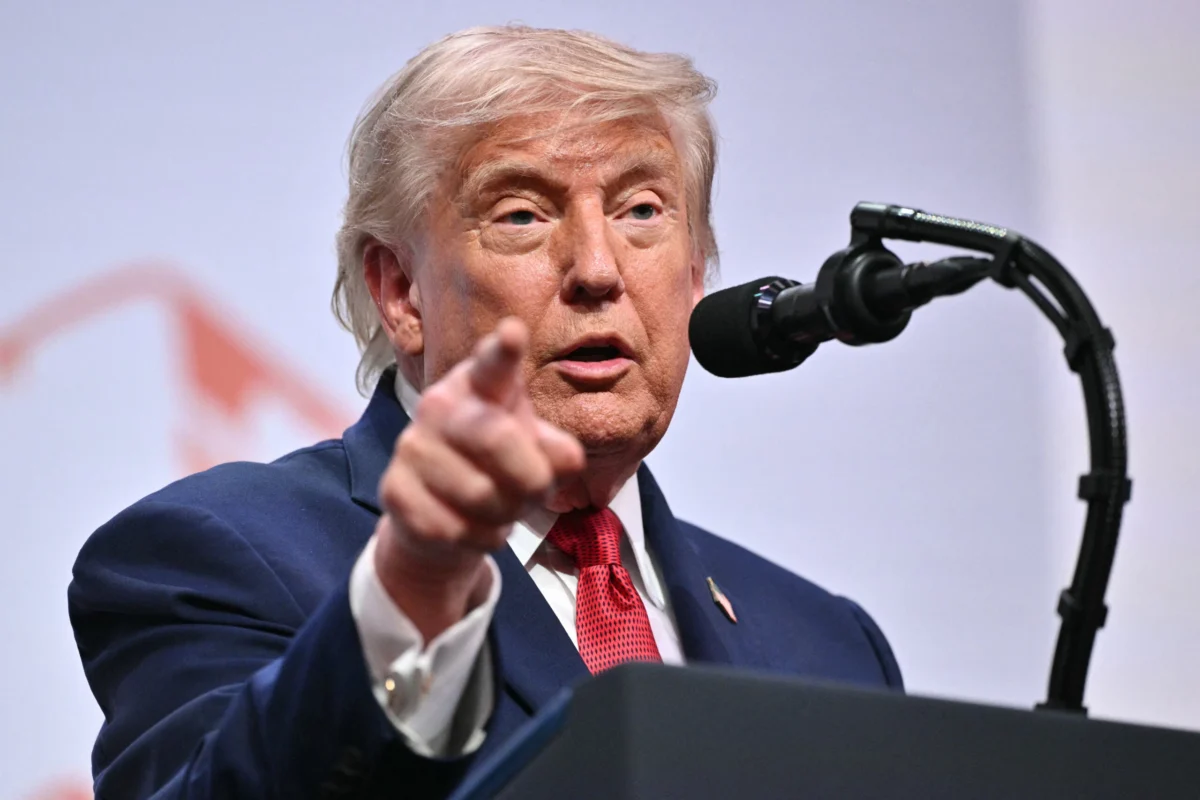
Speaking to reporters from the Group of Seven (G7) Summit in Evian, France, on Wednesday, President Trump remained non-committal when questioned about the certainty of the signing, which was tentatively scheduled for Friday. Throughout the day, Trump issued stern warnings, indicating that Washington would resume military action if Iran failed to "behave," underscoring the delicate and conditional nature of the nascent agreement.
The proposed Memorandum of Understanding (MOU) marks a significant potential pivot in US-Iran relations, which have been characterized by decades of animosity, escalating tensions, and indirect conflict. The current administration’s "maximum pressure" campaign, initiated after Trump unilaterally withdrew from the 2015 Joint Comprehensive Plan of Action (JCPOA), had brought the two nations to the brink of direct confrontation on multiple occasions.
A History of Volatility: US-Iran Relations
To understand the gravity of the proposed MOU, it is crucial to revisit the tumultuous history between the United States and Iran. Relations fundamentally shifted after the 1979 Islamic Revolution, which saw the overthrow of the US-backed Shah and the establishment of an anti-Western Islamic Republic. The subsequent hostage crisis at the US embassy in Tehran cemented a deep-seated antagonism.
For decades, the US has accused Iran of sponsoring terrorism, pursuing nuclear weapons, and destabilizing the Middle East through its support for various proxy groups, including Hezbollah in Lebanon, Houthi rebels in Yemen, and various militias in Iraq and Syria. Iran, in turn, views US presence and policies in the region as imperialistic and a threat to its sovereignty.
The international community’s concerns about Iran’s nuclear program intensified in the early 2000s, leading to a series of UN, US, and EU sanctions. These measures severely crippled Iran’s economy, particularly its vital oil and gas sector. The culmination of diplomatic efforts under the Obama administration, involving the P5+1 (China, France, Germany, Russia, the United Kingdom, and the United States), led to the landmark JCPOA in 2015. Under this agreement, Iran committed to significantly curtailing its nuclear activities and submitting to stringent international inspections in exchange for the lifting of multilateral sanctions.
However, President Trump withdrew the US from the JCPOA in May 2018, deeming it an insufficient deal that did not address Iran’s ballistic missile program or its regional influence. His administration subsequently reimposed and expanded sanctions, launching a "maximum pressure" campaign designed to force Iran back to the negotiating table for a more comprehensive agreement. This strategy led to a dramatic escalation of tensions:
- 2019: Attacks on oil tankers in the Gulf of Oman, drone shoot-downs, and a major drone and missile attack on Saudi Arabian oil facilities, which the US attributed to Iran.
- January 2020: A US drone strike killed Iranian Quds Force commander Qassem Soleimani in Baghdad, prompting Iranian missile retaliations against US bases in Iraq.
These incidents highlighted the perilous trajectory of US-Iran relations, underscoring the urgent need for de-escalation. The current MOU discussions appear to be a direct consequence of this sustained period of high tension, seeking to pull both nations back from the precipice.
The G7 Summit and Presidential Ambivalence
President Trump’s remarks at the G7 Summit provided a stark reminder of his transactional approach to diplomacy. "Deals are amazing. I’ve done them all my life," Trump stated during a news conference with Indian Prime Minister Narendra Modi. "I’ve gone into deals that were 100 percent and they don’t happen. I’ve gone into deals that there was no chance of getting them done, and it happens, and they happen easily." He concluded, "So, you never know with deals, do you? But you’re going to find out pretty soon. I think it will be done."
This characteristic blend of confidence and caution, coupled with his earlier threat of resuming bombing campaigns, introduced an element of unpredictability into the highly anticipated signing. Shortly after, Trump further muddied the waters by suggesting the signing could occur "tomorrow [Thursday], maybe the next day," indicating a fluid timeline for the potentially historic event. This shifting narrative reflects the intricate and often volatile nature of high-stakes diplomatic negotiations, particularly when dealing with long-standing adversaries.
Details of the Proposed Memorandum of Understanding
While the full text of the MOU has not been publicly released, US officials have provided key insights into its proposed terms, which both the US and Iran have indicated would serve as an initial step towards broader negotiations. A senior US official, speaking on background, outlined 14 points of the agreement:
- Cessation of Hostilities: The MOU is intended to end fighting on all fronts, signaling a significant de-escalation of military posturing and proxy conflicts.
- Naval Blockade and Maritime Access: The US naval blockade on Iranian ports would be lifted, and the strategically vital Strait of Hormuz, a crucial chokepoint for global oil shipments, would be reopened. This would have immediate economic implications for Iran and global energy markets.
- Sanctions Relief: Crucially, the US would immediately issue sanctions waivers for Iran’s fossil fuel industry. This targeted relief could provide a much-needed economic boost to Iran, which has seen its oil exports plummet under "maximum pressure."
- Nuclear Program Status Quo: Regarding Iran’s nuclear program, the MOU reportedly restates Iran’s long-held position that it will not seek a nuclear weapon. For the immediate future, both countries would maintain their current "status quo" on nuclear activities. This implies no immediate dismantling or significant changes to Iran’s current enrichment levels or stockpile, a point likely to draw scrutiny from critics.
- Future Negotiations: The initial deal is explicitly framed as a launch point for 60 days of intensive negotiations on more entrenched issues. These include the future of Iran’s nuclear program, specifically addressing its stockpile of enriched uranium, its support for regional proxies, and the long-term administration of the Strait of Hormuz.
- Reconstruction and Development Plan: A notable inclusion is a commitment for the US and its regional partners to develop a "mutually agreed plan with at least USD 300 billion for the reconstruction and economic development of the Islamic Republic of Iran." This substantial sum underscores the potential economic incentives for Iran to comply with the agreement.
- Unfreezing Assets and Sanctions Removal: The full removal of Iranian sanctions and the unfreezing of billions of dollars in Iranian assets held abroad would proceed on an unspecified schedule following the signing of the deal.
President Trump’s Caveats and Clarifications
President Trump, however, added important caveats to some of these commitments. When asked about the $300 billion reconstruction plan, he stated it would only proceed "if they’re [Iran] doing things right." This conditional language reinforces the idea that the US retains leverage and expects continued compliance from Tehran.
Trump also drew a distinction between unfreezing Iran’s assets and providing new money. He explained, "We have taken a lot of their money, and we have their money… It’s not our money, it’s their money, and we froze it at a certain point in time. I guess we’re going to have to give it back, you know. If we didn’t give it back, nobody would ever invest in the dollar again." This clarification addresses a common misconception and highlights the broader implications of US financial policy on international trust and the dollar’s status as a global reserve currency.
Secrecy and Political Scrutiny
The clandestine nature of the MOU’s negotiation and the delayed release of its official text have drawn sharp criticism from across the political spectrum in the US.
Senator Mark Kelly, a Democrat and member of the Armed Services and Intelligence Committees, expressed his frustration on X (formerly Twitter): "A month of negotiations with Iran produced a page and half deal that nobody’s allowed to look at. As a member of the Armed Services and Intelligence Committees, I need to see the actual text to believe we have a deal, not just a tweet." This sentiment reflects a broader demand for transparency from Congress, which plays a crucial oversight role in foreign policy.
Senate Majority Leader John Thune, a Republican, confirmed that members of Trump’s party were pressuring the White House for the official text. "We’re trying to get it," Thune told reporters, indicating bipartisan concern over the lack of public access to the agreement’s specifics.
Negar Mortazavi, a senior fellow at the Center for International Policy, provided an expert perspective on the secrecy, telling Al Jazeera, "There are significant political considerations surrounding release of the text. Washington and Tehran have publicly emphasised different aspects of the agreement, while critics on all sides are scrutinising its contents. Releasing the document before a formal signing and before key details are finalised could intensify political opposition and complicate the implementation process." This analysis suggests that both sides might be strategically withholding details to manage domestic and regional expectations and avoid derailing the fragile agreement before it’s formally sealed.
However, US Vice President JD Vance offered a contrasting explanation, suggesting that it was Iran and regional mediators, rather than Washington, who preferred the slow rollout. Speaking to CBS News, Vance admitted, "Yeah, so there are some, frankly, diplomatic protocols that I don’t fully understand." He added, "We’re actually trying to push them to get it out today, because we want to tell the American people what’s in this deal." This indicates a potential disagreement or differing strategies between the negotiating parties regarding public disclosure.
Trump’s Assertions on "Regime Change" and Israeli Concerns
Amidst the G7 discussions, President Trump used a speech to again hail the MOU as a strategic breakthrough, promising that eventual negotiations would yield a nuclear agreement with Iran that surpassed the 2015 JCPOA. He further claimed that the US-Israeli conflict with Iran had indeed resulted in "regime change" in Iran. This assertion stands in stark contrast to the consensus among experts, who maintain that Iran’s government remains firmly in place, with many of its new leaders adopting even more entrenched hardline positions. Trump, however, described this new group of leaders as "very smart" and "far less radicalised," believing them to be "really good." This interpretation of Iran’s internal political landscape is highly contentious and not widely shared.
Turning to Israel, President Trump reiterated his criticism of Israeli Prime Minister Benjamin Netanyahu’s military approach in Lebanon, where continued Israeli military attacks threaten to destabilize the region and potentially derail the nascent US-Iran agreement. Despite this, Trump lauded the ongoing partnership between Washington and Tel Aviv, emphasizing its importance. He also confirmed that Washington had sent a "copy" of the MOU to Israel, underscoring the necessity of keeping key regional allies informed, even if they harbor strong reservations about any deal with Iran. Israel has consistently viewed Iran as its foremost existential threat and has been deeply skeptical of any diplomatic overtures that do not fully dismantle Iran’s nuclear capabilities and curb its regional influence.
Broader Implications and Outlook
The potential signing of this MOU carries profound implications for regional stability, global energy markets, and the future of nuclear non-proliferation.
- Regional Stability: A de-escalation of direct US-Iran tensions could reduce the immediate risk of wider conflict in the Persian Gulf. However, the 60-day negotiation period on Iran’s proxy networks will be crucial. Regional rivals like Saudi Arabia and the UAE will be watching closely, balancing cautious optimism for reduced conflict with concerns that sanctions relief might empower Iran’s regional ambitions.
- Economic Impact: The immediate lifting of some fossil fuel sanctions and the promise of broader sanctions relief could significantly boost Iran’s struggling economy, potentially easing internal pressures. For global markets, increased Iranian oil supply could stabilize prices, though the specifics of waivers and export volumes remain to be seen.
- Nuclear Program: The "status quo" provision for the initial MOU means the immediate threat of a rapidly advancing Iranian nuclear program might be contained, but the real test lies in the 60-day negotiations. How the US and its partners address Iran’s enriched uranium stockpile, centrifuge development, and verification mechanisms will determine whether this new framework offers a more robust and verifiable solution than the JCPOA, or simply defers the critical issues.
- US Foreign Policy: This diplomatic pivot signals a potential shift away from the "maximum pressure" doctrine towards a more engagement-focused approach. If successful, it could enhance the US’s diplomatic credibility and demonstrate a capacity to de-escalate complex conflicts. Conversely, failure could further entrench mistrust and harden positions on all sides.
- Israeli Concerns: Despite receiving a copy of the MOU, Israel is likely to remain highly vigilant. Its security establishment will scrutinize every detail, particularly regarding the nuclear provisions and any perceived limitations on Iran’s regional activities. The ongoing Israeli military actions in Lebanon highlight Israel’s independent security calculations, which may not always align with broader US diplomatic initiatives.
As the anticipated signing date approaches, the world watches with bated breath. The path to a comprehensive and lasting peace between the US and Iran is fraught with historical mistrust, complex geopolitical rivalries, and deeply entrenched ideological differences. President Trump’s mixed signals underscore the fragility of the process, leaving open the possibility that this momentous step towards de-escalation could still unravel, or conversely, accelerate unexpectedly. The coming days will be pivotal in determining whether this initial agreement can pave the way for a more stable future in the Middle East.
