

Four years after the Calf Canyon/Hermits Peak Fire decimated 341,471 acres in northern New Mexico, the landscape remains a haunting testament to the increasing volatility of the American Southwest. The massive burn scar, a jagged wound across the Sangre de Cristo Mountains, is still defined by vast stretches of charred timber and barren slopes where lush forests once stood. As the most destructive blaze in the state’s recorded history, the 2022 fire was not merely an isolated disaster but a harbinger of a broader ecological crisis. According to the New Mexico Energy, Minerals and Natural Resources Department (EMNRD), wildland fires have consumed more than 5.45 million acres across the state over the last two decades—an area larger than the state of New Jersey.
In response to this accelerating loss of forest cover, a coalition of state agencies and academic institutions has launched an ambitious, multi-decade strategy known as the "reforestation pipeline." This interagency initiative aims to move beyond traditional planting methods, which have historically seen low survival rates in the face of rising temperatures and prolonged drought. By integrating advanced genetic selection, nursery "stress training," and predictive survival modeling, New Mexico is attempting to rewrite the manual on how to restore arid landscapes in an era of unprecedented climate change.
The Scale of the Reforestation Challenge
The magnitude of the task ahead is difficult to overstate. For decades, reforestation in New Mexico relied on a patchwork of federal and state efforts, often sourcing seedlings from out-of-state nurseries as far away as Idaho. However, the logistical strain of transporting young trees across hundreds of miles often compromised their health before they even reached the soil. Furthermore, traditional seedlings—raised in the pampered, high-moisture environments of commercial nurseries—frequently failed when introduced to the brutal reality of a New Mexican burn scar.
The April 27, 2026, groundbreaking of the New Mexico Reforestation Center in Mora County represents a fundamental shift in this approach. Once fully operational, the center is slated to produce 5 million seedlings annually, focusing on key native species such as ponderosa pine and Douglas fir. But as Jenn Auchter, director of the New Mexico Reforestation Center, points out, production volume is only half the battle. "So yes, we’re planting, but are we actually reforesting?" Auchter asks. The distinction is vital: planting is an act; reforestation is a successful ecological outcome.

A Chronology of Increasing Volatility
To understand the urgency of the reforestation pipeline, one must look at the timeline of New Mexico’s fire history, which has shifted from a natural cycle of low-intensity ground fires to a modern era of catastrophic "megafires."
- 2011: The Las Conchas Fire. At the time, it was the largest fire in state history, burning 156,000 acres in the Jemez Mountains. It was notable for its extreme speed, burning 43,000 acres in its first 14 hours.
- 2012: The Whitewater-Baldy Complex. This fire surpassed Las Conchas just a year later, burning 297,000 acres in the Gila National Forest.
- 2022: The Calf Canyon/Hermits Peak Fire. This disaster redefined the scale of destruction. Triggered by two escaped prescribed burns managed by the U.S. Forest Service, the fire merged to create a behemoth that destroyed hundreds of homes and fundamentally altered the hydrology of northern New Mexico.
- 2024-2026: The Transition to Active Restoration. Following the 2022 disaster, the state legislature and partner universities accelerated funding and research for the Reforestation Center, recognizing that natural regeneration was failing in many high-severity burn patches.
The Reforestation Pipeline: From Seed to Forest
The "reforestation pipeline" is a collaborative effort involving EMNRD, New Mexico Highlands University (NMHU), New Mexico State University (NMSU), and the University of New Mexico (UNM). Each entity manages a specific segment of the tree’s lifecycle to maximize the probability of long-term survival.
Genetic Selection: Finding the "Toughest" Parents
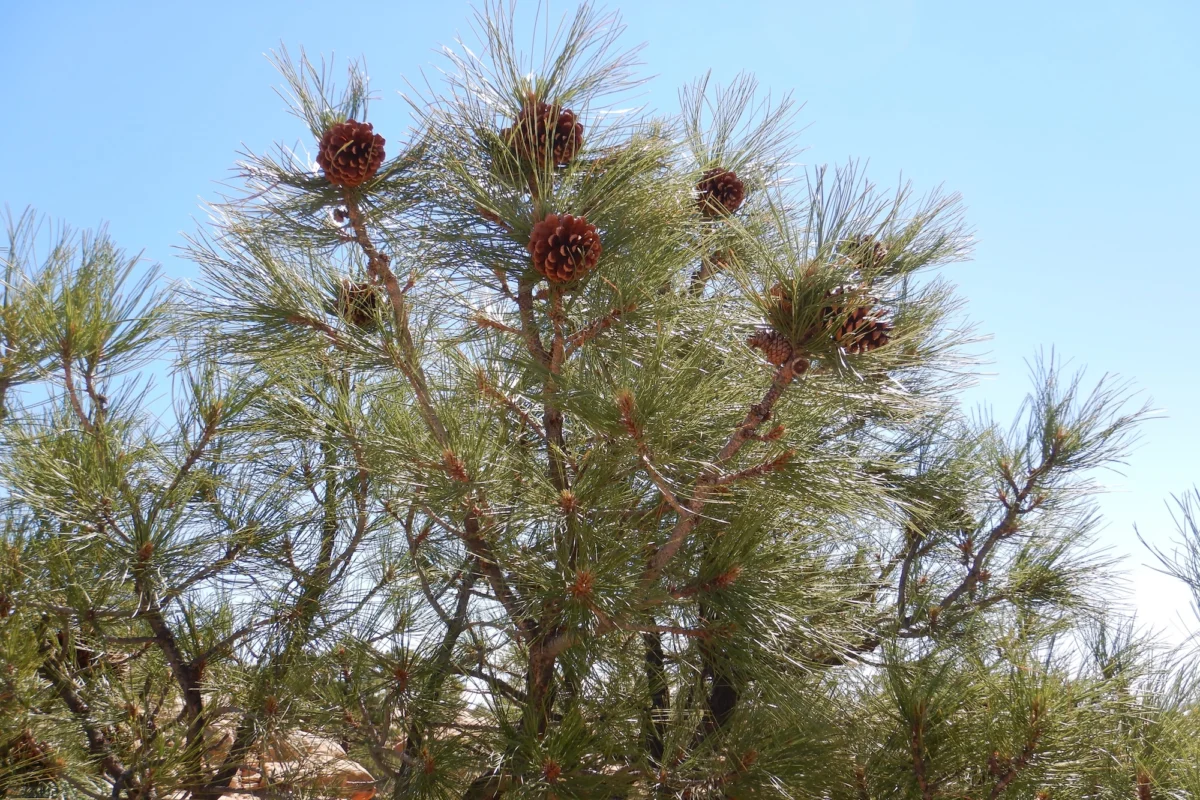
The process begins with researchers from New Mexico Highlands University who scout forests for "the best trees on the worst sites." Instead of collecting seeds from lush, protected groves, they seek out mature pines that have survived extreme drought, localized fires, or record-breaking heatwaves. These trees are believed to possess the genetic resilience necessary for the future climate. In 2024 alone, contractors collected 12 million seeds from these hardy specimens.
Nursery Stress Training: Preparing for the Inferno
Once the seeds are harvested and certified for quality by the U.S. Forest Service National Seed Laboratory, they are sent to the John T. Harrington Forestry Research Center at NMSU. Here, research scientist Andrei Toca employs a "tough love" approach to nursery management.
Unlike traditional nurseries that keep seedlings in optimal, "garden-like" conditions, Toca exposes the young plants to controlled drought and elevated temperatures. This "stress training" forces the seedlings to adapt early. They develop larger, more robust root systems capable of seeking deep underground moisture and produce fewer needles to minimize water loss through transpiration.

This preparation is essential because surface temperatures on burn scars can reach a staggering 150 degrees Fahrenheit. Without the shade of a canopy, the dark, charred soil acts as a heat sink, absorbing solar radiation and creating a microclimate that is often lethal to unconditioned plants.
Predictive Modeling and the Science of Site Selection
Even the hardiest seedling will perish if planted in a location that cannot support life. This is where Matt Hurteau, a professor at the University of New Mexico and director of the Center for Fire Resilient Ecosystems and Society, provides critical data.
Historically, the survival rate for seedlings in Southwestern wildfire footprints has hovered around a dismal 25 percent. Hurteau’s team has spent years developing a predictive model that identifies "micro-refugia"—patches of land where a seedling has the highest chance of survival. The model, which currently boasts a 63 percent accuracy rate, analyzes various topographic factors:
- Solar Radiation: South and west-facing slopes receive the most intense sun, making them high-risk zones.
- Slope Position: Seedlings planted in gullies or at the base of slopes are more likely to benefit from water runoff.
- Aspect and Steepness: These factors determine how much moisture the soil retains before it evaporates.
By using these maps, land managers can avoid "planting for failure" on scorched southern slopes and instead focus resources on northern aspects and drainage areas where the climate remains slightly more temperate.
Assisted Migration: Redefining "Native" Species
One of the more provocative aspects of New Mexico’s strategy is the concept of assisted migration. As the climate warms, the environmental conditions of northern New Mexico are beginning to resemble the historical climate of the southern part of the state or even northern Mexico.

Professor Hurteau suggests that reforestation efforts must look beyond the species that currently occupy a landscape. "We tend to limit ourselves reforestation-wise to species that occur within the area," he notes. However, the Chihuahuan pine, typically found in southern New Mexico and Arizona, may be a better fit for the future of the north. This species has evolved different adaptations to frequent fire and extreme aridity, making it a "climate-ready" candidate for landscapes that are no longer hospitable to traditional ponderosa or fir populations.
Economic and Social Implications of Forest Loss
The drive for reforestation is fueled by more than just ecological sentiment; it is a matter of civilizational survival for many New Mexican communities. Forests act as natural water filters and sponges. When they are removed, the consequences for downstream water users are catastrophic.
In the aftermath of the 2022 Calf Canyon/Hermits Peak Fire, the city of Las Vegas, New Mexico, faced a public health crisis when its primary water source, the Gallinas River, was choked with ash, sediment, and debris. The city’s water treatment infrastructure was unable to process the contaminated flow, leading to shutoffs that crippled local businesses and schools.
Furthermore, the loss of vegetation has turned mountain slopes into launchpads for flash floods. Without a root system to hold the soil and a canopy to break the fall of raindrops, even moderate monsoons can trigger debris flows that destroy roads, bridges, and irrigation systems (acequias) that have been in use for centuries.
Steve Bassett, director of conservation programs for The Nature Conservancy in New Mexico, emphasizes that the window for action is closing. "The clock is ticking," Bassett says. "Every year that passes, we’re setting our forests back by not being able to seize the moment." He notes that the current backlog of 7 million acres needing restoration will only grow as future fires inevitable occur.

A Model for the Arid West
New Mexico’s "reforestation pipeline" is being watched closely by other Western states facing similar crises. From the Sierras in California to the Rockies in Colorado, the era of "passive restoration"—simply letting nature take its course—is ending. In many high-severity burn areas, the "seed trees" have been killed across such vast distances that natural regeneration could take centuries, if it happens at all.
By combining the industrial scale of the new Mora County facility with the precision of UNM’s survival modeling and NMSU’s stress-testing, New Mexico is attempting to build a resilient, man-made bridge to the future. The success of this initiative will be measured not in the millions of trees planted today, but in the health of the forests that stand fifty years from now—forests that must be built to endure a world that is hotter, drier, and more fire-prone than the one that came before.
