

The federal government is facing mounting pressure from parliamentarians, municipal leaders, and climate experts to accelerate the implementation of a comprehensive national adaptation strategy. The call for action comes as Canada undergoes a massive push to expand housing and critical infrastructure, a movement that experts warn is currently ignoring the escalating threats posed by extreme weather and a changing climate. During a high-level session convened in Ottawa last Tuesday, sponsored by the Intact Centre on Climate Adaptation, speakers emphasized that the window for proactive planning is closing as the economic and social costs of climate-related disasters reach unprecedented levels.
The central tension identified by participants is the contradiction between the country’s urgent need for affordable housing and the systemic failure to ensure that new developments are resilient to future environmental conditions. Despite clear warnings regarding climate risks, various provinces and municipalities continue to grant permits for housing projects on vulnerable floodplains. This practice, described by experts as a short-term solution to the housing crisis, is expected to create long-term financial liabilities for homeowners and taxpayers alike.
The Economic Imperative for Climate Resilience
The financial toll of climate change on the Canadian economy has shifted from a theoretical future concern to a staggering present-day reality. Data presented by Kathryn Bakos, the Intact Centre’s managing director for resilience and finance, illustrates a dramatic escalation in insured losses over the past four decades. Between 1984 and 2008, the annual average for insured losses from extreme weather events hovered between $300 million and $400 million. However, the period from 2009 to 2025 has seen this average balloon to $2.9 billion annually.
The year 2024 stands as a catastrophic outlier, marking the worst single year on record with $9.2 billion in insured losses. This spike was driven by a series of high-profile disasters, including the devastating Jasper wildfire and historic flooding across Toronto, southern Ontario, and parts of Quebec. Bakos noted that these figures represent only the tip of the iceberg. The Intact Centre’s research indicates that for every $1 in insured property losses, there are approximately $3 to $4 in uninsured losses borne by governments, businesses, and individuals. These hidden costs include the destruction of public infrastructure, lost economic productivity, and the depletion of emergency reserves.
Furthermore, the research has begun to quantify the "human cost" of these disasters. Beyond property damage, major flooding and fire events are linked to significant increases in prescriptions for anti-anxiety medications, higher demand for mental health counseling services, and substantial lost work time. These social determinants of health are rarely factored into traditional infrastructure budgets, yet they represent a growing burden on Canada’s healthcare and social safety systems.
A Critique of Current Federal Investment
While the government under Prime Minister Mark Carney has committed billions of dollars toward upgrading the nation’s infrastructure—including ports, pipelines, transmission lines, and housing—critics argue that the investment is dangerously lopsided. Climate adaptation experts contend that while the government is eager to build, it is significantly under-funding the efforts required to "climate-proof" these assets.
Senator Mary Coyle, co-chair of the Senators for Climate Solutions group, addressed the session with a call for a dual-track approach. While acknowledging that the long-term solution requires a drastic reduction in greenhouse gas emissions, she stressed that adaptation is the only tool available to manage the risks already "baked into" the system. "We all know we’re not going to adapt our way out of the climate crisis," Coyle stated. "But what are we going to do right now with these risks that are upon us? The impact of climate change is not up for debate. Extreme weather is a reality; flooding is the most expensive result of this climate crisis, and fire is closely behind."
Coyle argued that the federal government’s 2023 National Adaptation Strategy, while a positive step in acknowledging the urgency of the situation, lacks the necessary financial backing and centralized leadership to drive meaningful collaboration between the private sector, provinces, and municipalities. She called for a "bending of the curve" regarding rising disaster costs through a massive scale-up of resilience investments.
Municipalities on the Front Lines
The Federation of Canadian Municipalities (FCM), which represents more than 2,000 local governments housing 90% of the Canadian population, reports that its members are struggling to manage the physical and fiscal realities of climate change. Carole Saab, CEO of the FCM, described extreme weather as an "operational reality" rather than a future threat. Local and Indigenous governments are now routinely managing complex evacuations, protecting compromised drinking water systems, and operating emergency shelters.
According to Saab, the pace of climate change is currently outstripping the design of existing systems and the levels of available funding. The FCM is urging the federal government to allocate at least $2 billion annually specifically for climate resilience. While Saab admitted that $2 billion is likely insufficient to meet the total national need, she emphasized that it would provide the necessary "seed money" to encourage long-term planning and private-sector partnerships.
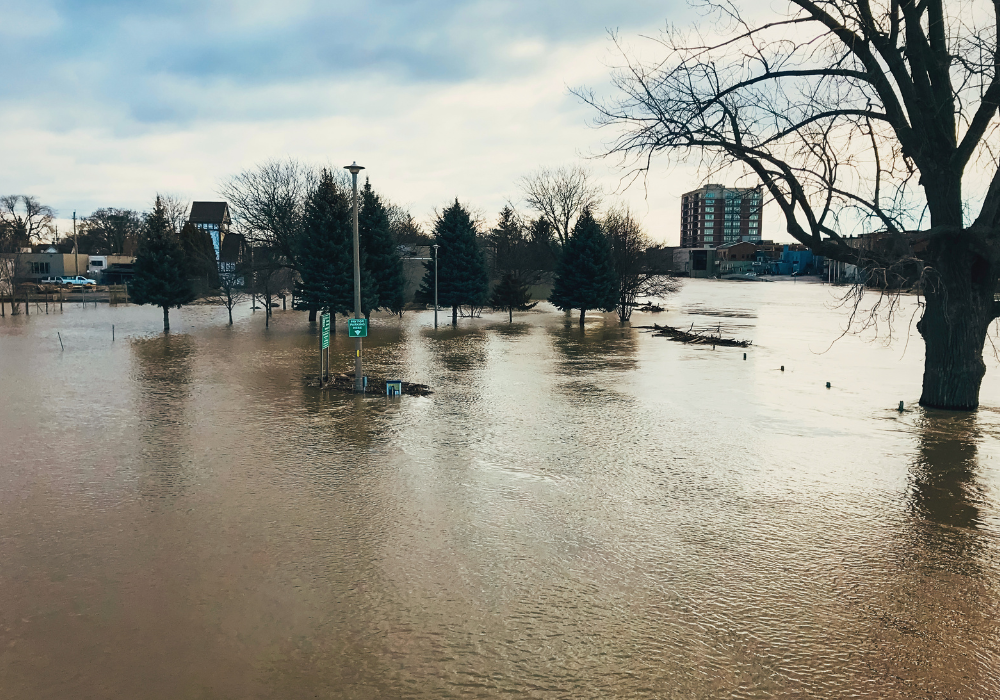
"Communities certainly understand the risks that are in their faces every day, and they are ready to act," Saab said. "The challenge is the scale and pace of what they’re facing is accelerating faster than existing systems and funding levels were designed to handle." She specifically criticized the ongoing development on floodplains, noting that solving the housing crisis by building in high-risk zones merely "exacerbates one problem while trying to solve another."
Legislative and Policy Recommendations
The political momentum for a more robust adaptation framework is building within the House of Commons. Shannon Miedema, the Liberal MP for Halifax and chair of the Commons Committee on Environment and Sustainable Development, indicated that her committee is set to release a comprehensive report on adaptation in the near future. Drawing on her previous experience working on Halifax’s climate plan, Miedema emphasized that adaptation cannot be achieved in a vacuum.
"The lessons I took away from working at the city is that you don’t get very far if you don’t bring everybody with you," Miedema said. She advocated for a collaborative model where the federal government provides the framework and funding, while local governments provide the site-specific expertise needed to implement resilience measures.
To streamline this process, Blair Feltmate, head of the Intact Centre, proposed several cost-effective measures that could be implemented immediately. He called for a "national home flood and wildfire preparedness campaign" to educate property owners on simple maintenance and renovations that can drastically reduce risk. Feltmate also suggested that the financial sector must play a larger role. This includes training real estate brokers and mortgage providers to ensure that climate-resilient upgrades are accurately reflected in property valuations.
Feltmate’s recommendations include:
- A Moratorium on Floodplain Development: Strictly prohibiting new construction on current or projected river and coastal floodplains.
- Tax Incentives and Subsidies: Providing financial relief for homeowners who invest in sump pumps, backwater valves, and fire-resistant roofing materials.
- Infrastructure Audits: Mandatory climate-risk assessments for all federally funded infrastructure projects to ensure they can withstand weather patterns projected for 2050 and beyond.
The Path Forward: Resilience as an Investment
The overarching consensus from the Ottawa session was that spending on resilience should not be viewed as a sunk cost, but as an investment with a high rate of return. By spending millions today on protective infrastructure and smarter zoning, Canada can avoid tens of billions in disaster recovery costs in the coming decades.
The current strategy of "build first, fix later" is increasingly viewed as fiscally irresponsible. As the insurance industry continues to adjust its premiums to reflect the $9.2 billion reality of 2024, the affordability of housing will be determined not just by the cost of a mortgage, but by the ability to insure and protect the asset.
As the Commons Committee prepares to release its findings and the Carney government looks toward the next budget cycle, the message from climate experts is clear: Canada’s national adaptation strategy must move from a document of intent to a fully funded mandate. Without a coordinated effort to align housing goals with climate realities, the country risks building a future that is structurally unable to withstand the environment of the 21st century.
