

The landscape of modern investment portfolios is increasingly shaped by the strategic integration of alternative investments. These asset classes, ranging from private equity and venture capital to real estate and hedge funds, offer the potential to enhance diversification, boost returns, and mitigate risk. However, their inherent complexity often presents a significant hurdle for financial advisors and the broader investment community, creating a pervasive education gap that hinders optimal client outcomes. Addressing this critical challenge is the core mission of the CAIA Association, a global professional body dedicated to advancing knowledge and transparency in alternative investments.
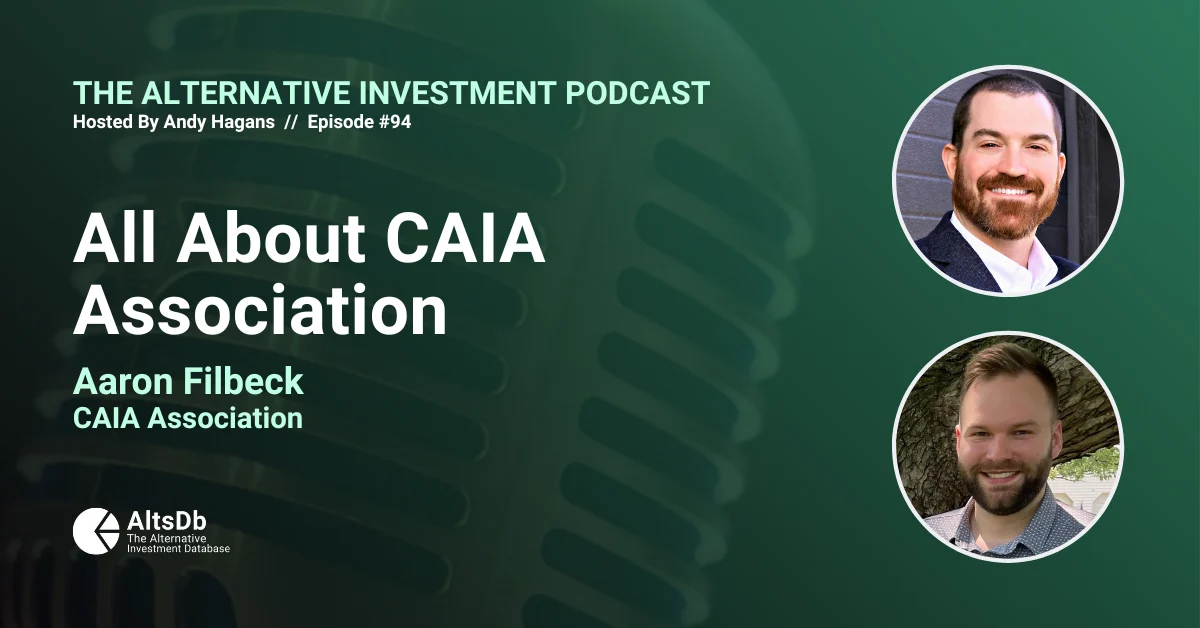
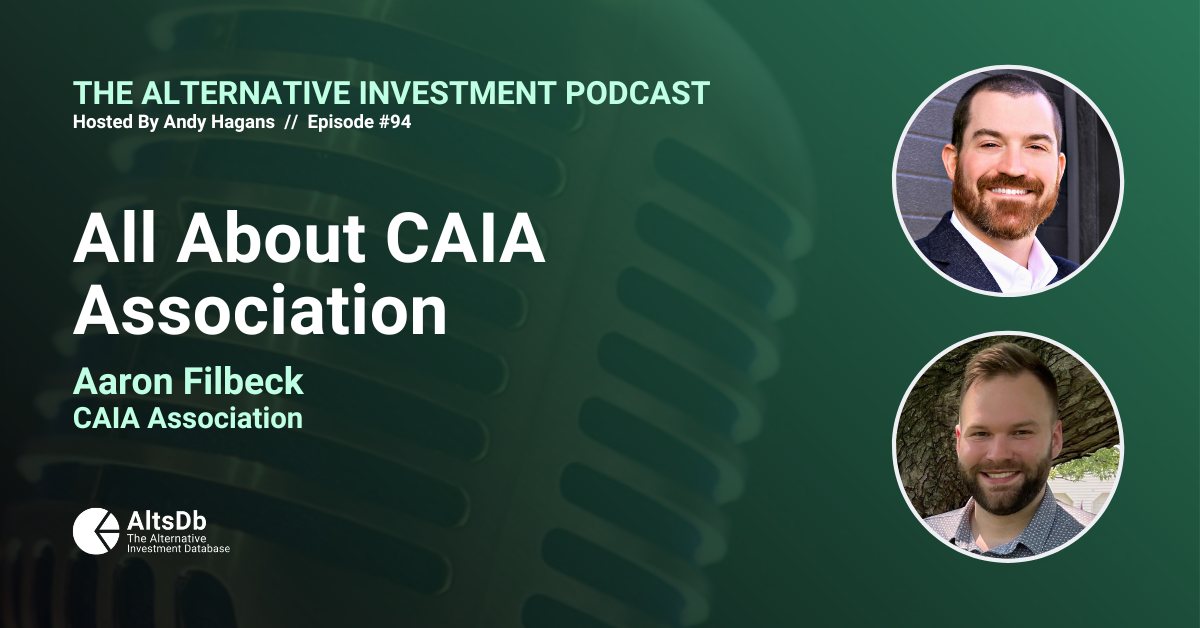
Aaron Filbeck, Managing Director and Head of UniFi at CAIA, recently joined "The Alternative Investment Podcast" hosted by Andy Hagans to illuminate CAIA’s multifaceted approach to bridging this knowledge divide. Filbeck articulated how the organization’s educational initiatives are designed not only to equip financial professionals with the necessary expertise but also to ultimately improve outcomes for clients and the financial ecosystem at large.
The Evolving Role of Alternative Investments
For decades, institutional investors like pension funds, endowments, and sovereign wealth funds have consistently allocated a significant portion of their portfolios to alternative assets. These sophisticated investors recognize the long-term benefits of illiquid investments in achieving robust risk-adjusted returns and enhancing portfolio resilience. Industry data from Preqin, a leading alternative assets data provider, consistently shows substantial growth in global alternative assets under management, surpassing $13 trillion in recent years. This growth trajectory underscores the increasing importance of these strategies in diversified portfolios.
However, the democratization of alternative investments, which has seen these asset classes become more accessible to individual investors and financial advisors, has outpaced the development of comprehensive educational resources. This disparity has created a situation where many advisors, despite a fiduciary duty to act in their clients’ best interests, may lack the confidence or the specific knowledge to effectively evaluate, select, and manage alternative investment products. This gap is particularly pronounced given the intricate nature of these investments, which often involve long lock-up periods, complex fee structures, and unique risk profiles that differ significantly from traditional liquid securities.
CAIA Association: A Global Leader in Alternatives Education
The CAIA Association stands as a prominent global organization committed to fostering greater alignment, transparency, and knowledge within the investment industry, with a specific emphasis on alternative investments. With a membership base exceeding 13,000 professionals across approximately 100 countries, CAIA operates as a global network of expertise. Filbeck highlighted that the membership is diverse, encompassing limited partners (LPs), general partners (GPs), financial advisors, regulators, and distribution professionals, underscoring the broad applicability of CAIA’s educational mission.
"Our mission is to create better alignment, transparency, and knowledge for all investors," Filbeck stated. "We achieve this through formal education programs, thought leadership, and advocacy. While the CAIA designation is a cornerstone of our formal education, we also provide a wealth of resources for the broader industry."
The organization’s global reach is facilitated by a network of 33 chapters strategically located in major financial centers worldwide. These local chapters play a crucial role in disseminating region-specific knowledge and fostering continuous learning through events and discussions. This decentralized yet interconnected structure allows CAIA to balance global principles with localized nuances, particularly concerning regulatory frameworks and tax codes that can significantly influence investment strategies.
The CAIA Charter Program: Deepening Expertise
At the heart of CAIA’s educational offerings is the CAIA Charter program, a rigorous two-level examination process designed to equip investment professionals with a deep understanding of institutional-quality alternative investments. The program typically requires candidates to dedicate between 400 to 500 hours of self-study to master the curriculum.
Level I of the CAIA Charter introduces candidates to a wide array of alternative strategies, including private equity, real assets, hedge fund strategies, and structured credit. It focuses on understanding the bottom-up mechanics of these strategies, their inherent risk-return profiles, and their fundamental characteristics.
Level II of the program then shifts to a top-down, allocator’s perspective. Building upon the foundational knowledge from Level I, candidates delve into portfolio construction, risk management, investment and operational due diligence, and the integration of Environmental, Social, and Governance (ESG) factors. This comprehensive approach ensures that charterholders not only understand individual alternative asset classes but can also effectively integrate them into a broader portfolio context, a skill essential for both institutional allocators and advisors seeking to build robust client portfolios.
Filbeck emphasized that the CAIA Charter is not exclusively for institutional investors. "We teach you to think like an allocator," he explained. "Whether you’re a GP focused on a specific strategy, an advisor, or a distribution professional, the program provides a foundational understanding of how institutional investors approach alternative investments. This perspective is crucial for effectively serving end clients, whether they are institutions or individuals."
UniFi by CAIA: Empowering the Private Wealth Management Industry
Recognizing the specific needs of the private wealth management sector, CAIA launched UniFi by CAIA. This specialized learning platform is dedicated to educating asset managers, intermediaries, and independent registered investment advisors (RIAs) on the intricacies of alternative investments.
"UniFi is designed to upscale professionals quickly on how these strategies work and how they fit into a client’s portfolio," Filbeck elaborated. The platform offers a more accessible, online delivery mechanism compared to the in-depth CAIA Charter. Currently, UniFi features a flagship certificate program, "The Fundamentals of Alternative Investments," a 20-hour course providing a comprehensive overview of alternative asset classes.
Looking ahead, UniFi is expanding its offerings with a series of micro-credentials designed to provide deeper dives into specific topics. Forthcoming micro-credentials will focus on private debt and digital assets, reflecting the dynamic evolution of the alternative investment landscape. These shorter, focused programs allow professionals to acquire targeted knowledge and develop a greater conversational fluency in complex areas, enabling them to better communicate with clients and make informed investment decisions.
The Financial Data Professional (FDP) Charter: Bridging Data Science and Finance
In addition to its core alternative investment education, CAIA also offers the Financial Data Professional (FDP) Charter. This program addresses the growing intersection of data science and financial services, a trend that is transforming investment strategies across all asset classes, including alternatives.
The FDP Charter aims to bridge the communication gap between data scientists and financial professionals. "We have these two very smart disciplines that may not understand one another," Filbeck noted. "The FDP program helps financial professionals better understand data science and translate its applications into meaningful investment insights, preventing issues like overfitting data or creating algorithms without practical relevance." This program is particularly relevant for firms looking to leverage artificial intelligence, machine learning, and advanced data analytics in their investment processes.
Addressing the Education Gap: Progress and Future Outlook
The journey to bridge the education gap in alternative investments has been a gradual but progressive one. Filbeck characterized the early days of the "liquid alts" movement approximately a decade ago as "version 1.0" of this democratization wave, which he believes was largely driven by product rather than a thorough understanding of client needs.
"Compared to what we saw 10 years ago, with the rise of private capital and the acceleration over the past couple of years, I would say we’ve done a much better job," Filbeck observed. "However, there’s still a lot of ground to cover. Our focus, especially in wealth management, is on educating professionals on the foundational ‘why’ – why it matters to allocate to these strategies and how it impacts the client. The bar is exceptionally high for advisors, and we aim to equip them with the confidence and knowledge to make informed allocation decisions."
The trend Filbeck finds most heartening is the increasing willingness of financial professionals to acknowledge their knowledge gaps and actively seek out educational resources. "We receive many inquiries from individuals and teams stating, ‘I have this gap, our team has this gap, and we need to upskill in this particular area’," he shared. This proactive approach, coupled with the increasing demand from clients for access to alternative investments, is a powerful catalyst for continued education and professional development.
Looking ahead, Filbeck expressed optimism regarding educational trends. He highlighted the advancements in technology that enhance the delivery of educational content, making it more accessible and engaging. Furthermore, he sees a growing shift in conversations within the industry, moving away from a product-centric approach towards a client-objective-first methodology. "We’re seeing more and more conversations moving towards the client perspective, and perhaps away from leading with the product," he stated. This client-centric evolution is a critical step in ensuring that alternative investments are implemented responsibly and effectively, ultimately benefiting the end investor.
For financial professionals seeking to deepen their understanding of alternative investments and related fields, the CAIA Association offers a comprehensive suite of educational programs and resources. Further information can be found on their website at caia.org. The organization is also active on various social media platforms, providing ongoing insights and fostering industry dialogue.
