

Brazil stands at a critical juncture in its quest to become a global superpower in climate finance. As the steward of the Amazon, the world’s largest rainforest and a vital carbon sink, the nation has positioned itself as a primary destination for private capital seeking to offset carbon emissions. However, this ambition is currently colliding with a reality defined by systemic governance gaps, market design flaws, and allegations of widespread fraud. Recent findings from the country’s federal audit court and high-profile police investigations have cast a shadow over both the regulated and voluntary carbon markets, raising urgent questions about whether the credits being sold represent genuine environmental benefits or merely sophisticated financial maneuvering.
In late January, Vital do Rêgo Filho, the head of Brazil’s federal audit court (TCU), delivered a sobering assessment of the country’s flagship carbon program, RenovaBio. He characterized the system as a "true sea of uncertainty" following a comprehensive audit that exposed weak metrics and insufficient oversight. The audit suggested that the program, designed to lower emissions in the fuel sector, lacks the transparency necessary to prove its actual climate impact. This sentiment is echoed by environmental advocates like Alexandre Prado, the climate change lead for WWF-Brazil, who warns that emissions trading systems are failing to deliver their promised impact, threatening the very purpose of these market mechanisms.
The Origins and Mechanics of RenovaBio
RenovaBio was launched in 2020 as a cornerstone of Brazil’s strategy to meet its commitments under the Paris Agreement. The program operates on a regulated basis, requiring fuel distributors to meet annual decarbonization targets by purchasing Decarbonization Credits, known as CBIOs. Each CBIO is intended to represent one tonne of carbon dioxide emissions avoided by substituting fossil fuels with biofuels, such as ethanol and biodiesel. The underlying logic is that biofuels derived from sugarcane or soy absorb carbon during their growth cycle, making them a "greener" alternative to gasoline and diesel.
Since its inception, RenovaBio has facilitated the transfer of approximately $2.2 billion from fossil fuel distributors to biofuel producers. However, the program’s rapid implementation has come under scrutiny. Legislative records show that the bill creating RenovaBio was approved in just 28 days—a staggering pace compared to the three-year average for most Brazilian laws. Research by Lira Luz Benites Lazaro of the University of São Paulo suggests this was the result of "sophisticated green lobbying." Industry trade bodies, most notably UNICA (representing the sugarcane sector), dominated the public hearings, while environmental groups and academics were largely sidelined.
The result of this accelerated legislative process is a system that many critics argue is tailored to industry interests rather than environmental integrity. The TCU audit highlighted that RenovaBio relies on a single carbon-intensity indicator that fails to account for net emissions across the entire production chain. Furthermore, the audit revealed that 60% of the biomass used by certified producers is not adequately tracked for links to illegal deforestation. There is a persistent risk that expanding biofuel production could inadvertently drive the clearing of native vegetation, leading to a net increase in carbon emissions.
A Chronology of Brazil’s Carbon Market Development
To understand the current crisis, one must look at the timeline of Brazil’s regulatory and market evolution over the last decade:
- 2015: The Paris Agreement is signed, introducing Article 6, which provides a framework for international carbon credit trading. This sparks a global surge in interest in forest-based offsets.
- 2017–2018: Legislative fast-tracking of RenovaBio begins, driven by a powerful biofuels lobby seeking market certainty.
- 2020: RenovaBio officially enters operation, establishing the CBIO market.
- 2021–2023: The voluntary carbon market expands rapidly in the Amazon. Unregulated brokers, nicknamed "carbon cowboys," begin targeting indigenous lands and traditional communities.
- June 2024: Federal police launch "Operation Greenwashing," uncovering a massive criminal network involved in fraudulent carbon credits.
- December 2024: Brazil passes a landmark law to establish its first comprehensive regulated carbon market, attempting to bring the voluntary sector under federal oversight.
- Early 2026: BNDES (Brazil’s development bank) publishes a public consultation revealing deep industry and civil society dissatisfaction with the current certification monopoly and land tenure issues.
The Rise of the Carbon Cowboys and Operation Greenwashing
While RenovaBio represents the regulated side of the market, the voluntary carbon market has faced even more severe integrity challenges. Driven by corporate net-zero pledges, the demand for forest carbon has led to a "green gold rush" in the Amazon. This has attracted "carbon cowboys"—unregulated entities that exploit the region’s complex land tenure history to claim credits.
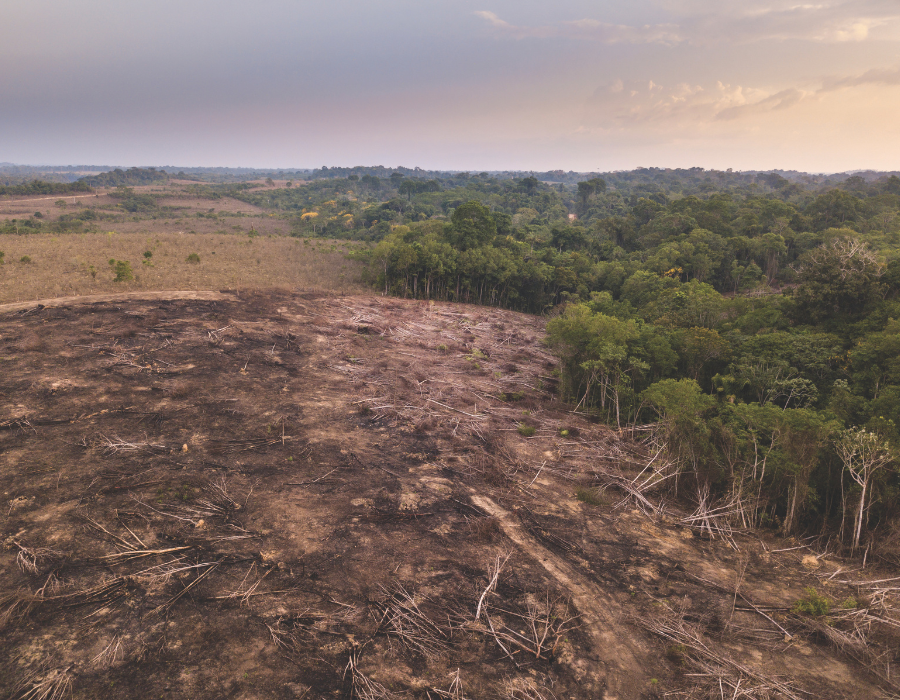
In June 2024, Operation Greenwashing exposed the scale of this criminality. Federal investigators uncovered a network that used forged land titles and the complicity of corrupt public officials to seize over 500,000 hectares of public land in the Amazon. This area, roughly equivalent in size to Canada’s Prince Edward Island, was used to generate fraudulent carbon credits worth an estimated $33 million, which were then sold to major multinational corporations.
These criminal networks often use coercive tactics, binding forest communities to decades-long contracts that offer little financial return while stripping them of their land rights. The lack of a centralized registry for voluntary projects allowed these "carbon cowboys" to operate in the shadows for years, selling "avoided deforestation" credits on land that was already protected or, conversely, land that was being actively cleared by the same entities claiming the credits.
Structural Failures and Land Tenure Insecurity
At the heart of Brazil’s carbon market woes is a fundamental problem: land tenure. The Amazon is a patchwork of overlapping claims, disputed boundaries, and fraudulent registrations dating back decades. Without a clear and undisputed legal record of who owns a specific tract of land, the validity of any carbon credit generated from that land is inherently suspect.
"How can you sell credit for avoided deforestation if you don’t know who owns the land?" asks Alexandre Prado of WWF-Brazil. He argues that land regularization must be a prerequisite for any carbon project. Without it, the market remains vulnerable to "grilagem"—the traditional Brazilian practice of land-grabbing through forged documents.
The reliance on international certifiers has also been a point of contention. Verra, a Washington-based non-profit that handles more than 90% of forest carbon projects in Brazil, has faced criticism for its methodologies. While Verra maintains that it requires project developers to prove legal rights to the land and obtain informed consent from local communities, critics argue that these international bodies are ill-equipped to navigate the Byzantine complexities of Brazilian land law and the socio-political dynamics of the Amazon.
Official Responses and the Path to Reform
In response to the audit and the police investigations, Brazilian authorities have begun to take corrective measures. The National Oil Agency (ANP), which oversees RenovaBio, has acknowledged that the program requires "constant updates" to ensure its integrity. The agency is currently working to tighten oversight of auditing firms and improve data-sharing protocols to ensure that biomass producers are not linked to deforestation.
Furthermore, the Brazilian Supreme Court recently moved to lift injunctions that had allowed some non-compliant fuel distributors to avoid purchasing CBIOs. This move was seen as a victory for the program’s stability, though it did not address the underlying structural flaws in how carbon intensity is measured.
The new carbon market law passed in late 2024 represents the government’s most ambitious attempt to restore credibility. The law aims to create a mandatory emissions-trading system similar to the European Union’s, while also bringing voluntary projects under a state-monitored legal framework. However, the implementation of this law is already facing hurdles. In early 2026, the first meetings to draft the system’s operational rules revealed significant friction. One major point of contention is the exemption of the agricultural sector—Brazil’s second-largest source of emissions—from the regulated market. Critics argue that this exemption is another result of powerful lobbying that undermines the country’s climate goals.
Broader Implications for Global Climate Finance
The crisis in Brazil’s carbon markets serves as a cautionary tale for the global community. It highlights the dangers of prioritizing market speed over institutional integrity. If Brazil, with its vast natural resources and sophisticated financial sector, struggles to maintain a high-integrity carbon market, it raises doubts about the viability of similar schemes in other developing nations with even weaker governance structures.
For the global carbon market to function, credits must be "additional"—meaning the carbon reduction would not have happened without the financial incentive—and they must be permanent and verifiable. Brazil’s current "sea of uncertainty" suggests that many existing credits may fail these basic tests.
Despite the current challenges, there is a sense of cautious optimism among some environmentalists. The fact that these failures are being identified by the country’s own audit courts and police forces is a sign of institutional resilience. By exposing the "carbon cowboys" and the flaws in RenovaBio, Brazil has an opportunity to rebuild its market on a foundation of transparency and land justice.
The next few years will be a litmus test for the administration’s ability to resist industry lobbying and prioritize long-term environmental stability over short-term financial gains. If Brazil can successfully implement its new regulated market and solve its land tenure crisis, it may yet fulfill its potential as the heart of the world’s green economy. If it fails, the "sea of uncertainty" could swallow the credibility of forest-based carbon offsets globally, dealing a significant blow to the international effort to combat climate change.
