

In the heart of Fort Pierce, Florida, an area characterized by its vibrant "Peacock District" but hampered by deep-seated economic challenges, a transformative agricultural initiative is proving that sustainability and social equity can grow from the same soil. Led by Bernie McBee, a retired citrus industry veteran whose tenacity is as weathered as his signature straw floppy hat, the "Harvesting Hope & Seeding Solutions" community garden has evolved from a modest parish project into a sophisticated, off-the-grid engine of food production. Supported by the First Church parish, the garden has successfully generated over 4,500 pounds of fresh produce this year alone, providing a critical lifeline to a region officially designated as a food desert.

The project represents a convergence of traditional horticultural wisdom and cutting-edge renewable energy technology. While many community gardens struggle with long-term viability, the Fort Pierce initiative has integrated solar power, battery storage, and advanced aquaponics to ensure that it remains resilient against both economic fluctuations and the increasingly volatile Florida climate. As the garden enters its fourth year of operation, it stands as a scalable model for how localized, volunteer-led agriculture can address systemic failures in the global food supply chain.
Addressing the Crisis of the Food Desert
The term "food desert" refers to geographic areas where residents’ access to affordable, healthy food options is restricted due to a lack of grocery stores or farmers’ markets. For the residents of Fort Pierce, particularly those in the economically disadvantaged neighborhoods surrounding Avenue A, the lack of proximity to corporate groceries means a reliance on convenience stores that often stock processed, high-calorie, and low-nutrient items. This lack of access is a primary driver of diet-related illnesses, including diabetes and hypertension, which disproportionately affect low-income communities.

Harvesting Hope & Seeding Solutions was launched in 2022 to disrupt this cycle. The mission began with three primary target demographics: senior citizens and individuals with disabilities living in an adjacent high-rise apartment complex; a Hispanic "church-within-the-church" group; and local food dispensaries such as Sarah’s Kitchen and the Mustard Seed. The reach of the garden has since expanded to include unhoused individuals who utilize the "dignity showers" offered on Saturdays. These recipients now leave with personal bags of freshly harvested lettuce, kale, and other nutrient-dense produce, ensuring that the most vulnerable members of the community have access to the "bounty" of the land.
A Chronology of Growth and Innovation
The timeline of the garden’s development reflects a rapid transition from basic raised beds to a high-tech agricultural hub. In its first year, the project aimed to serve 735 individuals over a four-year phase; however, the demand was so acute that over 500 people were served in the first twelve months alone.

By 2023, the infrastructure began to shift toward true sustainability. The installation of a massive solar array and battery storage system marked a turning point, allowing the garden to operate independently of the local municipal grid. In the current 2024-2025 cycle, the project has integrated biological pest management and expanded its composting program to include food waste from local kitchens, creating a "closed-loop" system where nutrients are returned to the soil that produced them.
The involvement of the United States Department of Agriculture (USDA) has been instrumental in this growth. Through a formal USDA designation, the project has been able to glean an additional 2,500 pounds of produce from experimental farms located west of the city. By the end of the current grant cycle, organizers anticipate they will have distributed a total of 10,000 pounds of produce to the community.

Technical Infrastructure and Renewable Energy
The most striking feature of the Harvesting Hope & Seeding Solutions garden is its "piece-de-resistance": a combined solar and battery storage system that rivals commercial installations. The solar array is not merely a collection of panels; it is a piece of hardened infrastructure engineered to withstand 160 mph winds, a necessity in a region prone to major hurricanes.
Supporting this array are six Tesla batteries capable of producing 27 kW of power. This capacity is sufficient to power four average American homes. The system has proven so efficient that the community garden has become a net producer of energy, sending electricity back to the City of Fort Pierce. In fact, the garden currently ranks as the third-largest utility contributor in the city. This energy independence is crucial for the garden’s future plans, which include climate-controlled growing environments that require consistent power for cooling and irrigation.

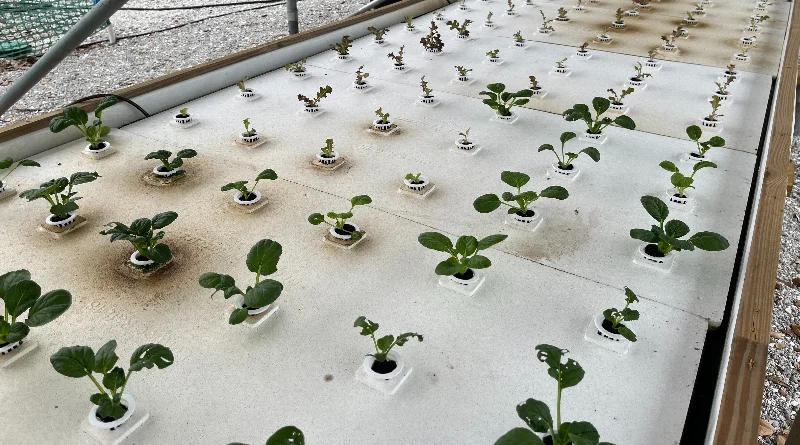
Beyond energy, the garden utilizes advanced biological filtration. An on-site aquaponics system features nearly fifty blue tilapia. The waste produced by the fish is processed by beneficial bacteria into nitrates and nitrites, which serve as a high-grade organic fertilizer for the plants. This symbiotic relationship between aquatic life and plant life reduces the need for synthetic fertilizers, further lowering the environmental footprint of the operation.
Sustainable Agriculture and Biological Pest Control
In keeping with its commitment to organic principles, the garden avoids the use of harsh chemical pesticides. Instead, the team employs a sophisticated strategy of biological control. As soon as crops begin to bloom, volunteers introduce ladybugs, lacy mites, and predatory mites. The larvae of these beneficial insects consume common garden pests, protecting the harvest without introducing toxins into the food supply.

The garden also utilizes "trap crops" like flowering hemp to attract and distract pests away from the primary vegetables. To bolster these efforts, the project is currently installing bat houses to encourage natural insect hunters to take up residence on the property.
Soil health is maintained through a combination of traditional 10-10-10 nutrient mixtures and intensive composting. The composting operation is divided into two distinct sections: one for yard waste and another for food waste. This allows local food kitchens to return their vegetable scraps to the garden, completing the "full circle" of the food system.
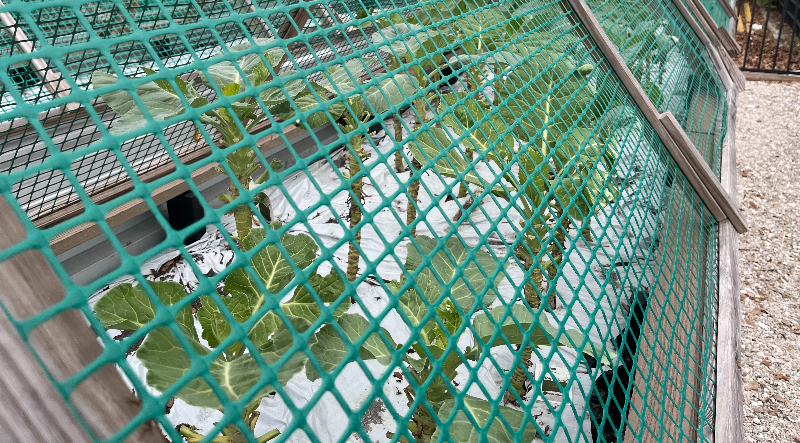
The crop variety is extensive, tailored to both the nutritional needs of the community and the realities of the Florida climate. Harvests include:
- Leafy Greens: Lettuce, Swiss chard, romaine, collard greens, kale, mustard greens, and cabbage.
- Cruciferous Vegetables: Broccoli and cauliflower.
- Nightshades and Others: Tomatoes, tomatillos, eggplant, peppers, and okra.
- Legumes and Roots: Beans, and experimental crops of beets and onions.
Navigating the Sub-Tropical Environment
Growing food in southeastern Florida presents unique challenges, from the intense summer heat to the local wildlife. The "Peacock District" is named for the feral peacocks that roam the streets—descendants of birds that escaped a private enclosure decades ago. While aesthetically pleasing, these birds are notorious for raiding gardens. To counter this, the garden is protected by "peacock-fencing." Interestingly, peppers and tomatoes act as natural deterrents to the birds, and neighbors are encouraged to reach through the fence to pick peppers, fostering a sense of shared ownership and security.

The growing season in Fort Pierce is also inverted compared to northern climates. To address the "summer slump" where temperatures are too high for many plants to set fruit, the project is currently constructing a "hoop house." This structure will allow for year-round production by utilizing vertical hydroponics and climate control. The vertical systems will nurture leafy vegetables in nine-inch water beds, replicating the successful raised-bed models currently used outdoors.
The Human Element: A Volunteer-Driven Success
The operational backbone of Harvesting Hope & Seeding Solutions is its roster of 47 dedicated volunteers. Over the past twelve months, these individuals have donated more than 4,500 hours of labor. The volunteer force is notably skilled, including retired USDA workers and industry professionals like McBee, who bring a high level of technical expertise to the soil.

Maintenance and harvesting occur three days a week—Tuesday, Thursday, and Saturday. These sessions involve everything from "deadheading" flowers to "awakening" the beds in late summer with composted chicken manure and molasses. The process of "solarization"—where beds are flooded and covered with plastic to kill soil-borne pests through anaerobic heat—is a labor-intensive task that the volunteers manage with precision.
Broader Impact and the $2 Million Vision
The success of the garden has sparked a broader vision for the Avenue A corridor. Bernie McBee and the First Church leadership have proposed a $2 million expansion plan that would transform the site into a holistic community resource center. The plan includes the purchase of two adjacent buildings to create transitional housing—motel-style rooms for unhoused individuals—and a dedicated grocery store where garden produce can be distributed more efficiently.

Furthermore, the expansion would include a climate-controlled greenhouse and an additional solar system. In the event of a natural disaster, the site is designed to serve as an emergency hub. The existing 50-amp electrical infrastructure could support FEMA’s refrigerated RVs, providing a critical staging ground for relief efforts in a neighborhood that is often the last to receive aid during power outages.
Implications for Urban Planning and Policy
The Harvesting Hope & Seeding Solutions project offers a compelling case study for urban planners and policymakers. It demonstrates that food insecurity is not merely a logistical problem of "moving food from point A to point B," but a systemic issue that can be mitigated through localized production and renewable energy.
By utilizing "heirloom seeds" harvested on-site, the garden ensures genetic diversity and reduces reliance on commercial seed conglomerates. This focus on seed sovereignty, combined with energy independence and biological pest control, creates a resilient agricultural model that is less vulnerable to the "quadruple squeeze" of climate change, rising costs, nutritional decline, and supply chain fragility.
As the church bells of First Church gong the hour, they signal more than just the passage of time; they mark the progress of a community that has taken its food security into its own hands. With the continued support of partners like the USDA, Sarah’s Kitchen, and the Mustard Seed, the Harvesting Hope & Seeding Solutions garden is not just growing vegetables—it is growing a blueprint for a more sustainable and equitable future.
