

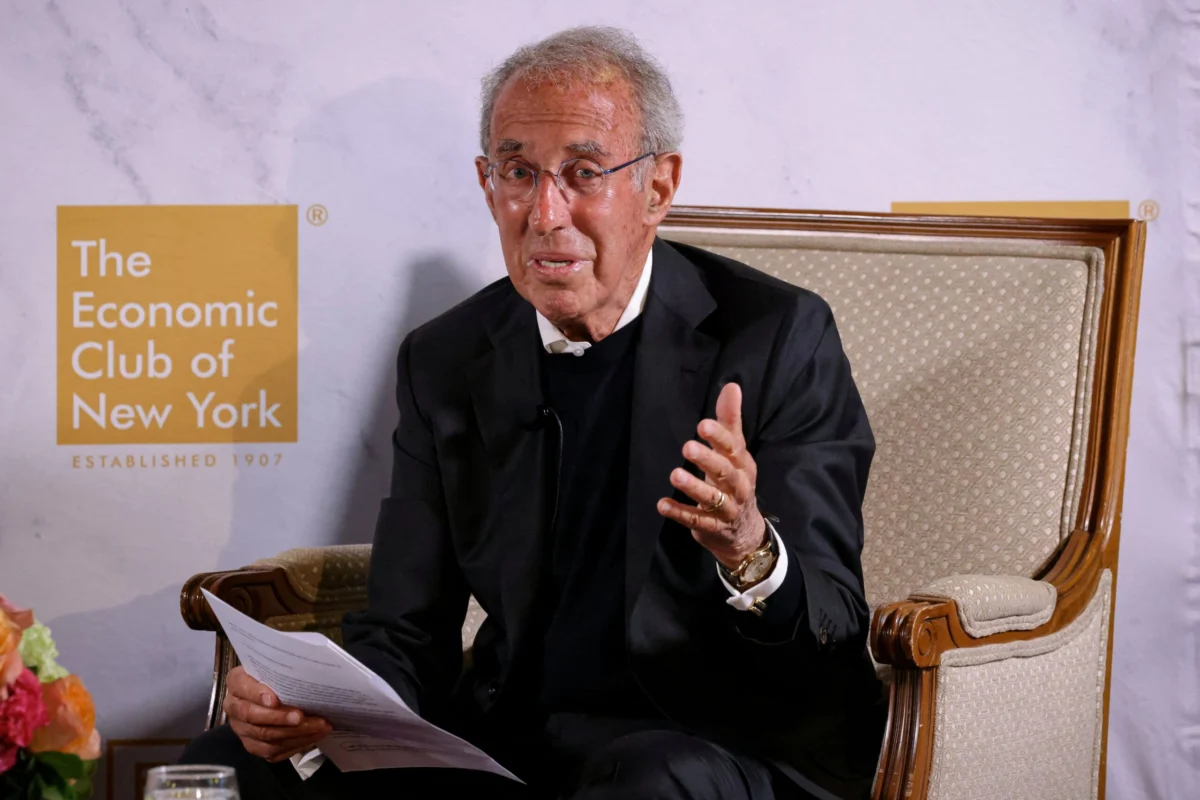
Veteran investor Ron Baron, a long-standing and ardent supporter of Elon Musk’s ventures, has significantly increased his firm’s stake in SpaceX, committing an additional $1 billion during the company’s recent stock-market debut. This substantial investment elevates Baron Capital’s total holdings in the pioneering rocket and satellite enterprise to approximately $25 billion, a move that underscores Baron’s unwavering confidence in SpaceX’s transformative potential, even as its valuation has soared to an unprecedented $2 trillion. The purchase was not merely an opportunistic trade but a strategic maneuver to maintain Baron Capital’s ownership percentage as SpaceX offered new shares to the public, preventing dilution of its deeply entrenched position.
A Decades-Long Vision for a Trillion-Dollar Future
Baron, speaking on CNBC’s "Squawk Box," articulated his extraordinary long-term vision for SpaceX, stating, "I think we’re going to make hundreds of billions of dollars." He passionately asserted SpaceX’s unparalleled technological lead, claiming, "What they’ve done isn’t possible for anyone else to accomplish. Not possible. And so he’s at least 10 years ahead of everyone else, as far as making satellites, as far as making rockets, as far as building networks." This perspective highlights Baron’s conviction that SpaceX’s innovation engine is operating on a different temporal plane compared to its competitors, creating a formidable barrier to entry and securing a dominant market position for the foreseeable future. His investment philosophy, clearly articulated, is centered on being a business owner rather than a short-term trader: "I’m an investor in a business. I’m not buying and selling or trading." This deep-seated commitment to long-term value creation is a hallmark of Baron Capital’s strategy, particularly evident in its extensive exposure to Musk-led companies.
Chronology of a Visionary Investment
Ron Baron’s journey with SpaceX began in 2017, a pivotal year when the company’s valuation stood at less than $22 billion. At that time, Baron Capital initiated its investment through employee tender offers, recognizing the nascent potential of a company that was still primarily known for its reusability breakthroughs with the Falcon 9 rocket. Since that initial foray, Baron Capital has consistently participated in SpaceX’s funding rounds, a testament to its continuous belief in the company’s trajectory and an active effort to deepen its stake. The firm has taken part in no fewer than 27 funding rounds, systematically increasing its exposure as SpaceX expanded its ambitions and capabilities. The latest $1 billion purchase on the day of the company’s "stock-market debut" — an event that, while not a traditional initial public offering in the sense of a widespread public listing, marked a significant liquidity event or direct offering that allowed existing shareholders to sell and new investors to buy into the company at a new valuation benchmark — was explicitly aimed at maintaining the firm’s proportional ownership. This strategic move underscores Baron’s commitment to riding SpaceX’s growth wave without ceding ground to new investors.
SpaceX’s Meteoric Rise and Market Context
SpaceX’s journey from a disruptive startup to a $2 trillion aerospace behemoth is a narrative of relentless innovation and ambitious execution. The company’s valuation surge places it among the world’s most valuable enterprises, a rarefied club typically reserved for tech giants like Apple, Microsoft, and Nvidia. This valuation reflects not just its current capabilities but the immense future potential embedded in its multi-faceted business model.
At its core, SpaceX has revolutionized space transportation with its reusable Falcon 9 and Falcon Heavy rockets, dramatically reducing launch costs and increasing access to space. This segment of the business has secured lucrative contracts with NASA, the U.S. Department of Defense, and numerous commercial satellite operators globally, establishing SpaceX as the undisputed leader in commercial launch services. The company’s ability to reliably and affordably send payloads to orbit has democratized space, enabling a new era of satellite deployment and scientific missions.
Beyond launch services, SpaceX’s Starlink division has emerged as a formidable player in the global internet connectivity market. Starlink, a constellation of thousands of low-Earth orbit (LEO) satellites, provides high-speed, low-latency broadband internet access to underserved and remote areas worldwide. As of early 2026, Starlink had reportedly surpassed several million subscribers globally, generating significant recurring revenue and demonstrating rapid expansion. The strategic importance of Starlink extends beyond commercial applications; its robust and resilient network has proven invaluable in critical situations, providing essential connectivity in conflict zones and disaster-stricken regions.

The company’s long-term vision is encapsulated in its Starship program, an ambitious endeavor to develop a fully reusable super heavy-lift launch system capable of carrying humans and cargo to the Moon, Mars, and beyond. Starship represents a paradigm shift in space exploration, promising to make interplanetary travel economically viable. While still in its intensive development and testing phases, successful prototypes and test flights have demonstrated Starship’s groundbreaking potential, capturing global attention and fueling investor excitement about humanity’s multi-planetary future.
Furthermore, SpaceX’s Crew Dragon spacecraft, developed under NASA’s Commercial Crew Program, has restored human spaceflight capabilities to the United States, regularly ferrying astronauts to and from the International Space Station. This capability solidifies SpaceX’s position not only as a cargo and satellite launch provider but also as a trusted partner in human space exploration.
Baron Capital’s Concentrated Bet on Musk’s Ecosystem
The depth of Baron Capital’s commitment to SpaceX is further illuminated by its significant allocation within its managed funds. As of March 31, SpaceX constituted a staggering 33% of the assets in the $10.4 billion Baron Partners Fund and 25.5% of the Baron Asset Fund. This represents an exceptionally high concentration for a single private company within diversified investment portfolios. Moreover, when combined with the firm’s substantial position in Tesla, another flagship company led by Elon Musk, approximately half of the assets in some Baron portfolios are now tied to companies under Musk’s direct leadership. This level of concentration is a clear reflection of Ron Baron’s profound conviction in Musk’s visionary leadership, his ability to execute audacious projects, and his capacity to disrupt multiple industries simultaneously. It also signals a high-stakes strategy, where the fortunes of a significant portion of Baron Capital’s assets are intrinsically linked to the performance and trajectory of a single, albeit highly influential, individual and his ventures.
The Visionary Economy: A Tenfold Expansion
Baron’s projections for SpaceX’s future valuation are nothing short of astounding. He anticipates that the company, currently valued at $2 trillion, could reach an astronomical valuation of $20 trillion, $30 trillion, or even $40 trillion within the next decade. To put this into perspective, a $40 trillion valuation would dwarf the current market capitalization of the entire S&P 500 and exceed the GDP of many major economies. This extraordinary forecast is rooted in Baron’s belief that Musk’s ambitions transcend traditional corporate growth. "Normally, our economy doubles roughly every 10 years," Baron noted. "What he thinks is, by the innovations and the work that he’s doing, he’s going to make the economy grow 10 times in 10 years, not double."
This statement reveals a deeper philosophical underpinning to Baron’s investment thesis: that Musk’s endeavors, particularly SpaceX’s ability to unlock new frontiers and provide foundational infrastructure for a space-based economy, will not merely participate in economic growth but will actively accelerate and exponentially expand the global economy itself. By making access to space cheaper, faster, and more reliable, SpaceX is opening up possibilities for new industries, resource utilization, and human expansion that were previously confined to science fiction. Starlink, for instance, is creating a global digital highway, enabling commerce and communication in previously disconnected regions, thereby expanding the effective reach of the global economy. Starship’s potential to enable lunar and Martian settlements could unlock entirely new economic ecosystems.
Implications and Broader Impact
Ron Baron’s latest investment in SpaceX, coupled with his staggering long-term projections, carries significant implications for the investment community, the aerospace industry, and the broader global economy.
- Validation of Private Market Valuations: The $2 trillion valuation achieved by SpaceX in a private or limited public offering underscores the immense capital flowing into innovative, high-growth private companies. This trend, often driven by institutional investors and high-net-worth individuals, allows companies to remain private for longer, accumulating significant value before a broader public listing. It also validates the aggressive valuation multiples applied to companies deemed truly disruptive.
- The Power of Visionary Leadership: Baron’s unwavering faith in Elon Musk highlights the enduring appeal and perceived value of visionary leadership. Musk’s track record of turning ambitious ideas into reality, despite numerous challenges and skeptics, has cultivated a unique level of trust and conviction among his most committed investors.
- Space as the Next Economic Frontier: The projected multi-trillion-dollar valuation for SpaceX signals a growing recognition among sophisticated investors that space is not merely a domain for government agencies but a burgeoning economic frontier. The commercialization of space, encompassing satellite services, space tourism, asteroid mining, and interplanetary colonization, is increasingly seen as a catalyst for unprecedented economic expansion.
- Concentration Risk and Reward: Baron Capital’s highly concentrated bet on Musk’s companies, while potentially yielding extraordinary returns if his vision materializes, also exposes its portfolios to significant concentration risk. Any major setback or challenge faced by SpaceX or Tesla could have a disproportionate impact on these funds. This strategy is a testament to Baron’s high conviction but also a reminder of the inherent risks associated with such focused bets.
- Competitive Landscape and Disruption: SpaceX’s dominance and technological lead are forcing competitors, both established aerospace giants and emerging startups (such as Blue Origin, United Launch Alliance, and Amazon’s Project Kuiper), to innovate at an accelerated pace. The company’s relentless pursuit of reusability and scale has redefined industry benchmarks, fostering a more dynamic and competitive space sector.
- Regulatory Scrutiny and Geopolitical Significance: As SpaceX’s influence grows, so too will regulatory scrutiny. Operating a global satellite internet constellation and developing advanced rocket technology involves navigating complex international regulations, spectrum allocation challenges, and geopolitical considerations. The dual-use nature of much of SpaceX’s technology (civilian and military applications) further elevates its strategic importance.
- Catalyst for Broader Economic Growth: If Baron’s projections for Musk’s impact on global economic growth even partially materialize, it could herald a new era of prosperity driven by technological breakthroughs and expanded human capabilities. Access to space resources, new forms of energy, and global connectivity could fundamentally alter existing economic structures and create unforeseen opportunities.
In conclusion, Ron Baron’s latest, substantial investment in SpaceX is far more than a simple financial transaction; it is a profound declaration of faith in a future shaped by audacious technological innovation and visionary leadership. His conviction that SpaceX will not only generate "hundreds of billions of dollars" but also catalyze a tenfold expansion of the global economy underscores the transformative potential he sees in Elon Musk’s multi-planetary ambitions. While the projections are staggering and the risks inherent in such a concentrated bet are considerable, Baron Capital’s steadfast commitment to SpaceX exemplifies a long-term investment philosophy focused on backing disruptive technologies poised to redefine humanity’s future. The journey of SpaceX, now valued at $2 trillion, continues to be one of the most compelling narratives in modern finance and technology, watched closely by investors and innovators alike.
