

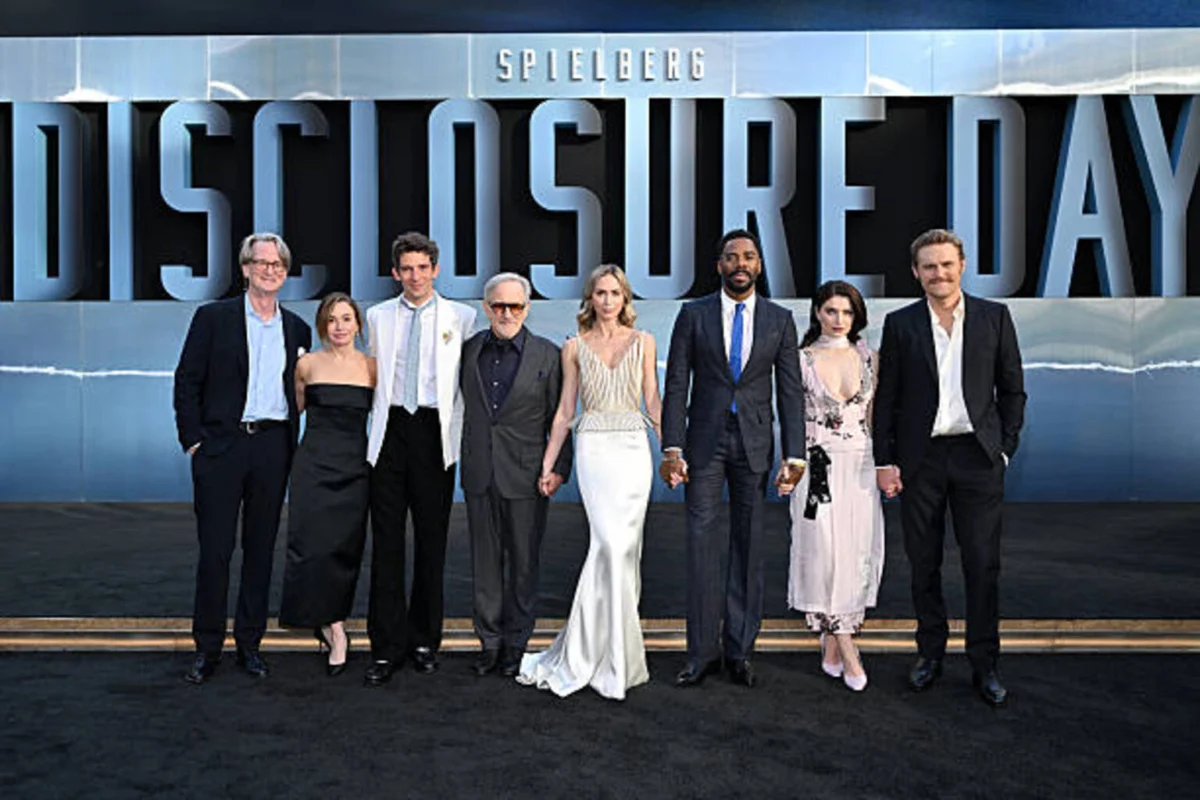
The legendary filmmaker Steven Spielberg has once again demonstrated his unparalleled ability to captivate audiences, as his latest original science-fiction thriller, Disclosure Day, debuted atop the North American box office this past weekend. The highly anticipated film garnered an estimated $44 million, marking a significant milestone as the largest opening ever for an original film directed by Spielberg. This impressive performance provides a much-needed shot in the arm for the theatrical exhibition industry, delivering a bona fide summer event picture that has resonated strongly with moviegoers. The success of Disclosure Day underscores the enduring appeal of original storytelling, especially when helmed by a master director, amidst a landscape increasingly dominated by established franchises and pre-existing intellectual properties.
Spielberg’s Enduring Legacy and the Power of Original Sci-Fi
Steven Spielberg’s name is synonymous with groundbreaking cinema, particularly within the science fiction genre. From the awe-inspiring wonder of Close Encounters of the Third Kind (1977) and the heartwarming adventure of E.T. the Extra-Terrestrial (1982) to the thrilling spectacle of Jurassic Park (1993) and the intense realism of War of the Worlds (2005), Spielberg has consistently pushed the boundaries of cinematic storytelling. His works have not only entertained millions but have also profoundly shaped the cultural consciousness, often exploring themes of discovery, humanity’s place in the universe, and the consequences of technological advancement. Disclosure Day joins this esteemed lineage, offering a fresh narrative that, by its very definition, does not rely on pre-existing fanbases, making its box office triumph all the more remarkable.
The film’s genre as a "science-fiction thriller" taps into a universal fascination with the unknown and the potential for high-stakes drama that often accompanies speculative narratives. Spielberg has a proven track record of blending compelling human stories with spectacular visual effects and suspenseful plotting, a formula that appears to have been perfectly executed in Disclosure Day. The concept of an "original film" is critical here; unlike many of his other blockbusters, which were adaptations (e.g., Jaws, Jurassic Park, Ready Player One), Disclosure Day represents a concept born purely from new creative vision. This emphasizes Spielberg’s confidence in fresh narratives and the studios’ willingness to invest in unique storytelling, a trend that many industry observers hope will continue.
Dissecting the Box Office Performance
The estimated $44 million opening weekend for Disclosure Day is not just a number; it is a testament to several factors converging positively. Firstly, it reaffirms Steven Spielberg’s unparalleled draw as a director. While some directors are known for their specific genre expertise or visual style, Spielberg consistently attracts audiences across demographics, an almost singular feat in contemporary Hollywood. His name alone signals a certain level of quality, spectacle, and emotional depth that audiences trust.
To put the $44 million in perspective for an "original" Spielberg film, one must look at his historical openings, adjusting for inflation and market conditions. E.T. the Extra-Terrestrial, for instance, opened to a modest $11.8 million in 1982 but went on to become a global phenomenon, demonstrating a different era of theatrical releases where films built momentum over weeks and months. Close Encounters of the Third Kind had a limited release in late 1977 before a wide release in 1978, generating a cumulative $116 million domestic. While direct comparisons across decades are complex due to inflation and evolving distribution models, the $44 million figure for Disclosure Day in today’s market, especially for a non-franchise entry, signifies strong immediate demand and effective pre-release buzz. It suggests that audiences were genuinely excited by the premise and the promise of a fresh, high-quality cinematic experience.
Industry analysts highlight that this opening is particularly robust given the current competitive landscape. Summer movie seasons are traditionally packed with tentpole releases, often sequels, prequels, or adaptations of comic books and video games. For Disclosure Day to emerge as the top earner against this backdrop suggests a successful marketing campaign by Universal Pictures and Amblin Entertainment, effectively communicating the film’s unique appeal and Spielberg’s involvement. The demographic breakdown, while not yet fully released, is likely to show a broad appeal, attracting both long-time Spielberg fans and younger audiences drawn to the thriller and science-fiction elements.
A Timely Boost for Theatrical Exhibition
The phrase "much-needed summer event picture" cannot be overstated. The theatrical exhibition industry has faced significant challenges in recent years, from the lingering effects of the global pandemic to the rise of streaming services and shifting consumer habits. While blockbusters have performed well, there has been a noticeable scarcity of original films breaking through to this extent, especially outside of established cinematic universes. Disclosure Day‘s performance signals a renewed public interest in the communal experience of cinema, particularly for films that offer a truly unique and compelling narrative.
Throughout the spring and early summer, while some films performed adequately, the overall box office has been yearning for a definitive "breakout hit" that could invigorate the market and remind audiences of the magic of the big screen. Disclosure Day appears to have filled that void, providing a compelling reason for moviegoers to leave their homes and immerse themselves in a cinematic event. This success is not just beneficial for Universal and Amblin, but also for theater chains, concessionaires, and the thousands of individuals employed in the exhibition sector. It sends a positive signal to studios that investing in original, high-quality content for theatrical release can still yield significant returns.
The Journey to the Big Screen: Production and Marketing
The development of Disclosure Day has been a closely watched project within Hollywood circles. While specific details about its genesis remain under wraps, it is understood that the concept was developed by Spielberg himself, or a close collaborator, before being brought to Universal Pictures and Amblin Entertainment. The production likely involved a substantial budget, typical for a Spielbergian sci-fi epic, encompassing state-of-the-art visual effects, a talented ensemble cast, and extensive post-production work. The image metadata itself, citing "Universal Pictures and Amblin Entertainment presents," confirms the key players behind the film’s realization.
The marketing campaign for Disclosure Day played a crucial role in its successful opening. Early teasers and trailers would have strategically built intrigue, showcasing Spielberg’s signature visual flair and the film’s compelling premise without giving away critical plot points. The campaign would have leveraged Spielberg’s name heavily, using it as a primary selling point, while also highlighting the film’s unique narrative and its potential for a thrilling, thought-provoking experience. Social media engagement, targeted advertising, and traditional media outreach would have all contributed to generating significant pre-release buzz, culminating in a strong opening weekend. The decision to release it during the competitive summer window also indicates confidence from the studio in its ability to stand out.
Industry Reactions and Analyst Perspectives
The strong opening for Disclosure Day has been met with enthusiasm across the industry. While no official statements from Steven Spielberg or specific studio executives were immediately available, the sentiment is overwhelmingly positive. A spokesperson for Universal Pictures would likely emphasize the studio’s commitment to visionary storytelling and the power of original content. They would probably highlight the collaborative effort that brought the film to fruition and express gratitude to audiences for their overwhelming support. Amblin Entertainment, Spielberg’s production company, would similarly take pride in delivering a film that resonates culturally and commercially.
Film industry analysts have been quick to dissect the implications of Disclosure Day‘s success. "This is precisely the kind of outcome Hollywood needs to see," noted one prominent analyst, who wished to remain anonymous to speak freely on market trends. "It proves that audiences will still flock to theaters for an original story, especially when it’s crafted by a master like Spielberg. It’s a powerful counter-narrative to the idea that only franchise films can succeed on the big screen." Others pointed out the importance of the film’s quality. "Word-of-mouth will be crucial going forward," remarked another industry observer, "but a strong opening signals that the initial critical reception and audience sentiment are largely positive, which bodes well for its long-term theatrical run." Exhibitors, too, are likely breathing a sigh of relief. Representatives from major theater chains would emphasize the positive impact on their foot traffic and the overall health of the exhibition sector, underscoring the film’s role in drawing diverse audiences back to cinemas.
Broader Impact and Implications for Original Content
The success of Disclosure Day carries significant implications for the future of original content in Hollywood. For years, there has been a palpable concern that studios are becoming overly reliant on established franchises, reboots, and sequels, leading to a perceived lack of originality. The reasoning often cited is the lower financial risk associated with properties that already have a built-in audience. However, Disclosure Day‘s performance challenges this notion, demonstrating that audiences are hungry for fresh narratives, provided they are executed with vision and quality.
This success could encourage other studios to greenlight more original projects, especially those from esteemed filmmakers with a proven track record. It may also inspire a renewed focus on developing unique stories that can stand on their own merits, rather than fitting into a pre-existing universe. Such a shift could foster greater creative diversity in the film industry, offering more varied options for moviegoers and potentially leading to a new wave of cinematic innovation.
Moreover, Disclosure Day‘s performance serves as a powerful reminder of Steven Spielberg’s unique position in cinematic history. His ability to consistently deliver films that are both critical darlings and commercial successes is almost unparalleled. This latest achievement further cements his legacy as not just a technically brilliant director, but also a storyteller who understands the pulse of the audience and what truly moves them.
Looking Ahead: Potential for Awards and Cultural Impact
With a strong opening, the conversation around Disclosure Day will undoubtedly shift towards its potential for long-term box office success, critical acclaim, and even awards season recognition. The film’s strong start suggests good word-of-mouth, which is essential for sustaining theatrical runs beyond the opening weekend. Depending on its critical reception, it could be a contender for various accolades, particularly in technical categories given Spielberg’s known prowess in visual storytelling and production design.
Beyond the numbers and awards, Disclosure Day has the potential to leave a lasting cultural impact. Science fiction often holds a mirror to society, exploring contemporary anxieties and hopes through futuristic lenses. As a "thriller," it is likely to engage audiences not just intellectually but also emotionally, sparking discussions and interpretations that extend far beyond the cinema hall. Should the film maintain its momentum, it could join the ranks of Spielberg’s other iconic works, becoming a touchstone for future generations of filmmakers and audiences alike, further solidifying the importance of original, visionary storytelling in the ever-evolving landscape of global entertainment. The coming weeks will reveal the full extent of its global reach and its ultimate place in cinematic history, but for now, Disclosure Day has unequivocally delivered a triumph for original cinema and a much-needed jolt for the theatrical experience.
