

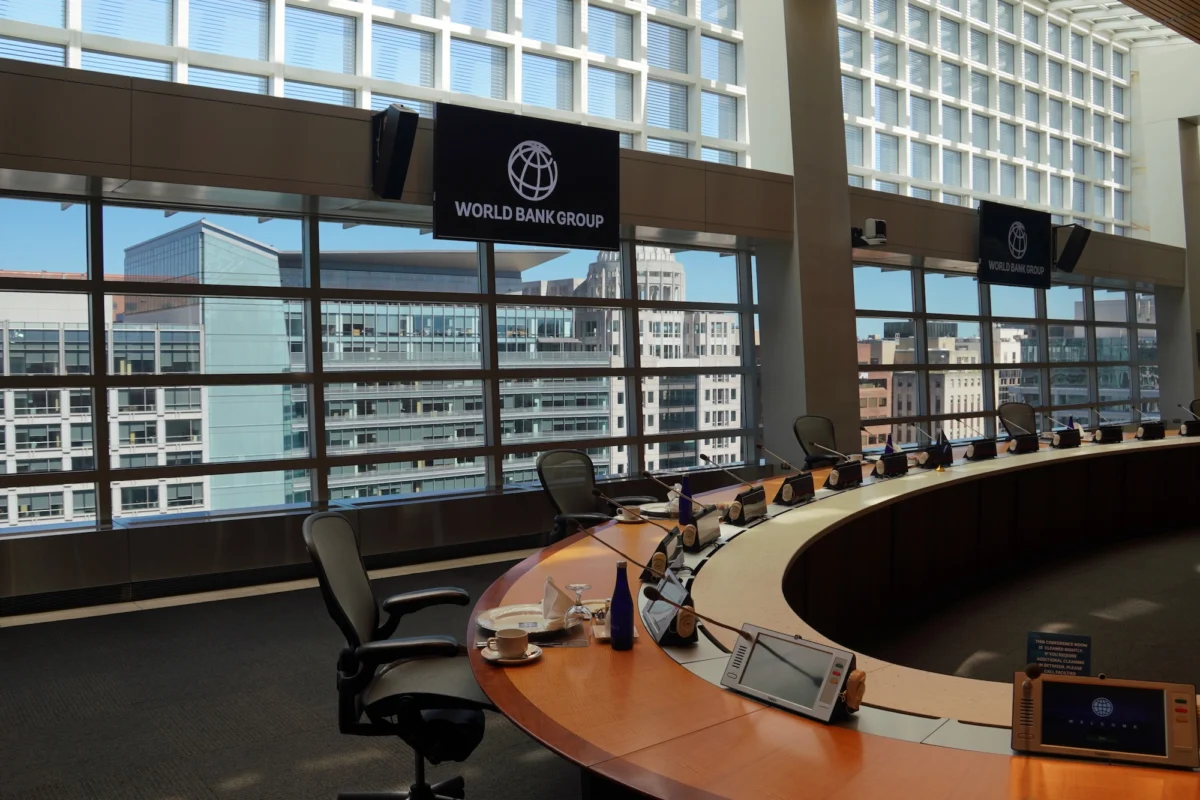
The World Bank Group is currently embroiled in a governance crisis following an unprecedented decision by its Board of Executive Directors to overrule the findings of its own independent accountability mechanism, the Office of the Compliance Advisor Ombudsman (CAO). This move, which centered on a systemic investigation into predatory microfinance practices in Cambodia, has triggered the resignation of the CAO’s Director General, Janine Feretti, and sparked a fierce backlash from over 100 civil society organizations worldwide. The controversy highlights a growing tension within the world’s largest development lender between the pursuit of operational efficiency and the mandate to protect vulnerable communities from the unintended harms of development finance.
At the heart of the dispute is the International Finance Corporation (IFC), the World Bank’s private sector arm, and its investments in six of Cambodia’s largest microfinance institutions (MFIs). A 2022 complaint filed by local human rights groups alleged that these investments led to widespread human rights abuses. Following a rigorous multi-year investigation, the CAO concluded that the IFC had violated its own social and environmental sustainability policies by failing to identify and mitigate the risks of predatory lending. However, in June 2024, the Board took the rare step of invalidating these findings, a move critics argue undermines the very foundation of the bank’s accountability framework.
Chronology of the Cambodian Microfinance Dispute
The path to the current crisis began in the early 2010s as the IFC significantly ramped up its exposure to the Cambodian financial sector, viewing microfinance as a primary tool for poverty alleviation and financial inclusion.
2012–2021: Rapid Expansion and Rising Debt
During this decade, Cambodia’s microfinance sector grew into one of the most concentrated in the world. By 2021, the sector held approximately $16 billion in outstanding loans, with the average loan size per borrower being one of the highest globally relative to per capita income. Reports from local NGOs began to surface, documenting a trend of "predatory" lending where land titles were used as collateral for small consumer loans.
May 2022: Formal Complaint Filed
Two Cambodian human rights organizations, LICADHO and Equitable Cambodia, filed a formal complaint with the CAO on behalf of affected borrowers. The complaint alleged that IFC-funded MFIs engaged in unethical collection practices, including forced land sales, and that the resulting debt traps led to food insecurity, child labor, and migration.
October 2023: CAO Investigation Findings
The CAO completed its investigation, determining that the IFC had failed to perform adequate due diligence. The watchdog found that the IFC was aware of the risks in the Cambodian market but continued to funnel capital into institutions that lacked sufficient consumer protection safeguards. The report recommended a comprehensive remedial action plan, including compensation for families who lost their land.
June 2024: Board Intervention and Resignation
The World Bank Board of Directors met to review the CAO’s report. In a move described by legal experts as "unprecedented," the Board rejected the CAO’s conclusions. They argued that microfinance activities did not fall under the strict jurisdiction of the IFC’s Sustainability Framework in the manner described by the CAO. Simultaneously, the Board authorized a "special" action plan that omitted many of the CAO’s core recommendations. Days later, CAO Director General Janine Feretti announced her resignation, citing the Board’s interference with the office’s independence.
Supporting Data: The Scale of the Cambodian Microfinance Crisis
To understand the weight of the CAO’s findings, one must look at the economic data characterizing the Cambodian microfinance landscape. Cambodia has approximately 2.8 million microfinance borrowers in a total population of 17 million. According to a 2023 study by the Royal University of Phnom Penh and international researchers, nearly two-thirds of households in certain provinces reported being "heavily" burdened by debt.
The IFC’s involvement is substantial. At the time of the complaint, the IFC had hundreds of millions of dollars committed to the six MFIs named in the investigation: ACLEDA Bank, Hattha Bank, AMK, Amret, LOLC, and Prasac. These institutions represent the lion’s share of the Cambodian market.
The human cost is equally quantifiable. The CAO investigation noted that in numerous cases, borrowers were forced to sell their primary residences or agricultural land to repay loans that often carried effective interest rates and fees exceeding 18%. The loss of land in a predominantly agrarian society directly correlates with the "hunger and increased suicide risks" cited in the watchdog’s report. Furthermore, the use of land titles as collateral for micro-loans—a practice discouraged in many other developing markets—became the industry standard in Cambodia, creating a systemic risk that the CAO argued the IFC should have addressed.
Institutional Responses and the "Efficiency vs. Accountability" Debate
The World Bank Board defended its decision by framing it as a matter of institutional clarity. In an official statement, the Board suggested that the CAO had overstepped its mandate by applying broad sustainability standards to specific financial intermediary (FI) investments in a way that would make development lending prohibitively slow or legally risky.

The IFC Management’s response to the CAO findings argued that the institution had followed standard industry practices and that the problems in Cambodia were the result of macroeconomic factors beyond their control. They emphasized the bank’s "evolution" towards a "bigger and better" bank, a strategy championed by World Bank President Ajay Banga, which focuses on mobilizing private capital at scale and speed to meet climate and development goals.
However, civil society experts, including Stephanie Amoako and Megan Pearson of Accountability Counsel, argue that this is a "false choice." They contend that accountability is not a barrier to efficiency but a prerequisite for sustainable development. In a joint statement, over 100 organizations noted: "If the IFC is afraid of receiving many complaints, it indicates that its current microfinance activities are neither efficient nor effective. Restricting the ability of communities to spotlight harm is counterproductive."
The resignation of Janine Feretti has particularly alarmed the international community. As the head of the CAO, Feretti was seen as a bulwark for the rights of the poor. Her departure signals a potential shift in the bank’s internal power dynamics, where the Board may be seeking to exert more direct control over supposedly independent watchdogs.
Broader Impact: The Erosion of Global Safeguards
The Cambodian case is not an isolated incident but part of a broader trend toward "accountability carveouts" at the World Bank Group. Analysts point to several recent policy shifts that suggest a systemic retreat from rigorous oversight:
1. The Mutual Reliance Framework
The World Bank has recently entered into "Full Mutual Reliance Frameworks" with other development finance institutions (DFIs), such as the Asian Development Bank. While these agreements are intended to reduce "red tape" by allowing projects to follow a single institution’s standards, they often restrict affected communities to only one accountability mechanism. If a community is barred from the World Bank’s CAO because the project is technically being led by another DFI with weaker standards, their path to remedy is significantly narrowed.
2. The Bhutan Hydroelectric Precedent
Earlier in 2026, the Board approved a hydroelectric project in Bhutan co-financed by the bank’s public and private arms. In this instance, the Board granted specific waivers that stripped affected communities of their right to access the CAO. The project was marketed as a success of the "One World Bank" approach, which seeks to integrate different arms of the bank to streamline operations, but critics see it as a blueprint for bypassing environmental and social scrutiny.
3. Integration and Dilution of Mechanisms
The bank is currently in the process of integrating the CAO with other accountability mechanisms that cover public sector investments. While the bank has pledged a principle of "no regression"—meaning protections should not be weakened—the current recruitment process for the new head of this integrated mechanism has raised red flags. Unlike previous searches, the current process does not include civil society stakeholders on the selection committee and allows current World Bank staff to apply, which could compromise the independence of the role.
Implications for the Future of Development Finance
The fallout from the Cambodian microfinance decision has significant legal and reputational implications for the World Bank. Historically, international financial institutions have enjoyed a high degree of legal immunity in national courts. This immunity is often predicated on the existence of robust, internal "grievance redress mechanisms" like the CAO. If these mechanisms are seen as no longer independent or capable of providing remedy, the bank may face increased litigation in domestic courts across the globe.
Furthermore, the decision risks alienating the very communities the World Bank seeks to serve. If the "Evolution Roadmap" of the bank prioritizes the speed of capital disbursement over the safety of the recipients, the "impact" the bank seeks to achieve may be overshadowed by the social unrest and poverty it inadvertently creates.
To restore trust, civil society leaders suggest that the World Bank must ensure its new integrated accountability mechanism covers all institutional activities without "sectoral carveouts" like the one applied to microfinance. They also call for an explicit "remedy mandate," ensuring that when harm is found, the bank is obligated to facilitate financial or material restitution to the victims.
As the World Bank continues its structural evolution, the Cambodian case remains a stark reminder that in the world of high-finance development, the distance between a "poverty-alleviating loan" and a "predatory debt trap" is often measured by the strength of institutional accountability. Without a course correction, the "unprecedented" decision of June 2024 may become a dangerous new standard.
