

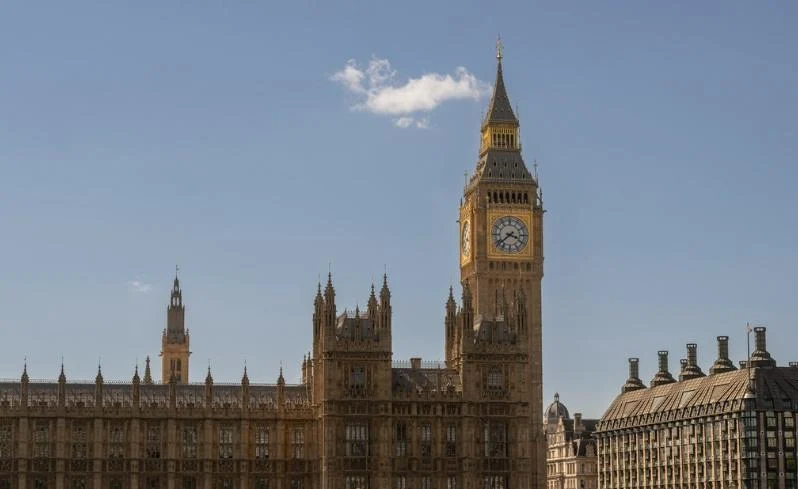
The United Kingdom government has formally committed to a landmark investment in the Tropical Forests Forever Facility (TFFF), a pioneering global fund led by Brazil designed to revolutionize the way the international community finances the protection of the world’s most critical carbon sinks. Announced in London on September 4, 2026, the commitment involves a £400 million (approximately $540 million USD) loan aimed at scaling up the preservation of tropical and subtropical broadleaf moist forests. This move signals a significant shift in the UK’s approach to international climate finance, transitioning from a traditional grant-based donor model to a more sustainable, investment-oriented strategy.
The TFFF, which was first introduced to the world stage during the COP30 climate summit in Belém, Brazil, in November 2025, serves as a specialized financial mechanism to provide long-term, predictable funding to countries that successfully maintain their forest cover. Unlike previous initiatives that often relied on short-term pledges or complex carbon credit markets, the TFFF seeks to create a permanent endowment-style structure that rewards conservation results through direct, performance-based payments.
A Strategic Pivot in Climate Finance
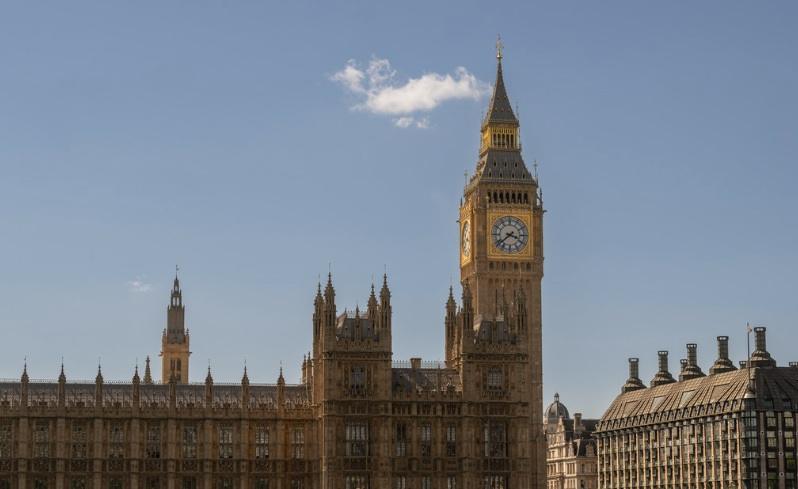
The UK’s decision to structure this £400 million contribution as a loan rather than a grant is a cornerstone of its "investor-first" climate strategy. In a statement to the House of Commons, Katie White, the UK Minister of State for Energy Security and Net Zero, emphasized that this approach ensures the longevity of the capital while aligning the interests of public and private sectors. Under the TFFF model, forest-rich nations are not burdened with the debt; instead, the facility itself manages the capital to generate investment returns. These returns, bolstered by private market borrowing, are then used to pay sovereign states for every hectare of forest they protect.
This "investor instead of donor" philosophy is intended to address a long-standing criticism of international climate aid: the lack of consistency. By treating forest preservation as a valuable asset class, the UK and its partners hope to mobilize the $4 billion annually that experts believe is necessary to halt global deforestation by 2030. The loan remains subject to final due diligence, which will scrutinize the facility’s governance, the specific terms of the credit arrangements, and the rigorousness of its monitoring protocols.
The Origins and Mechanism of the TFFF
The Tropical Forests Forever Facility was born out of a collaboration between the Brazilian government, led by President Luiz Inácio Lula da Silva, and several international financial institutions. Brazil, home to the largest portion of the Amazon rainforest, argued at COP30 that the world must pay for the "environmental services" provided by standing forests.
The mechanism is elegantly simple in theory but technically sophisticated in practice. Participating countries receive annual payments based on the total area of tropical forest they preserve. To ensure transparency and prevent fraud, the TFFF utilizes high-resolution satellite imagery and independent verification to confirm that the forest cover remains intact. If a country experiences deforestation, its payments are reduced or suspended, creating a direct financial incentive for local governments to enforce environmental laws and support sustainable land-use practices.
The facility targets the world’s most vital "green lungs," including the Amazon Basin in South America, the Congo Basin in Africa, and the vast rainforests of Southeast Asia. These regions are not only essential for biodiversity but are also critical for global weather patterns and carbon sequestration.
The Environmental Imperative: Forests as Global Infrastructure
The UK’s investment comes at a time of increasing environmental urgency. In her address to Parliament, Minister Katie White highlighted the immediate domestic impacts of global climate instability. The summer of 2026 saw record-breaking heatwaves and devastating wildfires across the British Isles, phenomena that scientists increasingly link to the loss of tropical forests thousands of miles away.
Tropical forests absorb approximately 30% of global greenhouse gas emissions each year. When these forests are cleared for agriculture or mining, they not only stop absorbing carbon but also release centuries of stored CO2 back into the atmosphere. The "tipping point" theory—the idea that the Amazon could eventually transition into a dry savanna if deforestation continues—poses an existential threat to global climate stability. By supporting the TFFF, the UK government is positioning forest preservation as a form of global infrastructure protection, essential for safeguarding British families and businesses from the escalating costs of climate-related disasters.

Chronology of the UK’s Commitment to Forest Preservation
The journey toward this $540 million loan began years ago, but the timeline accelerated significantly over the past 24 months:
- November 2021 (COP26, Glasgow): The UK leads the Glasgow Leaders’ Declaration on Forests and Land Use, where over 140 countries pledged to halt and reverse forest loss by 2030.
- August 2024: Brazil proposes a "Global Forest Fund" concept during G20 meetings, seeking a permanent financing structure rather than temporary aid.
- November 2025 (COP30, Belém): The Tropical Forests Forever Facility is officially launched. Brazil secures initial interest from several G7 nations, including the UK, France, and Germany.
- Early 2026: The UK Department for Energy Security and Net Zero begins a deep-dive assessment into the financial viability of the TFFF’s loan-based model.
- September 4, 2026: The UK government announces its intention to provide £400 million in financing, marking one of the largest single commitments to the facility to date.
Supporting Data and Financial Projections
The financial logic of the TFFF is predicated on the "social cost of carbon." While the facility aims to mobilize $4 billion a year, the economic value of the ecosystem services provided by these forests is estimated in the trillions.
Data from the World Resources Institute (WRI) suggests that every dollar invested in tropical forest protection yields at least $5 to $30 in economic benefits, ranging from flood control and water purification to agricultural stability. For the UK, the £400 million loan is a calculated risk aimed at preventing the much higher costs of future climate adaptation. If the TFFF reaches its $4 billion annual goal, it could effectively protect over 1 billion hectares of tropical forest, sequestering billions of tons of carbon dioxide over the next decade.
Furthermore, the "performance-based" nature of the fund is supported by advancements in remote sensing. Companies like Planet and governmental agencies like NASA now provide daily satellite updates, allowing the TFFF to adjust payments with a level of precision that was impossible during the early days of carbon offsetting in the early 2000s.
Official Responses and Global Implications
The announcement has been met with cautious optimism from international environmental organizations and political leaders. Brazilian officials welcomed the UK’s move, viewing it as a validation of their leadership in the Global South. A spokesperson for the Brazilian Ministry of Environment stated that the UK’s "investor" approach provides the kind of market signal needed to attract institutional investors, such as pension funds and sovereign wealth funds, into the conservation space.

However, some NGOs have raised questions regarding the "due diligence" phase. Climate activists have called for strict safeguards to ensure that the payments reach indigenous communities and local forest guardians, who are often the most effective protectors of the land but are frequently sidelined in high-level financial agreements.
From a geopolitical perspective, the UK’s investment strengthens its ties with Brazil and other forest-rich nations in the "Global South." It also sets a precedent for other wealthy nations. If the TFFF model proves successful, it could replace the fragmented and often volatile voluntary carbon markets with a more robust, state-backed system of environmental credits.
Future Outlook: Toward 2030 and Beyond
As the UK moves toward its own 2030 climate targets, the success of the Tropical Forests Forever Facility will be a litmus test for the viability of large-scale, performance-based climate finance. The £400 million loan is more than just a financial transaction; it is an experiment in whether the global capital markets can be successfully harnessed to protect the natural world.
The coming months will be critical as the final terms of the loan are negotiated. The world will be watching to see if the TFFF can maintain its momentum and whether other major economies will follow the UK’s lead in treating the world’s forests not as a charity case, but as a vital investment in a stable global future. Should the facility achieve its funding goals, it may well become the most significant tool in the global arsenal to combat the twin crises of climate change and biodiversity loss.
