

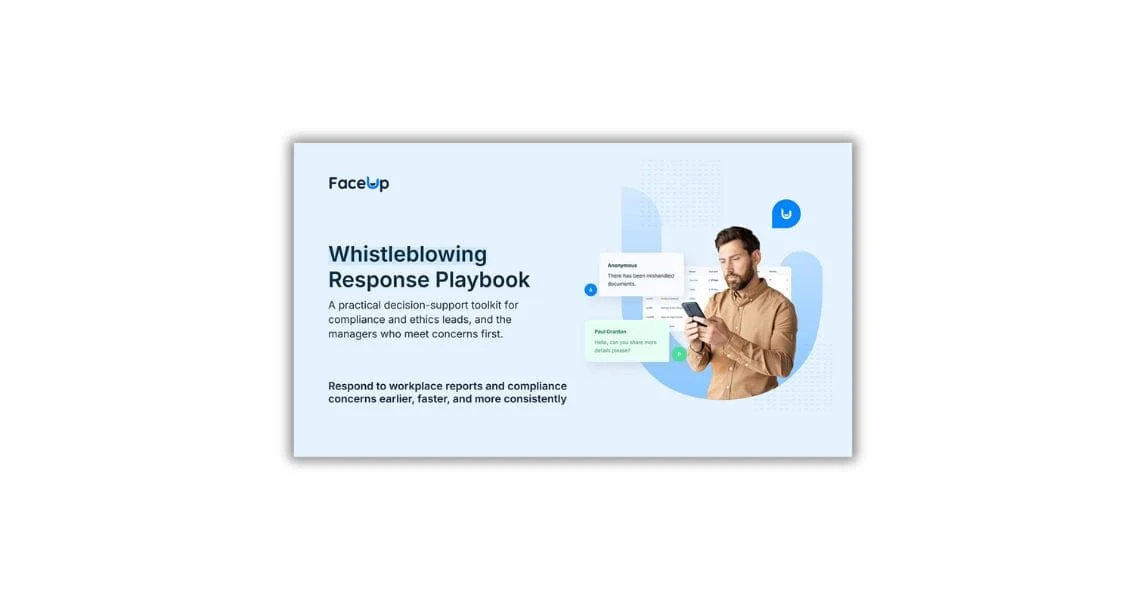
A critical juncture in organizational ethics and compliance often hinges on the initial response to a reported concern, a moment where a manager’s actions can determine whether an issue is addressed proactively or allowed to fester. FaceUp, a provider of ethics and compliance platforms, has released a new whitepaper, "The Whistleblowing Response Playbook," designed to equip compliance teams with structured strategies for navigating these pivotal moments. The document outlines a comprehensive approach to handling seven recurring situations encountered by compliance departments, providing a clear roadmap for response tiers, initial actions, escalation triggers, common organizational pitfalls, and essential questions for leadership.
The whitepaper underscores a critical, often overlooked, deadline: the 120-day window from an internal report to the potential for self-disclosure to the Department of Justice (DOJ). This timeframe is paramount for organizations aiming to mitigate penalties and demonstrate a commitment to remediation. The 14-page playbook is specifically tailored for compliance leads who, while ultimately responsible for the outcome, may not be privy to the initial interactions that set the course for an investigation.
The Crucial First Conversation: Managerial Discretion as a Compliance Bottleneck
The core premise of FaceUp’s playbook lies in the immediate aftermath of a concern being raised, typically with a line manager rather than directly with the compliance department. This initial interaction is presented as a critical inflection point. The whitepaper argues that the manager’s understanding of proper protocol, their willingness to engage constructively, and their ability to discern the gravity of the situation can dictate the entire trajectory of a case.
Historically, a lack of standardized training for managers on handling employee concerns has led to inconsistent responses. In some instances, concerns might be dismissed due to a manager’s personal relationships, a desire to avoid disruption, or simply a lack of awareness regarding the potential legal and reputational ramifications. This can result in issues being "quietly absorbed" – meaning they are not formally documented, investigated, or addressed, leaving the organization vulnerable to further escalation, regulatory scrutiny, or internal damage.
A Structured Framework for Seven Common Scenarios
FaceUp’s playbook addresses seven archetypal situations that compliance teams frequently encounter. For each scenario, the document provides a detailed framework:
- Response Tier: This categorizes the situation based on its potential severity and urgency, guiding the level of attention and resources required.
- First Actions: Clear, actionable steps are outlined for the manager or the immediate recipient of the concern, emphasizing prompt and appropriate engagement.
- Signals to Escalate Now: Specific indicators are identified that necessitate immediate escalation to the compliance department or higher authorities, such as evidence of fraud, harassment, or systemic policy violations.
- Common Organizational Mistakes: The playbook highlights recurring errors that organizations make in handling these situations, such as inadequate training, delayed investigations, or a lack of proper documentation.
- Question for Leadership: Each scenario is paired with a strategic question designed to prompt reflection and discussion at the leadership level, fostering a culture of accountability and continuous improvement in compliance practices.
This structured approach aims to move away from ad-hoc responses and towards a more predictable, defensible, and effective whistleblowing management system.
The 120-Day Deadline: A Stark Reminder of Regulatory Urgency
The whitepaper’s opening serves as a stark reminder of a critical regulatory deadline that many organizations may not fully appreciate: the 120-day period from the initial internal report to the potential for self-disclosure to the DOJ. This timeframe is particularly relevant in the context of investigations involving potential violations of federal laws, such as the Foreign Corrupt Practices Act (FCPA) or other anti-bribery and corruption statutes.
Self-disclosure can significantly influence the outcome of a government investigation. Regulatory bodies, including the DOJ, often provide leniency to companies that proactively report misconduct, cooperate fully with investigations, and implement robust remediation measures. Failing to meet this self-disclosure deadline can result in more severe penalties, including substantial fines, reputational damage, and potential debarment from government contracts.
The playbook’s emphasis on this deadline underscores the importance of swift and effective internal reporting and investigation processes. Delays in acknowledging, investigating, or reporting a concern internally can inadvertently lead to the forfeiture of opportunities for leniency. Compliance leads, therefore, must have mechanisms in place to ensure that reports are channeled efficiently and that investigations are conducted with the necessary speed and thoroughness to meet such critical timelines.
FaceUp’s Platform: Streamlining Ethics and Compliance for Lean Teams
The "Whistleblowing Response Playbook" is a product of FaceUp, a company specializing in ethics and compliance technology. FaceUp positions its platform as a solution designed for "lean teams," aiming to consolidate critical functions like report intake, investigation management, and case tracking into a single, integrated system.
A key selling point of the FaceUp platform is its purported speed of deployment and flexibility. The company claims that its system can be live within hours, requiring no extensive IT projects. Furthermore, it emphasizes the platform’s adaptability, allowing organizations to "reshape in minutes when the rules change." This agility is crucial in the dynamic landscape of compliance, where regulations and best practices are constantly evolving.
For compliance leaders, particularly those in organizations with limited resources, the ability to manage these complex processes efficiently and adapt quickly to new requirements is paramount. FaceUp’s offering aims to address these needs by providing a centralized, user-friendly, and adaptable tool for managing ethical conduct and compliance risks.
Background Context: The Evolving Landscape of Whistleblowing and Corporate Accountability
The increasing focus on whistleblowing frameworks and corporate accountability is not a new phenomenon, but it has intensified significantly in recent decades. Driven by high-profile corporate scandals, such as Enron, WorldCom, and the LIBOR scandal, regulators and the public have demanded greater transparency and ethical conduct from businesses.
Legislation like the Sarbanes-Oxley Act of 2002 in the United States, for example, mandated new standards for financial reporting and corporate governance, including provisions for whistleblower protection. More recently, the EU Whistleblower Directive, implemented across member states, has aimed to standardize and strengthen whistleblower protection mechanisms across the European Union.
These regulatory shifts have placed a greater onus on organizations to establish robust internal reporting systems and to take allegations of misconduct seriously. The potential for significant financial penalties, reputational damage, and even criminal charges for individuals involved in misconduct has made effective compliance programs a strategic imperative rather than a mere operational requirement.
The rise of sophisticated data analytics and the increasing interconnectedness of global business operations also contribute to this heightened scrutiny. Companies are now more exposed than ever to potential breaches of conduct, making the ability to detect, investigate, and remediate issues swiftly and effectively critical to their long-term viability.
Chronology of a Whistleblowing Event: From Initial Report to Resolution
While the FaceUp playbook focuses on the immediate response, understanding the broader chronology of a whistleblowing event provides crucial context:
- Initial Observation/Discovery: An employee or third party observes or becomes aware of potential misconduct.
- Reporting: The concern is reported through established internal channels (e.g., to a manager, HR, or a dedicated compliance hotline) or external channels (e.g., regulatory bodies).
- Acknowledgement and Initial Assessment (First Conversation): The recipient of the report acknowledges receipt and conducts an initial assessment of the concern’s nature and potential severity. This is where the FaceUp playbook’s emphasis lies.
- Triage and Escalation: Based on the initial assessment, the report is categorized, and if necessary, escalated to the appropriate internal parties, such as the compliance department, legal counsel, or internal audit.
- Investigation: A formal investigation is launched to gather facts, evidence, and witness statements. This may involve interviews, document reviews, forensic analysis, and other investigative techniques.
- Determination of Findings: The investigation concludes with a determination of whether misconduct occurred and, if so, its nature and scope.
- Remediation and Disciplinary Action: If misconduct is confirmed, appropriate corrective actions are taken, which may include disciplinary measures against individuals, policy revisions, or process improvements.
- Reporting to Authorities (if applicable): If the misconduct involves legal violations, the organization may need to report the findings to relevant regulatory or law enforcement agencies, potentially within specific statutory deadlines (like the 120-day DOJ window).
- Communication and Closure: Relevant parties are informed of the investigation’s outcome (within legal and privacy constraints), and the case is formally closed.
- Post-Resolution Review: The organization may conduct a review of the incident and the response to identify lessons learned and further enhance its compliance program.
Supporting Data: The Cost of Non-Compliance and the Benefits of Proactive Whistleblowing
The financial and reputational costs associated with failing to address whistleblowing concerns effectively are substantial. While specific data points for every scenario are dynamic and context-dependent, general trends highlight the importance of proactive compliance:
- Regulatory Fines: In the US, for instance, penalties for violations of the FCPA can reach millions of dollars. In 2021, the DOJ reported recovering over $5 billion in settlements and penalties from corporate enforcement actions.
- Litigation Costs: Defending against lawsuits arising from internal misconduct, such as discrimination, harassment, or fraud, can incur significant legal fees and potential settlement payouts.
- Reputational Damage: Public exposure of ethical lapses can erode customer trust, damage brand equity, and lead to a decline in market value. A study by the Ponemon Institute found that the average cost of a data breach was $4.24 million in 2021, a figure that often includes reputational fallout.
- Employee Morale and Turnover: A culture that fails to address concerns can lead to decreased employee morale, increased absenteeism, and higher turnover rates, all of which impact productivity and profitability.
Conversely, robust whistleblower programs have demonstrated tangible benefits. Companies that actively encourage and protect whistleblowers often benefit from early detection of issues, preventing them from escalating into major crises. Furthermore, proactive self-disclosure and remediation, as facilitated by a well-managed whistleblowing process, can lead to reduced penalties from regulatory bodies.
Official Responses and Industry Reactions (Inferred)
While specific official statements directly referencing FaceUp’s whitepaper were not provided in the source material, the release of such a document is indicative of broader industry trends and concerns. Compliance officers, general counsel, and internal audit leaders are consistently seeking practical tools and guidance to navigate the complexities of modern compliance.
The emphasis on manager training and the critical first conversation aligns with feedback from regulatory bodies and compliance thought leaders. For example, the U.S. Securities and Exchange Commission (SEC) has consistently stressed the importance of a strong "tone at the top" and a culture of compliance, which inherently includes empowering and educating all levels of management.
Industry analysts and consultants in the governance, risk, and compliance (GRC) space would likely view such a playbook as a valuable resource. The focus on actionable steps and common pitfalls speaks to the practical challenges faced by compliance professionals daily. The inclusion of the DOJ’s 120-day self-disclosure deadline also reflects a growing awareness of the strategic implications of internal investigation timelines.
Broader Impact and Implications: Cultivating a Culture of Integrity
The implications of a well-executed whistleblowing response strategy, as advocated by FaceUp’s playbook, extend far beyond mere regulatory compliance. Such a strategy is fundamental to cultivating a robust culture of integrity within an organization.
When employees feel confident that their concerns will be heard, investigated impartially, and addressed appropriately, it fosters an environment of trust and psychological safety. This, in turn, can lead to increased employee engagement, loyalty, and a greater willingness to speak up about potential issues before they become systemic problems.
For leadership, adopting the principles outlined in the playbook signifies a commitment to ethical governance and a proactive approach to risk management. It demonstrates that the organization values transparency, accountability, and the well-being of its stakeholders. The questions posed to leadership within the playbook serve as catalysts for strategic discussions, encouraging a continuous evaluation of the organization’s ethical compass and its preparedness to confront challenging situations.
In conclusion, FaceUp’s "Whistleblowing Response Playbook" offers a timely and practical guide for organizations seeking to enhance their ethics and compliance programs. By providing a structured framework for managing common whistleblowing scenarios and highlighting critical regulatory deadlines, the whitepaper empowers compliance teams to navigate complex situations with greater confidence and efficacy, ultimately contributing to a more ethical and resilient corporate environment.
