

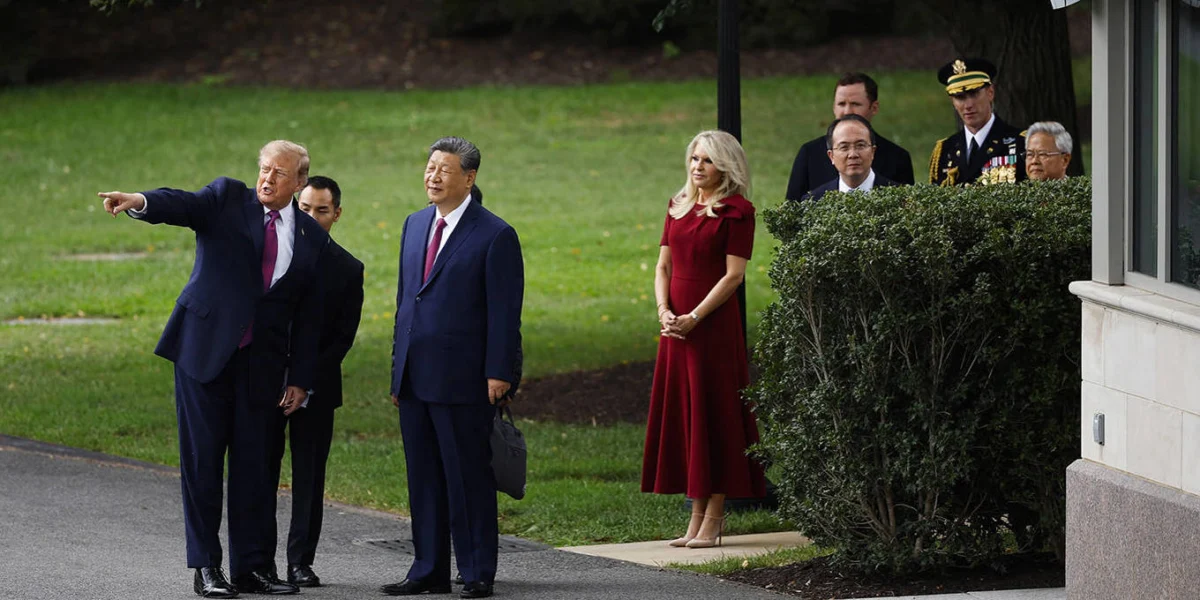
NEW HAVEN – The much-anticipated summit between United States President Donald Trump and Chinese President Xi Jinping, held on September 30, 2026, concluded with a palpable sense of anticlimax. While the diplomatic engagement itself was not entirely without merit, the event was widely perceived by observers as prioritizing symbolic gestures and ceremonial displays over substantive breakthroughs on critical bilateral and global issues. This imbalance, critics argue, highlighted a missed opportunity to address complex challenges that are increasingly shaping the international landscape.
The summit, a highly publicized event aimed at fostering dialogue between the world’s two largest economies, was characterized by an atmosphere that leaned heavily on diplomatic theater. President Trump’s public pronouncements, which included expressions of "heartfelt admiration" for President Xi, were met with a mixture of bewilderment and concern. These statements, according to geopolitical analysts, seemed to conflate the outward symbols of power with genuine influence and strategic leverage. The optics of the meeting, featuring elaborate protocols and carefully choreographed photo opportunities, overshadowed the lack of concrete agreements on pressing matters such as trade imbalances, the burgeoning field of artificial intelligence, the geopolitical sensitivities surrounding Taiwan, and China’s complex role in two distinct theaters of ongoing global conflict.
A Brief Chronicle of US-China Diplomatic Engagements
The roots of this summit can be traced back to a complex and often tumultuous period in US-China relations. The two nations have been engaged in a multifaceted rivalry, encompassing economic competition, technological development, and ideological differences. Previous high-level engagements, including numerous phone calls, video conferences, and face-to-face meetings since President Trump’s inauguration, had yielded mixed results. The period leading up to this particular summit was marked by escalating trade disputes, intellectual property concerns, and a growing awareness of China’s expanding military and economic footprint globally.
- Early 2017-2020: The initial years of the Trump administration saw a sharp escalation in trade tensions, characterized by the imposition of tariffs on billions of dollars worth of goods by both the US and China. Diplomatic efforts focused on de-escalating the "trade war," with limited success in achieving fundamental shifts in trade practices.
- 2020-2022: The COVID-19 pandemic introduced new layers of friction, with disputes over the origin of the virus and vaccine diplomacy. Simultaneously, concerns grew regarding China’s assertiveness in the South China Sea and its policies in Hong Kong and Xinjiang.
- 2023-2025: A period of cautious recalibration saw some efforts to stabilize the relationship, with high-level dialogues aimed at preventing miscalculation. However, underlying tensions persisted, particularly concerning technological competition, with the US implementing export controls on advanced semiconductors and other critical technologies. Discussions around China’s role in global supply chains and its Belt and Road Initiative also remained prominent.
- Leading up to September 2026: The announcement of the summit in late 2025 signaled a renewed, albeit guarded, attempt at direct engagement. Expectations were tempered by the ongoing geopolitical complexities and the divergent national interests of the two powers.
The Substance Gap: Key Issues Left Unaddressed
The primary disappointment of the summit lay in the absence of meaningful progress on several critical issues that demand urgent attention.
Trade and Economic Relations: Despite years of contentious trade negotiations, the fundamental issues of the bilateral trade deficit, market access for American companies in China, and intellectual property protection remained largely unresolved. While both sides acknowledged the importance of economic stability, no concrete steps were announced to address the persistent imbalances or to foster a more equitable trade environment. The United States has consistently voiced concerns over what it terms "unfair trade practices" by China, including forced technology transfer and state subsidies for domestic industries. China, in turn, has pointed to US trade barriers and restrictions on Chinese investment as impediments to a more balanced relationship. The summit failed to bridge this divide.
Artificial Intelligence and Technological Competition: The rapid advancement of Artificial Intelligence (AI) presents both immense opportunities and significant risks. The summit provided a platform to discuss the future of AI, but failed to yield any concrete agreements on ethical guidelines, data governance, or the potential for AI-driven geopolitical instability. Both nations are heavily invested in AI research and development, creating a competitive dynamic that could have profound implications for national security and global economic structures. The lack of a collaborative framework on AI risks a fragmented and potentially dangerous technological race. Data from the International Data Corporation (IDC) in 2025 indicated that global spending on AI systems was projected to reach over $500 billion by 2026, with both the US and China being the largest contributors and beneficiaries.
The Taiwan Question: The status of Taiwan remains a highly sensitive and volatile issue in US-China relations. While discussions undoubtedly touched upon the matter, no discernible shift in policy or rhetoric was evident. The United States maintains a policy of "strategic ambiguity" regarding its commitment to Taiwan’s defense, while China views Taiwan as a renegade province and has not ruled out the use of force to achieve reunification. Any perceived escalation of tensions around Taiwan could have catastrophic consequences for regional and global stability. The summit offered no new pathways for de-escalation or confidence-building measures concerning this critical flashpoint.
China’s Role in Global Conflict Zones: The summit also failed to elicit significant clarity or commitment from China regarding its role in two distinct theaters of ongoing global conflict. Without specifying which conflicts, the article implies that China’s actions or inactions in these regions are a source of international concern and that the summit did not provide the expected level of engagement on these issues. This could refer to ongoing proxy conflicts, the supply of materials to warring factions, or China’s broader geopolitical maneuvering in regions experiencing instability. The absence of a robust discussion on these matters leaves a significant void in addressing pressing international security concerns.
Expert Reactions and Analysis
Geopolitical analysts and foreign policy experts offered a range of perspectives on the summit’s outcomes. Dr. Evelyn Reed, a senior fellow at the Global Security Institute, commented, "While dialogue is always preferable to silence, this summit appears to have been a missed opportunity. The emphasis on ceremony over substance suggests a lack of genuine political will to tackle the most pressing challenges facing both nations and the world."
Professor Jian Li, a specialist in Sino-American relations at Peking University, noted, "The summit’s outcome reflects the deep-seated structural issues in the bilateral relationship. Both sides are grappling with domestic pressures and strategic imperatives that make bold concessions difficult. While the lack of concrete agreements is disappointing, the continued engagement itself is a small positive, preventing further deterioration."
Broader Impact and Implications
The perceived failure to achieve substantive outcomes at the US-China summit carries several significant implications for the international order:
- Erosion of Trust: When high-level diplomatic engagements prioritize optics over tangible progress, it can further erode trust between nations and within the international community. This can make future diplomatic efforts more challenging.
- Heightened Geopolitical Uncertainty: The lack of progress on critical issues like Taiwan and technological competition could contribute to increased geopolitical uncertainty and the potential for miscalculation.
- Impact on Global Governance: The inability of the two leading global powers to find common ground on issues like AI governance or conflict resolution can hinder the effectiveness of international institutions and global efforts to address shared challenges.
- Economic Ramifications: The absence of breakthroughs in trade could mean the continuation of existing economic tensions, potentially impacting global supply chains, investment flows, and economic growth.
The summit between President Trump and President Xi, therefore, serves as a stark reminder of the complexities inherent in managing the relationship between two global superpowers. While the dialogue itself is a necessary component of international diplomacy, its true value lies in its ability to translate into tangible progress that addresses the pressing challenges of our time. The September 2026 meeting, unfortunately, appears to have fallen short of that critical objective, leaving a world yearning for greater clarity and decisive action.
