

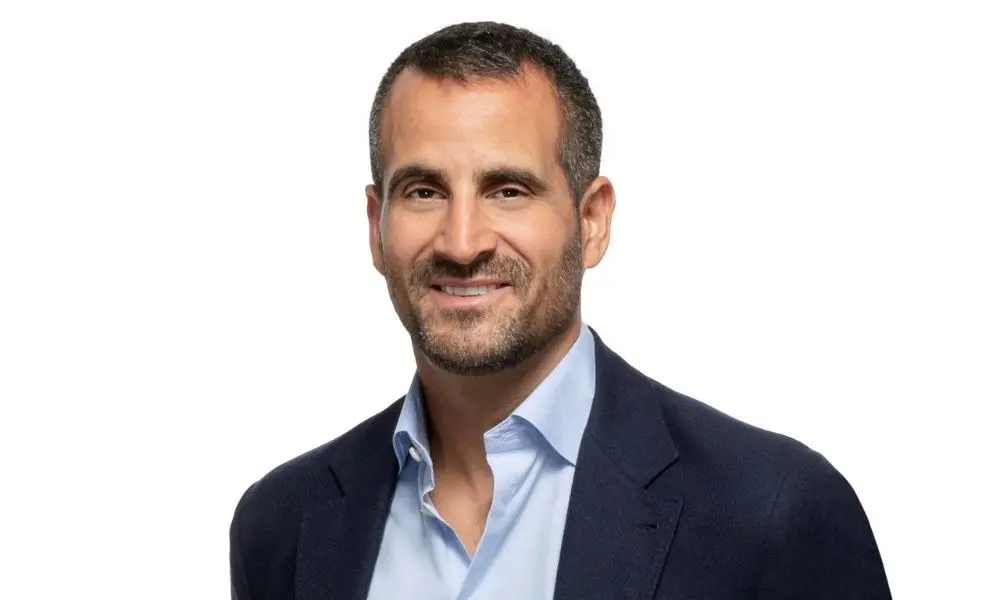
The fundamental question clients pose to their financial advisors, "Am I going to be okay?", is the bedrock of the advisory relationship. Yet, providing a definitive answer to this deeply personal query remains an enduring challenge within the wealth management industry. According to Som Seif, Founder and CEO of Purpose Unlimited, this difficulty is not a reflection of individual advisor shortcomings but rather a pervasive systemic issue. He attributes this friction to the industry’s historical evolution from a stock trading focus to its current, often uneasy, transition into a comprehensive financial planning discipline.
This inherent tension was starkly illuminated by the findings of the Canadian Momentum Project, a recent initiative by Purpose that surveyed Canadians, Canadian High Net Worth Investors, and Canadian advisors. The study revealed a significant demand for proactive wealth management. A substantial 70% of Canadians expressed a desire to actively participate in growing their wealth, while 67% sought knowledge on novel wealth accumulation strategies. Furthermore, an overwhelming 75% of respondents wished for financial strategies that ensured their money would last longer into retirement.
Advisors, in turn, mirrored this client ambition. An impressive 89% acknowledged the critical importance of financial planning and the creation of robust financial plans. However, the survey also exposed a significant operational gap: 63% of advisors reported that clients regularly require more support than current tools can effectively provide. Compounding this, 43% of advisors found it challenging to create truly tailored advice for each individual client. Seif posits that this disconnect between client aspirations and the current delivery of advisory services is a direct consequence of the industry’s historical underpinnings and its structural limitations.
"The industry itself is riddled with friction points," Seif stated in a recent address. "It has been an industry that has not prioritized innovation, nor has it emphasized operational rigor and structure to facilitate friction reduction. Consequently, it has not adequately supported the mechanisms necessary for end investors and advisors to deliver the desired value." He elaborated, "Advisors fundamentally aspire to provide greater value to their clients, but the prevailing operational model of the industry has confined them to the role of portfolio managers, leading with product rather than truly centering the client and addressing their long-term financial journey."
The Deep-Rooted Challenge of Answering the "Am I Okay?" Question
Seif attributes the difficulty advisors and clients experience in definitively answering the "Am I going to be okay?" question to the existing infrastructure within the wealth management sector. While acknowledging the industry’s progress in evolving advisors into planners, he highlights persistent technological hurdles that impede the ability to provide planning at scale. He observes that financial plans are frequently delivered as singular, transactional events, and subsequent client interactions often revolve around a series of account statements. These statements, while detailing investment returns and contribution limits, often fail to articulate how these components collectively contribute to the client’s overarching financial goals. The plan, intended as a snapshot answer to their fundamental question, is then followed by updates framed within the technical language and symbols of stock brokerage, creating a sense of detachment from the initial, holistic vision.
"What clients initially seek is a clear answer to their hierarchy of needs, which begins with, ‘let me know if I’m going to be okay.’ That is the paramount question they need answered," Seif emphasized. "The industry, both in how advisors communicate it to their clients and how investors perceive it, is not effectively delivering that assurance."
Seif argues that both clients and advisors desire a more "holistic" financial relationship. He envisions a scenario where advisors are equipped to engage with clients on a broader spectrum of their financial lives, encompassing daily spending habits, mortgage management, lines of credit, and all other facets of their financial ecosystem. Currently, however, he contends that advisors largely lack the necessary infrastructure to interact with clients beyond the confines of investment management. The systems and data required for this expanded engagement are conspicuously absent.
"This is why advisors often feel like they are working with one arm tied behind their back," Seif remarked.
The alienation clients feel from their financial plans is not the sole consequence of this siloed approach to financial services. Seif believes that because advisors remain deeply entrenched in investment management and product-centric frameworks, they often struggle to fully comprehend their clients’ evolving goals and life plans. Human lives are inherently dynamic, and as individuals change, advisors lack the agile tools necessary to update plans at the scale required for a thriving practice. This inadequacy, in turn, leads to a growing disconnect between the advisor and the client.
Addressing the Industry’s Structural Silos Through Innovation
On an individual and practice level, many advisors have attempted to surmount these challenges through various means. Some pursue additional credentials, such as a Certified Professional Accountant (CPA) designation, or expand their teams to incorporate a wider array of expertise. Seif, however, characterizes these as "band-aid solutions." He points out that many of these expanded teams often lack the necessary scale and capital to employ dedicated planners, insurance specialists, and estate planning experts, thus failing to address the root cause of the problem.
Seif advocates for solutions that originate from the back-end of the business, emphasizing the critical need for seamless data integration and the robust linkage between planning and portfolio management software. He believes that when these backend systems can communicate effectively and incorporate a deep understanding of the client’s individual circumstances, periodic statements can transform from abstract lists of accounts into genuine progress reports towards their most critical life goals.
This call for renewed investment in infrastructure and innovation arrives at a time when markets are experiencing historic highs and the wealth management industry is enjoying considerable prosperity. The sector has doubled in size over the past decade and shows signs of doubling again. Within this lucrative environment, large, established broker-dealers may not possess a strong incentive to undertake the significant investments required for such fundamental changes. However, Seif appeals to a higher principle of customer service and satisfaction, asserting that the industry’s current offerings are not yet fully meeting client expectations. He cites the rapid growth of Wealthsimple as a prime example of how a service demonstrably more attuned to customer satisfaction and experience can achieve significant market penetration and success.
"We are at a pivotal moment in Canada where our leaders are urging us to be more ambitious, our industry is calling for greater ambition, and Canadians themselves are demanding more," Seif stated. "I believe this represents a genuine call to action for us as an industry. Financial services play an indispensable role in the wealth creation of Canadians, and our country possesses a tremendous opportunity."
The Canadian Momentum Project, launched in the latter half of 2023, involved a comprehensive survey of over 2,500 Canadians, 500 High Net Worth Individuals, and 400 financial advisors across the country. The initiative aimed to uncover the evolving needs and expectations within the Canadian financial landscape. Preliminary findings, released in early 2024, have already sparked considerable discussion within industry circles regarding the future of financial advisory services.
The historical trajectory of the wealth management industry in Canada can be traced back to its roots in stockbroking and investment banking in the early to mid-20th century. For decades, the primary function of financial professionals was to facilitate the buying and selling of securities. The concept of comprehensive financial planning, encompassing retirement, estate, tax, and risk management, gained prominence in the latter half of the 20th century, spurred by regulatory changes and an increasing awareness of long-term financial needs. However, the technological infrastructure and business models of many legacy institutions have lagged behind this conceptual evolution.
The implications of Seif’s critique are far-reaching. If advisors are unable to provide clients with the assurance they seek, it could lead to increased client anxiety, reduced trust in the advisory profession, and a potential shift towards DIY investment strategies or alternative financial solutions. For the industry to thrive and truly serve the needs of Canadians, a fundamental reimagining of its operational framework and technological backbone is imperative. This requires a commitment to innovation, a client-centric philosophy, and the willingness to invest in the infrastructure that empowers advisors to deliver on their promise of financial security. The success of disruptors like Wealthsimple underscores the market’s readiness for change and the potential rewards for those who can effectively bridge the gap between ambition and execution in the realm of financial advice. The coming years will likely see a significant push for greater integration, personalization, and proactive engagement within the Canadian wealth management sector.
