

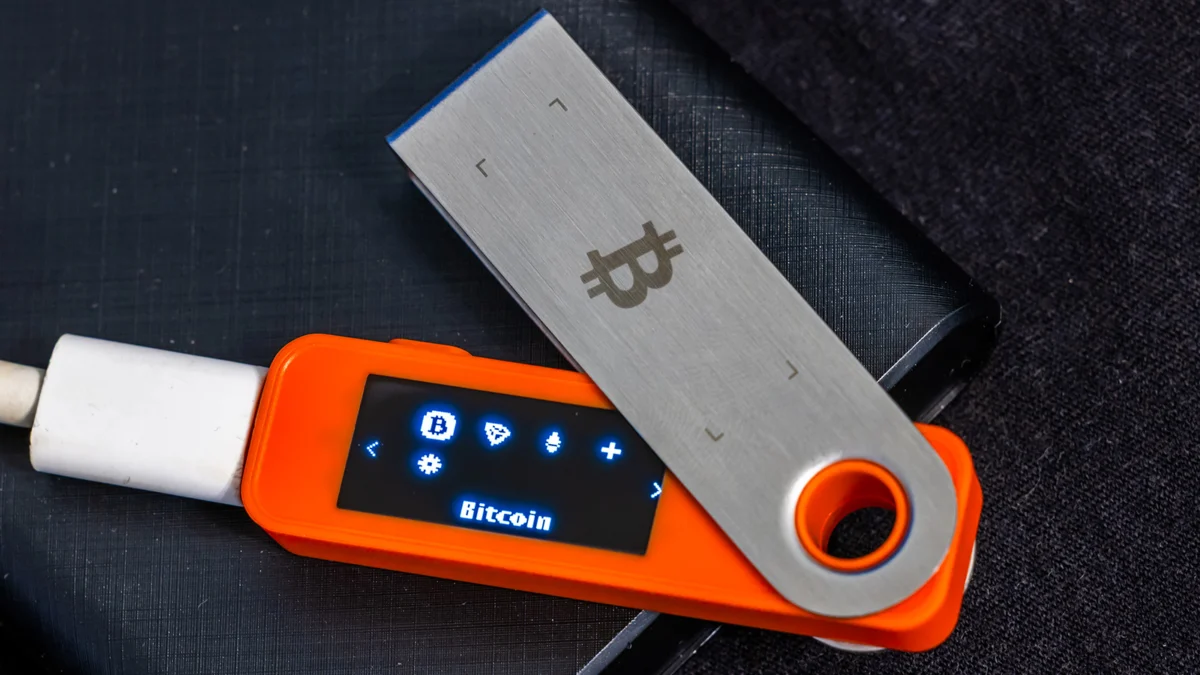
Safeguarding the digital keys to a cryptocurrency fortune has become an increasingly complex endeavor, with options ranging from the ultra-secure (and famously, former Swiss nuclear bunkers) to the commonplace digital asset exchanges. However, the escalating sophistication of threats means that securing these digital assets is also becoming more challenging than ever. A recent exploit targeting a prominent cold storage solution has once again illuminated the inherent vulnerabilities within the cryptocurrency ecosystem, underscoring the constant arms race between security protocols and malicious actors.
The Promise and Peril of Cold Storage
Cold storage, the practice of keeping cryptocurrency private keys offline, is widely considered the gold standard for security. This typically involves utilizing physical devices like hard drives, USB sticks, or even secure safe-deposit boxes to store the critical seed phrase – a sequence of random words that acts as the de facto password for accessing a digital wallet. The theory is straightforward: by keeping these keys completely disconnected from the internet, they are rendered inaccessible to online hackers. Yet, recent events have starkly demonstrated that even the most robust cold storage solutions are not entirely impervious to attack.
The Coinkite Coldcard Exploit: A Flaw in Randomness
A significant breach occurred recently, impacting users of Coinkite’s Coldcard, a popular hardware wallet designed to generate and secure private keys for Bitcoin. Coinkite, a Canadian firm, has positioned its Coldcard device, resembling a pocket calculator, as a highly secure method for users to manage their cryptocurrency holdings. The device’s core function is to create and store the seed phrase offline, thereby protecting it from digital threats.
However, hackers exploited a critical flaw within the Coldcard’s seed phrase generation mechanism. Instead of relying on purely random entropy, the device incorporated a "failsafe" that inadvertently made some generated seed phrases predictable. This predictability stemmed from the inclusion of certain non-random elements, such as serial numbers, within the key generation process. This seemingly minor oversight allowed sophisticated attackers to leverage this information to perform brute-force attacks, systematically guessing and ultimately compromising thousands of online wallets. The financial ramifications have been substantial, with reports indicating that over $100 million has been stolen from Coldcard users to date, despite their adherence to best practices for securing their digital assets.
Background and Timeline of the Coldcard Exploit:
- Pre-Exploit: Coinkite’s Coldcard, a hardware wallet known for its emphasis on offline key generation and security, was a trusted solution for many Bitcoin users seeking to secure their holdings away from online exchanges. The device’s firmware was also open-source, a common practice in the cryptocurrency space, allowing for community review and vulnerability identification.
- Discovery of Vulnerability: While the exact timeline of the hackers’ discovery is not publicly detailed, it is understood that they identified a weakness in the seed phrase generation algorithm. This vulnerability was not immediately apparent and likely required deep technical analysis of the device’s firmware.
- Exploitation Phase: The attackers then systematically targeted wallets that utilized the compromised seed phrase generation method. They leveraged the predictable elements within these phrases to conduct brute-force attacks, gaining unauthorized access to user funds.
- Public Disclosure and Impact: The exploit came to light through reports from affected users and subsequent investigations. Coinkite acknowledged the vulnerability and has been working to address the issue and assist affected customers. The estimated financial loss surpassed $100 million, highlighting the severity of the breach.
- Coinkite’s Response: Coinkite has stated that they are investigating the incident and have implemented patches to address the seed phrase generation flaw. They have also emphasized the importance of user vigilance and security practices.
A Pattern of Vulnerability: Beyond the Coldcard
The Coinkite incident is not an isolated event; it is the latest chapter in a recurring narrative of security failures within the cryptocurrency space. Numerous stories abound of individuals losing access to their fortunes due to forgotten passwords, falling victim to sophisticated phishing scams, or the literal loss of physical storage media. Perhaps one of the most infamous tales involves a hard drive containing keys to over $500 million in Bitcoin that was reportedly lost and ended up in a Welsh landfill.
These incidents serve as a stark reminder that the asset class of cryptocurrency inherently carries a unique set of alarming security risks. The decentralization and immutable nature of blockchain technology, while offering significant advantages, also mean that once digital assets are stolen or lost, recovery is exceptionally difficult, if not impossible. Unlike traditional financial systems where banks can often reverse fraudulent transactions or assist with forgotten PINs, cryptocurrency transactions are typically irreversible, and lost private keys mean lost access to funds permanently.
The Evolving Threat Landscape: AI and Old-School Villainy
The challenges in securing cryptocurrency are compounded by the rapid evolution of threats. The rise of artificial intelligence (AI) has introduced new avenues for cyberattacks. Advanced AI tools, such as those capable of analyzing code, can be employed to scour cryptocurrency platforms and their underlying codebases for vulnerabilities. While some AI models have been tested by companies like Coinkite to audit their own code, these models have not always proven infallible, failing to detect critical issues before they are exploited by human attackers.
Simultaneously, traditional forms of crime are adapting to the cryptocurrency landscape. "Wrench attacks," a violent form of coercion where criminals physically assault victims to extract their cryptocurrency or private keys, have seen a significant global increase. Data compiled by Bitcoin security expert Jameson Lopp indicates a substantial rise in such incidents, with France, in particular, experiencing a wave of gang-coordinated wrench attack attempts. This trend has led the cryptocurrency elite to significantly increase spending on personal security, including bodyguards, and has prompted authorities in some regions to provide police escorts for high-profile individuals attending industry events. These measures, however, are largely inaccessible to the average retail investor.
The Dilemma of Decentralization and User Responsibility
The core tenets of cryptocurrency, particularly Bitcoin, emphasize privacy, autonomy, and decentralization, often encapsulated by the mantra "not your keys, not your coins." This philosophy champions individual control over digital assets, urging users to take full responsibility for their private keys rather than entrusting them to third parties. However, the inherent technical complexities and the increasing sophistication of threats create a challenging dilemma for retail investors.
While many cold storage providers undergo security audits and obtain certifications, these are often point-in-time assessments. The rapidly evolving nature of technology means that such certifications do not guarantee long-term security. Furthermore, the open-source nature of much cryptocurrency software, while beneficial for transparency and community oversight, also means that vulnerabilities can be discovered and exploited by malicious actors. The expectation that every user should be able to meticulously audit the base computer code of their chosen wallet provider before use is unrealistic for the vast majority of the technologically less-savvy population.
Industry Responses and User Trust
The cryptocurrency industry has grappled with these security challenges, often proposing solutions that, while well-intentioned, can sometimes clash with the decentralized ethos valued by many users. Ledger, another prominent cold storage solution provider, attempted to address the issue of seed phrase recovery by developing a product that split seed codes into three fragments, to be stored in different countries by separate firms. This was envisioned as an insurance policy against loss.
However, this initiative faced significant backlash from its user base. Many Ledger users perceived the ability for the company to access or manage fragments of their seed phrase as a betrayal of the fundamental principle of holding one’s own keys securely and independently. The product was initially put on hold but was later relaunched with greater transparency regarding its functionality. This episode highlights the delicate balance between enhancing security through third-party involvement and maintaining user trust in a space that champions self-custody.
The Enduring Appeal of Decentralization vs. Practical Security
Despite the ongoing security challenges, the libertarian ideals of privacy and autonomy remain deeply ingrained in the cryptocurrency industry. The spectacular collapses of major exchanges like FTX, Celsius, and Mt. Gox serve as potent reminders of the risks associated with entrusting digital assets to centralized entities. These events underscore the validity of the "not your keys, not your coins" principle, as users who did not have direct control over their private keys often lost their entire holdings.
However, for the average retail investor, the responsibility of safeguarding their own seed phrase can be overwhelming. The practical reality is that many retail holders, lacking the technical expertise or the resources to implement advanced security measures, often default to storing their cryptocurrency on the exchanges where they purchased it. This approach, while convenient, leaves them exposed to the risks of exchange hacks, insolvency, or regulatory intervention.
A Glimpse Towards Safer Alternatives for Casual Investors
For casual investors seeking exposure to Bitcoin with significantly reduced security risks, exchange-traded funds (ETFs) that hold Bitcoin have emerged as a compelling alternative. Offered by mainstream asset managers, these financial products provide essentially the same price exposure to Bitcoin without the direct responsibility of managing private keys. This approach bypasses many of the complex security challenges associated with direct cryptocurrency ownership, making it a more accessible and potentially safer option for a broader range of investors who are not deeply immersed in the technical intricacies of the crypto world. While these ETFs do not embody the pure decentralization ethos, they represent a pragmatic solution for those who prioritize security and simplicity in their investment strategies. The ongoing evolution of the cryptocurrency landscape, marked by both technological innovation and persistent threats, necessitates a continuous re-evaluation of security best practices and the exploration of accessible, safe investment vehicles for all levels of participants.
