

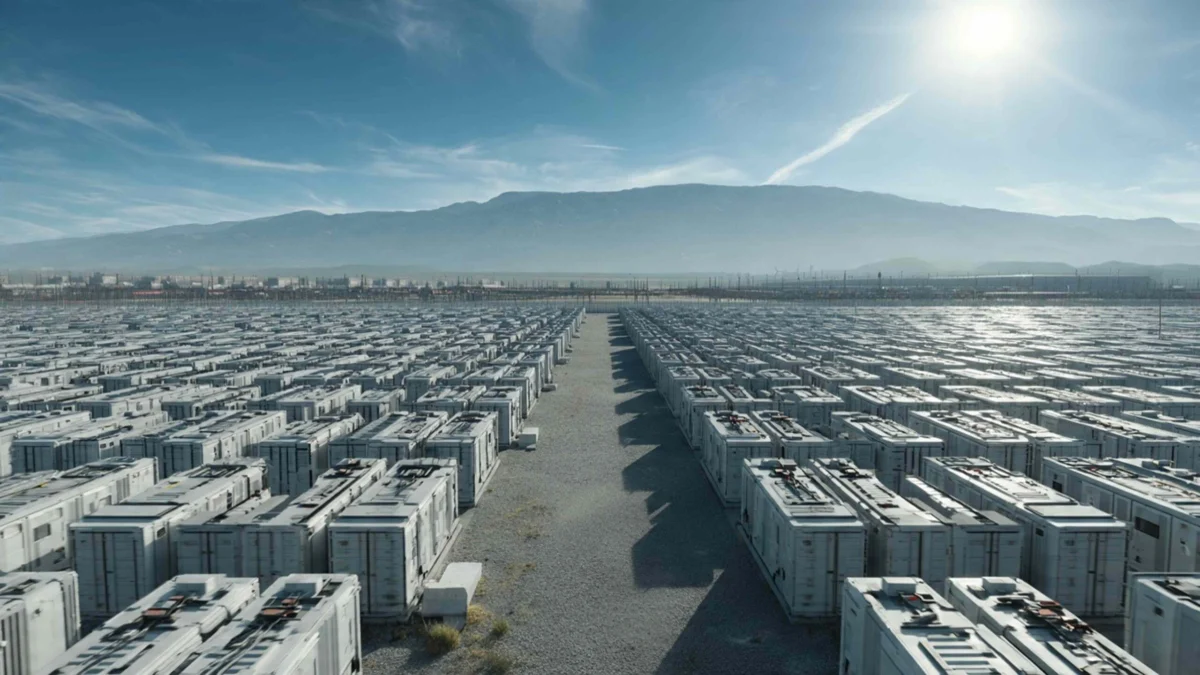
As the planet experiences increasingly frequent and intense heat waves, a critical component of the global energy transition is undergoing a fundamental evolution. Grid-scale batteries, once considered a niche supplement to traditional power generation, have emerged as the primary mechanism for stabilizing a modern energy system characterized by fluctuating renewable supply. However, as the limitations of current technology become apparent under the strain of extreme weather and surging industrial demand, a new generation of long-duration energy storage (LDES) solutions is moving from the laboratory to the front lines of the electrical grid.
For nearly a century, the backbone of the global electrical grid has been its transmission infrastructure—a vast network of high-voltage wires designed to carry power from centralized fossil fuel plants to distant consumers. Yet, this infrastructure is currently struggling to keep pace with the dual pressures of decarbonization and electrification. As transportation, heating, and industrial processes shift from fossil fuels to electricity, the demand for new power lines has created a massive backlog. In many regions, renewable energy projects face wait times of a decade or more to connect to the grid. In this context, battery storage has become an essential "bridge," capable of being deployed faster and more precisely than traditional transmission lines, particularly near high-demand hubs such as artificial intelligence data centers and electric vehicle manufacturing plants.
The Limitations of the Lithium-Ion Status Quo
The last five years have witnessed an unprecedented boom in grid battery capacity. According to data from BloombergNEF, global energy storage installations reached record highs in 2023 and 2024, with developers pushing massive utility-scale projects in the United States, China, South Africa, Chile, Canada, and Australia. To date, this growth has been almost entirely driven by lithium-ion technology, the same chemistry found in smartphones and electric cars.
Despite its success, lithium-ion storage faces significant hurdles in the context of a warming climate. A report by the International Energy Agency (IEA) highlights a critical vulnerability: most grid batteries deployed today are "short-duration," meaning they typically provide power for only two to four hours. While this is sufficient for smoothing out minor fluctuations in solar output or providing "frequency regulation," it is inadequate for supporting the grid through an entire night or during multi-day extreme weather events when wind and solar production may drop simultaneously.
Furthermore, prolonged and extreme heat is known to accelerate the degradation of lithium-ion cells. High ambient temperatures trigger chemical reactions within the battery that reduce its lifespan and efficiency, creating a paradox where the very technology needed to combat climate-driven energy surges is itself weakened by rising temperatures. These limitations have catalyzed a global race to develop and deploy "Long-Duration Energy Storage" (LDES)—technologies capable of discharging power for 10 hours, 100 hours, or even longer.
Iron-Air Technology: Reversing the Process of Rust
One of the most prominent players in the LDES space is the U.S.-based company Form Energy. The firm has developed a proprietary iron-air battery technology that offers a significant edge over lithium-ion: the ability to store and discharge electricity for up to 100 hours. This duration allows the grid to withstand "renewable droughts"—periods of several days where weather conditions prevent wind and solar from generating sufficient power.
The chemistry of the iron-air battery is elegantly simple, operating on the principle of reversible rusting. During the discharge process, the battery "breathes in" oxygen from the air, which reacts with metallic iron to create rust (iron oxide), releasing electrons in the process. When the battery is charged using surplus electricity from the grid, the process is reversed: an electrical current converts the rust back into metallic iron, and the battery "exhales" oxygen.
Form Energy’s transition from pilot to industrial scale reached a milestone in October 2024, when the company began production at its first high-volume manufacturing facility in Weirton, West Virginia. The choice of location is symbolic, as the plant sits on the site of a former steel mill, repurposing the infrastructure of the old coal-and-iron economy for the renewable future. The company is currently powering more than 75 gigawatt-hours of projects. Most notably, Form Energy has partnered with Xcel Energy to build what is projected to be the largest battery in the world by energy capacity in Minnesota. This project is specifically designed to support the 24/7 carbon-free energy goals of a Google data center, with delivery of the first modules expected by late 2028.
Advanced Compressed Air: Mining the Atmosphere
While iron-air batteries rely on chemical reactions, other innovators are looking toward mechanical solutions. Compressed air energy storage (CAES) is a technology with roots in the 17th century, but Toronto-based Hydrostor has modernized the concept into what it calls Advanced Compressed Air Energy Storage (A-CAES).
The A-CAES system functions as a massive "air battery" by utilizing underground rock caverns. During periods of low electricity demand, surplus energy is used to power a compressor that forces air into an underground cavern. This process typically generates heat, which Hydrostor captures and stores in a thermal management system. When the grid requires power, the compressed air is released and heated using the stored thermal energy, then passed through a turbine to generate electricity.
Hydrostor’s chief technology officer, Chris Phebus, explains that the system uses a hydrostatic compensation process. "The cavern operates at a fixed pressure band with the weight of a water column acting as a massive underground piston," Phebus noted in a recent technical brief. This allows the system to maintain steady power output throughout the discharge cycle.
The company’s facility in Goderich, Ontario, stands as the world’s first commercially contracted A-CAES project. Hydrostor is now scaling this technology with the Willow Rock Energy Storage Center in Kern County, California. In early 2026, the company signed a 50-megawatt offtake agreement with California Community Power, a coalition of non-profit public energy agencies. The Willow Rock facility is designed to provide eight hours of continuous, emission-free discharge, offering a scalable alternative to traditional pumped-hydro storage without the need for specific mountainous topography.
Carbon Dioxide Domes: A Closed-Loop Thermodynamic Solution
In Milan, Italy, the startup Energy Dome is taking a different approach by utilizing carbon dioxide (CO2) as a working fluid for energy storage. Unlike carbon capture technologies that seek to bury CO2 underground, Energy Dome uses the gas as a reusable medium in a closed-loop thermodynamic process.
When renewable energy is abundant, the Energy Dome facility uses electricity to compress CO2 from a near-atmospheric state into a high-pressure liquid. This process generates heat, which is stored. When the grid needs electricity, the liquid CO2 is evaporated using the stored heat, expanding back into a gas and driving a turbine. Because CO2 can be stored in a liquid state at ambient temperatures under relatively low pressure, it allows for a high-density energy storage system that does not require the specialized geological formations needed for compressed air.
Energy Dome’s primary hub in Piacenza is capable of storing 2,000 tons of CO2 daily. The company has attracted significant international attention, including a July 2025 partnership with Google to provide carbon-free energy for the tech giant’s operations. Furthermore, the firm is expanding into the United States through a partnership with Alliant Energy to build a 200-megawatt-hour facility in Columbia County, Wisconsin. Expected to be completed by late 2027, the project will be capable of powering approximately 18,000 homes for 10 hours on a single charge.
Sodium-Ion and Zinc: The Search for Abundant Materials
As the demand for batteries scales toward the terawatt-hour level, concerns regarding the supply chain for critical minerals like lithium, cobalt, and nickel have intensified. This has led to a resurgence of interest in sodium-ion and zinc-based chemistries.
China’s Contemporary Amperex Technology Co., Limited (CATL), the world’s largest battery manufacturer, is leading the charge in sodium-ion technology. Sodium is far more abundant and cheaper than lithium, and sodium-ion batteries can operate more effectively in cold temperatures. While they currently have lower energy density than lithium-ion, they are ideally suited for stationary grid storage where weight and volume are less restrictive than in a passenger vehicle. CATL is scheduled to enter commercial deployment of its first sodium-ion energy storage systems in September 2026, with shipments expected to reach one gigawatt-hour by the end of that year.
Similarly, Toronto-based e-Zinc is championing zinc-air technology. Zinc is a globally abundant, inexpensive, and recyclable metal. The e-Zinc system stores energy by using electricity to grow zinc metal onto electrodes; to discharge the energy, the zinc is dissolved back into the electrolyte. The company’s technology provides 10 to 100 hours of discharge and is positioned as a replacement for diesel generators in remote microgrids and industrial settings. In 2024, e-Zinc secured US$31 million in Series A2 financing and opened a pilot facility in Mississauga, Ontario, to validate its technology for commercial use.
Broader Implications and the Future of Grid Reliability
The shift toward long-duration energy storage represents more than just a technological upgrade; it is a fundamental reimagining of grid reliability. As coal and gas plants are retired, the "firm" capacity they provided must be replaced. Short-duration lithium-ion batteries have proven they can handle the "sprints"—the sudden spikes in demand—but the "marathons" of the energy transition require the LDES technologies currently coming online.
The economic implications are equally significant. By providing a way to store energy for days rather than hours, LDES can reduce "curtailment"—the practice of turning off wind turbines or solar panels when they produce more power than the grid can handle. This increases the overall efficiency and profitability of renewable energy assets.
Industry analysts suggest that the period between 2025 and 2030 will be the "deployment decade" for these technologies. With major tech companies like Google and utilities like Xcel Energy and Alliant Energy signing long-term contracts, the market for LDES is moving out of the venture-capital-funded pilot stage and into the mainstream of global infrastructure. While lithium-ion will likely remain the dominant choice for electric vehicles and short-term grid needs, the "backbone" of the future carbon-free grid will almost certainly be a diverse mix of iron, air, water, and carbon dioxide.
