

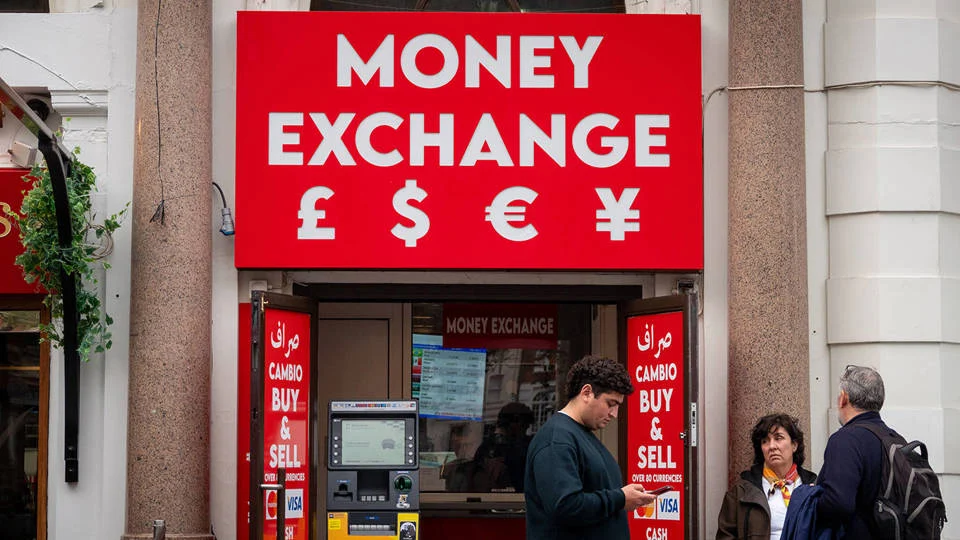
The global monetary order is fragmenting. Each use of financial sanctions by the United States raises the option value of an alternative to the dollar, making diversification a form of strategic insurance. But while managed diversification is healthy, a disorderly scramble for the exits would not be.
The Echo of Mundell’s Dream in an Era of Geopolitical Disruption
Discussions surrounding geopolitical fragmentation invariably bring to mind the enduring vision of the late economist Robert Mundell: the establishment of a single world currency. Mundell, a Nobel laureate often hailed as the "father of the euro," championed the concept of a global monetary union as a pathway to enhanced economic efficiency, reduced transaction costs, and greater price stability. His theoretical framework, which explored optimal currency areas and the benefits of fixed exchange rates, provided a powerful intellectual foundation for the aspirations of supranational monetary integration.
However, as nations increasingly grapple with the complexities of a world marked by resurgent geopolitical rivalries and the strategic deployment of economic tools, it is imperative for participants in these debates to ground their aspirations in the tangible, real-world experiences of existing monetary unions. The euro, now a quarter-century into its existence, offers a rich tapestry of lessons – both triumphant and cautionary – for any discussion about the future of global monetary architecture.
The Dollar’s Dominance Under Scrutiny: The Rise of Strategic Diversification
The United States dollar has long served as the de facto global reserve currency, a position cemented by its liquidity, the depth of U.S. financial markets, and historical geopolitical dominance. However, the increasing reliance on financial sanctions as a foreign policy tool has inadvertently amplified the perceived risks associated with dollar hegemony. When the U.S. imposes sanctions, it effectively cuts off access to the dollar-denominated financial system for targeted entities and nations. This action, while achieving immediate foreign policy objectives, also compels other countries to consider the "option value" of alternatives.
This increased option value translates into a strategic imperative for diversification. Countries are now more inclined to explore and develop alternative payment systems, reserve holdings, and trade invoicing mechanisms that are not solely reliant on the dollar. This is not necessarily a move towards outright de-dollarization, but rather a prudent strategy of "strategic insurance" against potential future disruptions or politically motivated economic actions. Managed diversification, in this context, can be seen as a healthy evolution of the global monetary system, fostering resilience and reducing systemic risk.
The Euro’s Genesis and Early Years: A Bold Experiment in Monetary Union
The creation of the euro was a monumental undertaking, born out of a desire for greater European integration and economic strength following decades of post-war reconciliation and cooperation. The Maastricht Treaty, signed in 1992, laid the groundwork for Economic and Monetary Union (EMU), setting out convergence criteria for inflation, government debt, budget deficits, long-term interest rates, and exchange rate stability that aspiring member states had to meet.
The official launch of the euro as an accounting currency occurred on January 1, 1999, with physical notes and coins entering circulation on January 1, 2002. This transition marked a watershed moment, replacing national currencies of twelve member states with a single currency. The initial years were characterized by a sense of optimism and a belief in the euro’s potential to foster unprecedented levels of trade, investment, and economic growth across the continent. The elimination of exchange rate volatility within the eurozone was expected to boost intra-European trade, reduce business costs, and enhance price transparency.
The Eurozone Crisis: A Crucible of Challenges
The euro’s resilience was put to its most severe test during the sovereign debt crisis that erupted in 2009-2010. The crisis exposed underlying structural weaknesses within the eurozone, particularly the inherent tension between a single monetary policy and diverse national fiscal policies. The inability of individual member states to devalue their currencies in response to economic shocks, coupled with significant fiscal imbalances accumulated during the preceding boom years, led to a cascade of sovereign debt defaults and a threat to the very existence of the single currency.
Key events during this period included:
- 2009: Greece reveals its budget deficit is far larger than previously reported, triggering a loss of market confidence.
- 2010: The European Financial Stability Facility (EFSF) is established to provide financial assistance to struggling eurozone members. Greece receives its first bailout package.
- 2011: Ireland and Portugal require bailouts. The European Central Bank (ECB) begins its Securities Markets Programme (SMP) to purchase sovereign bonds.
- 2012: Mario Draghi, then President of the ECB, famously declares the ECB will do "whatever it takes to preserve the euro." This statement, alongside the announcement of the Outright Monetary Transactions (OMT) program, a commitment to buy government bonds of struggling countries under strict conditions, is widely credited with calming financial markets and averting a sovereign default in the larger economies.
- Ongoing: The crisis prompts significant institutional reforms, including the establishment of the European Stability Mechanism (ESM) and the Banking Union.
Lessons Learned from the Eurozone Experience
The euro’s journey over the past quarter-century offers invaluable insights for policymakers contemplating global monetary reform or the implications of fragmentation:
- The Crucial Role of Fiscal Coordination: The euro crisis starkly demonstrated that a monetary union without a corresponding degree of fiscal integration or robust mechanisms for fiscal coordination is inherently vulnerable. Divergent national fiscal policies can lead to unsustainable debt burdens and economic imbalances that a single monetary policy cannot effectively address. The lack of a unified fiscal authority capable of redistributing resources or imposing fiscal discipline proved to be a critical weakness.
- The Necessity of a Lender of Last Resort: The ECB’s willingness to act as a lender of last resort for sovereign debt, albeit with significant political debate and institutional hurdles, was pivotal in stabilizing the eurozone. This highlights the importance of a central monetary authority with the mandate and capacity to intervene decisively during times of systemic stress.
- The Challenge of Asymmetric Shocks: Member countries within a monetary union will inevitably experience different economic shocks. Without the flexibility of independent monetary policy or exchange rate adjustments, these asymmetric shocks can be particularly damaging. The euro crisis saw countries with high debt and low growth facing similar monetary conditions as those with stronger economies, exacerbating their difficulties.
- The Importance of Structural Reforms: The crisis underscored the need for continuous structural reforms within member states to enhance competitiveness, improve labor market flexibility, and ensure fiscal sustainability. Monetary union alone cannot solve deep-seated economic problems.
- Political Will and Public Support: The survival of the euro ultimately depended on the sustained political will of national leaders and the resilience of public support for the European project. Without this, the economic and institutional challenges would have proven insurmountable.
Supporting Data and Economic Indicators
The euro’s impact on the European economy is multifaceted. Initially, it was credited with facilitating intra-eurozone trade. According to Eurostat data, trade between member states within the eurozone saw a significant increase in the years following its introduction, though disentangling the precise impact from other liberalization efforts has been complex. The elimination of currency conversion costs and exchange rate risk certainly contributed to this trend.
However, the crisis years revealed stark economic disparities. During the sovereign debt crisis, countries like Greece, Portugal, and Spain experienced severe recessions, with GDP contracting sharply. Unemployment rates in these nations soared to levels exceeding 20% and even 25% in some cases. In contrast, countries like Germany, with a stronger export sector and more robust fiscal position, weathered the storm more effectively, albeit with concerns about the burden of supporting struggling neighbors.
Inflation within the eurozone has also been a subject of ongoing debate. The ECB’s primary mandate is price stability, typically defined as inflation below, but close to, 2% over the medium term. While the euro has generally contributed to lower inflation volatility compared to the pre-euro era in many member states, periods of both deflationary pressure and rising inflation have presented challenges for the ECB. For instance, the post-crisis period saw persistent low inflation, prompting unconventional monetary policies like quantitative easing. More recently, global supply chain disruptions and energy price shocks have led to a surge in inflation across the eurozone, testing the ECB’s ability to manage price stability.
Official Responses and Institutional Evolution
In response to the euro crisis, European institutions and member states implemented a series of reforms aimed at strengthening the EMU and preventing future crises.
- The European Stability Mechanism (ESM): Established in 2012, the ESM is a permanent bailout fund designed to provide financial assistance to eurozone member states facing severe financial difficulties, subject to strict conditionality. It has since become a critical component of the eurozone’s financial safety net.
- The Banking Union: This initiative aims to create a more integrated and stable banking sector across the eurozone. It comprises two key pillars: a Single Supervisory Mechanism (SSM) giving the ECB direct oversight of the largest banks, and a Single Resolution Mechanism (SRM) to manage failing banks in an orderly manner, minimizing costs to taxpayers.
- The Fiscal Compact (Treaty on Stability, Coordination and Governance): This intergovernmental treaty, which entered into force in 2013, aims to strengthen fiscal discipline among eurozone member states by introducing stricter rules on budget deficits and public debt.
These institutional developments represent a significant evolution of eurozone governance, reflecting a hard-won understanding of the need for greater integration and stronger safety nets.
Broader Impact and Implications for Global Monetary Order
The euro’s experience has profound implications for the ongoing discussions about geopolitical fragmentation and the future of the global monetary order.
- The Limits of Monetary Union Without Fiscal Union: The euro’s struggles serve as a powerful cautionary tale. Any attempt to create a global single currency without addressing the fundamental differences in national fiscal capacities and the absence of a global fiscal authority would likely face insurmountable challenges. The sheer diversity of economies, political systems, and levels of development across the globe makes a truly unified world money an even more distant prospect than a fully realized European fiscal union.
- The Strategic Value of Diversification: The ongoing diversification away from the dollar, driven by concerns about sanctions and geopolitical risk, is a natural, albeit potentially disruptive, evolution. This trend could lead to a more multi-polar currency system, where a basket of currencies or even regional blocs play more significant roles in international finance.
- The Euro as a Model and a Warning: The euro remains the most significant example of a large-scale monetary union beyond the dollar. Its successes in fostering trade and economic integration, as well as its near-death experiences, provide a rich dataset for understanding the dynamics of supranational monetary arrangements. As discussions about alternative reserve currencies and payment systems gain momentum, the euro’s journey will undoubtedly be a central reference point.
- The Interplay of Economics and Geopolitics: The euro crisis and the current geopolitical landscape underscore the inextricable link between economics and geopolitics. Economic stability and monetary order are not purely technical matters; they are deeply influenced by international relations, national interests, and the strategic deployment of economic power.
In conclusion, while Robert Mundell’s dream of a single world currency may continue to inspire theoretical discussions, the practical realities of monetary integration, as exemplified by the euro’s quarter-century journey, offer a more sober assessment. The euro’s resilience in the face of unprecedented crises, its evolution through institutional reforms, and the ongoing challenges it navigates provide critical lessons for a world grappling with geopolitical fragmentation and the search for a more stable and diversified global monetary order. The quest for alternatives to dollar dominance is not a hypothetical exercise; it is a tangible development shaped by geopolitical realities and informed by the hard-won experiences of the world’s most ambitious monetary experiment.
