

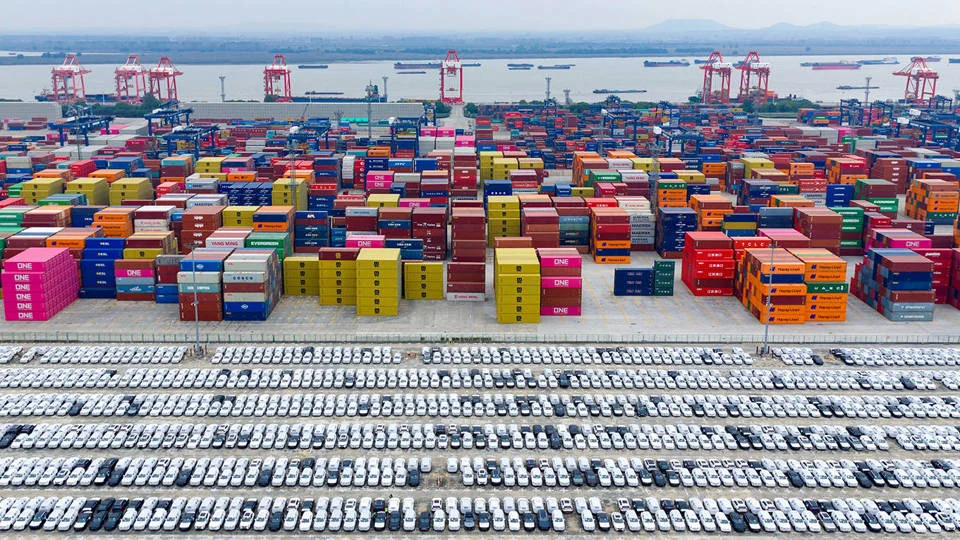
While economic rebalancing by China would be good for everyone, Chinese leaders have given little indication that they are moving decisively in this direction. With China’s ever-increasing exports threatening to decimate European manufacturing, the EU has little choice but to embrace tariffs.
WASHINGTON, DC – The economic landscape of the early 21st century has been profoundly reshaped by China’s integration into the global trading system, a process that began in earnest with its accession to the World Trade Organization (WTO) in 2001. Few could have fully predicted the far-reaching consequences this integration would unleash, particularly for established industrial powers. In the United States, the surge in Chinese imports contributed significantly to the hollowing out of the domestic manufacturing sector and a subsequent decline in manufacturing employment. This economic dislocation is widely seen as a key factor that helped pave the way for the rise of right-wing economic populism, culminating in the political ascent of Donald Trump. As Europe now grapples with its own burgeoning trade imbalances with China, it faces a starkly similar challenge. Unless decisive action is taken to protect its vital manufacturing base from the relentless tide of surging Chinese exports, the European Union may find itself on a trajectory toward a comparable economic and political destiny.
The Unfolding Economic Narrative: From WTO Accession to Trade Tensions
China’s journey from a planned economy to a global manufacturing powerhouse has been nothing short of extraordinary. Following its WTO accession in December 2001, China benefited from reduced trade barriers and a more predictable legal framework for international commerce. This allowed its vast labor pool and increasingly sophisticated industrial capacity to flood global markets with goods at competitive prices. For many Western nations, including the United States and EU member states, this period was characterized by a shift in manufacturing away from high-cost economies towards China.
Timeline of Key Developments:
- 2001: China accedes to the World Trade Organization, marking a pivotal moment in global trade.
- Early 2000s – Present: Significant growth in Chinese exports to developed economies, leading to manufacturing job losses and trade deficits in countries like the US and EU member states.
- 2010s: Growing awareness and concern in Western nations about the impact of Chinese trade practices, including allegations of subsidies, intellectual property theft, and currency manipulation.
- Mid-2010s onwards: The rise of economic nationalism and populist movements in some Western countries, partly attributed to the economic anxieties stemming from deindustrialization.
- Late 2010s – Early 2020s: Increased trade disputes and the imposition of tariffs by the United States under the Trump administration on Chinese goods, prompting retaliatory measures.
- 2020s: European manufacturers begin to voice increasing alarm over the competitive pressures exerted by Chinese exports, particularly in sectors like electric vehicles, renewable energy components, and advanced manufacturing.
The economic rebalancing that many hoped would occur as China developed – a shift from export-led growth to domestic consumption – has been slow and, according to many observers, insufficient. While China has indeed become a massive consumer market, its export engine continues to roar, fueled by state support and industrial policies aimed at dominating global supply chains. This has created an increasingly challenging environment for manufacturers in regions with higher labor costs and more stringent environmental regulations.
Supporting Data: The Growing Trade Imbalance
The scale of the trade imbalance between China and the EU is a critical factor driving the current policy discussions. While precise figures fluctuate, the trend is clear: the EU consistently imports significantly more from China than it exports.
- Trade Deficit: In recent years, the European Union’s trade deficit with China has widened considerably. For instance, in 2023, the EU’s deficit in goods trade with China stood at an estimated €291 billion, according to Eurostat data. This represents a substantial portion of the EU’s overall trade deficit.
- Sectoral Concentration: The deficit is particularly pronounced in certain manufacturing sectors. The automotive sector, for example, has seen a dramatic increase in Chinese electric vehicle imports, raising concerns about the competitiveness of European car manufacturers. Similarly, the renewable energy sector, crucial for the EU’s Green Deal objectives, is heavily reliant on Chinese-manufactured solar panels and wind turbine components.
- Export Growth: Chinese exports to the EU have demonstrated robust growth across a range of product categories, often outpacing the growth of EU exports to China. This suggests a sustained effort by Chinese industries to capture market share within the European economic bloc.
This persistent and growing trade imbalance creates economic pressure on European industries. It can lead to reduced profitability, plant closures, and job losses, mirroring the experiences of the US manufacturing sector in previous decades.
The European Dilemma: Protectionism as a Necessary Evil?
For European leaders, the situation presents a complex policy conundrum. On one hand, open trade and global integration are core tenets of the EU’s economic philosophy. Tariffs, by their nature, can lead to higher consumer prices, retaliatory measures from trading partners, and potential disruptions to global supply chains. However, the alternative – allowing unfettered imports of goods produced under potentially different regulatory and subsidy regimes – risks the long-term viability of critical European industries.
The argument for tariffs, as articulated by commentators like Desmond Lachman, hinges on the perceived lack of reciprocal market access and the potentially unfair competitive advantages enjoyed by Chinese manufacturers. These advantages can stem from various sources:
- State Subsidies: Chinese companies often benefit from substantial government support, including direct subsidies, preferential loans, and access to cheap land and energy. This allows them to offer products at prices that are difficult for unsubsidized European competitors to match.
- Lower Labor and Environmental Standards: While China’s standards have been improving, the cost of labor and compliance with environmental regulations can still be lower than in many EU member states. This can translate into a cost advantage for Chinese-produced goods.
- Intellectual Property Protection: Concerns persist regarding the protection of intellectual property rights in China, with allegations of widespread IP theft and forced technology transfers. This can undermine the innovation and competitiveness of European companies.
- Currency Manipulation: While less overt than in the past, some analysts still suggest that China’s currency policies can be managed to maintain a competitive edge for its exports.
Official Responses and Emerging Strategies
The European Commission and individual member states have been increasingly vocal about the challenges posed by China’s trade practices. While a unified and decisive response has been slow to materialize, there are clear indications of a shift towards more protective measures.
- EU Investigations: The European Commission has launched several anti-subsidy investigations into Chinese products, most notably into electric vehicles. These investigations can lead to the imposition of definitive tariffs if subsidies are found to be distorting the market.
- "De-risking" Strategy: The EU has adopted a strategy of "de-risking," which aims to reduce its over-reliance on China for critical goods and raw materials, rather than a full decoupling. This involves diversifying supply chains and strengthening domestic production capabilities.
- Industrial Policy Initiatives: The EU is also investing heavily in its own industrial capacity, particularly in strategic sectors like green technology and digital innovation, to bolster its competitiveness against Chinese imports. This includes initiatives like the European Chips Act.
- Member State Concerns: Individual EU member states, particularly those with significant manufacturing bases like Germany and France, have been at the forefront of advocating for stronger trade defense measures against China.
Inferred Statements and Reactions:
While direct quotes from Chinese officials regarding specific EU tariff proposals are often measured, Beijing has consistently advocated for free trade and has warned against protectionist measures, often framing them as detrimental to global economic growth. European industry associations, such as BusinessEurope, have expressed a dual concern: the need to compete on a level playing field while also emphasizing the importance of maintaining open trade channels and avoiding trade wars.
Broader Impact and Implications: A Shifting Global Order
The decisions made by the EU regarding its trade relationship with China will have profound implications, not only for its own economy but also for the broader global economic and geopolitical order.
- Economic Repercussions: The imposition of tariffs could lead to higher prices for consumers and businesses within the EU. It could also trigger retaliatory tariffs from China, impacting European exports and potentially disrupting global supply chains. However, proponents argue that these short-term costs are necessary to safeguard the long-term health of European manufacturing and prevent a repeat of the US experience.
- Geopolitical Realignment: A more protectionist EU stance towards China could further solidify the emerging geopolitical blocs. It might also signal a broader shift away from unfettered globalization towards a more regionalized or fragmented global economy.
- Innovation and Competitiveness: The threat of Chinese competition can act as a powerful catalyst for innovation within Europe. By forcing European companies to become more efficient and competitive, it could ultimately lead to stronger, more resilient industries. However, the risk remains that protectionist measures could stifle innovation if they reduce the incentive for domestic firms to improve their products and processes.
- The Future of Global Trade Governance: The current trade tensions highlight the limitations of existing global trade rules in addressing the complexities of state-led capitalism and the challenges of managing trade with economies that operate under different economic and political systems. This could necessitate a re-evaluation of the WTO’s role and the development of new international trade norms.
The European Union stands at a critical juncture. The economic rebalancing of China remains an aspiration rather than a reality, and the competitive pressures on European manufacturing are undeniable. The choice between embracing tariffs and risking the further erosion of its industrial base is a difficult one, with far-reaching consequences for its economic prosperity, its geopolitical standing, and the very nature of global trade in the 21st century. The coming months and years will reveal whether Europe can chart a course that protects its industries without sacrificing the principles of open commerce.
