

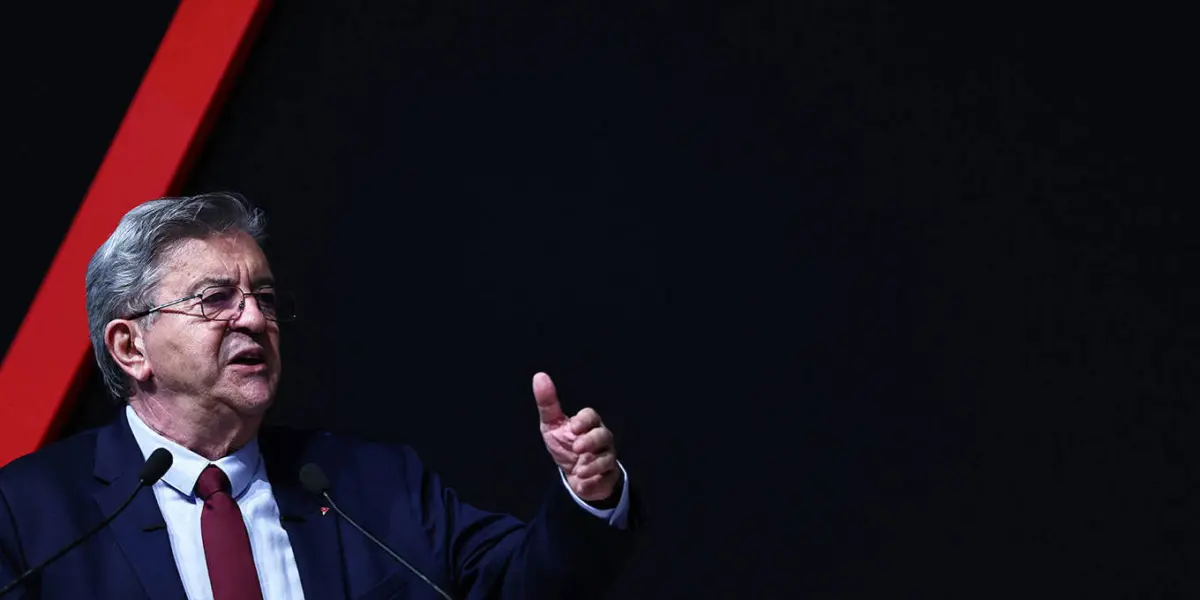
The sorry state of France’s public schools, which sparked angry demonstrations across the country, was a symptom of chronic austerity. But that did not stop the sirens of deeper austerity from rehearsing their song. Emmanuel Moulin, the governor of France’s central bank, is calling for large budget cuts to avert the “risk of being gradually strangled by rising interest rates.” If that happens, social tensions will be further inflamed and desperately needed investment will vanish. With Germany already confronting deindustrialization and surging support for far-right forces, France’s public debt is shaping up as Europe’s next fault line.
The French Education System Under Strain: A Symptom of Austerity
Recent weeks have seen widespread and vocal protests across France, stemming from the deteriorating condition of the nation’s public education system. Educators, parents, and students have taken to the streets to highlight issues ranging from overcrowded classrooms and crumbling infrastructure to a chronic shortage of qualified teachers and essential resources. These demonstrations, characterized by passionate pleas and urgent calls for action, underscore a systemic crisis that many attribute to years of sustained austerity measures impacting public spending.
The French education system, historically a cornerstone of the republic and a symbol of social mobility, has been grappling with budgetary constraints for over a decade. Since the 2008 global financial crisis and the subsequent European sovereign debt crisis, successive governments have implemented fiscal consolidation policies aimed at reducing public debt and deficits. While these measures were often framed as necessary for economic stability, their impact on vital public services like education has become increasingly apparent and detrimental.
Escalating Austerity Demands Amidst Economic Headwinds
Despite the visible distress within the education sector, the discourse surrounding France’s economic future is increasingly dominated by calls for further austerity. Emmanuel Moulin, the governor of the Banque de France, recently articulated concerns about the nation’s financial trajectory, warning of the "risk of being gradually strangled by rising interest rates." This statement, made in the context of a global economic environment marked by inflation and increasing borrowing costs, has reignited the debate about fiscal policy.
Moulin’s proposed solution involves significant budget cuts across various government departments. The underlying logic suggests that by reducing public expenditure, France can mitigate the impact of higher interest rates on its national debt servicing costs. However, critics argue that such a strategy, particularly when applied to already strained public services, could exacerbate existing social tensions and stifle crucial investment needed for long-term economic growth and modernization.
The Interplay of Public Debt and Social Stability
The governor’s remarks come at a sensitive time for France. The nation, like many of its European counterparts, is navigating a complex economic landscape. While the exact figures for France’s public debt fluctuate, it has remained a significant concern for policymakers. As of the most recent available data, France’s public debt-to-GDP ratio has been a persistent challenge, hovering around the 110% mark in recent years. This level of indebtedness, coupled with rising global interest rates, means that a larger proportion of the national budget is allocated to debt servicing, leaving less for public services and investments.
The fear is that further austerity, imposed in the name of fiscal prudence, could trigger a vicious cycle. Reduced public spending can lead to a decline in the quality of essential services, impacting citizens’ daily lives and potentially leading to increased social unrest. This, in turn, can create an environment of uncertainty that deters private investment, further slowing economic growth and making it even more challenging to manage the national debt.
A European Fault Line: Germany’s Woes and France’s Precarious Position
The economic challenges facing France are not isolated. The broader European context highlights a growing pattern of instability. Germany, the economic powerhouse of the European Union, is currently confronting its own set of economic difficulties, including a process of deindustrialization and a significant surge in support for far-right political parties. This trend in Germany, Europe’s largest economy, signals a broader disillusionment and a search for alternative political and economic solutions across the continent.
France’s position, therefore, is particularly critical. Its public debt is emerging as a potential "fault line" within the European economic architecture. A fiscal crisis in France, amplified by social unrest and a potential retreat from fiscal responsibility due to political pressures, could have significant ripple effects across the Eurozone. The interconnectedness of European economies means that instability in a major nation like France could trigger broader financial market volatility and challenge the very foundations of the single currency.
The Centrist Dilemma: Moderation or Enabling Extremes?
The article’s opening assertion raises a crucial point about the political consequences of centrist economic policies. When moderate political forces consistently dismiss sensible alternatives to severe austerity as "nonsense," they inadvertently limit the options available to voters. In such a scenario, where the established political center offers no compelling solutions to pressing economic and social problems, the far right often emerges as the primary beneficiary.
This dynamic is particularly relevant in France. The recent electoral successes of far-right parties, which have capitalized on public dissatisfaction with the status quo and offered seemingly radical solutions to economic woes, can be partly understood through this lens. When voters feel that their concerns about public services, job security, and economic inequality are not being adequately addressed by mainstream parties, they may turn to more extreme ideologies that promise drastic change.
Chronology of Austerity and Discontent
- 2008 Global Financial Crisis: The onset of the global financial crisis necessitates widespread fiscal stimulus and later, austerity measures across many developed economies, including France, to manage burgeoning public debts.
- Early 2010s: European sovereign debt crisis intensifies, leading to increased pressure on member states to adhere to strict deficit and debt reduction targets, impacting public service budgets.
- Mid-to-Late 2010s: Protests emerge across France related to various reforms, often touching upon the perceived impact of austerity on public services and social welfare.
- Late 2021 – Early 2022: Growing concerns about inflation and rising energy prices begin to exert pressure on household budgets and government finances.
- 2023 – Present: The Banque de France governor, Emmanuel Moulin, issues warnings about the risks associated with rising interest rates and advocates for significant budget cuts. Concurrently, public schools across France experience significant disruptions and protests due to underfunding and deteriorating conditions.
- Ongoing: Debates intensify regarding the efficacy of austerity measures in the face of current economic challenges and the potential for increased political polarization, with far-right parties gaining traction.
Supporting Data and Economic Indicators
- France’s Public Debt: As of the latest available data (e.g., end of 2023/early 2024), France’s public debt-to-GDP ratio has been reported to be around 110-112%. This figure represents a significant increase since the pre-2008 era.
- Interest Rate Environment: The European Central Bank (ECB) has implemented several interest rate hikes since mid-2022 in an effort to combat inflation. This has directly increased the cost of borrowing for governments, including France, on new debt issuances and the refinancing of existing debt.
- Education Spending: While precise comparative data can be complex to isolate, analyses from organizations like the OECD often show that while France invests a significant percentage of its GDP in education, the per-student spending and outcomes in certain areas can lag behind other developed nations, often linked to resource allocation and teacher shortages. Reports from French education unions frequently cite specific figures for understaffing and underfunding in particular regions or subject areas.
- Industrial Production in Germany: Recent economic reports have indicated a contraction in German industrial production, with some sectors experiencing significant downturns. This deindustrialization trend has been attributed to a combination of factors including high energy costs, global supply chain issues, and increased international competition.
- Far-Right Electoral Performance: In recent French elections, parties on the far-right have seen a notable increase in their vote share and representation in national and European parliaments, reflecting a broader shift in the political landscape.
Official Responses and Policy Debates
The French government, under President Emmanuel Macron, has historically pursued a path of fiscal consolidation, aiming to balance the budget and reduce public debt. However, the recent widespread protests in the education sector have put significant pressure on the administration to address immediate concerns.
The Ministry of National Education has responded to the protests by acknowledging the challenges and announcing various initiatives aimed at improving school conditions, recruiting more teachers, and increasing resources. These often involve targeted funding boosts for specific programs or regions, but critics argue they do not represent a fundamental shift away from austerity.
The Banque de France’s call for deeper budget cuts has been met with mixed reactions. While some economists and fiscal conservatives support the governor’s stance on managing debt, many educators, unions, and social advocacy groups have strongly condemned the proposal, arguing that it would further cripple public services and exacerbate social inequalities.
The political opposition, particularly parties on the left and the far-right, have used the situation to criticize the government’s economic policies. Left-wing parties advocate for increased public spending and a re-evaluation of fiscal priorities, while far-right parties often link the issues to broader concerns about national sovereignty and immigration, proposing different, often protectionist, economic solutions.
Broader Impact and Implications
The current situation in France carries significant implications not only for the nation but for the wider European Union.
- Social Cohesion: A sustained period of austerity, coupled with declining public services, risks further fraying social cohesion. The widening gap between those who can afford private alternatives and those reliant on public services can fuel resentment and political polarization.
- Economic Competitiveness: Underinvestment in education and infrastructure can hinder long-term economic growth and innovation. A nation that fails to adequately prepare its future workforce or maintain its infrastructure will struggle to remain competitive in the global economy.
- European Stability: France’s public debt is a critical factor in the stability of the Eurozone. Any significant fiscal distress or political instability in France could trigger wider financial market concerns and test the resilience of the single currency.
- Political Landscape: The ongoing debate about austerity and its consequences has a direct bearing on the political trajectory of France and Europe. If centrist parties are perceived as failing to offer viable solutions, they risk ceding further ground to populist and far-right movements, potentially leading to more unpredictable and disruptive political outcomes across the continent.
The path forward for France will likely involve a difficult balancing act between fiscal responsibility and the imperative to invest in its future. The challenge lies in finding an economic model that can address the legitimate concerns about public debt without sacrificing the essential public services that form the bedrock of a democratic and equitable society, and without inadvertently creating fertile ground for extremist ideologies. The coming months and years will be crucial in determining whether France can navigate these complex challenges effectively, or if it will become a stark example of how austerity, when misapplied, can sow the seeds of deeper societal and economic instability.
