

The intricate and often turbulent world of supply chain management, long considered the domain of operational leaders, has decisively ascended to the C-suite agenda. After a tumultuous five-year period marked by the lingering effects of COVID-19, disruptive tariffs, escalating costs, and persistent geopolitical instability, senior executives are now intensely focused on the resilience and efficiency of their supply networks. However, a critical question remains: is the information filtering up to these executive levels accurately reflecting the ground-level realities, and are the individuals closest to the day-to-day operations empowered to raise alarms when necessary?
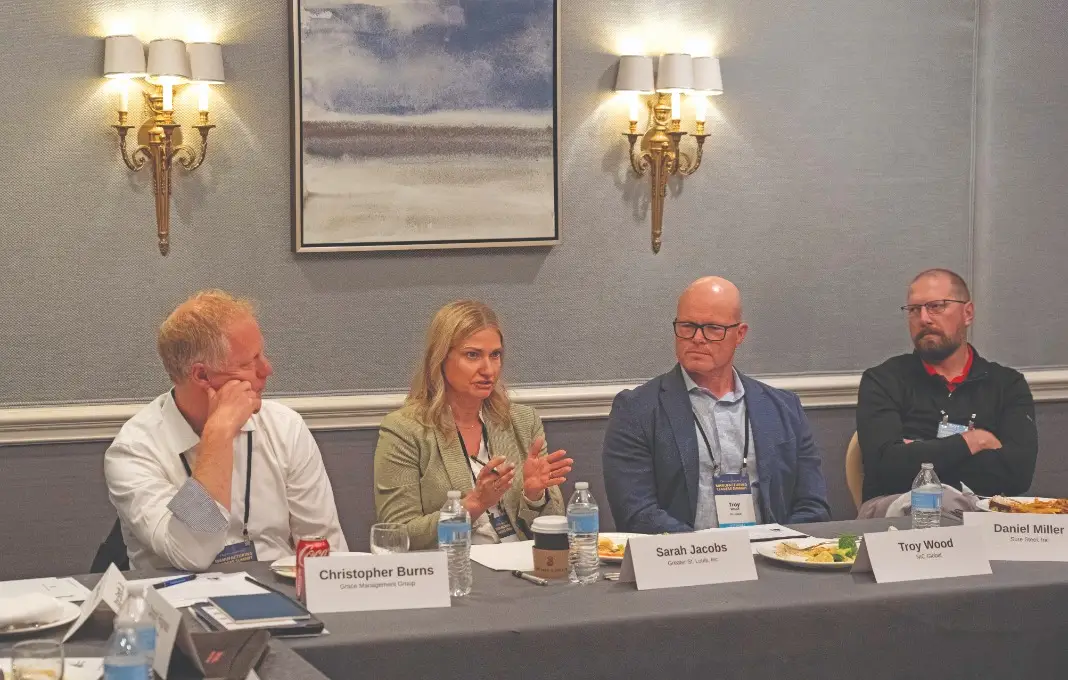
This pressing issue was at the forefront of discussions at the Chief Executive Manufacturing Leaders Summit held in St. Louis this past May. In partnership with Greater St. Louis, an organization dedicated to regional economic development, the summit convened a select group of supply chain managers, operations leaders, and Chief Operating Officers (COOs) from mid-sized manufacturing firms. The objective was to foster a candid, off-the-record dialogue addressing the communication breakdowns, workforce challenges, and emergent risks that are currently shaping the manufacturing landscape.
Sarah Jacobs, Senior Director of Business Growth at Greater St. Louis, who works directly with regional manufacturers to identify investment opportunities and growth strategies, emphasized the strategic shift. "This is no longer just an operational discussion," Jacobs stated. "This has been elevated to the CEO level because it plays such an important part and has been very volatile the last few years. Companies are really trying to figure out what do we localize, where does automation really pay off versus where it doesn’t, when do we redesign products and when is it easier to either price through or even just step away?"
The insights shared during the summit, while offering encouragement, also presented uncomfortable truths that manufacturers believe their top executives need to fully comprehend.
Reshoring and Vertical Integration: A Strategic Imperative
A significant trend emerging from the manufacturing floor is the deliberate move to bring previously outsourced operations back in-house. This strategic pivot is not driven by ideology but by operational necessity, a sentiment that participants hope will gain broader traction and understanding within executive suites.
One manufacturing executive, who recently inaugurated a new 140,000-square-foot fabrication facility, explained the rationale. "Some of our stuff, just the turnaround time to get that stuff was eight to ten weeks," he shared. "And now we can control a lot of that. So if we have something hot, we can stop what we’re doing and move on to that process." This ability to rapidly pivot and respond to urgent demands is a stark contrast to the lengthy lead times previously dictated by external suppliers. Another participant echoed this sentiment, reflecting, "Had we known this 20 years ago, we’d have made this decision 20 years ago." The clear implication is that the cost savings associated with outsourcing were often outweighed by a loss of agility and control, a lesson learned through hard experience.
However, this trend of vertical integration by manufacturers presents a direct threat to their existing suppliers, particularly those serving large Original Equipment Manufacturers (OEMs). One participant, whose company supplies components to three distinct industries, has witnessed all three embark on in-house production initiatives. "A lot of internal players thought, ‘well, we are so good at what we do—that’s not a legitimate threat, they can’t vertically integrate and substantially eat into our business’," he recounted. "But we have seen that determination stick in all three industries. We’ve seen some erosion of work to vertical integration." His stark conclusion for suppliers is to "assume nothing about loyalty. Keep delivering real value." This underscores the competitive pressure faced by suppliers who must continually demonstrate their indispensable contribution to their clients’ success.
The decision to diversify supply chains away from traditional hubs in China and India has also been a difficult, often more challenging, undertaking than leadership initially anticipated. Decades of offshoring have led to a hollowed-out domestic supply base for certain critical components. A supply chain director detailed the short-term financial strain of this transition. "We had a lot of struggles in 2019, 2020, 2021—like, okay, are we making a really stupid move here? Our competitors were saying we’re not caring about being the best, we just want to be the cheapest. And then people would source to that cheapest one."
The journey through this period of recalibration was arduous. Accounts payable became strained, and vendors grew increasingly hesitant to extend credit. "People have long memories," the director noted. "When you’re going through struggles, your accounts payable stretches out. Vendors don’t want to work with you because they’re thinking, ‘I’m not sure you’ll ever pay me.’ If I can’t get product, I can’t build anything. And if I can’t build anything, I can’t sell anything." The company faced existential challenges but ultimately persevered. "We weathered the storm and now we’re doing fantastic," he reported, a testament to strategic foresight and resilience.
Automation: Beyond the Novelty Act
Five years ago, discussions about automation often concluded with anecdotes of expensive robotic equipment relegated to novelty use, such as a "cobot" dribbling a basketball in a breakroom, due to a lack of skilled operators. Today, the conversation has evolved significantly. Manufacturers who have invested in automation reported that addressing the workforce component, historically the most formidable hurdle, has proven more manageable than anticipated.
One approach that has yielded positive results involves reframing automation’s impact on the workforce through profit-sharing initiatives. "They see it as, ‘Hey, we’ve got fewer people to share with, so it’s a bigger check for us at the end of the quarter’," explained one executive. The consensus among several participants was that fostering an "owner’s mindset" among employees is the key to successful automation integration. Furthermore, by de-skilling certain tasks, manufacturers become less vulnerable to absenteeism and can better afford to retain and reward their essential skilled workers. "I don’t care where you’re at," one participant stated, "it’s tough to find good people. Automation doesn’t solve that. But it changes what the problem costs." This perspective highlights that automation, while not a panacea for labor shortages, can significantly mitigate their financial impact and improve operational efficiency.
A complicating factor in the current automation landscape is a supply squeeze affecting components also in high demand by the burgeoning artificial intelligence (AI) data center industry. "Data centers are exploding because of AI," observed one COO. "We’re having trouble on two sides—we sell to mechanical contractors building data centers but our product doesn’t go in data centers. And, on the supply chain side, some fans and equipment we use are also used in data centers. Our lead times are stretching." This executive is actively monitoring the market for a supplier that can cater specifically to manufacturers’ needs, anticipating that the current boom may be unsustainable. "The data center bubble’s gonna burst at some point," he speculated. "Hopefully. But that’s the squeeze we’re feeling right now." This situation illustrates the interconnectedness of industrial demand and the ripple effects of emerging technologies on established supply chains.
Financial Fortitude: The Unwavering Importance of Cash Flow
Regardless of strategic initiatives or technological advancements, the fundamental principle of financial health remains paramount. As one participant with extensive experience in business turnaround consulting emphasized, available cash reserves dictate a company’s capacity for aggressive adaptation. His initial step with any struggling client is always to ascertain the existence and accuracy of a cash flow forecast.
"Nine out of 10 times nobody had a cash forecast," he reported, strongly advising CEOs to maintain visibility into their financial position at least six to eight weeks into the future. For industries with long production cycles, such as those requiring 15-18 months to build a single unit, the timing of customer payments and milestone disbursements can be critical. "You don’t want to end up in a situation where you took 20 percent upfront but will need 30 percent for materials. Am I playing the bank here? ‘Cause if I’m playing the bank, I’m not going to survive." This highlights the precariousness of operating without a clear understanding of cash inflows and outflows, especially in capital-intensive manufacturing.
A further principle advocated by this executive is to establish profit margin targets first and then work backward to formulate budgets. "If you want to start with 15 percent, then you’ve got to figure out how you’ll build 85 percent into it. But your profit is your starting point." This disciplined approach ensures that profitability is a core consideration from the outset, rather than an afterthought.
The Information Chasm: What CEOs Don’t Know
A recurring theme throughout the summit was the significant, and in some cases, vast, discrepancy between the information relayed up the corporate ladder and the actual conditions prevailing in procurement and production departments. One supply chain manager shared an experience where he identified a chronically late supplier’s president on LinkedIn. A subsequent phone call revealed that the president was unaware of the extent of his team’s misrepresentations. This led to an immediate face-to-face meeting, during which the president expressed his regret, stating, "He was quite embarrassed. He said, ‘Wow, shame on me for trusting people I thought were telling me the truth when they weren’t.’" This incident underscores the critical need for direct communication channels and a culture of transparency.
Another participant described a frustrating internal dynamic where engineering consistently asserted that a particular vendor was the sole viable option, irrespective of cost. "I got told so many times, ‘It has to be them’," he recounted. His semi-humorous proposed solution was to hire an additional engineer solely to challenge the company’s existing engineering team and obtain a second opinion.
The practical solutions for bridging this information gap are not inherently complex. They include implementing weekly reviews of long-lead items, fostering proactive vendor communication, and ensuring that key performance metrics are visible and accessible at the senior leadership level. However, the underlying requirement is a corporate culture that encourages the rapid dissemination of bad news rather than its suppression or dilution as it ascends the organizational hierarchy.
One CEO offered a blunt assessment: "If they’re lying to you, you need to get a new vendor." While identifying unreliable external partners is a crucial step, the more profound challenge often lies internally. The critical task for leadership is to cultivate an environment where employees feel secure enough to communicate the unvarnished truth about operational realities before potential issues escalate into full-blown crises.
As Sarah Jacobs reiterated in her closing remarks, the initial hope that the post-COVID era would usher in a return to pre-pandemic normalcy has proven unfounded. "Everybody thought, ‘if we can just get through Covid, everything will settle down again’," she observed. "That has not been the case." The manufacturing sector is likely to continue navigating a landscape of ongoing volatility and complexity for the foreseeable future, underscoring the enduring importance of clear communication, strategic adaptability, and robust financial management. The insights gleaned from this candid exchange serve as a vital reminder to C-suite executives of the critical need to bridge the gap between strategic oversight and operational execution, ensuring that the information driving their decisions is grounded in the realities of the ground.
