

The automotive landscape in California, long considered the global bellwether for electric vehicle (EV) adoption, has undergone a significant shift during the first half of 2026. While the state continues to lead the nation in zero-emission transport, a notable cooling of the market has emerged, characterized by a "drop-off" in sales across various segments that once saw rapid, uninterrupted growth. According to the latest registration data and market analysis, the previously vibrant trend of electric models saturating the "Top 5" lists of multiple vehicle categories has become increasingly concentrated. Despite this broader industry malaise, Tesla remains a formidable force, maintaining a vice-grip on several key segments even as competitors struggle to maintain their footing in an increasingly "drab" economic environment for new car buyers.
The State of the Market: A Year of Consolidation
The first two quarters of 2026 have presented a stark contrast to the explosive growth seen in the early 2020s. For years, industry analysts pointed to California as the proof of concept for a total EV transition, with electric models frequently topping sales charts across economy, luxury, and utility categories. However, recent data indicates a contraction. Several vehicle categories that previously boasted at least one or two electric options in their top five rankings have seen those models slip, replaced by traditional internal combustion engine (ICE) vehicles or hybrid alternatives.
This stagnation is attributed to a combination of market saturation among early adopters, persistent concerns regarding public charging infrastructure reliability, and broader macroeconomic headwinds including inflation and high interest rates. Nevertheless, the EV market is not in a state of collapse but rather one of consolidation. While the "middle of the pack" has thinned out, the market leaders—most notably Tesla—have demonstrated remarkable resilience, continuing to outperform their nearest rivals by significant margins.

Tesla’s Unwavering Dominance in Luxury Segments
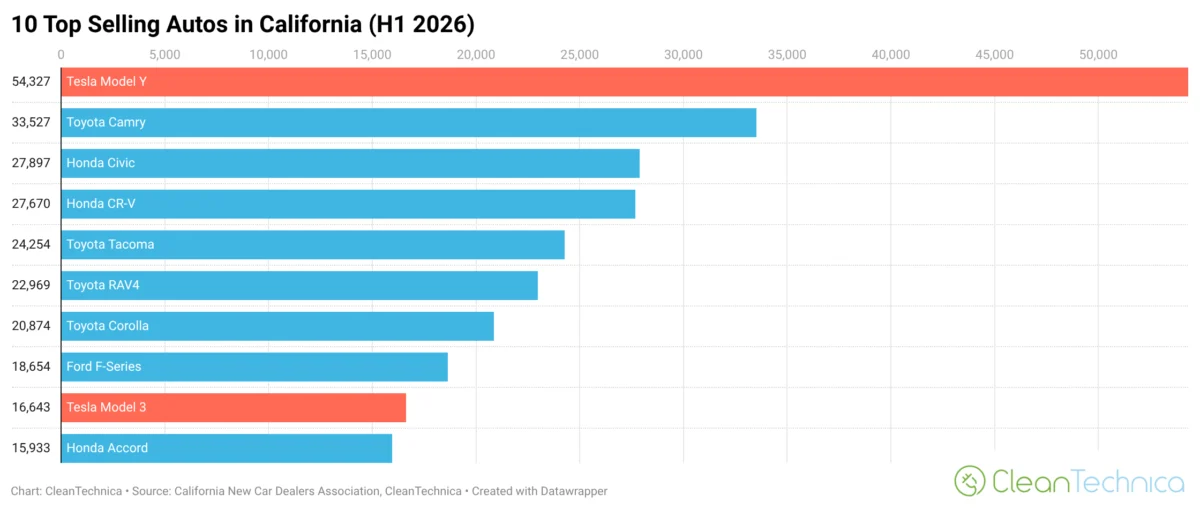
The Tesla Model Y continues to serve as the standard-bearer for the electric transition in the Golden State. Despite a reported dip in its overall sales volume compared to its peak years, the Model Y remains the best-selling vehicle in California by a substantial margin. In the "Luxury Compact SUV" category, the Model Y’s performance is particularly striking; its sales figures are currently several times higher than its closest luxury competitors. This dominance suggests that while consumers may be more hesitant to enter the EV market than in previous years, those who do are overwhelmingly choosing established, proven platforms.
Similarly, the Tesla Model 3 has maintained its "crushing" lead in the "Near Luxury" vehicle class. The Model 3 continues to outperform all other models in its segment, with sales volume nearly four times that of its nearest competitor. This suggests that the Model 3’s recent refreshes and competitive pricing strategies have successfully insulated it from the broader market downturn. Within the overall California car market, the Model 3 secured the fourth position among all passenger cars, a testament to its enduring appeal even as the "newness" of the EV era begins to fade.

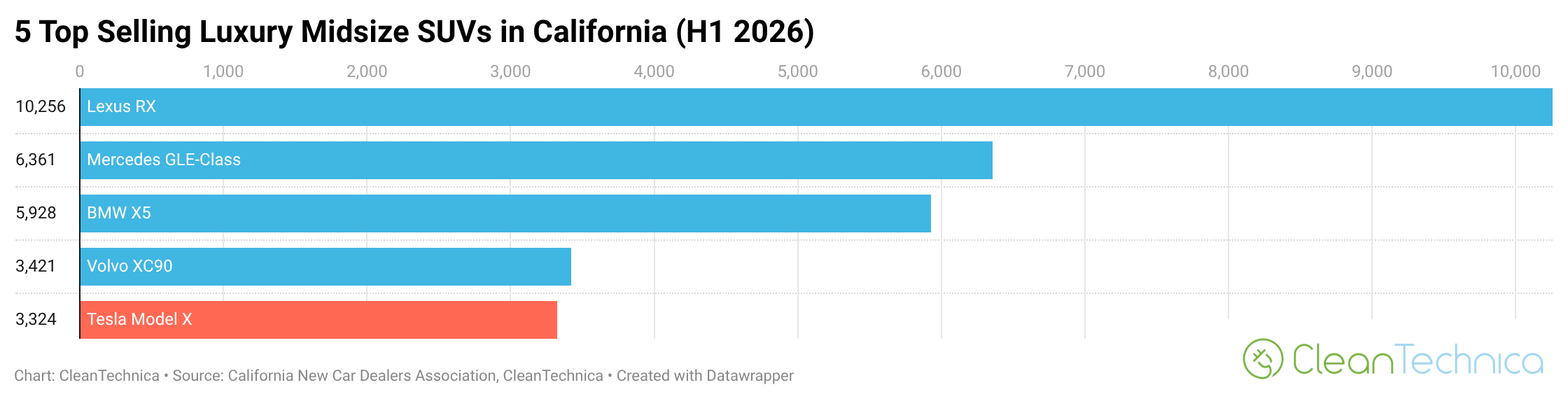
In the higher-end segments, Tesla’s aging flagship models continue to hold their own. The Tesla Model S, despite being one of the oldest platforms in the company’s lineup, ranked second among all luxury and high-end sports cars. Similarly, the Model X secured the fifth spot in its category. The performance of these models is noteworthy given that industry rumors have frequently suggested their eventual phasing out or replacement. Their continued presence in the top five indicates a loyal customer base and a lack of direct competitors that can match Tesla’s software integration and Supercharger network.
The Competitive Landscape: Rivian, Ford, and Volkswagen
Beyond the Tesla ecosystem, a handful of other manufacturers have managed to secure positions in the top tiers of their respective categories. The Rivian R1S has emerged as a significant player in the luxury SUV space, claiming the second-place spot in its specific category. Rivian’s success in California is often cited as a reflection of the state’s "outdoor lifestyle" demographic, which prioritizes utility and off-road capability alongside zero-emission technology. The R1S’s volume was closely trailed by the Ford Mustang Mach-E, which took fourth place in its own highly competitive category.
The inclusion of the Ford Mustang Mach-E in the top five highlights the importance of legacy brand recognition in the EV transition. While Ford has faced challenges in scaling its EV production, the Mach-E remains a popular choice for California drivers looking for a familiar brand with a modern powertrain.
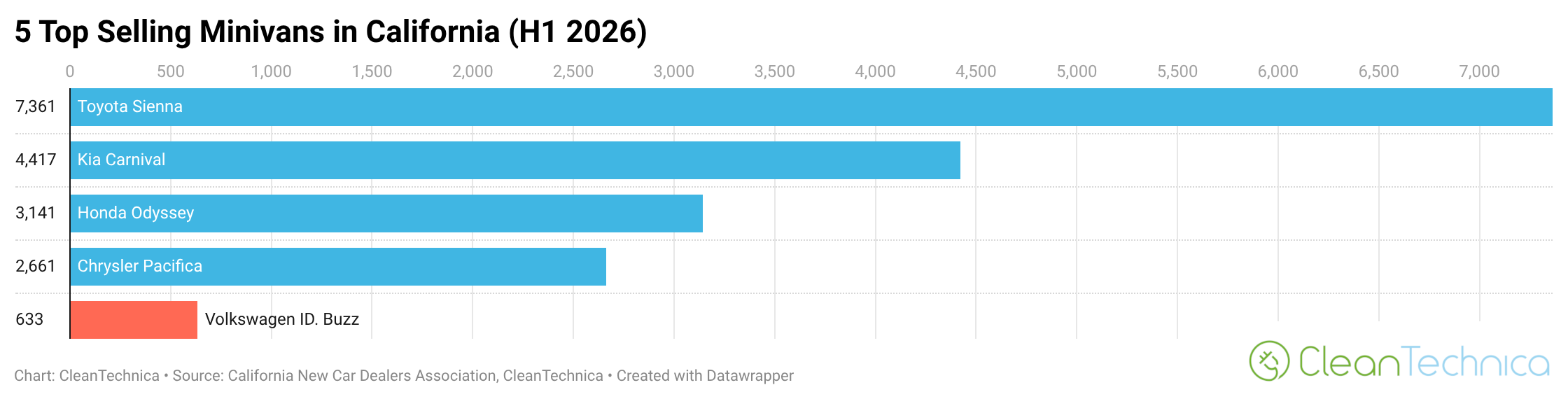
A more surprising entry into the 2026 charts is the Volkswagen ID. Buzz. The electric reimagining of the iconic Microbus has managed to slip into the top five of the minivan category. While the minivan segment is relatively small compared to SUVs and trucks, the ID. Buzz’s entry is significant. It represents one of the few electric options in a family-oriented segment that has traditionally been dominated by hybrid mainstays like the Toyota Sienna and Chrysler Pacifica. However, analysts note that the competition in the minivan category is limited, making it easier for a niche electric entry to claim a top-five spot with relatively modest volume.

Chronology of the 2026 Sales Cooling
To understand the current "drab" state of the market, it is necessary to look at the timeline of the past 18 months.
- Q1-Q2 2025: The market began to show signs of plateauing. Federal and state incentives remained available, but the "low-hanging fruit" of tech-savvy early adopters had largely been harvested.
- Q3-Q4 2025: High interest rates began to take a toll on luxury vehicle leases and purchases. Manufacturers responded with price cuts, which stabilized volume but squeezed profit margins.
- Q1 2026: A notable shift in consumer sentiment was recorded in California. Surveys indicated that while interest in EVs remained high, the "intent to purchase" within the next six months dropped as consumers waited for next-generation battery technology or improved charging infrastructure.
- Q2 2026: The current data reflects a market that has bifurcated. High-volume leaders like the Model Y and Model 3 continue to thrive, while experimental or "me-too" EV models from other brands have fallen off the leaderboards, unable to compete with Tesla’s scale or the efficiency of traditional hybrids.
Economic and Regulatory Implications
The 2026 data presents a complex challenge for California policymakers. The state has mandated that 100% of new car sales be zero-emission by 2035, with intermediate targets requiring 35% by 2026. While the Tesla Model Y and Model 3 are doing the "heavy lifting" to meet these quotas, the lack of diversity among the top-selling EVs is a point of concern. If the transition is to succeed, the market must see high-volume success from a broader range of manufacturers and vehicle types, including affordable compacts and work-ready pickup trucks.

The Cybertruck, notably absent from the top five in the truck categories, illustrates the difficulty of breaking into the most entrenched segments of the American auto market. While it has a dedicated following, it has yet to displace the dominance of traditional pickups in the way the Model Y displaced luxury crossovers.
Industry analysts suggest that the current sales "drop-off" is a natural correction. "We are moving from the era of ‘EV excitement’ to the era of ‘EV utility,’" says one senior analyst at a leading automotive research firm. "In 2022, people bought EVs because they were new. In 2026, they buy them if they make financial and practical sense. This explains why the Model Y is still number one—it has the best balance of range, price, and charging accessibility."

Broader Impact and Future Outlook
As the second half of 2026 approaches, the automotive industry is watching California closely to see if the sales slump is temporary or a sign of a long-term trend. The "drab" performance of many EV categories suggests that manufacturers may need to rethink their strategies, moving away from high-priced luxury EVs and toward more accessible models that can compete with the likes of the Toyota RAV4 or Honda CR-V on price.
For Tesla, the H1 2026 results are a double-edged sword. On one hand, they confirm the brand’s total dominance of the Californian market, with the Model Y crushing all other SUVs and trucks of any price or size. On the other hand, the overall decline in EV diversity in the "Top 5" lists suggests that the transition is slowing down.
Ultimately, the first half of 2026 has proven that while the electric revolution is far from over, it has entered a more difficult and competitive phase. The "Golden State" remains the leader in the move away from fossil fuels, but the road to 2035 appears to be steeper than previously anticipated. The dominance of a few key models, primarily from Tesla, provides a lifeline for the state’s environmental goals, but the broader industry will need to innovate more aggressively to recapture the momentum of previous years.
