

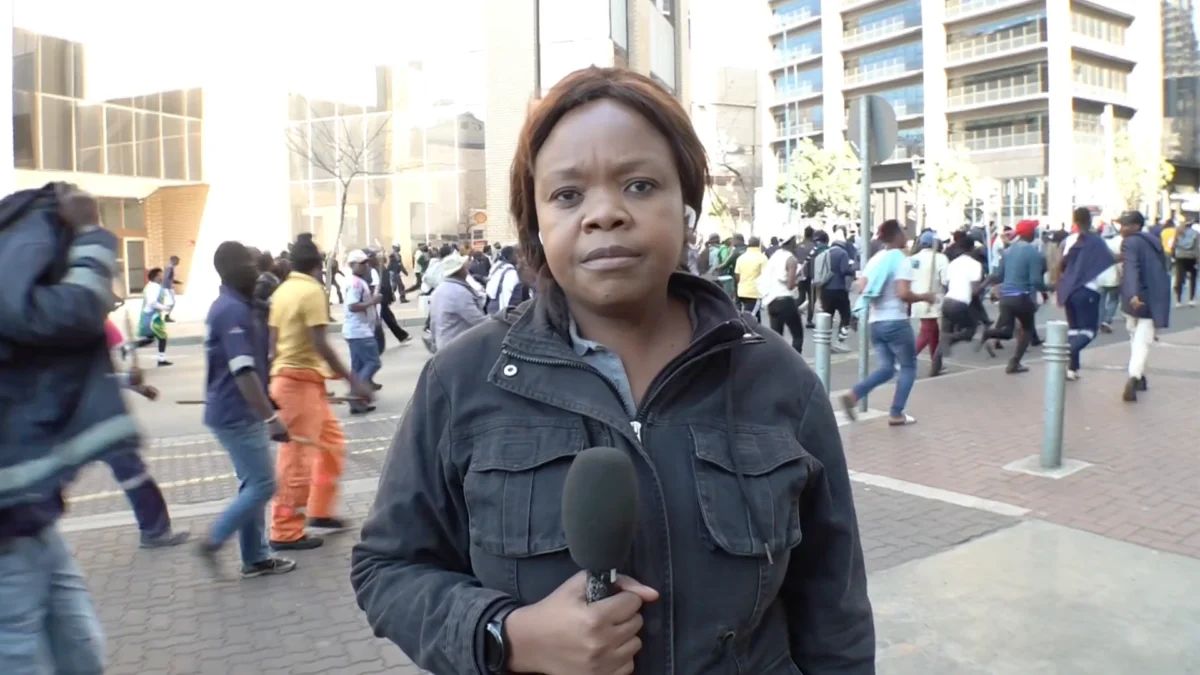
The streets of Johannesburg’s central business district and surrounding townships became the focal point of intense civil unrest on June 30, 2026, as thousands of demonstrators gathered to demand the immediate mass deportation of undocumented foreign nationals. The protests, organized by a coalition of nationalist movements and local community forums, coincided with an "unofficial deadline" set by these groups for all undocumented migrants to vacate the country. As the sun set over the Gauteng province, the atmosphere remained volatile, with heavy police presence deployed to prevent the kind of xenophobic violence that has periodically scarred South Africa’s post-apartheid history.
The demonstrators, carrying placards and chanting slogans such as "South Africa for South Africans," moved through areas known for high migrant populations, including Hillbrow, Yeoville, and Alexandra. The core grievances cited by the organizers center on the nation’s systemic economic struggles, specifically the soaring unemployment rate and the perceived strain on public infrastructure. While the South African government has not endorsed the June 30 deadline, the grassroots momentum behind the movement underscores a deepening fracture within the country’s social fabric.
Contextualizing the Rise of Anti-Migrant Sentiment
To understand the intensity of the June 30 protests, one must look at the socio-economic landscape of South Africa over the last decade. Since the early 2000s, the country has been a primary destination for migrants from across the African continent, particularly from Zimbabwe, Mozambique, Nigeria, and Ethiopia. Many are drawn by the promise of economic opportunity in Africa’s most industrialized economy or are fleeing political instability and conflict in their home nations.
However, the reality for many South Africans has been one of stagnation. By mid-2026, the national unemployment rate remains one of the highest in the world, with youth unemployment hovering near 60%. This economic desperation has provided fertile ground for populist movements to frame the presence of foreign nationals as the primary cause of domestic hardship. Groups like Operation Dudula and the "Put South Africa First" movement have gained significant traction by linking undocumented migration to the proliferation of informal settlements, the overburdening of the healthcare system, and the scarcity of entry-level jobs in the retail and construction sectors.
Chronology of the Unofficial Deadline
The "June 30 Deadline" was not a policy enacted by the Department of Home Affairs, but rather a symbolic ultimatum issued by community activists earlier in the year. The timeline of events leading to today’s protests highlights a gradual escalation in rhetoric:
- January 2026: Several community-based organizations in Gauteng and KwaZulu-Natal issued a joint statement demanding that the government "audit" all informal businesses and verify the residency status of all foreign shop owners.
- March 2026: Small-scale "clean-up" operations began in Johannesburg, where activists forcibly closed stalls and shops they claimed were owned by undocumented individuals. These actions were met with mixed responses from local law enforcement.
- April 2026: The coalition of anti-migrant groups officially designated June 30 as the "Day of Departure," warning that if the government did not begin mass deportations by this date, the citizens would "take matters into their own hands."
- June 15–29, 2026: Tensions built as the deadline approached. Migrant-owned businesses in Pretoria and Johannesburg began closing early, and many families reportedly fled to temporary shelters or sought refuge in embassies, fearing a repeat of the 2008 and 2015 xenophobic attacks.
- June 30, 2026: Large-scale marches began at 8:00 AM, converging on the headquarters of the Department of Home Affairs and the Gauteng Provincial Legislature.
Supporting Data: Economic and Social Indicators
The arguments presented by the protesters are often supported by a specific interpretation of national data. According to Statistics South Africa (Stats SA), the competition for resources in urban hubs is at an all-time high. While official figures suggest that foreign-born residents make up approximately 7% to 9% of the total population, local activists argue these numbers are undercounted due to the porous nature of the country’s borders.
In the labor market, the "displacement theory"—the idea that migrants take jobs from locals by accepting lower wages—is a central pillar of the protest movement. Data from the informal sector indicates that a significant portion of spaza shops (small convenience stores) and street vending operations are managed by foreign nationals. Protesters argue that this dominance prevents South Africans from entering the micro-economy.
Furthermore, the issue of crime has become inextricably linked to the migration debate. While the South African Police Service (SAPS) has repeatedly stated that crime is a multifaceted issue driven by poverty and inequality rather than nationality, high-profile cases involving foreign-led syndicates in drug trafficking and cable theft have been used by protest leaders to justify their demands for mass removals.
Official Responses and Human Rights Concerns
The South African government’s response to the June 30 protests has been a delicate balancing act. President Cyril Ramaphosa’s administration has consistently condemned xenophobia, citing the country’s commitment to Pan-Africanism and the African Union’s goals of regional integration. However, the government has also faced immense pressure to show that it is "tough on borders."
In a statement released late on June 30, the Ministry of Home Affairs urged for calm: "While we acknowledge the frustrations of our citizens regarding unemployment and service delivery, we cannot allow the rule of law to be undermined by vigilante deadlines. We are committed to ensuring that all residents in South Africa are documented and that our immigration laws are strictly enforced through legal channels, not through intimidation."
International bodies and human rights organizations have expressed grave concern over the safety of the migrant population. Amnesty International and the United Nations High Commissioner for Refugees (UNHCR) have called on the South African government to provide protection to vulnerable communities. "The scapegoating of migrants for systemic governance failures is a dangerous trend," said a spokesperson for a prominent human rights NGO in Johannesburg. "The unofficial deadline of June 30 has created a climate of fear that threatens the lives of thousands of innocent people, many of whom are legal asylum seekers or refugees."
Fact-Based Analysis of Implications
The implications of the current unrest extend far beyond the streets of Johannesburg. If the situation escalates into widespread violence, it could have significant repercussions for South Africa’s standing on the continent and its economic stability.
- Diplomatic Relations: South Africa’s relations with neighboring SADC (Southern African Development Community) nations, particularly Zimbabwe and Nigeria, are at risk. In previous years, xenophobic outbreaks led to retaliatory protests against South African businesses operating abroad, such as MTN and Shoprite.
- Economic Disruption: The informal economy, which provides a lifeline for millions of people, is heavily reliant on the distribution networks often managed by foreign nationals. A mass exodus or prolonged closure of these businesses could lead to supply chain disruptions in townships, exacerbating food insecurity and raising prices for the poorest citizens.
- The Rule of Law: The emergence of "unofficial deadlines" set by non-state actors poses a challenge to the authority of the South African state. If the government is seen as unable to control these movements, it may embolden further vigilante action in other sectors, such as housing or energy.
- Social Cohesion: The long-term impact on social cohesion is perhaps the most concerning. The "us versus them" narrative currently dominating the national discourse threatens to undermine the "Rainbow Nation" ideal that has been a cornerstone of South African identity since 1994.
Looking Ahead: The Path to Resolution
As the protests continue into the night, the immediate priority for the South African Police Service is the maintenance of order and the protection of life. However, experts agree that a security-led response is only a temporary fix. Addressing the root causes of the June 30 unrest will require a comprehensive approach that includes:
- Enhanced Border Management: Strengthening the newly established Border Management Authority (BMA) to ensure that immigration is managed effectively and legally.
- Economic Reform: Implementing policies that foster job creation for South Africans, particularly in the manufacturing and industrial sectors, to reduce the competition for survival in the informal economy.
- Transparent Data: Improving the collection and dissemination of migration data to counter misinformation and provide a factual basis for public policy debates.
- Community Dialogue: Facilitating grassroots dialogues between local residents and migrant communities to address grievances and foster mutual understanding.
The events of June 30, 2026, serve as a stark reminder of the volatility inherent in societies where high inequality meets rapid demographic change. While the "unofficial deadline" may pass, the underlying tensions that fueled today’s protests in Johannesburg are likely to persist until the fundamental socio-economic challenges facing the nation are addressed with transparency and urgency.
