

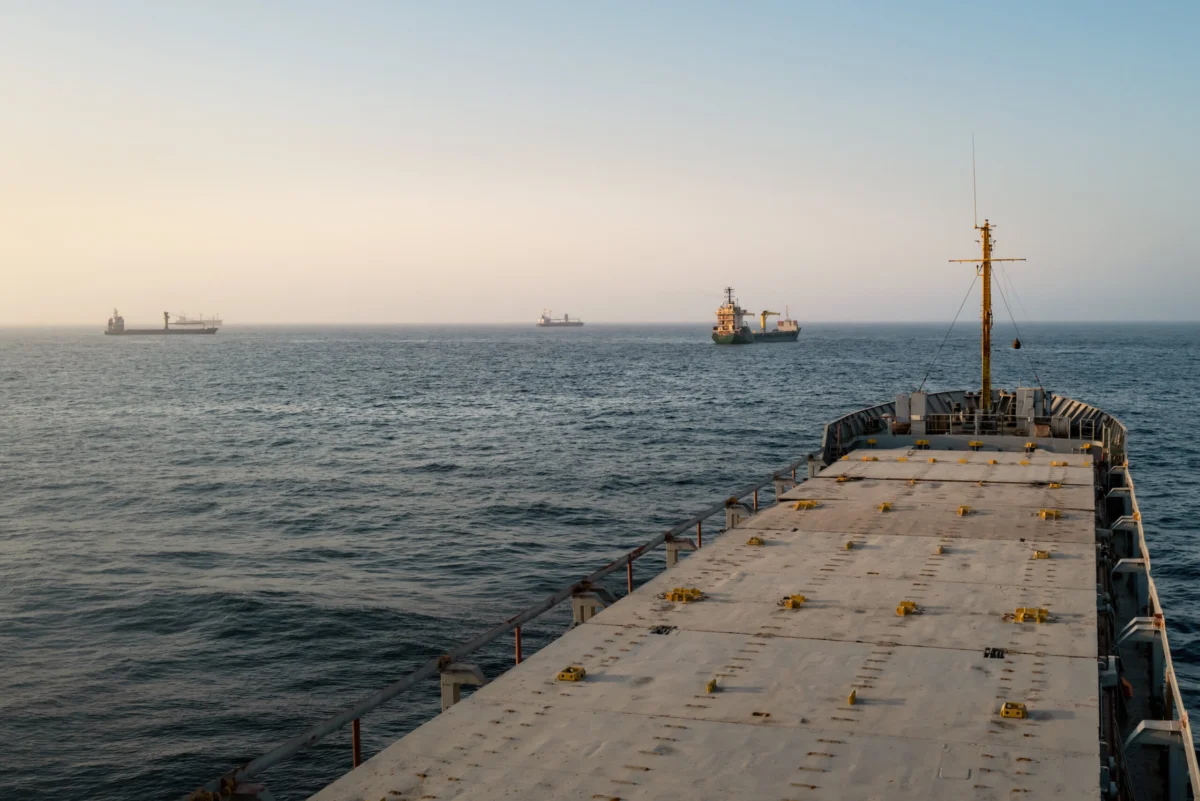
Shipping traffic through the vital Strait of Hormuz is experiencing a tentative recovery a week after a landmark deal between the United States and Iran aimed at reopening the critical waterway. However, a recent attack on a cargo vessel has cast a shadow of renewed uncertainty over the fragile passage, forcing a pause in United Nations evacuation efforts and prompting some oil tankers to alter their course. This incident underscores the precarious nature of the region’s geopolitical landscape and its profound impact on global energy markets.
The ceasefire announcement, brokered following months of escalating tensions and direct confrontations, had initially signaled a potential return to normalcy for maritime trade. In the immediate aftermath, from June 15th to June 21st, a total of 125 transits were recorded, representing the highest weekly volume since the conflict escalated in late February. This surge was largely driven by shipping companies rushing to move accumulated Gulf crude oil before the 60-day truce window, established as part of the broader deal, expires. The urgency to capitalize on this temporary reprieve underscores the significant economic stakes involved in maintaining open shipping lanes.
Further evidence of this cautious uptick was observed on June 24th, when AXS Marine recorded 62 commercial vessel crossings, the highest single-day count since the war began. While this figure represents a significant improvement, it is still equivalent to only 53% of the traffic observed on the same day in the previous year, highlighting the lingering hesitations and the long road to full recovery. The Strait of Hormuz, a narrow waterway situated between Oman and Iran, is one of the world’s most critical energy chokepoints, typically facilitating approximately 20% of global oil traffic. Its strategic importance cannot be overstated, as any disruption here has immediate and far-reaching consequences for global energy supply and prices.
The fragile peace was jolted on Wednesday when the Islamic Revolutionary Guard Corps (IRGC) declared that all vessels must adhere to its northern routing and comply with Iranian navigational instructions. This directive was swiftly followed by an attack on the Ever Lovely, a Singapore-flagged Evergreen container ship, which was struck on its starboard side by a projectile off the Omani coast. A U.S. official attributed the strike to the IRGC, marking the first reported attack on a cargo vessel since the ceasefire came into effect. This incident has effectively halted the United Nations’ planned evacuation of personnel, demonstrating the immediate and destabilizing impact of such acts of aggression.
This dual-authority scenario leaves shipowners in a precarious position, navigating between competing directives with no universally agreed-upon safety protocols. The IRGC’s designated northern corridor is under its direct control, while the U.S. and Oman have championed a separate southern corridor passing through Omani waters, with Oman issuing navigational guidance and the U.S. Navy providing maritime oversight. The original, standard pre-war commercial lane remains closed due to the lingering threat of naval mines, a dangerous legacy of the recent conflict.
Navigating Competing Authorities and Heightened Risks
The conflicting directives from Iranian authorities and the U.S.-Omani coalition have created a complex and hazardous environment for maritime operators. Iran’s warning of action against ships not using its northern route or coordinating with its officials highlights the assertive stance of the IRGC. Conversely, the U.S. and Oman’s efforts to establish a southern corridor offer an alternative, but this too is subject to the unpredictable geopolitical climate. This divergence of control and authority creates a significant dilemma for companies, forcing them to weigh the risks of transit against the potential for competitors to gain market share by accepting those risks.
Bruce Tan, a Singapore-based electronics manufacturer, articulated this challenge. He revealed that he had resumed moving goods to Middle Eastern clients after a four-month hiatus, but only in small, incremental batches. His decision reflects a cautious approach, hedging against the possibility of the Strait closing again. To further mitigate risk, Tan is also rerouting a portion of his orders through alternative corridors, a strategy aimed at insulating his business from potential future disruptions in the Strait of Hormuz. This demonstrates a broader trend among businesses to diversify their logistical strategies in response to the heightened instability.
Industry Leaders Weigh In on the Fragile Recovery
Despite the setback of the Ever Lovely attack, some industry leaders remain cautiously optimistic about the overall trend in shipping transits. Aristidis Alafouzos, CEO of Okeanis Eco Tankers Corp, a major crude oil shipping company, expressed his view that the incident off the Omani coast is unlikely to "significantly change" the upward trajectory of transits. Speaking to CNBC’s "Squawk Box Europe," Alafouzos noted the substantial increase in crude oil passages and anticipates this trend will continue. He believes that this "one-off event isn’t enough to really disrupt the recent events of the large exports of Kuwaiti and Emirati crude oil from the Gulf."
However, Alafouzos also pointed to a significant absentee in the recovery: Saudi Arabia. He observed that Saudi crude exports from within the Arabian Gulf remain negligible, with shipments primarily originating from Yanbu in the Red Sea. This suggests that while some Gulf states are resuming normal export operations, others are still hesitant or facing their own logistical challenges that are independent of the Strait of Hormuz situation. The full restoration of global oil supply will likely depend on the complete reintegration of all major producers into the international market.
A Deep Dive into the Strait of Hormuz’s Future
The ongoing situation in the Strait of Hormuz raises critical questions about the future of maritime security and global trade. Analysts have consistently warned that passage through the waterway remains fraught with peril. Shipping companies are urgently seeking greater clarity on safe navigation protocols, the potential for future tolls, and how existing sanctions regimes might interact with any reopened passages. This lack of certainty is a significant impediment to the full resumption of normal trade activities.
Tim Huxley, CEO of Singapore-based Mandarin Shipping, which manages a fleet of 50 vessels globally, highlighted the persistent concerns. Mandarin Shipping has kept all of its vessels out of the Strait, a testament to the perceived risks. Huxley elaborated on the multifaceted nature of the uncertainty, stating, "We don’t know how much of the straits is mined – it can be very dangerous going through that." He further emphasized the ambiguity surrounding the authorization of ship passages and the competing levels of control exerted by Iran and the U.S. This situation has led many ship owners to adopt a "wait and see" approach, delaying commitments until the geopolitical landscape stabilizes and clearer guidelines emerge.
The issue of insurance is also a major factor. Huxley noted that "insurance premiums are still very high on ships and cargoes going through the straits." He concluded, "Until there is a more concrete set of guidelines on safe navigation, people are going to be very reticent to go through." This sentiment is echoed by Han Shen Lin, China country director of The Asia Group, who provided a stark assessment of the corporate predicament.
Han Shen Lin bluntly stated, "Boardrooms aren’t asking about cargo safety – they’re asking if it is insurable." He revealed that war-risk premiums have escalated dramatically, from 0.05% to over 0.7% of hull value per transit. He characterized this as "not a risk premium, that’s a serious business model stress test." The financial implications of such premiums are substantial, impacting the profitability and viability of shipping operations. Furthermore, Han emphasized the cascading consequences of any incident: "One vessel seizure doesn’t just cost you the cargo – it costs you the client relationship, the insurance renewal, and your board’s confidence. Speed is worthless without survivability." This underscores the high-stakes environment in which companies are currently operating.
Broader Implications and the Path Forward
The recurring disruptions in the Strait of Hormuz have significant implications for the global economy. As a critical artery for oil and gas transportation, any prolonged instability can lead to price volatility, impacting everything from consumer fuel costs to industrial production. The current situation highlights the vulnerability of global supply chains to geopolitical tensions in strategically vital regions.
The incident involving the Ever Lovely serves as a stark reminder that the de-escalation efforts are fragile and susceptible to renewed provocations. The U.S. and Iran, having engaged in a delicate negotiation to restore passage, now face the challenge of managing the fallout from this attack and preventing a further deterioration of the situation. The United Nations’ paused evacuation plan underscores the immediate humanitarian concerns and the potential for civilian casualties in any escalation.
Moving forward, the key will be the establishment of clear, internationally recognized protocols for safe passage. This likely requires sustained diplomatic engagement, verifiable commitments from all parties involved, and a robust mechanism for incident response and de-escalation. The willingness of major oil producers, such as Saudi Arabia, to fully re-engage in the global market will also be a crucial indicator of the region’s stability. Until then, shipping companies and the industries that rely on them will continue to operate in an environment of heightened uncertainty, with the Strait of Hormuz remaining a potent symbol of the delicate balance between geopolitical interests and global economic stability. The long-term implications for energy security and international trade hinge on the ability to transform this fragile truce into lasting peace and predictable maritime operations.
