

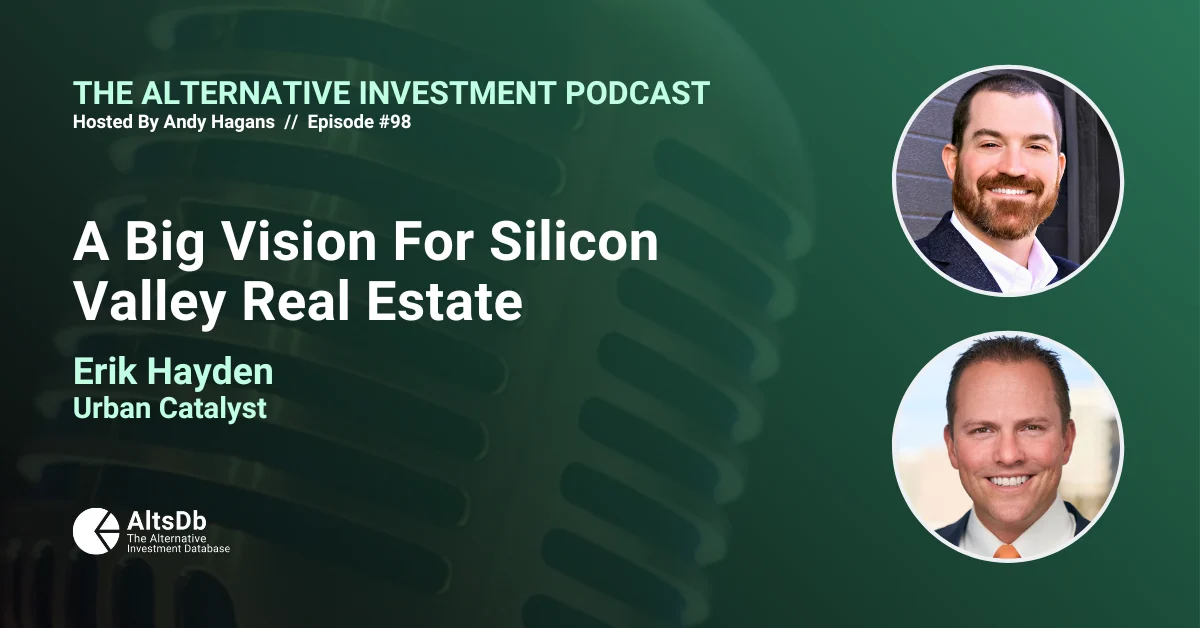
Silicon Valley, a region often perceived through a lens of "doom and gloom" in real estate discussions, is demonstrating remarkable resilience and is projected to experience a sustained wave of growth for decades to come. This optimistic outlook is supported by the region’s robust economic engine, fueled by innovation and the persistent demand for talent and infrastructure from leading technology companies. Erik Hayden, founder of Urban Catalyst and recognized as one of Silicon Valley’s 100 most powerful individuals, recently shared insights into how the region is positioned to create generational wealth for long-term real estate investors, a perspective that challenges prevailing negative sentiments.
The Enduring Powerhouse of Silicon Valley
The narrative surrounding California real estate has frequently been dominated by concerns over high costs, regulatory hurdles, and outward migration. However, a deeper analysis of Silicon Valley reveals a different story, one of sustained economic dominance and strategic development. In 2021, California, as a standalone economy, ranked as the fourth largest in the world, surpassing Germany. A significant portion of this economic prowess is directly attributable to Silicon Valley, which experienced one of its most prosperous years on record in 2021. The region saw a surge in companies going public, rivaling the dot-com boom era, and attracted unprecedented levels of venture capital funding. To illustrate this concentration of capital, the city of Menlo Park, with a population of just 45,000, received more venture capital funding than the entire state of Texas in 2021.
This economic vitality is underpinned by the presence of global technology giants such as Meta, Google, and Apple, whose headquarters and operations anchor the region. While discussions of population shifts to states like Texas and Montana have been prevalent, they often overlook the long-term demographic trends and the continuous influx of international talent. California’s population has grown consistently for over a century, with any recent minor dips being temporary. The state’s appeal, from its climate to its economic opportunities, continues to draw individuals from around the globe, offsetting some of the outward migration.
Urban Catalyst: A Vision for Ground-Up Development
Erik Hayden’s company, Urban Catalyst, has emerged as a prominent player in this dynamic landscape, focusing on ground-up real estate development. Hayden, who has a background in acquiring and developing large-scale projects across the San Francisco Bay Area, founded Urban Catalyst in 2018 with a specific vision for downtown San Jose. He identified a significant opportunity driven by the southward migration of tech companies from the traditional Silicon Valley hubs of Palo Alto, Menlo Park, and Mountain View. As these established cities became increasingly built out, San Jose emerged as the logical next frontier for expansion.
"We saw the light switch turning on in downtown San Jose from a ground-up development perspective," Hayden stated. "This was primarily due to the overall tech migration trends throughout Silicon Valley. If Palo Alto, Menlo Park, and Mountain View are the center of the tech universe, they aren’t very large cities. We’ve seen a lot of expansion."
The company’s strategy involved building strong relationships with property owners, allowing them to acquire land and initiate projects before the full wave of development hit. While many other developers also recognized San Jose’s potential, Urban Catalyst’s proactive approach and deep understanding of the local market allowed them to secure a strategic position.
The Strategic Role of Opportunity Zones
A key element of Urban Catalyst’s strategy has been its engagement with the Opportunity Zone (OZ) program. While the program offers significant tax benefits, Hayden emphasizes that it was not the primary driver for choosing San Jose. Instead, the decision to focus on OZ-eligible areas was a strategic choice to enhance investor returns.
"We wanted to be in San Jose, and San Jose was also an Opportunity Zone," Hayden explained. "We became an Opportunity Zone fund, and it’s been working out pretty great for us." This approach highlights a nuanced understanding of how tax incentives can complement strong underlying real estate fundamentals, rather than dictate investment decisions.
Navigating the Startup Phase: Risk and Capital
Launching a real estate development firm, especially one with a significant capital requirement for ground-up projects, inherently involves substantial risk. Hayden addressed this by emphasizing his extensive experience in land acquisition, a role he held with titles such as Vice President of Land Acquisition and Director of Land Acquisition. This expertise allowed him to navigate the complex process of evaluating potential projects, understanding city regulations, and developing accurate financial models.
The initial capital for Urban Catalyst was raised from friends and family, totaling approximately $4.5 million, solely to establish the company and cover operational costs. This early funding was crucial for covering significant expenses, including legal fees for contractor negotiations (estimated at $20,000-$30,000) and the creation of a Private Placement Memorandum for their first Opportunity Zone fund (around $300,000). The need to secure office space with a five-year lease further underscored the initial capital outlay.
Hayden also offered a philosophical perspective on entrepreneurial risk: "The person that you work for as an employee, their business can go out of business and then you’re fired. And then what? You’re gonna go find another job. As long as you start your own business, at least you get to make the choices. At least you’re the one that gets to steer the ship." This perspective suggests that entrepreneurship, while demanding, offers a degree of control that can mitigate certain types of professional risk.
A "Big, Bold Vision" from the Outset
Unlike serial entrepreneurs who might build businesses incrementally, Hayden’s approach with Urban Catalyst was characterized by a large-scale vision from its inception. He drew parallels between developing multi-million dollar buildings and flipping houses, arguing that the effort is comparable, with the primary difference being the number of zeros involved. Similarly, he noted that raising a $20 million fund versus a $200 million or $2 billion fund involves the same fundamental work, albeit with greater financial scale.
This mindset extended to Urban Catalyst’s fundraising strategy. Rather than relying on traditional channels dominated by broker-dealers and registered investment advisors, the company embraced digital marketing. By leveraging platforms like Google, LinkedIn, and Facebook, Urban Catalyst was able to reach individual investors directly, a tactic that proved highly successful. In their first year, they raised $50 million through this approach, a strategy that many in the industry subsequently emulated. This innovative use of digital channels for fundraising in the real estate equity space distinguished Urban Catalyst and contributed to its rapid growth and market recognition.
Earned Media and Brand Building
The news coverage surrounding Urban Catalyst’s projects has been extensive, with over 250 media mentions in the last five years. This "earned media" has significantly contributed to the company’s brand building efforts, a strategy often more valuable than paid advertising. Articles in local and national newspapers detailing project milestones—from applications and approvals to construction progress—have resonated with potential investors. This consistent positive press has generated organic traffic to their website and supported their fundraising initiatives, reinforcing the brand’s credibility and visibility.

Challenging Misconceptions About California Real Estate
Despite the prevailing negative narratives, Silicon Valley’s economic reality remains exceptionally strong. The region’s ability to attract significant investment and its status as a hub for innovation continue to drive its real estate market. Hayden pointed out that in 2021, Silicon Valley experienced its best year for IPOs since the dot-com era and saw record venture capital funding. This economic dynamism directly influences the real estate market, creating demand for both residential and commercial properties.
The narrative of widespread exodus from California is also being challenged. While some residents have relocated, the state’s overall population growth, bolstered by international immigration, remains a key demographic factor. Furthermore, the economic fundamentals driving demand in Silicon Valley are undeniable, even for investors who may hold differing political views. "You don’t invest based on your politics. You invest where the best financial opportunity is," Hayden asserted, a sentiment that underscores the pragmatic approach required in real estate investment.
The San Jose Housing Crisis: An Opportunity and a Challenge
Silicon Valley faces a severe housing shortage, with approximately six jobs created for every new housing unit built over the past 30 years. This imbalance has driven up housing costs dramatically, with San Jose recently being ranked as the most expensive big city in the United States and the fourth most expensive globally, with median home prices between $1.6 and $1.7 million. This crisis, while detrimental to affordability, also presents opportunities for developers.
However, the high cost of construction, driven by labor shortages and regulatory complexities, poses a significant challenge. Hayden highlighted the paradox: "We can’t even build buildings because the cost is too high, because nobody can live here to build the buildings." This creates a downward spiral where the lack of affordable housing for construction workers exacerbates the housing shortage.
Urban Catalyst’s Projects and the Future of San Jose
Urban Catalyst’s current offering, Opportunity Zone Fund II, features four diverse projects in downtown San Jose: Echo (approximately 400 multi-family units in a high-rise), Icon (a 500,000-square-foot office building), Keystone Hotel (a 172-key Marriott Townplace Suites), and Gifford Place (a senior living facility). The company’s success in securing approvals for all eight of its projects across its two funds is a testament to its development expertise and its strong working relationship with the city of San Jose’s planning and economic development departments.
Notably, downtown San Jose is recognized as a pro-development area, benefiting from existing infrastructure and transit options, making it an ideal location for high-density development. This contrasts with some other California cities that have faced significant development hurdles and political opposition.
The presence of Google’s massive "Downtown West" campus, a $19 billion, 10-year project involving 7 million square feet of office space and 6,000 residential units, further solidifies San Jose’s growth trajectory. Urban Catalyst’s projects are strategically located in close proximity to this development, creating significant positive synergy. The company fosters collaboration among developers in the area, recognizing that collective growth benefits all stakeholders.
Addressing the Office Market Dynamics
The office sector has faced scrutiny due to remote work trends. However, Hayden points out that Silicon Valley’s office market demonstrated resilience even during the pandemic, with strong transaction volumes and record prices. While rents have seen minor adjustments and vacancy rates have slightly increased, major tech companies continue to lease space.
The return-to-office trend is gradually gaining momentum in Silicon Valley, albeit slower than in some other parts of the country. Layoffs announced by major tech firms, while significant in headlines, represent a relatively small percentage of the overall workforce growth experienced during the pandemic. In fact, the unemployment rate in Silicon Valley remains exceptionally low, around 2%, indicating a persistently tight labor market. Many of these layoffs are viewed as consolidations or efforts to optimize profit margins rather than indicators of a widespread economic downturn.
Expanding the Investment Horizon: Delaware Statutory Trusts
In a strategic expansion of its investment platform, Urban Catalyst has launched its first Delaware Statutory Trust (DST) offering. This industrial property in Dallas, Texas, represents a move into a different asset class and geographic market, yet aligns with the company’s core focus on tax-advantaged real estate investments. The DST model offers investors a way to defer capital gains taxes through a 1031 exchange.
The Dallas-Fort Worth metroplex was chosen for its robust population growth and its status as the second-largest industrial market in the country. The property features a 10-year lease with 3% annual rent increases, providing a stable income stream and a clear exit strategy for investors. This focus on net lease properties with built-in rent escalations and strong tenant covenants aligns with Urban Catalyst’s philosophy of investing based on a solid business plan rather than pure speculation.
"We wanted to expand our fund platform to provide more opportunities for our investors," Hayden stated. "Delaware Statutory Trust, it fits right in our wheelhouse. Tax-advantaged real estate. That is what we do here at Urban Catalyst."
A Long-Term Perspective on Growth
The consistent theme across Urban Catalyst’s strategy is a focus on "boom towns" with strong underlying demographic and economic growth. By identifying markets with robust long-term potential, such as Silicon Valley and key industrial hubs like Dallas-Fort Worth, the company aims to create value for investors over the long term. This forward-thinking approach, coupled with a commitment to quality development and strategic investment vehicles, positions Urban Catalyst to capitalize on the enduring opportunities in the real estate market, effectively challenging the prevalent "doom and gloom" narrative.
For those interested in learning more about Urban Catalyst’s investment opportunities, their website, urbancatalyst.com, provides further information.
