

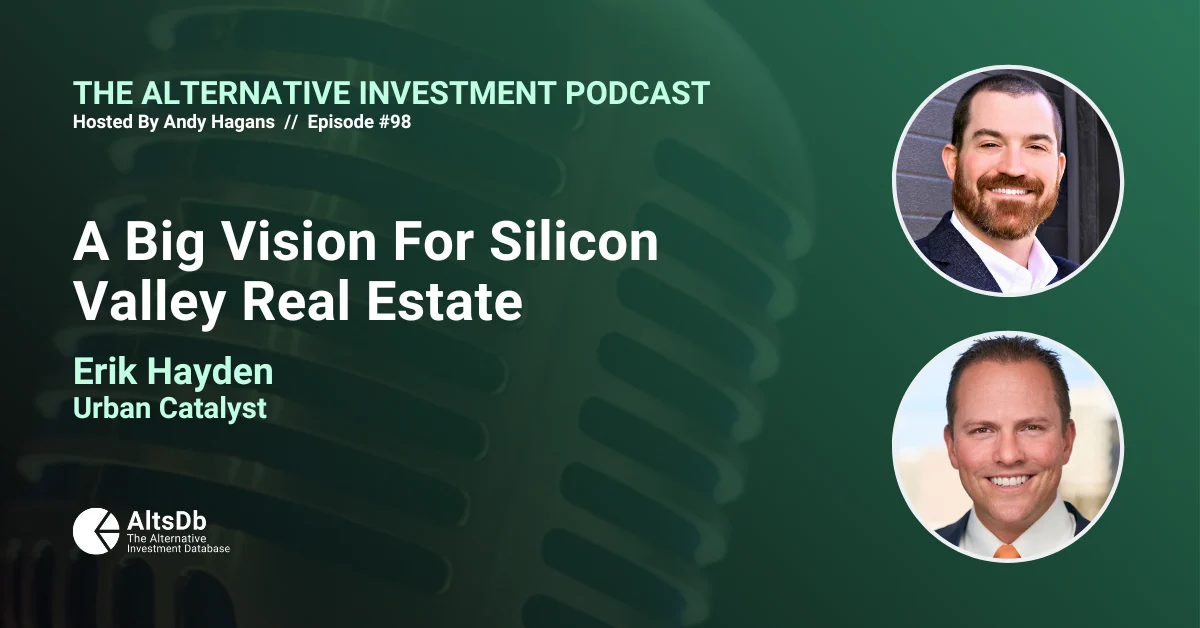
Silicon Valley, often a subject of starkly divided opinions, is demonstrating a robust capacity for sustained economic growth, challenging prevailing "doom and gloom" narratives. Erik Hayden, founder of Urban Catalyst and recognized as one of Silicon Valley’s 100 most powerful individuals, recently shared insights into the region’s real estate potential and its capacity to generate generational wealth for long-term investors. This perspective comes at a time when many regions grapple with economic uncertainty, yet Silicon Valley continues to attract significant investment and talent.
Urban Catalyst: A Foundation in Development and Opportunity
Urban Catalyst, as described by its founder, is a real estate equity fund with a strong foundation in expert real estate development. The firm engages in a multifaceted approach, encompassing the acquisition, ownership, and management of existing assets, alongside significant ground-up development and rehabilitation projects. This comprehensive strategy positions Urban Catalyst to capitalize on various market opportunities.
Erik Hayden’s entrepreneurial journey began with extensive experience in ground-up development, particularly within the dynamic Silicon Valley landscape, with a notable focus on San Jose. Prior to establishing Urban Catalyst in 2018, Hayden served as president of a development company overseeing a major project in Oakland and concurrently managed a consulting business for other development firms. The decision to launch Urban Catalyst was driven by a keen understanding of the high returns associated with ground-up development and the inherent potential of the Silicon Valley real estate market.
The San Jose Renaissance: A Strategic Pivot
Hayden identified a significant turning point in downtown San Jose around 2018, signaling a burgeoning opportunity for ground-up development. This observation was intrinsically linked to broader tech migration trends across Silicon Valley. While established tech hubs like Palo Alto, Menlo Park, and Mountain View are geographically constrained, the southward expansion of major technology companies such as Google, Apple, and Meta has created a ripple effect.
The development boom in Sunnyvale, which is now largely built out, pointed towards downtown San Jose as the next logical growth frontier. This foresight has been validated as numerous tech giants have acquired land, opened offices, and announced substantial expansion plans in San Jose. While other developers have also recognized this potential, Urban Catalyst’s strategy involved cultivating strong relationships with property owners, many of whom were already established contacts, enabling them to secure properties at an opportune moment, just as the wave of development was beginning to crest.
Hayden emphasized that Urban Catalyst’s initial focus on San Jose was not primarily driven by its designation as an Opportunity Zone. Instead, the decision stemmed from the fundamental belief in San Jose as an optimal location for building and achieving strong returns while simultaneously contributing to the city’s improvement. The alignment with Opportunity Zones was a subsequent realization, providing an additional layer of tax benefits for investors. This strategic approach, prioritizing sound real estate fundamentals over tax incentives, has proven successful.
Navigating the Startup Phase: Risk and Reward
The inception of a company like Urban Catalyst involves significant entrepreneurial risk. Hayden addressed the common perception of entrepreneurship as inherently risky, countering that it can also be a path to greater control and, potentially, reduced risk when approached strategically. He highlighted the importance of thorough preparation and risk mitigation in the early stages.
Urban Catalyst’s launch was supported by an initial sponsor-level capital raise of approximately $4.5 million, primarily from friends and family. This funding was crucial for establishing operations, covering essential costs such as legal fees for creating a Private Placement Memorandum (estimated at $300,000 for their first fund), leasing office space, and negotiating contractor agreements. The high cost of doing business in California, particularly for professional services, was acknowledged as a significant factor, yet the underlying economic strength of the region made these investments feasible.
Hayden drew a parallel between being an employee and a business owner, arguing that both roles carry inherent risks. However, as a business owner, one retains the agency to steer the company’s direction, a critical factor in navigating market fluctuations and achieving long-term success.
A Vision for Scale: Beyond Incremental Growth
Unlike entrepreneurs who adopt a serial approach, building and exiting multiple smaller ventures, Hayden’s vision for Urban Catalyst was characterized by an immediate focus on scale. This "big, bold vision" contrasts with a strategy of starting small and gradually expanding. He cited examples of successful large funds like Blackstone, which began with substantial initial capital, and drew a parallel to ground-up development.
Hayden’s personal experience with developing large-scale buildings, with an average size of $100 million, informed his perspective. He posited that the effort involved in constructing a $100 million building is not exponentially greater than flipping a house; it primarily involves managing larger figures. Similarly, at the fund level, raising and deploying a $20 million fund versus a $2 billion fund involves similar foundational work, with the primary difference being the magnitude of capital. This philosophy underscores a commitment to tackling ambitious projects from the outset.
Disrupting Fundraising with Digital Marketing
Urban Catalyst’s fundraising strategy also deviated from the norm. While many Opportunity Zone funds rely heavily on broker-dealers and registered investment advisors, Hayden noted that these channels often expressed reservations about first-time funds. In response, Urban Catalyst embraced a direct-to-investor approach, leveraging new SEC regulations (506(c)) and employing digital marketing tactics.
By utilizing platforms like Google, LinkedIn, and Facebook, Urban Catalyst drove potential investors to their website, facilitating lead generation and subsequent engagement through their investor relations team. This digital-first strategy proved highly effective, enabling them to raise $50 million in their first year. This approach marked a significant shift in the real estate equity fundraising landscape, prompting many other firms to adopt similar digital marketing strategies. The cost of digital advertising, such as Google AdWords, increased as more players entered the space, but Urban Catalyst’s early adoption provided a distinct advantage. Their team, many of whom had prior experience in the tech industry, brought established marketing expertise to the real estate sector.
Brand Building Through Earned Media
The synergistic effect of Urban Catalyst’s development projects and their marketing strategy has resulted in significant brand building. Ground-up development inherently generates news, with each project milestone—from permit approvals to construction progress—contributing to media coverage. Over the past five years, Urban Catalyst has been featured in over 250 news articles, including consistent appearances in the Silicon Valley Business Journal. This "earned media" provides a level of credibility and visibility that purchased advertising cannot replicate, driving organic traffic and further fundraising efforts.
Addressing Misconceptions: The Enduring Strength of Silicon Valley
Despite persistent narratives of decline, Silicon Valley remains an economic powerhouse. In 2021, California’s economy, if it were an independent country, would rank as the fourth-largest globally, surpassing Germany. Silicon Valley itself experienced one of its most successful years in 2021, with a surge in companies going public and unprecedented levels of venture capital funding. The city of Menlo Park, with a population of 45,000, attracted more venture capital than the entire state of Texas. The presence of global tech giants like Meta, Google, and Apple anchors this economic vitality.

Concerns about population exodus from California are often overstated. While there have been population shifts, California’s population has historically grown, and recent figures indicate a return to growth trajectories following a minor dip in 2020-2021. This growth is partly fueled by international immigration, with individuals drawn to California’s climate, economy, and opportunities, often viewing it as a compelling value proposition compared to other global destinations.
The state’s budget surplus in 2023 further counters the "doom and gloom" narrative. While political discourse can be divisive, investment decisions should be guided by financial opportunity rather than political alignment. Historically, California real estate has demonstrated remarkable appreciation over the past 50 years, providing significant returns for investors who have made prudent decisions.
The San Jose Housing Crisis: A Development Opportunity
San Jose has been identified as the most expensive large city in the United States and the fourth most expensive globally, with median home prices ranging between $1.6 and $1.7 million. This severe housing shortage, where six jobs have been created for every housing unit built over the last three decades, presents a significant challenge but also an opportunity for development.
The high cost of construction, driven by labor shortages, exacerbates this crisis. There is a scarcity of skilled labor willing and able to live in the region due to housing costs, creating a self-perpetuating cycle of rising construction expenses. This dynamic underscores the critical need for efficient and effective development strategies.
Urban Catalyst’s success in securing approvals for all eight of its projects across its two funds in San Jose is a testament to the city’s planning and economic development department, which Hayden describes as "top-notch" and understanding of urban development. While California as a state can present development hurdles, downtown San Jose has demonstrated a pro-development stance, recognizing the need for high-density housing in areas with robust infrastructure and transit.
Urban Catalyst’s Opportunity Zone Fund II: Diversified Projects
Urban Catalyst’s Opportunity Zone Fund II encompasses four distinct projects:
- Echo: A high-rise development featuring approximately 400 multi-family units.
- Icon: A 500,000-square-foot office building.
- Keystone Hotel: A 172-key Marriott Townplace Suites, which is already under construction.
- Gifford Place: A senior living facility, specifically assisted living and memory care.
This diversified portfolio mitigates risk by spanning various asset classes. The strategic location of the Icon office building, near the future BART station and Santa Clara Street—the central business district’s main thoroughfare—positions it as a prime transit-oriented development. Its proximity to Google’s planned "Downtown West" mega-campus, a $19 billion, 10-year project expected to be Google’s largest global campus, creates significant positive synergy. This massive undertaking, involving 7 million square feet of office space and 6,000 residential units, is already underway.
The collaborative spirit among the approximately 10 active developers in downtown San Jose, who meet regularly to support each other’s projects, fosters a shared vision for downtown’s revitalization. This collective effort aims to create a more vibrant urban core, where each successful development enhances the value of others.
Addressing the Office Market Dynamics
While the headlines often paint a bleak picture for the office sector, Silicon Valley’s office market has shown resilience. Even during the COVID-19 pandemic, the region experienced robust transaction volumes and record prices for existing office space, attracting significant investment. Although rents have seen minor decreases and vacancy rates have slightly increased, large tech companies continue to sign substantial leases.
The return-to-office trend in Silicon Valley is lagging behind other parts of the country, with approximately 60-70% of workers having returned compared to pre-pandemic levels. This slower pace is partly attributed to aggressive hiring in 2021, where tech workers had considerable leverage. However, recent layoffs, though headline-grabbing, represent a small fraction of the overall pandemic-era hiring. The unemployment rate in Silicon Valley remains low at 2%, and job growth has continued, even amidst reported layoffs. Notably, major tech companies have consolidated layoffs, with a disproportionately small percentage impacting their Silicon Valley operations. Apple, for instance, has not conducted significant layoffs and has recently leased additional office space.
The Delaware Statutory Trust (DST) Offering
Urban Catalyst is expanding its offerings with a new Delaware Statutory Trust (DST) product. This initiative marks a diversification beyond their core Opportunity Zone focus. The initial DST offering features an industrial property in Dallas, Texas, a market experiencing robust demographic and economic growth.
The choice of an industrial property in Dallas aligns with Urban Catalyst’s strategic approach to identify "boom towns" with strong long-term economic fundamentals. The DST structure, offering tax-advantaged real estate investments, fits seamlessly with the firm’s expertise. The selected industrial property boasts a 10-year lease with a 3% annual rent increase, providing built-in rent growth and a clear exit strategy for investors. This net-lease structure offers a lower risk profile compared to ground-up development, while still capitalizing on strong market fundamentals.
Dallas-Fort Worth’s industrial market is particularly attractive due to its significant population growth and its status as the second-largest industrial market in the country. The chosen property’s location within the city of Dallas, between Dallas and Fort Worth, and its proximity to the Dallas-Fort Worth International Airport, a major freight cargo hub, further enhance its strategic value. Historical rent growth in the submarket has been strong, averaging 14% year-over-year for industrial properties. This combination of contractual rent increases and strong market appreciation provides a conservative yet potentially lucrative investment thesis.
Urban Catalyst’s commitment to quality and excellence, demonstrated in their Opportunity Zone funds, is being applied to their DST offerings, aiming to provide investors with high-quality, tax-advantaged real estate opportunities. The firm’s ability to raise capital directly from individual investors, coupled with their established brand and reputation, positions them well for success in this expanded market.
For investors seeking to learn more about Urban Catalyst’s investment opportunities, the firm can be reached at urbancatalyst.com.
