

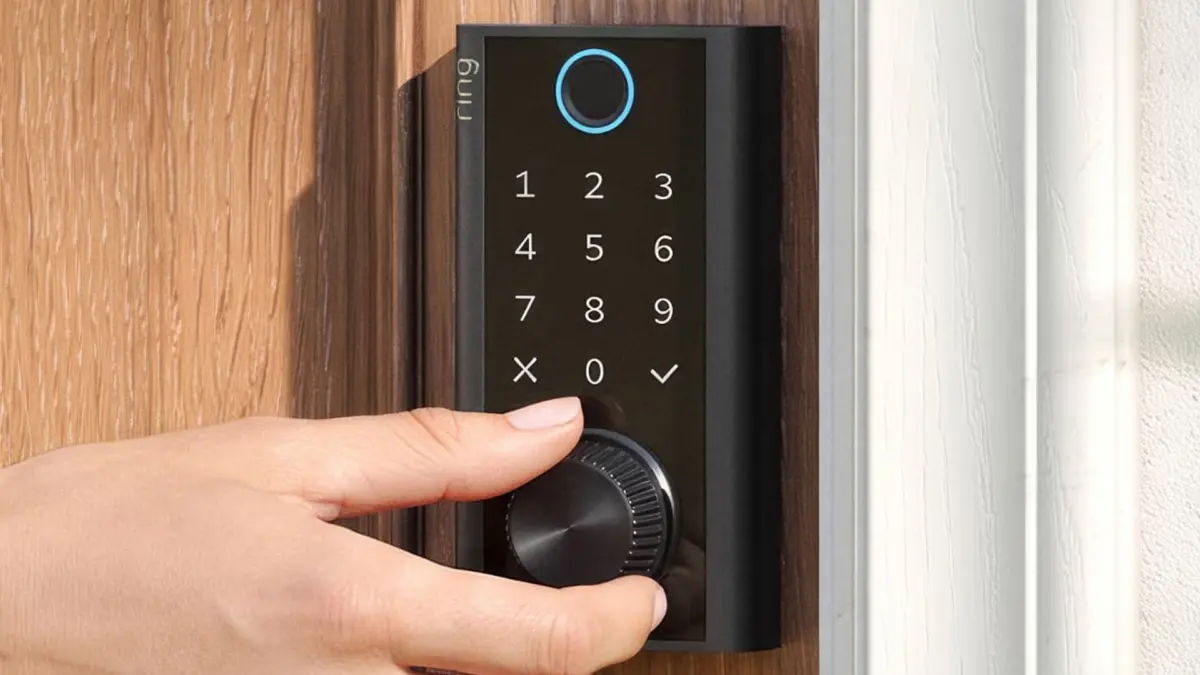
Ring, the Amazon-owned security giant that revolutionized the front porch with its video doorbells, has officially announced its entry into the smart lock hardware market. After years of integrating with third-party lock manufacturers, the company unveiled the Ring Smart Lock, a device designed to address one of the most persistent anxieties in home automation: the dead battery lockout. Set for release in early 2027, the device introduces a novel manual power dial that allows homeowners to generate enough electricity to operate the lock even when its internal battery is completely depleted.
The announcement marks a significant expansion of the Ring ecosystem. While Ring has long offered a comprehensive suite of outdoor cameras, alarm systems, and doorbells, it previously relied on "Works with Ring" partnerships with brands like Yale and Schlage to provide locking solutions. By developing its own proprietary lock, Ring is moving toward a more vertically integrated "whole-home" security model, ensuring tighter synergy with the Ring app and Amazon’s Alexa voice assistant.
The Engineering of the Manual Power Dial
The centerpiece of the Ring Smart Lock is its unique kinetic energy harvesting mechanism. Most smart locks on the market today rely on one of three backup methods when batteries fail: a physical keyway, a set of external contact points for a 9V battery jumpstart, or a USB-C emergency power port. Each of these solutions has inherent flaws. Physical keys are often forgotten or lost, 9V batteries are rarely carried on one’s person, and finding a portable power bank and cable while locked out of a home can be a logistical challenge.
Ring’s solution is a manual dial located on the exterior housing of the lock. By turning this dial, the user operates an internal generator that converts mechanical energy into electrical power. This energy is then routed to the lock’s control board and motorized deadbolt. According to technical specifications provided during the announcement, a short period of manual rotation provides sufficient current to power the keypad or fingerprint scanner, allowing the user to authenticate their identity and retract the bolt.
This "fail-safe" design is intended to eliminate the "range anxiety" associated with smart home hardware. For travelers returning from long trips or families who may have ignored low-battery notifications, the manual dial serves as a permanent insurance policy against being stranded outside.
Access Methods and User Interface
The Ring Smart Lock is designed as a multi-modal access point, offering four distinct ways to unlock the door. This versatility is intended to cater to different user preferences and situational needs:
- Biometric Fingerprint Scanner: A high-resolution capacitive sensor allows for near-instant access. Biometric entry has become a standard in the premium smart lock market due to its speed and the fact that it requires no peripheral tools or memorized codes.
- Backlit Keypad: For those who prefer traditional methods or need to grant access to guests, the lock features a physical keypad. Users can generate permanent or temporary PIN codes via the Ring app.
- Ring App Integration: Like all Ring products, the lock can be controlled remotely. This allows homeowners to verify the status of their door from anywhere in the world and lock or unlock it with a tap on a smartphone.
- Alexa Voice Control: As an Amazon-backed product, the lock features deep integration with the Alexa ecosystem. Users can lock the door using voice commands or include the lock in "Goodnight" routines that secure the home’s perimeter automatically.
Once inside the home, users can access the battery compartment. The lock utilizes Ring’s "Quick Release Ultra" battery pack, a rechargeable unit consistent with the company’s newer doorbell models. This modularity allows users to swap batteries easily without removing the entire lock housing.
Strategic Market Context and Competition
The smart lock market has seen a surge in innovation over the last five years, with the global market size valued at approximately $2.1 billion in 2023 and projected to grow at a compound annual growth rate (CAGR) of over 15% through 2030. Ring’s entry into this space is a direct challenge to established players like August, Yale, and U-tec.
Industry analysts suggest that Ring’s primary advantage lies in its massive existing user base. With millions of homes already equipped with Ring Video Doorbells, the addition of a native smart lock creates a seamless "entryway experience." For example, a user could theoretically see a delivery person via their doorbell camera and unlock the door to allow a package to be placed inside, all within a single interface.
However, the late 2027 release date puts Ring at a potential disadvantage regarding emerging industry standards. The smart home world is currently transitioning to "Matter," a universal connectivity standard designed to make devices from different manufacturers work together seamlessly. While Ring has not yet confirmed Matter compatibility or Thread support for the new lock, the industry expectation for a 2027 flagship product is full cross-platform interoperability with Apple Home and Google Home.

Technical Specifications and Aesthetics
Ring has confirmed that the Smart Lock will launch with a retail price of $250. This places it in the mid-to-high-range category, competing with the Schlage Encode and the Yale Assure series. To ensure the hardware complements a variety of architectural styles, Amazon will offer the lock in three distinct finishes:
- Satin Nickel (Silver): A modern, versatile finish suitable for contemporary homes.
- Matte Black: A popular choice for minimalist and industrial designs.
- Polished Brass: A traditional finish for classic or colonial-style entryways.
The lock is expected to be a full deadbolt replacement rather than a "retrofit" kit (like those offered by August), meaning it will require the removal of existing door hardware. This approach generally offers greater physical security and a more cohesive aesthetic look.
Security, Privacy, and Data Management
As with any internet-connected security device, privacy remains a paramount concern for potential buyers. Ring has faced scrutiny in the past regarding data handling and law enforcement access to camera footage. In response, the company has implemented mandatory two-factor authentication and end-to-end encryption for many of its products.
For the Smart Lock, Ring is expected to employ AES-128 bit encryption for all communication between the lock, the Ring Bridge (if required), and the cloud. The use of temporary PIN codes adds a layer of security for service providers or short-term rentals, as these codes can be set to expire after a single use or a specific time window. Furthermore, the lack of a traditional keyway on certain models can actually increase security by making the lock immune to "lock picking" or "key bumping," two common methods used by intruders to bypass mechanical locks.
Anticipated Challenges and Unanswered Questions
Despite the excitement surrounding the manual power dial, several questions remain regarding the device’s long-term performance. The efficiency of the manual generator is a point of interest; it is currently unknown how many rotations of the dial are required to "wake up" the system. If the mechanism requires excessive physical effort, it may be less accessible to children or elderly users.
Furthermore, battery life estimates have not yet been released. Most modern smart locks aim for six to twelve months of battery life on a single charge. Given that the Ring Smart Lock will likely utilize Wi-Fi or Sidewalk (Amazon’s long-range low-bandwidth network) for connectivity, managing power consumption will be a critical engineering hurdle.
The 2027 release window is also unusually far in the future for a consumer electronics announcement. This suggests that the product may still be in the final stages of hardware refinement or that Amazon is waiting for the broader adoption of new networking protocols before bringing the device to market.
The Broader Impact on Home Automation
The introduction of the Ring Smart Lock signals a shift in how tech giants view the "perimeter" of the home. By controlling the camera (Doorbell) and the access point (Lock), Amazon gains a comprehensive data set regarding home traffic patterns and security habits.
For the consumer, the primary benefit is the reduction of friction. The manual power dial represents a "human-centric" design philosophy—recognizing that technology is prone to failure and providing a mechanical solution that empowers the user. If successful, this feature could become a standard requirement for smart locks, much like the emergency trunk release became a standard in the automotive industry.
As the 2027 launch approaches, Ring is expected to provide further updates regarding third-party integrations and specific installation requirements. For now, the company has opened a notification sign-up on its official website, allowing interested consumers to stay informed as the project moves from announcement to production. In a crowded market, Ring’s "never-dead" battery solution may be the specific innovation needed to move smart locks from a luxury novelty to a household essential.
