

Following a disappointing July 2026 payrolls report that revealed an unexpected contraction in the U.S. labor market, leading prediction market platforms are indicating a potential rebound in August hiring. However, the collective intelligence of these platforms suggests a more tempered recovery than traditionally forecasted by economists, underscoring persistent uncertainty within the economic landscape. Traders on Kalshi, a regulated prediction market, currently assign 50-50 odds that more than 50,000 jobs were created last month. This outlook implies a slightly more conservative stance compared to the Dow Jones consensus estimate, which projects 53,000 jobs added in August. Similarly, Polymarket, another prominent platform, gives a 48% likelihood that the economy surpassed the 50,000 job creation threshold for the month. This nuanced anticipation emerges after a period of significant forecasting misses, where both conventional economic models and prediction markets have consistently overestimated the pace of job growth, raising questions about the reliability of current analytical tools in a volatile economic environment.
The Evolving Landscape of Economic Forecasting: Prediction Markets Gain Traction
Prediction markets, platforms where users trade contracts based on the outcome of future events, have increasingly garnered attention as alternative tools for economic forecasting. Unlike traditional surveys or econometric models, these markets aggregate the beliefs of a diverse group of participants who put real money on the line, theoretically incentivizing accurate predictions. The price of a contract on these platforms reflects the crowd’s perceived probability of an event occurring, offering a real-time, dynamic forecast. For instance, on Kalshi, traders engage in contracts asking whether a specific number of jobs will be created in a given month, with resolutions tied directly to official data from the U.S. Bureau of Labor Statistics (BLS). This mechanism provides a direct, market-driven probability estimate that some argue can sometimes be more responsive and less prone to systemic biases than traditional expert consensus. Their growing prominence stems from a desire among investors and analysts to find complementary or even superior forecasting methods, especially in times when conventional models appear to be struggling to capture rapid economic shifts. The theory behind the "wisdom of crowds" suggests that a large, diverse group of individuals, each with incomplete information, can collectively make more accurate predictions than any single expert. However, these markets are not without their limitations, including potential liquidity issues, the influence of dominant traders, and the nascent stage of their integration into mainstream economic analysis.
A Recent History of Forecasting Challenges: Two Months of Surprises
The current cautious outlook for August is heavily influenced by the recent track record of forecasting errors. For two consecutive months leading up to the August report, both traditional economists and prediction market traders significantly misjudged the trajectory of the U.S. labor market.
- June 2026: Expectations were robust, with many forecasts, including those from prediction markets, anticipating job creation in the six figures. This optimism was rooted in the ongoing narrative of a resilient labor market post-pandemic, albeit one grappling with inflationary pressures. However, the official BLS report delivered a stark contrast, showing job creation just below 60,000. This substantial miss sent ripples through financial markets and prompted a reassessment of the underlying strength of the economy. The initial surprise was attributed by some analysts to seasonal adjustments or idiosyncratic factors, but it also signaled a potential slowdown that was not fully captured by prevailing models.
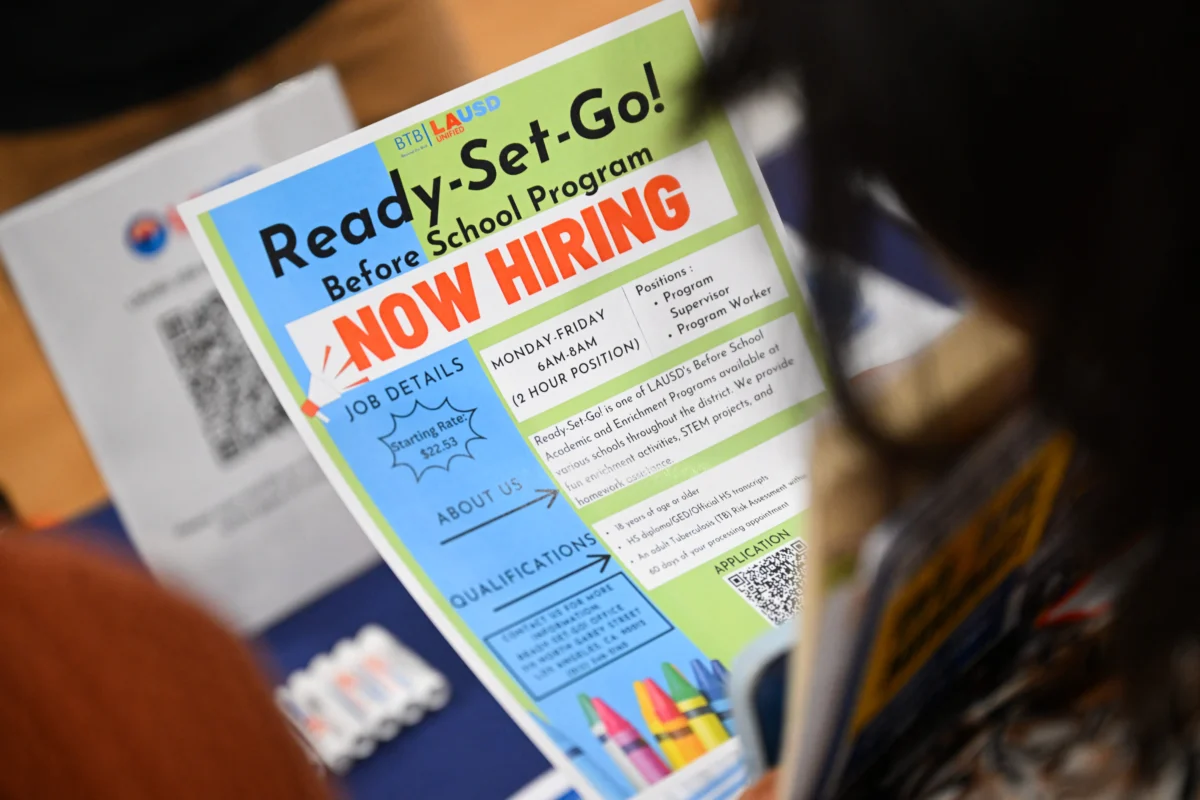
- July 2026: Building on the June disappointment, forecasts for July were already more subdued but still generally anticipated job growth. Prediction markets, for example, leaned towards positive job creation. Yet, the actual outcome proved even more startling: the U.S. economy reported a net loss of jobs for the month. This marked a significant turning point, shifting the conversation from a mere slowdown to concerns about potential labor market contraction. The July report served as a potent reminder of the economic volatility and the challenges faced by forecasters in accurately predicting labor market dynamics amidst ongoing global uncertainties, supply chain adjustments, and the cumulative impact of monetary policy tightening. The job losses, while not catastrophic, signaled a clear break from the trend of consistent, albeit moderating, job gains seen throughout much of 2025 and early 2026. This period also saw localized efforts to bolster employment, as exemplified by the Los Angeles Unified School District (LAUSD) holding an "Inspire Together" job and resource fair on July 29, 2026, actively seeking to fill education careers, a microcosm of the varied and sometimes challenging hiring landscapes across different sectors and regions.
August 2026 Outlook: A Nuanced View from Prediction Markets
Given the recent history of forecasting misses, the current predictions for August carry a heightened sense of scrutiny. Prediction market traders, having experienced firsthand the unexpected turns of the labor market, are exhibiting a broader range of potential outcomes for the upcoming report. On Kalshi, while the base case hovers around 50,000 jobs created, the platform also reflects significant probabilities for more extreme scenarios. Speculators on Kalshi see approximately a 1-in-4 chance that the U.S. economy actually lost jobs last month, echoing the surprising contraction seen in July. Simultaneously, there’s a similar 1-in-4 likelihood for a more robust outcome, with a contract asking if the country created more than 80,000 jobs in the period. This wide dispersion of probabilities highlights the market’s collective uncertainty and the potential for another significant deviation from consensus. The Dow Jones consensus estimate of 53,000 new jobs sits within this broader spectrum but is slightly higher than the 50-50 odds offered by Kalshi for exceeding 50,000 jobs, and the 48% likelihood from Polymarket. This subtle difference suggests that prediction markets, perhaps chastened by recent misses, are slightly more conservative or are pricing in a higher degree of risk for a weaker report. The August employment reading is scheduled for delivery at 8:30 a.m. ET on Friday, a moment keenly awaited by investors, policymakers, and the public alike.
The Broader Economic Landscape and Labor Market Dynamics
The U.S. labor market’s trajectory in mid-2026 is inextricably linked to broader economic forces, particularly the ongoing efforts by the Federal Reserve to combat persistent inflation. Throughout 2025 and into 2026, the Fed implemented a series of aggressive interest rate hikes aimed at cooling an overheating economy and bringing inflation back down to its target rate. A primary goal of these policies was to temper demand, which in turn was expected to lead to a moderation in wage growth and a loosening of the tight labor market. The recent slowdown in job creation and the surprising job loss in July could be interpreted as signs that the Fed’s policies are indeed taking hold, potentially pushing the economy towards a "soft landing" – a scenario where inflation subsides without triggering a severe recession. However, the sharp decline in job numbers also raises fears of an impending economic downturn.
Several factors contribute to the current complexity of the labor market. Supply chain disruptions, though easing, continue to affect certain sectors, while geopolitical tensions add another layer of uncertainty. Consumer sentiment has been volatile, influenced by inflation, interest rates, and the overall economic outlook. Business confidence surveys also show mixed signals, with some sectors experiencing robust demand while others face headwinds. The demand for labor itself remains uneven. While industries like technology saw significant layoffs in late 2025 and early 2026 as companies right-sized after a pandemic-driven hiring spree, other sectors, such as healthcare, education (as evidenced by the LAUSD fair), and leisure and hospitality, continue to face labor shortages in specific roles. The "Great Resignation" phenomenon, which saw millions of workers voluntarily leaving their jobs, has largely subsided, but the dynamics of worker preferences and expectations continue to evolve, impacting recruitment and retention strategies for businesses. The challenge for forecasters lies in discerning whether the recent job market softness is a healthy rebalancing or a prelude to a more significant downturn.
Implications for Monetary Policy and Financial Markets
The August jobs report holds significant implications for the Federal Reserve’s future monetary policy decisions. A weaker-than-expected report, especially one showing further job losses or minimal gains, could reinforce the view that the economy is cooling rapidly. Such data might prompt the Fed to pause or even reconsider further interest rate hikes, potentially signaling an end to the current tightening cycle. Conversely, a surprisingly strong report, particularly one exceeding the higher end of prediction market expectations (e.g., above 80,000 jobs), could suggest that the labor market remains resilient, providing the Fed with more room to continue its fight against inflation through additional rate increases. The central bank’s dual mandate of maximizing employment and maintaining price stability means that labor market data is a critical input into its decision-making process.
Financial markets will react swiftly to the release. Equity markets, which have been sensitive to signs of economic slowdown and the potential for recession, would likely see volatility. A weaker jobs report might initially cause stocks to dip on recession fears but could also be interpreted positively if it increases the likelihood of a Fed pivot towards lower rates. Conversely, a strong report might initially be seen as negative for equities if it suggests continued aggressive rate hikes. The bond market, particularly U.S. Treasury yields, is also highly responsive. Weaker job growth typically sends bond yields lower as investors anticipate a less hawkish Fed, while strong job numbers usually push yields higher. The U.S. dollar’s value against other major currencies is another key indicator, often strengthening on positive economic data that supports higher interest rates and weakening on signs of economic distress. Analysts across Wall Street are closely watching these indicators, with many acknowledging that the unprecedented nature of the post-pandemic recovery and inflationary cycle makes forecasting particularly challenging. The consistent misses by both traditional and prediction market forecasts highlight the difficulty in accurately modeling an economy still grappling with the lingering effects of global events and aggressive policy interventions.
The Evolving Role of Prediction Markets in Economic Analysis
The recent track record of prediction markets, while not perfect, offers valuable insights into their evolving role in economic analysis. While they too have overestimated job numbers in June and July, their current August forecasts show a slight divergence from traditional consensus, leaning towards a more cautious outlook. This could be interpreted in several ways: perhaps prediction market participants are quicker to adjust their collective expectations based on recent data, or they are better at pricing in tail risks (such as continued job losses). Their ability to reflect a wide range of probabilities, as seen on Kalshi with significant odds for both job losses and strong gains, offers a more granular view of market sentiment and uncertainty compared to a single point estimate from economists. As these platforms mature and gain more liquidity, they may become increasingly valuable as a real-time sentiment gauge, complementing traditional economic indicators and expert analyses. They represent a democratized form of forecasting, allowing a broader public to participate and contribute to collective economic intelligence. However, it is crucial to understand that prediction markets are not infallible; they are subject to the biases and collective psychology of their participants. Their utility lies in providing an additional data point, a different lens through which to view complex economic phenomena, rather than replacing established analytical frameworks entirely. The ongoing scrutiny of their performance against official BLS data will continue to refine our understanding of their strengths and weaknesses as forecasting tools in an increasingly unpredictable global economy.
(Disclosure: CNBC and Kalshi have a commercial relationship that includes customer acquisition and a minority investment.)
