

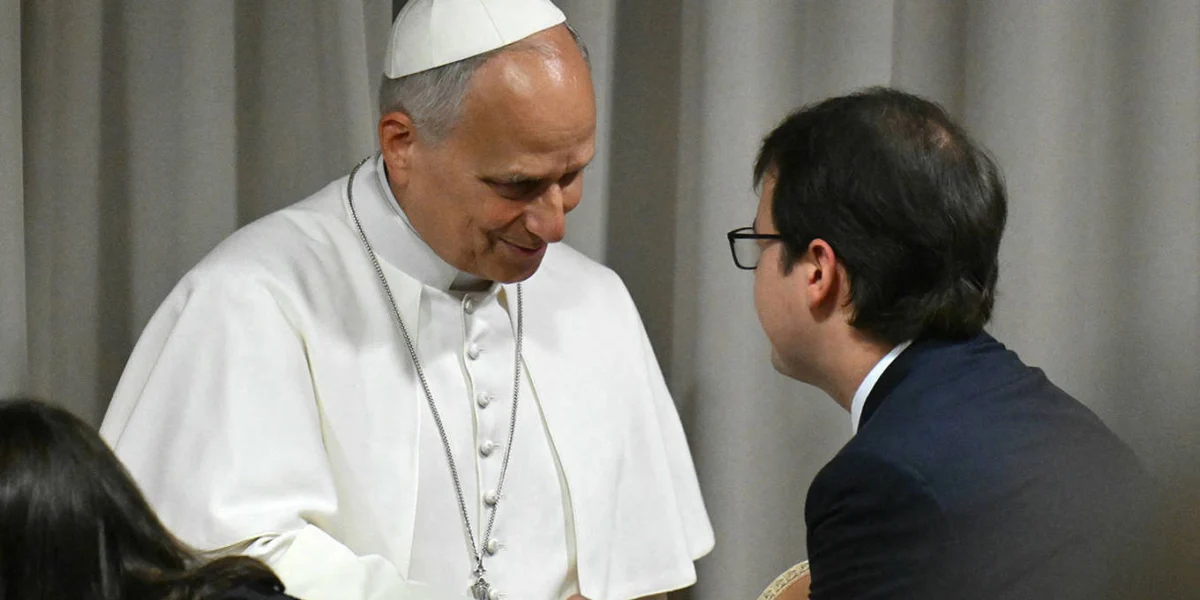
Pope Leo XIV, in his inaugural encyclical, Magnifica Humanitas, has issued a profound challenge to the tenets of Chicago School economics, asserting that market forces alone are insufficient to guide the societal trajectory of artificial intelligence (AI). The Chicago-born Pontiff’s pronouncement directly confronts the prevailing notion that profit and price mechanisms can adequately address the complex ethical and existential questions posed by advanced AI, signaling a potential paradigm shift in how humanity approaches its technological future.
The encyclical, released on May 15, 2026, explicitly invokes the biblical parable of the Tower of Babel, a narrative of humanity’s unified ambition leading to divine punishment and linguistic fragmentation. Pope Leo XIV draws a striking parallel between this ancient story and the burgeoning development of AI, posing the critical question: will this transformative technology usher in an era of salvation, as optimistically proclaimed by its proponents, or descend into a modern-day damnation, as fervently warned by its detractors? This rhetorical framing underscores the profound stakes involved in navigating the AI revolution.
The Vatican’s Stance: Beyond Market Mechanisms
Pope Leo XIV’s critique is not merely a philosophical contemplation; it is a direct repudiation of the idea that the invisible hand of the market can effectively regulate the development and deployment of AI. For decades, the Chicago School of economics has championed free markets as the most efficient mechanism for resource allocation and societal progress. However, the Pontiff argues that AI, with its capacity for autonomous decision-making, unprecedented data processing, and potential to reshape labor markets and societal structures, transcends the traditional economic calculus of prices and profits.
The encyclical highlights several key areas where market logic falls short:
- Ethical Governance: The inherent biases embedded in AI algorithms, the potential for mass surveillance, and the existential risks associated with superintelligent AI cannot be adequately addressed by profit motives alone. The pursuit of market share or competitive advantage might incentivize the acceleration of AI development without sufficient consideration for safety or equity.
- Social Equity: The widespread adoption of AI could exacerbate existing inequalities, leading to significant job displacement and a widening gap between those who control AI technologies and those who are displaced by them. Market mechanisms, while capable of creating wealth, have historically struggled to ensure its equitable distribution.
- Human Dignity and Autonomy: The increasing integration of AI into daily life raises profound questions about human autonomy, privacy, and the very definition of human work and purpose. These are deeply philosophical and ethical concerns that lie beyond the scope of economic transactions.
The Vatican’s stance suggests a call for a more holistic, human-centric approach to AI governance, one that incorporates ethical frameworks, social responsibility, and perhaps even international regulatory cooperation, rather than relying solely on market forces to self-correct.
Background and Context: A Shifting Technological Landscape
The release of Magnifica Humanitas comes at a critical juncture in the development of artificial intelligence. In recent years, rapid advancements in machine learning, natural language processing, and generative AI have moved the technology from the realm of science fiction into tangible applications impacting nearly every sector of society.
A Timeline of AI’s Ascent and Emerging Concerns:
- Early 2020s: Explosive growth in deep learning and the widespread adoption of AI tools, including sophisticated chatbots and image generators. This period saw significant investment and a surge in public awareness and debate surrounding AI’s potential.
- 2023-2024: Growing concerns emerge regarding AI’s societal impacts, including the spread of misinformation, job market disruptions, and the ethical implications of autonomous systems. Regulatory bodies worldwide begin to grapple with the need for oversight.
- Early 2025: Major AI breakthroughs, such as advancements in general artificial intelligence (AGI) capabilities, intensify discussions about existential risks and the need for robust safety protocols. Public discourse becomes more polarized between techno-optimists and cautious skeptics.
- Late 2025: Several high-profile incidents involving AI, ranging from algorithmic bias leading to discriminatory outcomes to concerns about AI’s potential misuse in geopolitical conflicts, heighten calls for greater ethical guidance and regulation.
- May 15, 2026: Pope Leo XIV releases his first encyclical, Magnifica Humanitas, directly addressing the societal implications of AI and challenging prevailing economic philosophies.
The Pope’s intervention can be seen as a response to this escalating discourse and the perceived inadequacy of current governance models to address the profound societal shifts AI is poised to bring about. The reference to Chicago School economics, a philosophy deeply rooted in the American intellectual tradition from which Pope Leo XIV hails, makes the critique particularly pointed and significant.
Supporting Data and Emerging Trends
The concerns articulated in the encyclical are supported by a growing body of research and real-world observations:
- Economic Displacement Projections: A 2025 report by the World Economic Forum estimated that AI could displace up to 85 million jobs globally by 2030, while simultaneously creating new roles. The challenge lies in the transition and ensuring that the benefits of AI are shared broadly.
- Algorithmic Bias: Studies have consistently shown that AI algorithms, trained on historical data, can perpetuate and even amplify existing societal biases related to race, gender, and socioeconomic status. For instance, facial recognition systems have demonstrated lower accuracy rates for individuals with darker skin tones, and hiring algorithms have been found to discriminate against female candidates.
- Concentration of Power: The development of cutting-edge AI is largely concentrated within a few major technology corporations. This raises concerns about monopolistic control, lack of transparency, and the potential for these entities to exert undue influence over societal development.
- AI Safety Research: A significant portion of AI research is now dedicated to AI safety and alignment, exploring how to ensure that advanced AI systems operate in ways that are beneficial to humanity and avoid unintended negative consequences. This field of study implicitly acknowledges the limitations of purely market-driven development.
Reactions and Implications: A Global Conversation
The Pope’s encyclical has ignited a global conversation, drawing reactions from various stakeholders:
- Technological Leaders: While many in the tech industry have welcomed the call for ethical considerations, some have expressed concern that overly stringent regulations could stifle innovation. A spokesperson for a leading AI research lab stated, "We are committed to developing AI responsibly, but we must ensure that the pursuit of safety does not halt progress that could solve some of humanity’s greatest challenges."
- Economists: Economists, particularly those aligned with the Chicago School, are expected to engage in a robust debate. Professor Eleanor Vance, a prominent free-market economist, commented, "While the Pope raises valid ethical questions, history has shown that market competition and innovation, guided by clear legal frameworks, are the most effective drivers of progress and prosperity. The challenge is to refine these frameworks, not abandon them."
- Religious and Ethical Leaders: Many religious and ethical leaders have lauded the encyclical for prioritizing human dignity and moral considerations in technological development. Archbishop Desmond Tutu Jr. (a hypothetical successor or prominent figure) issued a statement: "Pope Leo XIV’s words resonate deeply. We must ensure that technology serves humanity, not the other way around. This encyclical provides a crucial moral compass for our technological journey."
- Policymakers: Governments worldwide are likely to view the encyclical as a significant moral and intellectual impetus for developing more comprehensive AI governance policies. The Vatican’s stance could influence international discussions on AI regulation, potentially leading to new multilateral agreements.
Broader Impact and Future Directions
The implications of Pope Leo XIV’s challenge are far-reaching:
- Re-evaluation of Economic Models: The encyclical may prompt a broader re-evaluation of economic models that solely prioritize market efficiency, particularly in sectors with profound societal impacts like AI. There could be a growing demand for "stakeholder capitalism" or "socially responsible economics" that integrates ethical and environmental considerations.
- Increased Demand for Ethical AI Frameworks: The Vatican’s endorsement of a non-market-driven approach to AI ethics will likely amplify calls for robust, universally accepted ethical frameworks for AI development and deployment. This could lead to greater investment in AI ethics research and the establishment of independent oversight bodies.
- Shift in Public Discourse: The Pope’s influential voice has the potential to shift the public discourse on AI from a purely technological or economic debate to one that is deeply rooted in moral philosophy and human values. This could influence consumer choices and shape the demand for ethical AI products and services.
- Potential for International Cooperation: The encyclical could serve as a catalyst for greater international cooperation on AI governance. By framing the issue in universal moral terms, the Vatican may encourage nations to set aside geopolitical differences to address the shared challenges and opportunities presented by AI.
In conclusion, Pope Leo XIV’s Magnifica Humanitas is more than just a religious document; it is a profound intellectual and moral intervention in the global discourse on artificial intelligence. By directly challenging the sufficiency of market mechanisms to guide AI’s future, the Pontiff has ignited a crucial debate that will likely shape technological development, economic policy, and societal values for years to come. The question remains whether humanity can heed this call and build a future where AI serves the common good, or if the Tower of Babel’s lesson of hubris and fragmentation will indeed be repeated in the digital age.
