

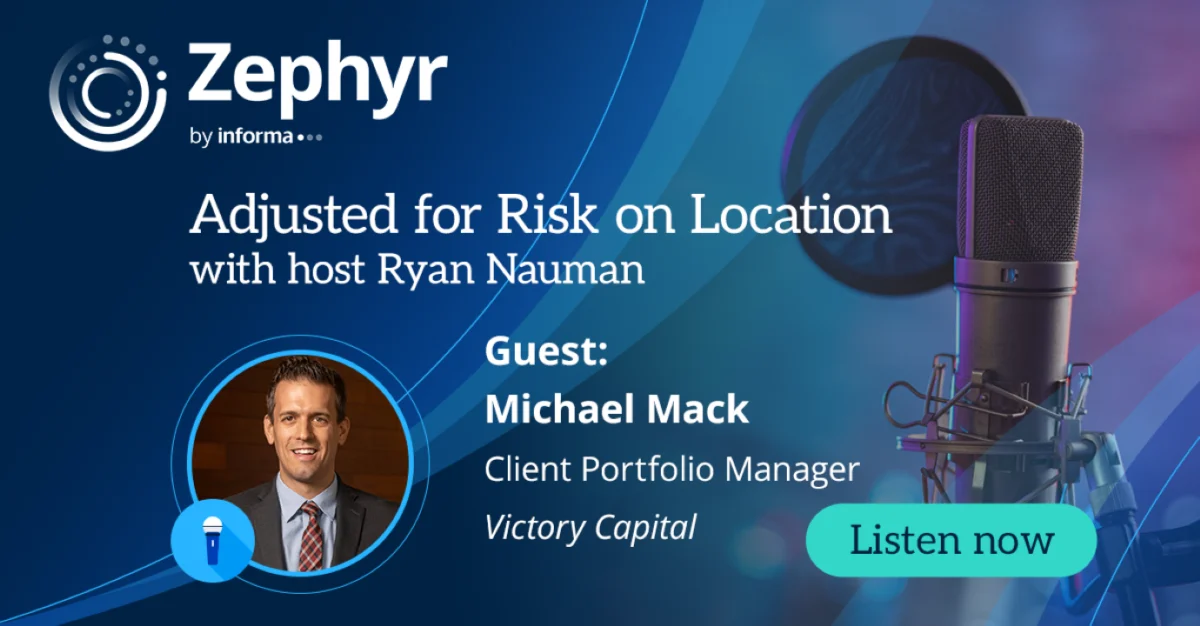
The Exchange ETF Conference, a prominent gathering for financial professionals, recently played host to a critical discussion on navigating the complex landscape of modern market risks. In an insightful session moderated by Ryan Nauman, host and a key figure at the conference, Michael Mack, a distinguished client portfolio manager at Victory Capital, shared his expert analysis on the prevailing market challenges and their profound implications for financial advisors constructing client portfolios. Mack’s discourse centered on two significant threats: concentration risk, particularly driven by the outsized influence of a few mega-cap technology stocks, and the persistent challenge of valuation, with the broader market trading at elevated multiples.
The Dominance of the "Mag Seven" and Its Concentrated Risk
Mack began by underscoring the alarming degree of concentration within the S&P 500 index, a benchmark that underpins a vast array of investment strategies. He pointed out that the so-called "Mag Seven" – a group of prominent technology and growth companies – now collectively represent approximately 35% of the S&P 500’s total market capitalization. This dominance, Mack elaborated, presents a substantial concentration risk that can manifest unexpectedly across diverse investment strategies, often without advisors explicitly seeking such exposure.
"This isn’t just a theoretical concern; it’s a tangible force shaping market performance," Mack stated during his presentation. "When a handful of companies wield such significant sway, the fortunes of the broader index become disproportionately tied to their individual trajectories. This can lead to a false sense of diversification if portfolios are merely weighted by market cap, as the underlying exposure is heavily skewed."
The implications of this concentration are far-reaching. A downturn in even a few of these mega-cap names could exert considerable downward pressure on the entire index, potentially impacting a wide range of investment products, from broad market ETFs to actively managed funds that benchmark against the S&P 500. For financial advisors, this necessitates a more granular understanding of their portfolio holdings and a proactive approach to managing this concentrated exposure.
Valuation Headwinds: A Market Trading at Elevated Multiples
Adding to the complexity of the current market environment is the issue of valuation. Mack highlighted that the market is currently trading at approximately 22 times earnings, a figure that, while not unprecedented in historical contexts, suggests a premium valuation that may leave less room for error. Elevated valuations can increase the susceptibility of portfolios to corrections, as future growth expectations are already priced in, leaving little buffer for unforeseen economic headwinds or company-specific challenges.
"When you’re investing in a market that is already richly valued, the margin for error shrinks considerably," Mack explained. "The market has priced in a significant amount of optimism. Any deviation from that optimistic outlook – be it a slowdown in economic growth, rising interest rates, or geopolitical instability – can lead to sharp and swift market declines."
This valuation concern is particularly acute for growth-oriented strategies. While growth has been a dominant theme in recent years, Mack cautioned that investors need to be discerning. The high valuations of many growth stocks mean that any disappointment in earnings or future guidance can trigger substantial price corrections.
Free Cash Flow: A More Nuanced Metric for Value and Growth Analysis
In response to these challenges, Mack advocated for a more sophisticated approach to investment analysis, emphasizing the critical role of free cash flow (FCF) in both value and growth assessments. He explained that traditional metrics, such as earnings, can sometimes present a misleading picture, particularly in the context of companies investing heavily in future growth, such as those heavily involved in artificial intelligence (AI).
"The heavy capital expenditures (CapEx) associated with AI development can significantly impact a company’s reported earnings, making it appear more expensive on a free cash flow basis than its earnings multiple might suggest," Mack elaborated. "Free cash flow provides a clearer picture of a company’s ability to generate actual cash that can be returned to shareholders, reinvested in the business, or used to reduce debt, independent of accounting adjustments related to CapEx."
Mack’s analysis suggests that companies investing aggressively in areas like AI may be showing lower free cash flow figures than their reported earnings might imply. This can make these companies appear even more expensive when assessed through an FCF lens, potentially masking underlying value or highlighting the risks associated with their growth trajectory. By incorporating FCF into their analysis, financial advisors can gain a more robust understanding of a company’s financial health and its capacity to generate sustainable returns.
Mitigating Risks: Strategic Portfolio Adjustments
Mack proposed several actionable strategies for financial advisors to mitigate these market risks and enhance portfolio resilience.
-
Consider Small Caps: While mega-cap stocks have dominated headlines, Mack suggested that small-cap equities could offer a compelling alternative. These companies often have less direct exposure to the "Mag Seven" and may trade at more attractive valuations, providing diversification benefits and potential for higher growth as they mature. Historically, small caps have demonstrated the potential for outperformance over the long term, albeit with higher volatility.
-
Embrace Value Strategies with Meaningful Discounts: Mack advocated for a renewed focus on value investing, but with a critical distinction: seeking companies that are trading at genuinely meaningful discounts to their intrinsic value. This involves looking beyond mere low P/E ratios and delving into fundamental analysis to identify undervalued assets with strong underlying business models and reasonable prospects for recovery or sustained growth.
-
Apply Growth/Profitability Screens to Avoid Value Traps: For growth-oriented portfolios, Mack recommended employing screens that prioritize both growth and profitability. This approach aims to avoid "value traps" – companies that appear cheap but are fundamentally flawed or have declining prospects. By focusing on companies that demonstrate sustainable growth coupled with strong profitability, advisors can identify quality growth at a reasonable price (GARP) opportunities.
The Role of Free-Cash-Flow ETFs in Portfolio Construction
Mack also highlighted the utility of Free-Cash-Flow (FCF) ETFs as a valuable tool for financial advisors. He posited that these ETFs can serve as effective complements to existing portfolio allocations, offering diversification beyond the current market’s mega-cap dominance.
"FCF ETFs can broaden exposure beyond the mega-cap universe that currently dominates cap-weighted indices," Mack explained. "They can work synergistically with core holdings, such as cap-weighted ETFs, dividend and value funds, and growth allocations. By focusing on companies that generate strong free cash flow, these ETFs offer a different lens through which to access market opportunities."
The strategic deployment of FCF ETFs can help advisors achieve several objectives:
- Diversification Beyond Mega-Caps: By concentrating on companies with robust FCF generation, these ETFs inherently reduce exposure to the handful of mega-cap tech giants, thus mitigating concentration risk.
- Enhanced Quality Focus: A focus on FCF often correlates with companies that have strong business fundamentals, disciplined capital allocation, and a proven ability to generate cash, which can lead to more resilient portfolios.
- Potential for Alpha Generation: Companies with strong and growing FCF may be better positioned to weather economic downturns and may outperform in the long run as their underlying cash-generating power translates into shareholder value.
Mack suggested that FCF ETFs could be integrated into portfolios by:
- Supplementing Cap-Weighted Cores: Adding an FCF ETF alongside a broad market index ETF can tilt the portfolio towards companies with stronger cash generation characteristics, potentially improving risk-adjusted returns.
- Complementing Dividend and Value Funds: For investors seeking income and value, FCF ETFs can offer exposure to companies that have the financial strength to sustain and potentially grow their dividends, as well as support their valuations.
- Balancing Growth Allocations: In growth portfolios, FCF ETFs can provide a more disciplined approach, ensuring that growth is supported by tangible cash flow generation rather than speculative earnings potential.
The Zephyr Advantage: Empowering Financial Advisors
The insights shared by Michael Mack at the Exchange ETF Conference underscore the critical need for financial advisors to employ sophisticated tools and strategies to navigate today’s complex market. Tools like Zephyr, mentioned in conjunction with the conference, can be instrumental in this endeavor. Zephyr is designed to assist financial advisors in identifying and selecting the most suitable ETF strategies for their clients, ensuring that portfolios are not only aligned with client objectives but also built with resilience against prevailing market risks.
"Understanding the nuances of market risk and having the right tools to implement strategic adjustments are paramount for advisors," a representative from Zephyr commented. "Our platform is built to empower advisors with the data and analytics needed to make informed decisions, helping them to construct portfolios that are optimized for both growth and capital preservation in challenging market conditions."
The ongoing advancements in ETF offerings, particularly those focused on specific financial metrics like free cash flow, provide advisors with an expanding toolkit to address the evolving demands of their clients and the dynamic nature of financial markets.
Victory Capital’s Approach to Market Navigation
Victory Capital, as represented by Michael Mack, is actively engaged in helping its clients and partners understand these market dynamics. The firm’s focus on client portfolio management and its engagement in industry events like the Exchange ETF Conference demonstrate a commitment to providing thought leadership and practical solutions. By offering insights into key market risks and potential mitigation strategies, Victory Capital aims to equip financial advisors with the knowledge and resources necessary to serve their clients effectively.
Victory Capital’s overview, presented at the conference, likely delved into their investment philosophy, research capabilities, and product offerings designed to address the current market environment. Their emphasis on understanding fundamental drivers of value, such as free cash flow, reflects a strategic approach to portfolio construction that prioritizes long-term resilience and sustainable growth.
Broader Implications for the Financial Advisory Industry
The discussion at the Exchange ETF Conference, and specifically Michael Mack’s insights, serve as a crucial reminder for the broader financial advisory industry. The era of passive investing, while offering benefits, also necessitates a deeper understanding of the underlying exposures within indices and ETFs. Advisors can no longer solely rely on market-cap weighting to provide adequate diversification.
The increasing complexity of the market, driven by technological advancements, global economic shifts, and evolving investor behaviors, demands a more proactive and analytical approach. Strategies that incorporate a deeper dive into company fundamentals, such as free cash flow analysis, and that actively seek to diversify away from concentrated exposures, are likely to become increasingly important. The availability and strategic utilization of specialized ETFs, like those focused on FCF, will play a significant role in this evolution.
The timeline of events leading to the current market conditions, characterized by the rise of mega-cap tech and the subsequent focus on valuation, has been a gradual but impactful shift. The years following the 2008 financial crisis saw a prolonged period of low interest rates and quantitative easing, which disproportionately benefited growth stocks and contributed to the concentration in the tech sector. The recent pivot towards higher interest rates and a more hawkish monetary policy stance has amplified concerns about valuations and the sustainability of growth-driven returns.
In conclusion, the insights shared by Michael Mack at the Exchange ETF Conference provide a valuable roadmap for financial advisors. By acknowledging and actively addressing concentration and valuation risks, and by leveraging sophisticated analytical tools like free cash flow analysis and specialized ETFs, advisors can build more robust portfolios, better positioned to navigate the uncertainties and capitalize on the opportunities within today’s dynamic market. The ongoing dialogue and sharing of expertise within the financial community, as exemplified by this conference, are vital for fostering informed decision-making and ultimately serving the best interests of investors.
