

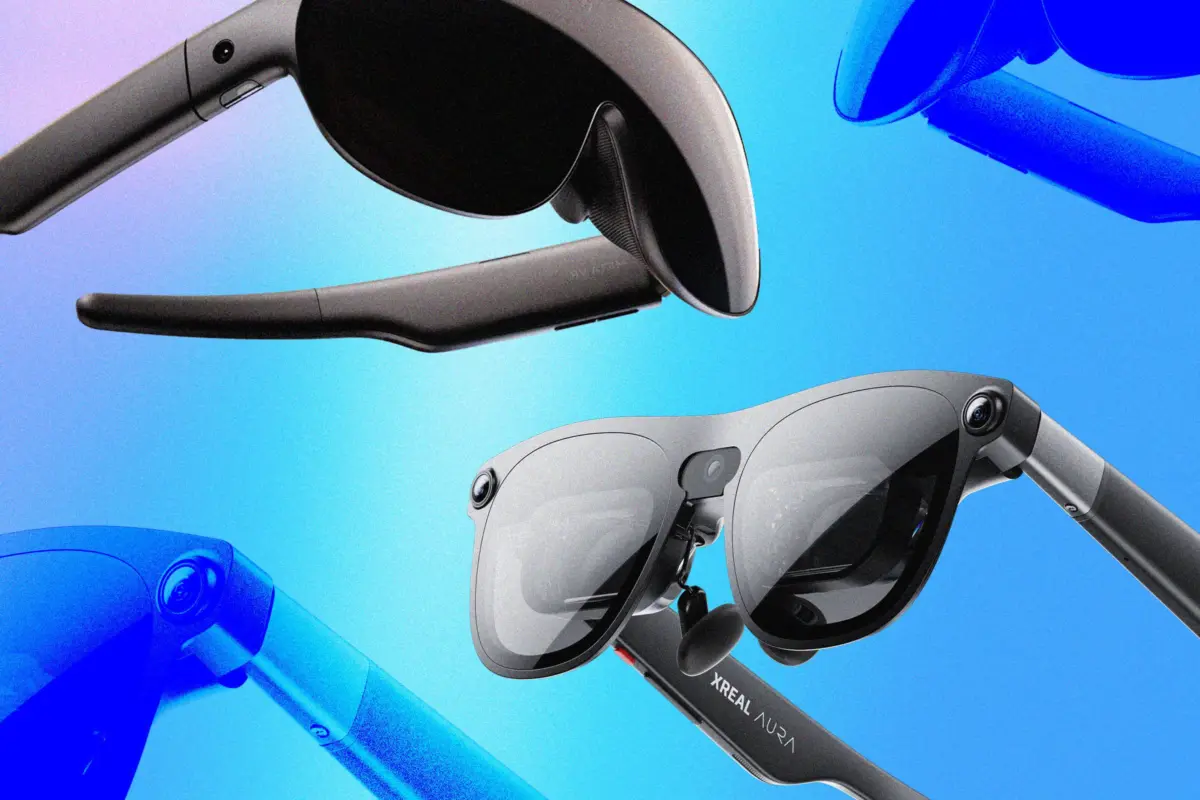
The landscape of wearable technology is undergoing a significant transformation as two major players, Meta and Xreal, prepare to launch high-end mixed-reality glasses that bridge the gap between traditional virtual reality (VR) headsets and everyday eyewear. Meta has signaled its intent to dominate the premium segment with its upcoming $1,299 VR glasses, while Xreal has officially announced the pricing for its direct competitor, the Xreal Aura, which will start at $1,279. This $20 price difference underscores an intensifying rivalry in the "face computer" market, a sector previously dominated by bulky headsets like the Apple Vision Pro and the Meta Quest 3.
As the industry pivots toward more wearable form factors, these new devices represent a shift in engineering priorities. Manufacturers are now focusing on reducing weight and heat by offloading processing power to external "compute pucks," allowing for a more socially acceptable aesthetic without sacrificing the high-resolution displays and spatial tracking capabilities that define mixed reality (MR).
The Evolution of Mixed Reality Hardware: A Chronology
The current competitive environment was catalyzed by a series of high-profile announcements in the second half of 2024. In September, during the Meta Connect event, Meta showcased a prototype of its mixed-reality glasses, often referred to in development as "Orion." The demonstration emphasized the device’s ability to provide high-fidelity digital overlays on the physical world while maintaining a form factor significantly smaller than the Quest series.
Following Meta’s showcase, Xreal—a company that has built a reputation for its "Air" series of virtual display glasses—held a strategic demo to unveil the Aura. This timing was viewed by industry analysts as a direct response to Meta’s hardware roadmap. On Wednesday, Xreal finalized the details of its market entry, confirming the $1,279 price point and opening preorders for existing reservation holders.
The timeline for consumer availability reveals a staggered rollout. While Meta’s glasses are expected to launch in early 2025, Xreal aims to capture the early adopter market by shipping the Aura units before the end of this year. Xreal has confirmed initial shipping to the United States, Canada, Japan, and South Korea, with plans for a broader global expansion into other regions slated for 2027.
Technical Specifications and Hardware Architecture
Both Meta and Xreal have adopted a similar architectural philosophy to solve the thermal and weight constraints of head-mounted displays. Both devices utilize a tethered compute puck—a small, pocket-sized device that houses the battery, RAM, and processor. This allows the glasses themselves to remain lightweight, focusing primarily on optics, sensors, and audio.

Meta VR Glasses: High-Fidelity Interaction
Meta’s $1,299 offering is centered around a 5K micro-OLED display system. The high resolution is designed to eliminate the "screen door effect" common in lower-end VR devices, making text readable for productivity tasks. A standout feature of Meta’s hardware is its sensor array. The glasses include downward-facing cameras specifically calibrated for precise hand tracking. This allows users to interact with virtual keyboards and UI elements with a level of accuracy that approaches physical input. Meta’s software integration leverages the existing Quest ecosystem, meaning the device will launch with a robust library of applications and services already optimized for spatial computing.
Xreal Aura: The Android XR Powerhouse
The Xreal Aura differentiates itself through its partnership with Google. It is built on the Android XR platform, a specialized version of the Android operating system designed for spatial environments. The base model features 12 GB of RAM and 256 GB of internal storage. By utilizing Android XR, Xreal grants users access to a vast ecosystem of mobile applications, though the company acknowledges that not all apps have been fully optimized for a 3D interface.
The primary hardware distinction for the Aura lies in its optical path. It utilizes lenses that allow for true real-world passthrough. Unlike Meta’s video passthrough—which uses cameras to film the outside world and re-project it onto internal screens—the Xreal Aura allows users to see the physical world directly through the glass. This approach typically results in zero latency and a more natural viewing experience when walking or interacting with people in person.
Software Ecosystems and the Battle for Platform Dominance
The competition between Meta and Xreal is as much about software as it is about hardware. Meta is doubling down on its proprietary "Horizon OS," aiming to become the "Windows of spatial computing." By controlling both the hardware and the operating system, Meta can fine-tune the user experience, resulting in the smooth, fluid interactions reported by early testers.
Conversely, Xreal’s reliance on Android XR represents a broader industry movement led by Google and Samsung to create an open standard for mixed reality. This "Android-first" approach aims to prevent a Meta or Apple monopoly in the AR/MR space. For users, the Xreal Aura offers a familiar interface, but early demos have indicated that the platform still faces "teething" issues, such as apps not syncing correctly or UI elements failing to adapt to the depth of a mixed-reality environment.
Comparative Market Analysis and Pricing Strategy
The pricing of these devices—hovering around the $1,300 mark—positions them as premium consumer electronics, significantly more expensive than the $499 Meta Quest 3 but substantially more affordable than the $3,499 Apple Vision Pro.
| Feature | Meta VR Glasses | Xreal Aura |
|---|---|---|
| Price | $1,299 | $1,279 |
| Release Date | Early 2025 | Late 2024 |
| Operating System | Horizon OS (Meta) | Android XR (Google) |
| Display Technology | 5K Micro-OLED | Micro-OLED / Optical Passthrough |
| Primary Input | Advanced Hand Tracking | Hand Tracking / Mobile Tethering |
| Processing | External Compute Puck | External Compute Puck |
Market analysts suggest that Xreal’s decision to undercut Meta by $20 is a symbolic gesture intended to signal its role as a competitive alternative. However, the true competition will likely be decided by the quality of the "passthrough" experience and the utility of the available apps. Meta’s device is currently positioned as a superior tool for stationary productivity—such as replacing a multi-monitor desk setup—while Xreal’s optical passthrough makes it a more viable candidate for "on-the-go" use cases.

Privacy Concerns and Social Implications
The rise of camera-equipped eyewear has reignited long-standing debates regarding privacy and social etiquette. Meta, in particular, has faced scrutiny over its Ray-Ban Meta smart glasses, with critics raising concerns about the potential for surreptitious recording. Both the Meta VR glasses and the Xreal Aura feature multiple camera sensors, which are necessary for spatial mapping and hand tracking but also capable of capturing environmental data.
Privacy advocates have pointed out that as these devices become slimmer and more indistinguishable from regular glasses, the "creep factor" may increase. Meta has attempted to mitigate these concerns by including recording indicator lights, but the effectiveness of such measures remains a point of contention. Furthermore, the "compute puck" design, while functional, requires a wired connection to the glasses, which may serve as a visual cue to bystanders that the wearer is using an active electronic device.
Broader Impact on the Tech Industry
The successful launch of the Meta VR glasses and the Xreal Aura could signal the beginning of the end for the traditional, bulky VR headset. If these companies can prove that a "glasses + puck" configuration is powerful enough for high-end gaming and professional work, the incentive to wear a heavy, face-mounted computer will diminish.
Furthermore, the involvement of Google through Android XR suggests that the mobile industry is preparing for a post-smartphone era. If mixed-reality glasses can successfully project a 100-inch virtual screen and handle all the tasks of a modern smartphone, the hardware landscape of the 2030s could look vastly different.
The immediate challenge for both companies will be convincing the general public that a $1,300 accessory is a necessity rather than a luxury. While tech enthusiasts and "prosumers" are likely to embrace the high-resolution displays and innovative form factors, mass-market adoption will require a "killer app"—a use case that makes the utility of mixed reality undeniable for the average consumer.
As Meta prepares for its early 2025 launch and Xreal begins fulfilling preorders this year, the tech industry will be watching closely to see which approach—Meta’s polished, closed ecosystem or Xreal’s open, Android-based platform—resonates more with the first wave of high-end mixed-reality users. The outcome will likely set the trajectory for wearable computing for the next decade.
