

In a significant development reflecting the increasing sophistication and evolving challenges within the venture capital ecosystem, Matt Krna, a seasoned veteran with a career spanning nearly the entire history of modern venture capital, has formally launched Two Meter Capital in 2024. The firm introduces an innovative model dubbed "GP on demand" or "harvest management," designed to provide essential "scaffolding" for venture firms grappling with the complexities of longer-lived portfolios and the imperative to optimize returns while ensuring continued support for entrepreneurs. This strategic intervention addresses a growing need in an industry undergoing profound structural changes, moving away from an apprenticeship-style model to a highly specialized and capital-intensive market.
The Evolving Landscape of Venture Capital: A Paradigm Shift
The venture capital industry has undergone a dramatic transformation over the past two decades. What was once characterized by relatively swift exits, often through initial public offerings (IPOs) within a six-year timeframe, has evolved into a landscape where companies remain private for an average of 15 years. This protracted private market lifecycle has fundamentally altered the dynamics of fund management. Traditional venture funds, typically structured with a 10-year lifespan and two one-year extensions, now frequently find their portfolios extending far beyond these original parameters. This discrepancy creates a significant challenge for General Partners (GPs), who are contractually obligated to manage these older assets long after their focus has shifted to new investments and subsequent funds.
Data underscores this shift. According to PitchBook-NVCA Venture Monitor reports, the median time to exit for venture-backed companies has steadily increased, with the median time to IPO often exceeding a decade. Furthermore, the overall number of venture-backed IPOs has seen fluctuations, with periods of reduced activity contributing to the accumulation of mature, yet still private, assets within older funds. This trend has also been accompanied by a consolidation of capital, with a smaller number of mega-funds attracting substantial allocations, further intensifying the pressure on mid-sized and emerging managers. The administrative burden and opportunity cost associated with managing these "tail-end" portfolios—often comprising dozens or even hundreds of companies—can be substantial, diverting valuable GP time and resources away from the core activities of sourcing new deals and supporting current high-growth investments.
Matt Krna’s Journey: A Career Forged in VC’s Evolution
Matt Krna’s extensive career in venture capital has uniquely positioned him to identify and address these systemic challenges. His journey through some of the industry’s most prominent firms provides a chronological narrative of venture capital’s evolution and a deep understanding of its operational intricacies.
Krna began his venture career as an analyst at Canaan Partners, a well-established early-stage firm, where he immersed himself in the foundational technologies of hardware and semiconductors. This initial exposure to the nuts and bolts of innovation provided him with a crucial technical grounding. His ascent continued at Investor Growth Capital, where he rose to lead the US Internet investment practice. Demonstrating an early eye for emerging trends, he co-founded the firm’s digital health effort, a sector that has since blossomed into a significant investment area.
A pivotal move saw Krna recruited to SoftBank, a global investment giant known for its aggressive growth-stage investments. Here, he played a crucial role in helping to raise a significant growth-stage fund, where he and his partners backed now-household names like Fitbit and BigCommerce. Reflecting on this period, Krna notes, "we actually did what we said we were going to do. It doesn’t always happen that way in the venture world," a statement that subtly hints at the challenges of execution and transparency within the industry. In 2015, he further honed his entrepreneurial chops by co-founding Princeville Capital, a successor fund that continued to focus on growth-stage opportunities.
The onset of the COVID-19 pandemic in 2020 served as a profound catalyst for Krna. Like many during that unprecedented period, he entered a phase of introspection, described as "hibernation mode," where he began "noodling on where the venture market was going next." This period of deep reflection, informed by his two decades of experience navigating multiple market cycles and observing the structural shifts in the industry, crystallized into the concept for Two Meter Capital. After several years spent meticulously developing the model "in the lab," the firm formally hung its shingle in 2024, ready to address what Krna saw as a critical, unmet need.
Two Meter Capital: The "Scaffolding" for a Maturing Industry
Two Meter Capital’s core premise is that the venture business, no longer a nascent industry, requires specialized infrastructure—"scaffolding"—to support its increasingly complex operations. Krna argues that while the primary competencies of a venture firm remain raising capital, identifying outlier companies, and continuing to back winners, the ancillary tasks associated with managing older, less active portfolios have become an inefficient drain on resources. This is where Two Meter Capital steps in.
The firm’s "GP on demand" or "harvest management" model is designed to relieve General Partners of the significant administrative and strategic burden associated with managing these longer-lived portfolios. By outsourcing these functions, venture firms can reallocate their internal talent and capital to their most promising active funds and new investments. Two Meter Capital acts as an extension of the GP team, providing dedicated resources and expertise to optimize the value of these tail-end assets.
- Bridging the Liquidity Gap and Optimizing Returns:
A primary function of Two Meter Capital is to generate liquidity from these older portfolios. This is crucial for several reasons. For Limited Partners (LPs), the investors in venture funds, extended holding periods can tie up capital for far longer than initially anticipated, impacting their overall asset allocation strategies and internal rates of return. By actively managing and strategically exiting investments from older funds, Two Meter Capital helps unlock this trapped capital, providing LPs with much-needed distributions. This also "keeps the venture flywheel moving," as Krna puts it, by demonstrating successful exits and returning capital, which in turn encourages LPs to commit to new funds. The firm’s expertise lies in discerning which companies within these portfolios still hold significant potential—perhaps "just hitting their KPIs finally"—and which require a different exit strategy or a managed wind-down. This active, specialized management can significantly enhance the overall return profile of these legacy assets, which might otherwise languish due to a lack of dedicated attention.
Empowering Entrepreneurs: A Continued Champion at the Cap Table
Beyond the financial and administrative benefits for GPs and LPs, Two Meter Capital’s model holds profound implications for entrepreneurs. In many older venture funds, portfolio companies, while potentially still viable or even on the cusp of significant growth, often find themselves effectively orphaned. Their original investors, now focused on newer funds, may have ceased active engagement, leading founders to feel that their "firm has quietly moved on." This can be detrimental, leaving companies without a crucial advocate at the cap table to navigate subsequent funding rounds, strategic partnerships, or exit opportunities.
Two Meter Capital ensures that these companies continue to have a "champion." By taking on the active management role, Krna’s team meticulously evaluates each company within the tail portfolio. They help clients make informed decisions: which companies to lean back into with renewed support, which to strategically pull back from, and which need assistance in finding their next logical step, be it an acquisition, a recapitalization, or a managed wind-down. This dedicated attention means that promising ventures in older portfolios are not overlooked or left to fend for themselves, potentially unlocking latent value and providing founders with the guidance and advocacy they still require. This continuity of support is vital for maintaining a healthy entrepreneurial ecosystem, where innovation is nurtured throughout a company’s lifecycle, not just in its early, high-growth phases.
Addressing Dual Needs: Established Firms and Emerging Managers
Two Meter Capital’s clientele falls into two distinct, yet equally critical, camps, each facing unique challenges that the firm’s model effectively addresses.
-
Relieving the Burden for Established Funds:
The first camp comprises mid-sized to large traditional venture funds. These firms are often actively deploying capital from their eleventh or twelfth funds while simultaneously managing extensive portfolios—sometimes encompassing 200 or more companies—across funds seven, eight, and nine. The sheer volume of these older investments creates a substantial operational overhead. One managing partner candidly shared with Krna that his firm was spending "four to five million dollars a year just on partner and associate time tied up in board meetings for older funds." This anecdote powerfully illustrates the opportunity cost; such significant resources could otherwise be directed towards identifying and nurturing the next generation of disruptive startups. By offloading this administrative and strategic burden, Two Meter Capital allows established firms to focus on their core mission of new investments and supporting their most active, high-potential portfolio companies, thereby enhancing overall efficiency and potentially boosting returns across their entire fund family. -
A New Off-Ramp for Emerging Managers:
The second, and perhaps more distinctive, client segment is emerging managers for whom, as Krna frames it, "there won’t be another fund." This highlights a critical, often unspoken, vulnerability in the venture ecosystem. While entrepreneurs have various "off-ramps"—finding a new CEO, pivoting, or gracefully exiting a venture that isn’t performing—emerging managers who decide that venture capital isn’t for them face a dilemma with no clear exit strategy. They remain legally and fiduciary responsible for their existing portfolio for the next "10-plus years," even if they no longer wish to actively participate in the industry or cannot raise a successor fund. This can be a significant deterrent for new talent considering entering the venture space.
By taking on "90 percent of that lift," Two Meter Capital essentially creates an "off-ramp" where none previously existed. This mechanism provides a dignified and responsible way for emerging managers to transition out of the venture capital business without abandoning their fiduciary duties or their portfolio companies. Krna identifies a significant "second-order effect" of this offering: "Knowing there’s a graceful exit may actually encourage more new managers to enter the industry in the first place." This has profound implications for fostering diversity and innovation within the venture capital talent pipeline, potentially lowering the perceived risk of starting a new fund and attracting a broader range of skilled individuals to the profession.
Industry Implications and Broader Impact
Two Meter Capital’s model is not merely a niche service; it represents a significant structural innovation with broader implications for the venture capital industry. By addressing the inefficiencies inherent in managing long-lived portfolios, the firm contributes to:
- Enhanced Capital Efficiency: Unlocking trapped capital in older funds and optimizing their returns improves the overall efficiency of capital allocation within the VC ecosystem. LPs receive distributions faster, allowing them to re-invest or reallocate capital more effectively.
- Sustained Innovation: By ensuring that promising companies in tail-end portfolios continue to receive attention and advocacy, Two Meter Capital helps prevent valuable innovations from fading due to lack of support, thereby contributing to the health of the broader innovation economy.
- Increased Specialization: The emergence of firms like Two Meter Capital signals a further maturation of the venture industry, where specialized service providers emerge to handle specific functions, allowing core venture firms to focus on their unique value propositions. This mirrors the evolution seen in other sophisticated financial markets.
- Democratization and Accessibility: The "off-ramp" for emerging managers can reduce barriers to entry and de-risk the career path for new fund managers, potentially leading to a more diverse and dynamic venture landscape.
Optimism Amidst Transformation: The Future of Innovation
Despite the structural challenges, Matt Krna remains profoundly optimistic about the venture capital industry’s future, driven primarily by the relentless pace of innovation. "The entrepreneurs are coming up with so many new concepts," he enthuses, having witnessed "multiple waves" throughout his career, from the internet wave to mobile. His current focus, like much of the tech world, is on Artificial Intelligence (AI), which he believes "is poised to eclipse most, if not all of those." Krna articulates a strong conviction that AI "is going to be amazingly transformative for every aspect of society, in ways that I think 99 percent of people on the planet don’t appreciate." This belief in the transformative power of technology underpins his dedication to ensuring the venture ecosystem is robust enough to support these groundbreaking developments.
His optimism is also deeply personal, rooted in the unique niche Two Meter Capital is carving out. Krna views this chapter of his career as an opportunity to actively shape the industry’s future. "I spent the first 10 years of my career apprenticing in this industry. The next 10, building a track record as an investor," he reflects. "This next chapter is maybe helping to change the paradigm a little bit, in a way that continues to bring our venture industry forward, more capable of ultimately supporting entrepreneurs and building." This ambition to innovate within the venture capital model itself positions him as a key figure in the industry’s ongoing evolution.
The Philosophy Behind the Name: "Two Meter Capital"
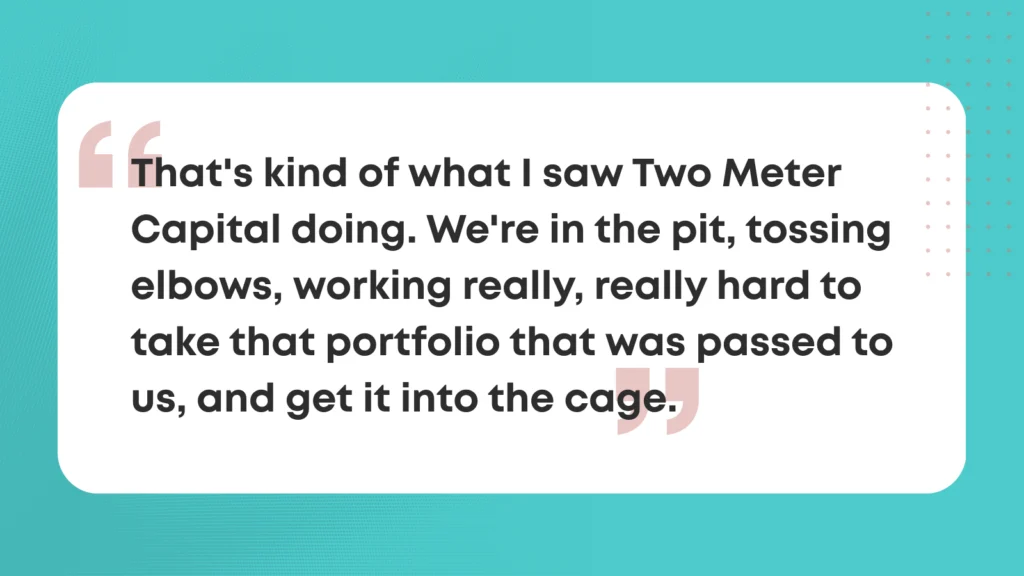
The firm’s distinctive name, "Two Meter Capital," is not arbitrary but deeply symbolic, drawing inspiration from the demanding sport of water polo, which Krna’s children play competitively. In water polo, the "2 meter" position is strategically located directly in front of the opposing team’s goal. This player is known for their tenacity, physicality, and strategic prowess—constantly fighting for possession of the ball, muscling through formidable defenders, and ultimately, putting the ball in the cage.
This analogy perfectly encapsulates Two Meter Capital’s approach. The firm positions itself at the critical juncture of venture portfolio management, ready to aggressively tackle the challenges of liquidity and optimization in older funds. It signifies a hands-on, determined effort to "muscle through" the complexities of legacy portfolios and deliver tangible results, ensuring that every investment, even those in the tail-end of a fund’s life, has a dedicated champion fighting for its success.
In conclusion, Matt Krna’s Two Meter Capital represents a timely and essential innovation in the venture capital landscape. By providing dedicated "GP on demand" services, the firm not only offers much-needed relief to established venture funds and a graceful exit path for emerging managers but also ensures that entrepreneurs in longer-lived portfolios continue to receive the advocacy and support they deserve. This strategic intervention underscores the venture industry’s maturity and its ongoing adaptation to the realities of a rapidly changing technological and financial environment, ultimately strengthening the entire innovation ecosystem for years to come.
