

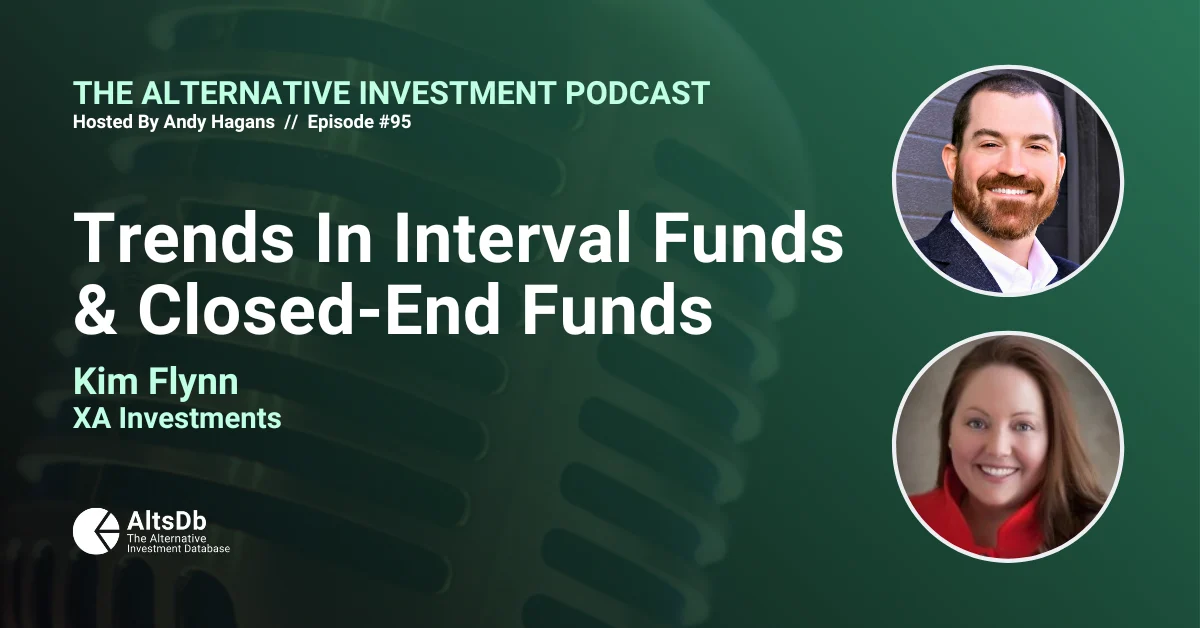
The alternative investment landscape has witnessed a dramatic transformation in recent years, with interval funds emerging as a significant growth engine and a key area of focus for both investors and asset managers. This evolving sector, characterized by its unique structure designed to offer greater liquidity than traditional private funds while providing access to illiquid alternative assets, is attracting considerable attention. Kim Flynn, managing director at XA Investments, a firm specializing in the development and launch of these complex investment vehicles, recently shared her insights into the burgeoning success of interval funds, the challenges faced by their sponsors, and the opportunities that lie ahead in a discussion on The Alternative Investment Podcast.
The meteoric rise of interval funds mirrors the broader expansion of the alternatives industry, which has seen substantial inflows as investors seek diversification and enhanced returns beyond traditional public markets. This growth trajectory is underpinned by a persistent search for yield and a growing appetite for asset classes that offer potentially uncorrelated returns.
The Rise of Interval Funds: A Structural Advantage
Interval funds, a category of closed-end funds, represent a sophisticated solution for accessing alternative investments. Unlike traditional open-end mutual funds, which allow investors to redeem shares daily at net asset value (NAV), interval funds offer a hybrid approach. While they can be purchased on a daily basis, redemptions are typically limited to a specific percentage of the fund’s outstanding shares, often occurring quarterly. This structural feature is crucial, as it allows fund managers to invest in less liquid assets, such as private equity, real estate, and private credit, without facing the constant pressure of meeting daily redemption requests that can plague open-end funds holding such assets.
Kim Flynn, with her extensive background in product development, including the launch of over 40 closed-end funds at Nuveen, brings a deep understanding of these structures. "These vehicles make alternatives more accessible," Flynn explained. "Unlike a private fund, where you might have to meet certain suitability requirements, interval funds offer a pathway for a broader range of investors to gain exposure to these asset classes."
Navigating the Nuances: Closed-End Funds vs. Interval Funds
To fully appreciate the appeal of interval funds, it’s essential to distinguish them from their publicly traded closed-end fund counterparts. Publicly traded closed-end funds, often listed on major exchanges, are characterized by their fixed number of shares that trade on the secondary market. This can lead to their shares trading at a premium or discount to their NAV, influenced by market sentiment and supply and demand dynamics. Historically, these funds have often been utilized for income-oriented strategies, with leverage frequently employed to enhance distributions.
"Listed closed-end funds are often used by investors who are looking for income," Flynn noted. "In the last 10 years, that search for yield has driven a lot of people to the listed closed-end fund space." She highlighted that the current market environment presents opportunities, with many listed closed-end funds trading at wider discounts than their historical averages. This can be particularly attractive to secondary market buyers seeking to acquire assets at a discount.
However, the inherent illiquidity of certain alternative assets poses challenges for funds aiming for daily NAV calculations, which is common for most listed closed-end funds. When a fund holds assets that cannot be easily valued on a daily basis, it can lead to significant discounts as investors question the portfolio’s true value. This is where interval funds offer a distinct advantage. Their limited redemption features provide managers with the necessary time horizon to manage illiquid portfolios effectively, potentially mitigating the impact of market volatility on valuations and avoiding forced selling at unfavorable prices.
The Evolution of the Alternatives Landscape
The journey of closed-end funds, from their origins in municipal bond funds to their current role in housing diverse alternative strategies, reflects the industry’s ongoing evolution. Flynn recounted her experience at Nuveen, where the firm was a market leader in listed closed-end funds, often partnering with external portfolio managers to bring specialized expertise to their offerings.
"When I left Nuveen in 2016, I launched an asset management platform as part of an investment bank here in Chicago, to do just that, to focus on alternatives, and to do it in partnership with sub-advisors," she stated. This experience has provided XA Investments with a broad perspective on the alternative investment ecosystem, engaging with a wide range of asset managers.
The industry has witnessed shifts, including a period of saturation in the listed closed-end fund market, which led some sponsors to explore non-listed structures like interval funds and tender offer funds. This pivot towards structures offering greater flexibility in managing illiquid assets has been a defining trend of the past five years.
XA Investments: Facilitating Access to Alternatives
XA Investments has positioned itself as a key player in this evolving landscape, offering a dual approach: launching its own funds and providing consulting services to asset managers seeking to navigate the complexities of alternative investment product development. The firm’s expertise spans both listed closed-end funds and, increasingly, interval funds, which are now a primary focus.
"We have been responsible for helping new fund sponsors enter the listed closed-end fund market," Flynn explained. "But I would say most of our clients are curious and most interested in the growing interval fund space. So that’s a lot of where we spend our time."
This focus on interval funds stems from their growing popularity and the increasing demand from investors for diversified portfolios that include alternative assets. XA Investments acts as a crucial intermediary, helping asset managers understand the intricacies of structuring, marketing, and distributing these sophisticated products.
Opportunities and Challenges in the Interval Fund Market
The interval fund market, while brimming with opportunity, is not without its challenges. One significant concern is the potential for misalignment between investor expectations and the inherent liquidity constraints of these vehicles. Flynn emphasized the critical importance of education, warning against marketing interval funds as if they were traditional mutual funds.
"These are not mutual funds, and they should not be sold in that fashion," she cautioned. "If someone doesn’t understand the fact that prorations can happen for one quarter or multiple quarters, you know, in reality, the market hasn’t been tested just yet." The recent market volatility, while providing some real-world testing, has also highlighted the need for robust liquidity management plans and clear communication with investors about potential redemption limitations.
Another aspect that has drawn scrutiny is the valuation of underlying assets. While third-party valuation firms are increasingly employed, the lack of real-time market pricing, as seen with publicly traded securities, can lead to questions about the accuracy and transparency of NAV calculations. Flynn pointed out the importance of "skin in the game," where fund sponsors and management have a significant personal investment in the fund, aligning their interests with those of their investors.
Best Practices for Interval Fund Design and Marketing
As the interval fund market matures, certain best practices are emerging for sponsors aiming to launch successful and investor-centric products. Flynn highlighted the importance of:
- Seed Capital and Scale: Launching with substantial seed capital or by contributing existing private funds can provide immediate scale and investor confidence, mitigating concerns about sub-scale vehicles.
- Expense and Fee Waivers: Initial waivers on management fees and expenses can make new funds more attractive, especially as they work towards achieving critical mass.
- Focus on the RIA Channel: Many successful interval funds have initially targeted the Registered Investment Advisor (RIA) community, which often possesses a greater understanding of alternative investments and a willingness to allocate to them.
- Disciplined Growth: Some sponsors are adopting a more disciplined approach to growth, capping fund size or turning away investors who may not fully grasp the liquidity limitations. This ensures that the fund’s liquidity management plan remains viable.
- Transparent Communication: Clear and consistent communication about the fund’s investment strategy, liquidity provisions, and potential risks is paramount.
Emerging Trends in Alternative Investments
Looking ahead, Flynn identified three emerging trends shaping the alternatives industry:
- Proprietary Interval Funds by RIAs: An increasing number of RIAs are exploring the creation of their own interval funds. Leveraging their direct client relationships, these advisors aim to capture a greater share of the investment management fee and offer tailored solutions to their clients.
- Direct-to-Consumer Fintech Platforms: Fintech companies are entering the interval fund space, often targeting a broader investor base, including non-accredited investors, through crowdfunding-like models. This trend signifies a democratization of access to alternative investments.
- Impact Investing Funds: While facing some ESG backlash in the U.S., there is a growing interest in impact-oriented interval funds that invest in alternative or illiquid securities with a focus on generating positive social or environmental outcomes alongside financial returns.
The expansion of interval funds and other alternative investment vehicles underscores a fundamental shift in investment strategies. As investors continue to seek diversification and enhanced returns, understanding the nuances of these evolving structures, their opportunities, and their inherent challenges will be crucial for both financial professionals and the individuals they serve. The journey of interval funds is a testament to innovation within the financial industry, offering a compelling path for accessing a wider array of investment opportunities, provided that clarity, education, and responsible stewardship remain at the forefront.
