

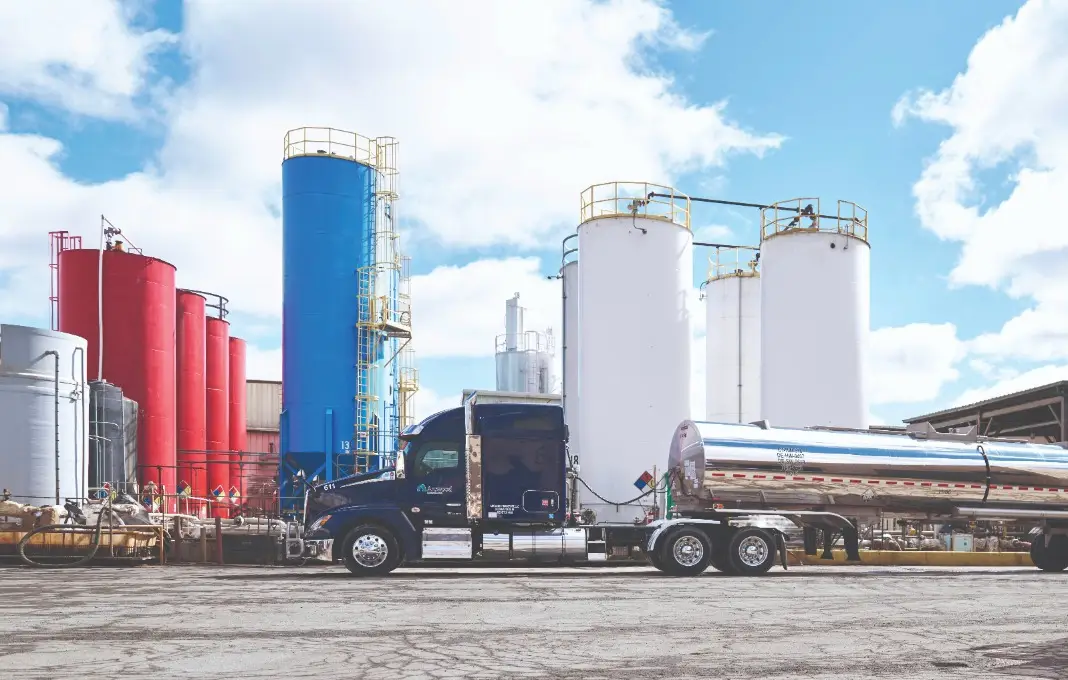
The relentless march of industrial progress, fueled by groundbreaking innovations across diverse sectors, is inherently linked to a growing imperative for environmental responsibility. As the United States experiences a resurgence in domestic manufacturing and a surge in technological advancements, the byproduct of this growth – complex waste streams and environmental challenges – demands a strategic and proactive approach. Far from being a mere compliance burden, effective environmental management is rapidly evolving into a critical strategic capability, essential for scaling innovation, building resilience, and securing long-term stakeholder confidence.
The Unseen Ecosystem of Innovation
Every significant technological leap generates a cascade of industrial activity, and with it, a corresponding environmental footprint. Artificial intelligence, for instance, a field experiencing exponential adoption, relies on a vast and often unseen industrial ecosystem. The production of sophisticated chips, the operation of power-hungry servers, and the maintenance of massive data centers all require substantial energy and resources. As AI’s influence permeates industries from healthcare to finance, the demand for the environmental infrastructure capable of supporting this growth responsibly intensifies.
This principle extends to other transformative sectors. The burgeoning market for GLP-1 therapeutics, aimed at addressing metabolic health concerns, necessitates advanced chemical manufacturing processes, each with its own unique waste management considerations. Similarly, the critical need to upgrade and expand energy infrastructure, whether for renewable sources or to meet rising demand, involves complex industrial operations with environmental implications. Advanced chemical manufacturing, a cornerstone of many modern industries, inherently produces intricate waste streams, some of which can be hazardous.
The factories, water treatment facilities, chemical handling operations, and myriad other industrial entities that form the backbone of these breakthroughs are also the very engines that generate environmental responsibility. Each new wave of innovation, while promising economic growth and societal advancement, simultaneously creates obligations that cannot be relegated to the periphery. The ability to manage the byproducts of progress efficiently, safely, and sustainably is no longer an afterthought; it is becoming the foundational element that allows innovation to scale responsibly and ethically.
Scaling Innovation: A New Strategic Imperative
Across the United States, a palpable surge in industrial investment is reshaping the national economic landscape. Manufacturers are actively expanding domestic operations, establishing new facilities for the production of emerging technologies, and meticulously reshaping supply chains to enhance resilience against global disruptions. This trend is unequivocally positive news for economic growth, job creation, and the revitalization of communities.
However, this revitalized industrial expansion is intrinsically coupled with a multiplicity of obligations, particularly as the waste streams generated become increasingly complex and diverse. Modern businesses operate in an environment where stakeholders have elevated expectations. Customers demand unwavering operational continuity, a commitment that hinges on robust and reliable supply chains, including the efficient management of waste. Regulatory bodies, at federal, state, and local levels, are enforcing stricter accountability standards, requiring businesses to demonstrate a clear and verifiable commitment to environmental protection. Simultaneously, communities, while benefiting from economic development and job creation, rightfully expect their air and water resources to be safeguarded.
Furthermore, investors, shareholders, and other key stakeholders are increasingly scrutinizing corporate practices, demanding transparency and responsible management of environmental challenges. What was once perceived by many as a burdensome compliance obligation is now being recognized and redefined as a strategic priority. The capacity to manage materials and their associated outputs responsibly, to adapt swiftly to evolving regulatory landscapes, and to maintain unimpeded operational continuity are no longer peripheral concerns but core strategic capabilities. Companies that excel in managing the byproducts of their progress are demonstrably better positioned to achieve sustained growth, navigate unforeseen disruptions, and cultivate deep trust with their critical stakeholders.
This fundamental shift in perspective aligns with a broader trend observed across many organizations: a comprehensive re-evaluation of how business resilience is built and maintained. Business leaders have, over the past several years, been diligently preparing for an increasingly complex and volatile operating environment. This preparation encompasses a wide array of risks, from geopolitical instability to climate-related events. Within this crucial conversation about resilience, environmental infrastructure deserves a prominent and integral place.
The scope of environmental infrastructure is often underestimated. It extends far beyond the conventional understanding of safe treatment, transportation, and disposal of regulated waste streams. It encompasses the development and deployment of innovative systems and technologies that enable resource recovery and robust recycling programs. As manufacturing scales and novel innovations transition from laboratory concepts to commercial viability, the demand for comprehensive environmental infrastructure and integrated solutions is poised for significant and sustained growth. Consequently, the companies that are strategically positioned to thrive in the coming decade are those that proactively embed environmental stewardship into their core growth planning, rather than treating it solely as a reactive measure for remediation when issues arise.
Partnering for Progress: Navigating Complexity with Expertise
To effectively navigate this evolving landscape, businesses require more than just basic service providers. They need expert partners possessing deep permitting expertise, a nuanced understanding of regulatory strategy, and the capability for robust data capture and reporting. These partners must be adept at navigating the intricate web of environmental regulations and operational complexities, while simultaneously helping their clients operate more efficiently, sustainably, and with greater confidence.
The escalating challenge of Per- and Polyfluoroalkyl Substances (PFAS), often referred to as "forever chemicals," serves as a stark and compelling illustration of this paradigm shift. The pervasive nature of PFAS is compelling businesses to confront a fundamental truth: waste management is no longer solely about containment or basic compliance. It is increasingly about instilling confidence – confidence that persistent contaminants can be effectively treated through credible, high-performance destruction pathways, and confidence that environmental risks are proactively addressed and mitigated before they escalate into significant financial liabilities.
"In my experience leading Arcwood Environmental, working with manufacturers and industrial companies across the country, I have witnessed firsthand the growing desire from our customers for more than a transactional service provider," states a representative from a leading environmental solutions firm. "They are seeking a reliable, responsive partner capable of not only solving complex challenges but also creating tangible value and providing invaluable peace of mind. They understand that true reliability in today’s environment necessitates a different cost structure, especially as growth requires materials to be transported farther from disposal sites. They are actively seeking innovative solutions that facilitate resource recovery, enhance recycling rates, improve operational efficiencies, and robustly support their risk mitigation strategies and stakeholder engagement efforts."
A Timeline of Evolving Expectations
The recognition of environmental responsibility as a strategic imperative has not emerged overnight. It is the result of decades of increasing scientific understanding, growing public awareness, and evolving regulatory frameworks.
- Mid-20th Century: Early environmental movements and legislation like the Clean Air Act (1970) and the Clean Water Act (1972) established foundational regulatory frameworks, primarily focused on pollution control and the establishment of emission and discharge standards. Waste management was largely characterized by landfilling and basic disposal.
- Late 20th Century: The Resource Conservation and Recovery Act (RCRA) in the U.S. (1976) introduced the concept of cradle-to-grave management for hazardous waste, signaling a move towards more comprehensive oversight. Growing awareness of toxic substances and their long-term impacts began to influence industrial practices.
- Early 21st Century: The rise of corporate social responsibility (CSR) and sustainability reporting gained momentum. Companies began to voluntarily disclose their environmental performance, driven by investor and consumer pressure. The concept of the circular economy, emphasizing resource reuse and recycling, started to gain traction.
- 2010s – Present: Increased focus on emerging contaminants like PFAS, microplastics, and greenhouse gas emissions has led to more stringent regulations and calls for advanced treatment technologies. Climate change has become a central driver, pushing industries to decarbonize and adopt more sustainable practices. The integration of environmental, social, and governance (ESG) factors into investment decisions has become mainstream. The COVID-19 pandemic further highlighted supply chain vulnerabilities and the importance of resilient, domestic manufacturing, underscoring the need for robust environmental infrastructure to support these efforts.
This chronological progression demonstrates a clear trajectory from reactive compliance to proactive strategic integration.
Supporting Data and Analytical Insights
The economic implications of this shift are significant. A 2023 report by the Environmental Protection Agency (EPA) highlighted that the environmental services sector in the U.S. directly employs over 1.2 million people and generates hundreds of billions of dollars in revenue annually, a figure projected to grow as demand for advanced waste management and remediation services increases. Furthermore, investments in green technologies and infrastructure are increasingly seen as drivers of economic competitiveness. For example, a study by the International Renewable Energy Agency (IRENA) indicated that scaling up renewable energy sources and associated infrastructure could create millions of net new jobs globally by 2030.
The complexity of modern industrial waste streams is also a critical factor. A 2022 analysis by the National Academies of Sciences, Engineering, and Medicine noted that the chemical composition of industrial byproducts is becoming increasingly sophisticated, requiring specialized knowledge and advanced treatment methodologies. This complexity is particularly evident in sectors like semiconductor manufacturing, where the production of microchips generates a variety of hazardous solvents and heavy metals, necessitating highly specialized disposal and recycling processes.
The financial implications of neglecting environmental responsibility are equally stark. The U.S. Government Accountability Office (GAO) has consistently reported on the rising costs associated with the cleanup of legacy industrial sites, often running into billions of dollars. Inaction on emerging contaminants can lead to substantial long-term liabilities, as exemplified by the ongoing remediation efforts and legal settlements related to PFAS contamination, which are estimated to cost hundreds of billions of dollars nationwide.
Official Responses and Industry Reactions
Government agencies are actively responding to these evolving challenges. The Biden-Harris administration has made significant investments in environmental infrastructure through initiatives like the Bipartisan Infrastructure Law, dedicating substantial funding towards clean water, hazardous waste cleanup, and the modernization of industrial facilities. The EPA is continuously updating its regulations and guidance to address emerging contaminants and promote sustainable industrial practices.
Industry leaders are also acknowledging this paradigm shift. Major manufacturing associations have been increasingly vocal about the need for collaborative solutions and regulatory certainty. Many forward-thinking companies are proactively investing in advanced waste treatment technologies, circular economy initiatives, and robust environmental management systems. Publicly traded companies are seeing increased pressure from institutional investors to demonstrate strong ESG performance, which directly influences their access to capital and their overall valuation.
"We are at a critical juncture," commented a senior executive from a Fortune 500 manufacturing company. "The traditional approach to waste management is no longer sufficient. We need partners who can help us innovate, optimize our processes, and ensure we are not only meeting but exceeding regulatory requirements, while also building trust with our communities and investors. This is about long-term viability and responsible growth."
Broader Impact and Implications for America’s Future
America’s future prosperity will undoubtedly be shaped by its capacity for innovation in technology, healthcare, manufacturing, and energy. The substantial investments being made in these sectors promise to unlock tremendous opportunities for economic advancement and societal progress. However, these investments are inextricably linked to new and significant responsibilities.
Ultimately, the narrative of industrial growth and environmental responsibility is not one of conflict, but of synergy. They are complementary forces that, when strategically aligned, forge the bedrock of sustainable progress. The companies that possess the foresight to recognize this fundamental reality and strategically respond to its implications will be the ones best positioned to lead the next era of American industry. They will be the innovators, the job creators, and the responsible stewards of the environment, ensuring that progress today does not come at the expense of future generations. The path forward requires a holistic approach, integrating environmental considerations into the very fabric of industrial strategy, thereby creating a more resilient, prosperous, and sustainable future for all.
