

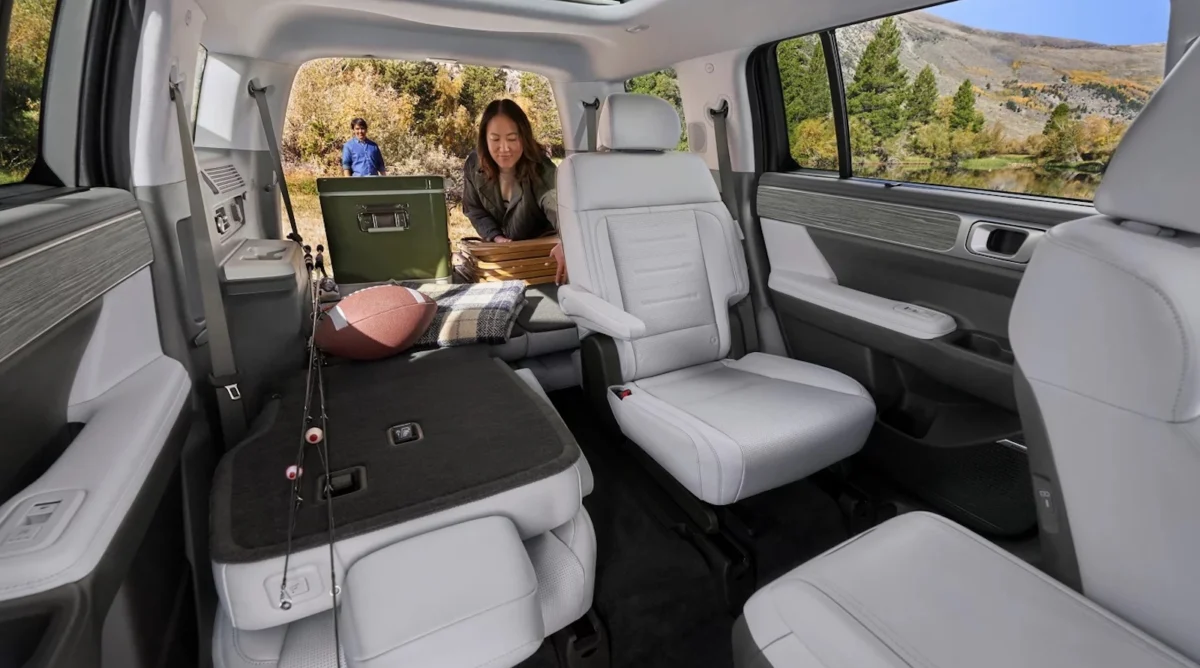
The global automotive landscape is witnessing a significant technical pivot as manufacturers seek to bridge the gap between internal combustion engines and pure battery electric vehicles. Hyundai Motor Group has officially announced a strategic expansion into the Extended-Range Electric Vehicle (EREV) market, signaling a major shift in its product roadmap for North America and China. This move, which includes both the Hyundai and Genesis brands, aims to address persistent consumer concerns regarding range anxiety and charging infrastructure while complying with tightening environmental regulations. By leveraging a powertrain technology that utilizes a gasoline engine solely as an onboard generator, Hyundai joins a growing list of automakers—including Stellantis, Ford, and Volkswagen’s Scout—that view EREVs as a critical transitional tool for the next decade of mobility.
Defining the EREV: A Technical Departure from Traditional Hybrids
To understand the significance of Hyundai’s move, it is necessary to distinguish EREVs from the more common Plug-in Hybrid Electric Vehicles (PHEVs). For much of the last decade, PHEVs were designed as "parallel hybrids," where both an internal combustion engine and an electric motor are connected to the drivetrain. In many early models, such as the initial offerings from Audi and BMW, the electric range was often a secondary consideration, sometimes offering as little as 10 to 20 miles of battery-only travel. These vehicles were frequently criticized as "compliance cars," designed more to meet regulatory fleet averages than to provide a true electric driving experience.
In contrast, an EREV operates on a "series hybrid" principle. The wheels are driven exclusively by electric motors. The internal combustion engine (ICE) has no physical connection to the wheels; instead, its sole function is to power a generator that recharges the battery pack or provides electricity directly to the motors when the battery is depleted. This allows the engine to operate at a constant, highly efficient RPM, reducing emissions and fuel consumption compared to traditional engines that must constantly adjust to varying road speeds and loads.
The EREV concept is not entirely new. The Chevrolet Volt, launched by General Motors in 2010, is widely considered the pioneer of the category. Despite a loyal following, the Volt was discontinued in 2019 as GM shifted its focus toward pure battery electric vehicles (BEVs). However, the resurgence of the EREV format suggests that the industry may have moved away from the technology prematurely, especially as the pace of BEV adoption faces headwinds in markets with underdeveloped charging networks.
The China Catalyst: Regulatory Shifts and Market Trends
The renewed interest in EREVs is largely driven by market dynamics in China, the world’s largest automotive market. For several years, Chinese regulators have offered aggressive incentives for "New Energy Vehicles" (NEVs). Recently, however, the criteria for these incentives have tightened. To qualify for the full suite of subsidies and policy benefits, plug-in vehicles must now demonstrate a minimum battery-only range of 100 kilometers (approximately 62 miles) under the China Light-Duty Vehicle Test Cycle (CLTC).
This regulatory shift effectively marginalized older PHEV designs with small batteries. In response, Chinese manufacturers like BYD and Li Auto have dominated the segment by producing EREVs with substantial battery capacities and total ranges exceeding 1,000 kilometers (620 miles). BYD’s latest iterations of these powertrains have pushed the boundaries further, claiming combined ranges of up to 1,300 kilometers.

Because the CLTC testing cycle is generally more optimistic than the United States’ Environmental Protection Agency (EPA) standards, a 100-kilometer range in China typically translates to roughly 50 miles of EPA-rated range. This specific threshold is becoming the new industry standard for "high-utility" hybrids, ensuring that the majority of daily commutes can be handled on electricity alone while maintaining a gasoline backup for long-distance travel.
Hyundai’s North American Strategy and the 2030 Vision
During its 2024 CEO Investor Day, Hyundai Motor Group detailed its "Hyundai Way" strategy, which involves a multi-pathway approach to electrification. Central to this plan is the introduction of EREVs to the North American market, starting with the Hyundai Santa Fe and the Genesis GV70.
The upcoming Santa Fe EREV is expected to feature a dual-motor, all-wheel-drive configuration. Hyundai claims the vehicle will deliver a combined range of over 600 miles on a full charge and a full tank of gas. This range is specifically designed to target the "range anxiety" that remains a primary barrier for American consumers considering a switch from gasoline to electric. By offering a vehicle that can travel from Los Angeles to San Francisco, or New York to Richmond and back, without needing a mid-trip fuel or charge stop, Hyundai hopes to capture a demographic that is interested in electrification but wary of the current state of public charging infrastructure.
The Genesis brand, Hyundai’s luxury arm, will also integrate EREV technology. While Genesis previously committed to becoming an all-electric brand by 2030, the company has adjusted its timeline to include "bridge" technologies. The Genesis GV70 EREV is projected to offer an even longer range of approximately 640 miles. This luxury application of EREV technology allows Genesis to compete with traditional high-end internal combustion SUVs while providing the silent, high-torque driving characteristics of an electric vehicle.
Production and Economic Implications
Hyundai’s commitment to EREVs is backed by significant investments in domestic manufacturing. The Santa Fe EREV is slated for production in the United States, likely at the Hyundai Motor Manufacturing Alabama (HMMA) facility. This plant already produces gasoline and traditional hybrid versions of the Santa Fe, and the integration of EREV assembly lines represents a strategic flexibility that allows the company to adjust production based on real-time market demand.
By 2030, Hyundai aims to have 10 different hybrid and EREV models in its U.S. lineup. The company forecasts that these electrified models will account for roughly 50% of its total sales by the end of the decade. To support this, Hyundai is expanding its North American production capacity by an additional 500,000 units. This includes the massive "Metaplant" in Georgia, which was originally intended for BEV production but is being designed with the versatility to handle hybrid and EREV assembly if necessary.
This strategy serves as a hedge against fluctuating EV demand. While BEV sales continue to grow, the rate of growth has slowed in certain regions due to high interest rates, the phase-out of some federal tax credits, and infrastructure gaps. EREVs provide a way for Hyundai to maintain high sales volumes and meet federal Corporate Average Fuel Economy (CAFE) standards without being entirely dependent on the rapid build-out of a national fast-charging network.

Competitive Landscape: The Rise of the Range-Extended Truck
Hyundai is not the only manufacturer betting on the EREV revival. The technology is particularly well-suited for heavy-duty applications, such as pickup trucks and large SUVs, where towing and hauling significantly reduce the efficiency of pure battery systems.
Stellantis is currently developing its "Ramcharger" powertrain for the Ram 1500. This EREV pickup features a 3.6-liter V6 engine that functions purely as a generator for a 92-kWh battery pack, providing a targeted total range of 690 miles. Similarly, Ford is reportedly exploring EREV options for its next generation of electric trucks, acknowledging that some commercial and rural customers require the refueling speed of gasoline for long-haul tasks.
Volkswagen’s new Scout Motors brand is perhaps the most notable recent entry into the EREV space. At the unveiling of its Traveler SUV and Terra pickup concepts, Scout announced an optional "Harvester" EREV system. Company officials noted that since the reveal, a significant portion of pre-orders have opted for the EREV configuration over the pure BEV version, highlighting a clear consumer preference for the security of an onboard generator in the off-road and utility segments.
Analysis of Environmental and Consumer Impact
From a policy perspective, EREVs represent a pragmatic middle ground. While they still utilize fossil fuels, their operational profile is vastly more efficient than traditional internal combustion vehicles. For consumers who plug in daily, an EREV functions as a pure electric vehicle for nearly all local driving, with the gasoline engine only activating during rare long-distance trips. Data from the Chevy Volt era showed that many owners went months without visiting a gas station, despite having an engine under the hood.
However, the environmental benefit depends heavily on consumer behavior. If an EREV owner fails to charge the vehicle and relies solely on the gasoline generator, the carbon footprint remains higher than a pure BEV. This has led to debates among environmental advocates and regulators regarding how much credit EREVs should receive toward zero-emission mandates. In California and other "Section 177" states that follow Advanced Clean Cars II regulations, the role of plug-in hybrids is strictly capped to ensure they do not replace the long-term goal of total decarbonization.
For the consumer, the EREV offers a unique value proposition: the "EV feel"—instant torque, smooth acceleration, and regenerative braking—without the "EV risk" of being stranded by a broken or occupied charging station. As Hyundai prepares to bring the Santa Fe and GV70 EREVs to market, the success of these models will likely serve as a bellwether for the entire North American auto industry. If these vehicles succeed in converting traditional SUV buyers to plug-in technology, they may prove to be the most effective catalyst for mass-market electrification seen to date.
Conclusion
The automotive industry’s shift toward EREVs reflects a maturing market that is beginning to prioritize consumer utility and logistical reality over ideological purity. Hyundai’s decision to integrate this technology into its core American lineup—the Santa Fe and Genesis GV70—marks a turning point where "range anxiety" is addressed not just with more chargers, but with smarter engineering. As production ramps up toward 2030, the EREV is poised to transition from a niche experimental format into a mainstream pillar of the global transportation network.
