

The transition from managing wealth for others to building a personal real estate empire is a narrative often discussed in financial circles, but few execute it with the precision demonstrated by Martin Castro-Silva. After spending 12 years as a private client banker at JP Morgan Chase in South Florida, Castro-Silva leveraged his professional observations of high-net-worth individuals to pivot into the competitive world of real estate investment. By 2025, his trajectory has culminated in a high-volume operation, transacting 11 properties in a single year, including seven successful flips and the retention of two rental units. His journey provides a blueprint for career professionals seeking to transition into full-time investing through disciplined "buy box" strategies and strategic financial engineering.
The Catalyst for Change: Observations from the Banking Floor
During his tenure at Chase, Castro-Silva occupied a front-row seat to the financial habits of South Florida’s affluent. A recurring pattern emerged: the clients experiencing the most consistent and rapid capital growth were almost exclusively tied to real estate. One particular client, a young investor frequently wiring funds for residential house flips, became the primary catalyst for Castro-Silva’s career shift. This individual was netting between $20,000 and $25,000 in profit per transaction over short durations.
Driven by these insights, Castro-Silva began a rigorous period of informal due diligence, interviewing active investors who visited his branch. The realization that single-family residential investments could yield returns nearly equivalent to half his annual salary in a fraction of the time prompted him to take action. In early 2022, he initiated his first move by refinancing his primary residence to extract the necessary liquidity for his entry into the market.
The Maiden Venture: A Lesson in Holding Costs and Perseverance
In February 2022, Castro-Silva partnered with his mother to acquire a townhome in Lake Worth, Florida. The purchase price was $200,000, funded through a combination of 50% cash from the home equity refinance and 50% hard money lending at interest-only terms. While the property required relatively minor cosmetic updates—estimated at $25,000 to $30,000—the project faced significant delays.
Because Castro-Silva was still maintaining his full-time position at the bank, the renovation of two bathrooms and a kitchen stretched across seven months. This extended timeline resulted in approximately $7,000 in holding costs, a critical metric in the house-flipping business. Despite the inefficiencies of the first project, the market remained favorable. After listing the property for $320,000 and providing a minor concession, the deal closed at $310,000. The net profit of $37,000 served as a proof of concept, confirming that real estate could provide the financial independence he sought for his family.
Scaling Operations and the Risks of Overpricing
The second deal marked a significant escalation in both risk and commitment. Castro-Silva acquired a single-family home two hours north of his initial base for $170,000, utilizing a cross-collateralized line of credit. Mid-renovation, he made the decision to resign from his banking career to focus entirely on real estate. This move was fueled by a desire to reclaim time with his young children and a confidence in his ability to replicate his initial success.
However, the second project introduced the "market reality" lesson. While the gut renovation was completed for $50,000—only slightly over the $40,000 budget—Castro-Silva ignored his real estate agent’s advice regarding the listing price. He initially priced the home between $325,000 and $335,000, subsequently rejecting a $300,000 cash offer in the first week of listing. The property sat on the market for four months, during which carrying costs eroded potential gains. He eventually sold the property for $300,000 via traditional financing. Although he still realized a $35,000 profit, the experience highlighted the dangers of "investor ego" and the importance of liquidity over speculative pricing.
Strategic Financing and Neighborhood Sourcing
By his third deal, Castro-Silva’s capital was largely tied up in ongoing projects. To continue scaling, he returned to his professional roots, approaching a former bank client who was also a real estate agent. He proposed a mutually beneficial arrangement: the agent would provide a $150,000 hard money loan, and in exchange, the agent would receive the listing rights for the finished product.
This deal utilized Castro-Silva’s first single-family house as collateral, a sophisticated use of cross-collateralization that allowed him to stay active in the market without personal cash reserves. Applying the lessons from his previous pricing error, he listed the third property at a competitive $299,000. The result was immediate; the home went under contract within six hours.
The fourth deal showcased the power of "direct-to-neighbor" sourcing. While working on a renovation, Castro-Silva made a habit of networking with local residents. This led to a direct acquisition of a neighboring property for $150,000—$20,000 less than the price a wholesaler had charged for a similar home in the area. For this project, he formed a family equity partnership with his siblings. They invested $60,000 into the renovation and sold the property for $320,000, netting a $65,000 profit. This transition to cash-heavy partnerships allowed him to reduce his reliance on high-interest hard money.
Chronology of Growth: 2022–2025
The evolution of Castro-Silva’s portfolio can be mapped through three distinct phases:
- The Foundation Phase (2022): Focused on proof of concept and learning the basics of renovation management while balancing a corporate career.
- The Transition Phase (2023–2024): Characterized by the move from South Florida to the Treasure Coast (Vero Beach and Sebastian). This period involved diversifying financing methods, including HELOCs, private lending, and family partnerships.
- The Optimization Phase (2025): Reaching a volume of 11 deals annually. This phase is defined by a standardized "buy box," a dedicated renovation crew, and a shift toward lifestyle preservation.
Market Analysis: Why Vero Beach and Sebastian?
Castro-Silva’s decision to move his operations and his family to Vero Beach and Sebastian was a calculated response to the economic shifts in Florida’s real estate market. South Florida markets like Miami and Fort Lauderdale have seen massive price appreciation, making the "entry-level" flip increasingly difficult to finance.
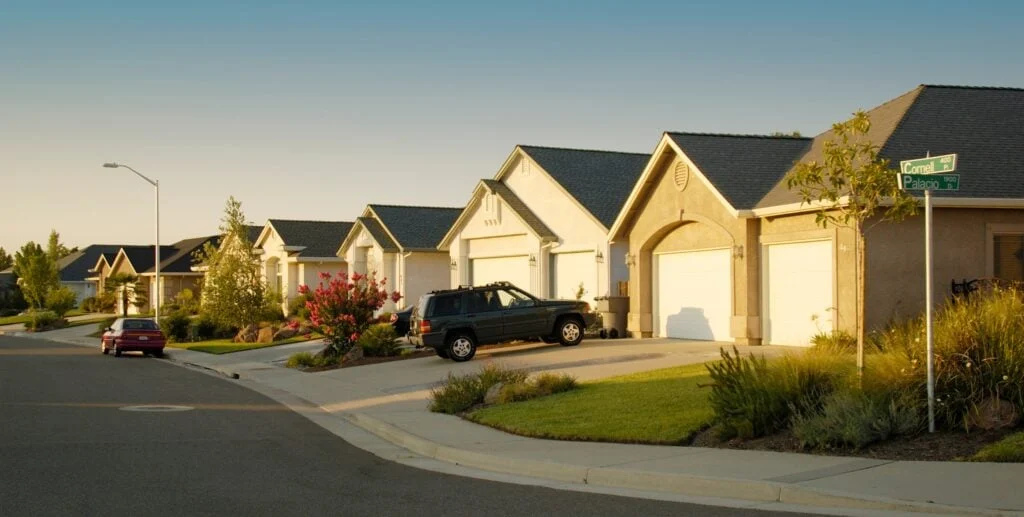
In contrast, Indian River County offers a more stable "middle-market" environment. Castro-Silva’s current buy box is highly specific:
- Property Type: Single-family homes, approximately 1,200 square feet.
- Configuration: 3 bedrooms (or 2-bedroom units with the potential to add a third room).
- Acquisition Price: $150,000 to $220,000.
- Exit Price: Under $350,000.
This strategy acts as a built-in safety net. In the event of a market slowdown, a property with an exit price under $350,000 in Florida is highly attractive to first-time homebuyers and can be easily converted into a rental that breaks even or generates positive cash flow. This "exit strategy redundancy" is a hallmark of conservative, professional-grade investing.
Economic Impact and Broader Implications
The success of investors like Castro-Silva has broader implications for local economies. By focusing on distressed properties in the $150,000 to $220,000 range, his operations contribute to the revitalization of aging housing stock in Sebastian and Vero Beach. Furthermore, his transition from a corporate banking role to a local business owner illustrates a broader trend in the American labor market where specialized professionals are increasingly seeking "sweat equity" opportunities over traditional salary structures.
From a financial perspective, Castro-Silva’s use of various debt instruments—ranging from hard money to cross-collateralized lines of credit—demonstrates the sophistication required to scale in a high-interest-rate environment. His ability to maintain a profit margin of $30,000 to $60,000 per deal suggests that even as borrowing costs rise, value-add real estate remains a viable vehicle for wealth creation if the acquisition price is disciplined.
Conclusion: The Shift to Lifestyle-Centric Investing
As of 2025, Martin Castro-Silva has achieved a balance that eludes many in the high-stakes world of real estate. By employing a dedicated renovation crew to handle the day-to-day labor and project management, he has successfully removed himself from the "grind" of the job site.
The most significant metric of his success is not the 11 deals transacted in 2025, but his total cessation of weekend work. By treating real estate as a structured business rather than a series of frantic projects, he has fulfilled the original goal he set when leaving the banking industry: reclaiming time for his family. His journey underscores a vital truth in the investment world: financial success is most valuable when it is coupled with the discipline to define "enough" and the strategy to protect one’s time.
