

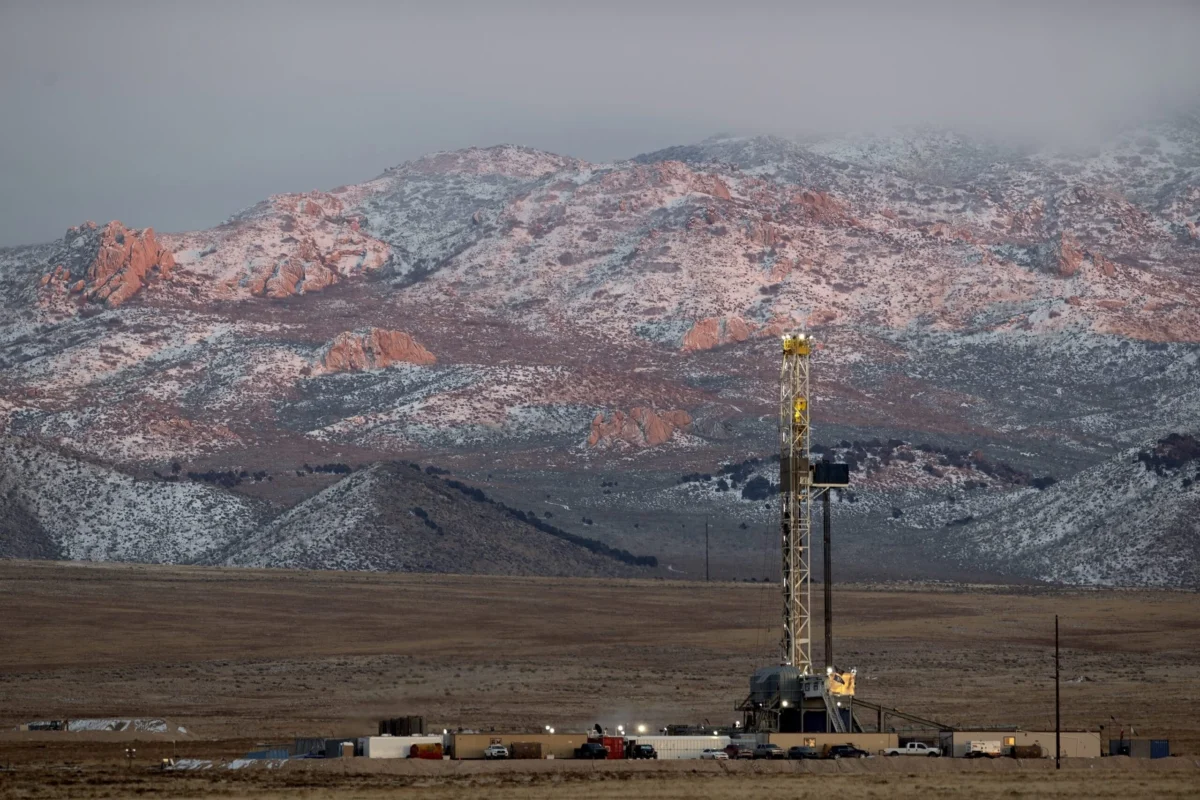
In the expansive and often desolate landscapes of the Utah desert, miles from any major urban center, a quiet revolution is taking shape. Here, near Milford, Fervo Energy is spearheading an ambitious endeavor, betting on its innovative approach to enhanced geothermal systems (EGS) to unlock a vast, untapped reservoir of baseload, emissions-free electricity. This pursuit comes at a pivotal moment, as the United States faces an unprecedented surge in power demand for the first time in decades, driven primarily by the proliferation of data centers, the electrification of transportation, and a renaissance in domestic manufacturing.
The Energy Transition and America’s Growing Power Appetite
The global energy landscape is undergoing a profound transformation, shifting away from fossil fuels towards renewable sources. While solar and wind power have seen remarkable growth and cost reductions, their intermittency poses a significant challenge to grid stability. The need for reliable, "firm" power sources that can operate continuously, regardless of weather conditions or time of day, is more critical than ever. This is where baseload power, traditionally provided by coal, nuclear, or natural gas plants, becomes indispensable.
Concurrently, the U.S. electric grid is experiencing a dramatic increase in demand. After years of relatively flat growth, projections from the Energy Information Administration (EIA) and other bodies indicate a significant uptick. This surge is largely attributable to the booming artificial intelligence (AI) sector, which requires massive data centers that consume prodigious amounts of electricity. Estimates suggest that AI data centers alone could demand an additional 85 gigawatts (GW) by 2030, equivalent to powering tens of millions of homes. The accelerating adoption of electric vehicles (EVs) and reshoring of industrial manufacturing further amplify this demand, putting immense pressure on existing infrastructure and accelerating the search for new, sustainable power solutions.
Geothermal’s Traditional Constraints and Fervo’s Breakthrough
Geothermal energy, which harnesses the Earth’s internal heat, is not a new concept. For decades, it has provided clean, reliable power in regions blessed with specific geological conditions – typically areas where hot, permeable rock formations naturally allow hot water or steam to rise close to the surface. These conventional hydrothermal systems are geographically limited, vastly restricting geothermal’s overall potential as a widespread energy source. The U.S., for instance, has approximately 3.7 GW of installed geothermal capacity, primarily in California and Nevada, representing a fraction of its total electricity generation.

Fervo Energy, founded in 2017 by CEO Tim Latimer and Chief Technology Officer Jack Norbeck, recognized this limitation as an opportunity. Latimer, a former drilling engineer in the oil and gas sector, saw the potential to apply the advanced drilling and hydraulic fracturing techniques perfected by that industry to unlock geothermal resources in areas previously deemed unsuitable. This approach, known as enhanced geothermal systems (EGS), fundamentally alters the geothermal paradigm. Instead of relying on naturally occurring reservoirs, EGS involves creating them. By drilling deep wells into hot, dry rock and then fracturing the rock to enhance permeability, engineers can circulate water through these engineered reservoirs, heating it to generate electricity at the surface.
A Journey from Skepticism to Scale: The Fervo Story
Fervo’s journey began with significant skepticism. In the company’s early days, Latimer recounted, venture capitalists often questioned the viability of investing in a power generation company, citing a stagnant electric grid. Oil and gas companies, too, dismissed Fervo’s methods, believing that drilling through hotter, harder granite for geothermal purposes would prove impractical and uneconomical.
"It’s a total transformation from 10 years ago, when people were questioning even the need for more new electricity," Latimer told CNBC, highlighting the dramatic shift in market perception. "This is a once-in-a-generation boom moment where hyperscalers, utilities and other customers need [power] now, and it’s our power that will be an important part of the electric grid."
Recognizing the critical importance of prime acreage for geothermal development, Latimer strategically acquired geothermal rights across the Western U.S. in Fervo’s nascent stages, amassing a portfolio of nearly 600,000 acres. This prescient move, securing land at an average price of $4 per acre, now appears remarkably astute, with comparable land parcels currently fetching upwards of $400 per acre.
Part of Fervo’s strategic land acquisition included acreage within Beaver County, Utah, a region that also hosts the Department of Energy’s Frontier Observatory for Research in Geothermal Energy (FORGE). The FORGE initiative, a dedicated research facility, aims to gather extensive data and develop technologies to de-risk and commercialize EGS for private developers. Fervo’s flagship project, Cape Station, is strategically located adjacent to the FORGE site, allowing the company to leverage valuable public research and contribute to the broader understanding of EGS technology.
Cape Station: Pioneering Commercial EGS

Fervo’s Cape Station project in Milford, Utah, is poised to make history. Slated to send power to the grid next month, it will become the first enhanced geothermal system in the U.S. to achieve commercial operation. This milestone is not just a triumph for Fervo but a significant step forward for the entire EGS industry, validating years of research and development.
The operational process at Cape Station mirrors, in some aspects, the techniques found in the Permian Basin, utilizing similar drill rigs provided by companies like Helmerich & Payne. However, the fundamental difference lies in the objective: here, the goal is the sustainable generation of emissions-free power.
On a tour of Cape Station, Latimer elucidated the intricate process. Fervo drills a pair of wells, each extending more than two miles deep, with one often incorporating a lateral section stretching over a mile horizontally. These wells penetrate hot, dry rock formations. Hydraulic fracturing is then employed to create an interconnected network of fractures within the surrounding rock. Non-potable water is subsequently injected down one well, circulates through the engineered reservoir where it is heated by temperatures exceeding 400 degrees Fahrenheit, and then returns to the surface via a separate production well. This superheated water or steam then passes through a heat exchanger, transferring its thermal energy to a working fluid in an Organic Rankine Cycle (ORC) turbine, which drives a generator to produce electricity. The cooled geothermal brine is then reinjected into the ground in a closed-loop system, minimizing water consumption and environmental impact. This entire cycle, from surface to subsurface and back, takes mere minutes.
Fervo’s drilling operations present unique challenges compared to traditional shale gas drilling due to the extreme conditions: harder rock, significantly hotter temperatures, and the requirement for exceptionally long well lives. To overcome these hurdles, the company has developed proprietary innovations in drill motors, bit designs (utilizing advanced polycrystalline diamond compact drill bits), and drilling fluids. These technological advancements have led to what Latimer describes as a "step change in performance for geothermal drilling," significantly improving efficiency and reducing downtime.
The Economics of Deep Earth Power: Driving Down Costs
A critical factor for the widespread adoption of EGS is cost competitiveness. Geothermal energy, while offering unparalleled reliability, has historically been more expensive than intermittent renewables like solar and wind, and often comparable to or higher than natural gas. Fervo’s strategy hinges on aggressive cost reduction through technological innovation and operational learning.
The company’s initial pilot wells in Nevada, drilled to a measured depth of 11,220 feet, took 70 days. At Cape Station Phase I, the average drilling time dramatically dropped to 21 days for deeper wells (14,483 feet of measured depth), reducing the capital cost to approximately $7,000 per kilowatt (kW) of installed capacity. Cape Station Phase II targets further improvements, aiming for $5,500 per kW and even deeper wells at 19,448 feet. Concurrently, Fervo is increasing the size of its pipes and tapping into hotter reservoirs, both of which enhance the electricity output per well.

Fervo benefits from federal tax credits, notably those preserved and expanded under the Inflation Reduction Act (IRA) of 2022. The IRA significantly boosted incentives for clean energy technologies, including geothermal, offering investment tax credits (ITC) and production tax credits (PTC) that can substantially reduce project costs and improve financial viability. These incentives are crucial in helping emerging technologies like EGS scale.
While significant progress has been made, Fervo acknowledges that costs must continue to fall to achieve broad competitiveness. Latimer projects a long-term target of $3,000 per kW. He emphasizes that Fervo’s ability to drill consistently and predictably has "removed a lot of the uncertainty and the exploration risk that has plagued geothermal for years." This consistency, he believes, places geothermal on a "learning curve" similar to what has driven dramatic cost reductions in other renewable energy sectors. The company anticipates substantial cost reductions not only in drilling but also in the power plant segment through modularity and standardization of designs.
The costs are split between subsurface drilling and the adjacent power plants. The first 33 MW power plant at Cape Station involved individually delivered components. For the larger 50 MW Phase II plants, parts and designs have been standardized, leading to a projected reduction of over 30% in construction time, demonstrating the benefits of modular manufacturing and design.
Strategic Partnerships and Market Traction
Fervo’s commercial success is underscored by its impressive roster of power purchase agreements (PPAs). Following its initial public offering (IPO) in May, which raised nearly $2 billion in an oversubscribed offering, Fervo has secured contracts for approximately 1 GW of power. This includes a significant offtake agreement with Google, a company with ambitious goals for 24/7 carbon-free energy by 2030. Other major buyers include Southern California Edison, Shell Energy, and NV Energy, signaling strong market confidence in Fervo’s technology.
While the specific terms of these PPAs remain undisclosed, hyperscalers like Google have demonstrated a willingness to pay above-market rates for firm, dispatchable clean power due to their corporate climate commitments. Geothermal’s continuous, non-intermittent nature makes it particularly attractive for meeting round-the-clock energy demands.
Fervo’s ability to leverage existing oil and gas supply chains provides a distinct advantage, enabling faster project timelines compared to many other generation sources. Furthermore, the Organic Rankine Cycle turbines used in Fervo’s power plants do not face the same extensive backlogs observed in the gas turbine market, where major manufacturers like GE Vernova have reported being sold out for years, further accelerating Fervo’s deployment capabilities.

Broader Implications: Powering the Future Grid
The successful commercialization and scaling of enhanced geothermal systems by companies like Fervo Energy hold profound implications for the future of the electric grid and the broader energy transition.
Firstly, EGS provides a crucial source of baseload, dispatchable clean energy. Unlike solar and wind, which are variable, geothermal plants can run continuously, providing a stable foundation for the grid. This inherent reliability makes EGS an ideal complement to intermittent renewables, enhancing grid stability and resilience.
Secondly, EGS offers significant environmental benefits. It produces zero operational greenhouse gas emissions, contributes to improved air quality, and, with its closed-loop system, minimizes water consumption. The land footprint of a geothermal plant is also considerably smaller than that required for utility-scale solar or wind farms producing equivalent baseload power.
Thirdly, the development of EGS can contribute to energy independence and security. By tapping into indigenous heat resources, countries can reduce their reliance on imported fossil fuels and diversify their energy portfolios. This localized energy production also offers greater resilience against geopolitical disruptions.
Finally, Fervo’s long-term vision extends beyond grid-connected projects. Latimer envisions a future where modular geothermal plants can be deployed "behind-the-meter" for large industrial consumers, particularly data centers, offering direct, localized, and highly reliable power supply. This decentralized model could significantly reduce transmission losses and accelerate the decarbonization efforts of energy-intensive industries.
Challenges and the Road Ahead

Despite the considerable progress and bright prospects, challenges remain. Continued cost reduction is paramount for EGS to compete broadly with all forms of power generation. While Fervo has demonstrated impressive reductions, sustaining this trajectory will require ongoing innovation and economies of scale. Public perception, particularly concerning the use of hydraulic fracturing techniques, also needs careful management, even though EGS typically operates at much lower pressures than hydrocarbon fracking and uses non-potable water in a closed loop.
Fervo’s IPO, while initially robust, has seen its stock price fluctuate, reflecting the inherent risks and long development cycles associated with novel energy technologies. However, the capital raised provides the necessary fuel for expansion.
"We have project sites throughout the entire Western United States. We now have the capital to pursue it, and we want to repeat these GeoBlocks all over the West and then all over the world until we realize a more reliable, affordable, and sustainable electric grid," Latimer affirmed.
As the U.S. grapples with an unprecedented surge in electricity demand and the urgent imperative to decarbonize its energy supply, Fervo Energy’s enhanced geothermal systems represent a compelling and potentially transformative solution. By harnessing the Earth’s enduring heat with ingenuity and advanced engineering, Fervo is not just building power plants; it is laying the groundwork for a more resilient, sustainable, and reliable energy future.
