

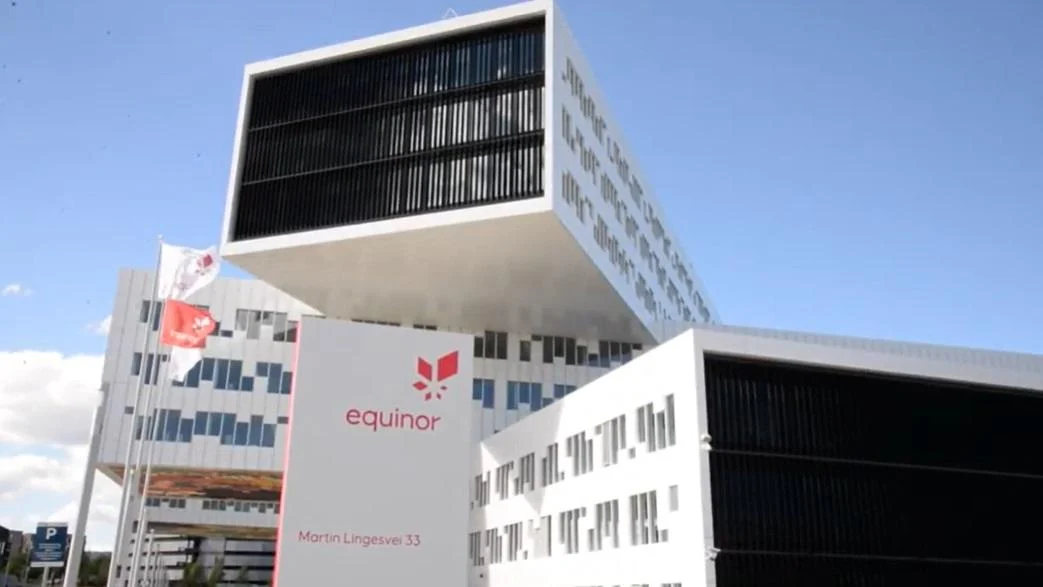
The Norwegian state-controlled energy giant Equinor has officially retired its flagship target to reach 10 to 12 gigawatts (GW) of installed renewable energy capacity by 2030. During the company’s recent Capital Markets Day, Chief Executive Officer Anders Opedal admitted that the company had recognized for some time that the ambitious goal was no longer tenable under current market conditions. This announcement represents a significant pivot for the company, which was once positioned as a leader among oil and gas majors in the transition to a low-carbon economy. The decision highlights the intensifying tension between the idealistic goals of the early 2020s and the harsh economic realities of the mid-2020s, characterized by high inflation, supply chain bottlenecks, and rising capital costs in the offshore wind sector.
According to Opedal, the company’s internal projections now suggest a much more modest trajectory, with installed renewable capacity expected to reach approximately 6 to 7 GW by the end of the decade—roughly half of the original high-end target. The CEO noted that while the company remains committed to the energy transition, it will no longer pursue volume-based targets that compromise shareholder value or capital discipline. "We have seen for several years that we will not reach that target," Opedal stated, acknowledging that the pipeline of viable projects has thinned as lease prices and construction costs skyrocketed.
A Chronology of Recalibration
The retirement of the 10–12 GW target is the latest step in a multi-year retreat from the aggressive transition strategy Equinor first unveiled in 2021. To understand the current shift, it is necessary to look at the timeline of the company’s evolving commitments:
- June 2021: Equinor launched its comprehensive "Energy Transition Strategy." At the time, the company set a bold target to reach an installed renewable capacity of 12–16 GW by 2030. Furthermore, it pledged that more than 50% of its gross annual capital expenditure (capex) would be directed toward renewables and low-carbon solutions by 2030, up from just 4% in 2020.
- February 2023: As the global economy grappled with post-pandemic inflation and the energy crisis sparked by the war in Ukraine, Equinor began to scale back. The company retired its specific 50% gross capex goal and lowered the 2030 renewable capacity target to a range of 10–12 GW.
- June 2026: At the latest Capital Markets Day, the company officially abandoned the 10–12 GW bracket entirely. The new focus shifted from "installed capacity" (GW) to "power production" (TWh), with a revised expectation of 6–7 GW of renewables by 2030.
This retreat mirrors similar moves by other European energy majors, such as BP and Shell, both of which have recently slowed their transition plans to focus on the high-margin returns currently offered by oil and gas production.
The Economic Headwinds of the Renewables Market
The primary driver behind Equinor’s decision is the deteriorating economics of large-scale renewable projects, particularly offshore wind, which was intended to be the backbone of Equinor’s green portfolio. When Equinor drafted its 2021 strategy, the global interest rate environment was at historic lows, and the cost of wind turbines and specialized vessels was relatively stable.
However, Opedal explained that the market landscape changed "totally" within five years. Lease prices for offshore wind seabed rights surged as competition intensified among energy companies and investment funds. Simultaneously, the cost of capital rose as central banks hiked interest rates to combat inflation. For capital-intensive projects like offshore wind, which require billions in upfront investment before the first kilowatt of power is sold, these factors decimated profit margins.
"Although we had allocated capex to those types of projects, we decided not to do them," Opedal said, referring to several high-cost lease rounds and projects that no longer met the company’s internal rate of return (IRR) requirements. By refusing to overpay for market share, Equinor has chosen to protect its balance sheet at the expense of its previous capacity targets.
Challenges in Carbon Capture and Storage (CCS)
Equinor’s recalibration extends beyond wind and solar. In 2021, the company also set an ambitious goal to transport and store between 30 and 50 million tons of CO2 per year by 2035. This was seen as a critical component of Norway’s national strategy to become a hub for European carbon management.
While Equinor executives maintained during the Capital Markets Day that they have secured enough geological storage space to meet these targets, they warned that the "market" for carbon storage is not developing as quickly as anticipated. Irene Rummelhoff, Executive Vice President for Marketing, Midstream & Processing, noted that potential industrial customers are slowing their investments in decarbonization technology.

Rummelhoff pointed to several systemic issues:
- Lower Emission Costs: In some regions, the cost of emitting CO2 remains lower than the cost of capturing and storing it, reducing the economic incentive for heavy industry to sign long-term storage contracts.
- Geopolitical Shifts: National governments that were expected to provide subsidies or "bridge funding" for CCS projects are increasingly diverting funds toward defense spending and social budgets.
- Lack of Public-Private Synergy: Rummelhoff emphasized that the CCS market cannot be "lifted" by customers alone; it requires robust public-private partnerships that are currently lacking ground due to fiscal constraints in European capitals.
A New Focus: Flexible Assets and Power Production
In place of the abandoned GW targets, Equinor is pivoting toward a more holistic "power production" goal. The company announced a new target to increase its total power production to more than 20 terawatt-hours (TWh) by 2030, a significant jump from the 5.7 TWh projected for 2025.
Crucially, this 20 TWh target will not come solely from renewables. Equinor intends to utilize "flexible assets," a term that includes gas-to-power facilities. By integrating gas—a resource Norway has in abundance—into its power production strategy, Equinor aims to provide stable, dispatchable energy that complements the intermittent nature of wind and solar.
This shift suggests that Equinor is leaning back into its core competency as a natural gas provider. Since the reduction of Russian gas exports to Europe, Norway has become the continent’s most vital energy partner. Equinor’s leadership appears to be betting that gas will remain a "transition fuel" for much longer than was fashionable to admit in 2021.
Industry-Wide Implications and Reactions
Equinor’s move is part of a broader trend of "green realism" sweeping through the energy sector. Market analysts suggest that the initial wave of energy transition targets set between 2015 (Paris Agreement) and 2021 was based on a "goldilocks" economic scenario that has since evaporated.

Industry observers have noted that Equinor’s decision is likely to be welcomed by certain segments of the investment community that have grown weary of low-return renewable investments. Conversely, environmental advocacy groups and climate-focused investors have expressed concern that the backsliding by major producers will make it nearly impossible to meet global net-zero deadlines.
The reaction from the Norwegian government, which owns a 67% stake in Equinor, has been one of pragmatic support. While the government remains committed to climate goals, it also relies heavily on Equinor’s dividends to fund the country’s massive sovereign wealth fund. Ensuring the company remains profitable and competitive in a volatile global market is a top priority for Oslo.
Conclusion: Navigating an Uncertain Transition
The retirement of the 10–12 GW goal marks the end of Equinor’s "volume-first" era of renewable expansion. The company is now entering a phase of "value-over-volume," where projects will only proceed if they can compete for capital against the company’s lucrative oil and gas assets.
As CEO Anders Opedal summarized, the pipeline is "thinner than we thought," and the company must navigate a world where the cost of being green has risen significantly. Equinor’s journey from its 2021 aspirations to its 2026 reality serves as a bellwether for the global energy transition at large. It illustrates that while the technical capability to build a renewable future exists, the economic and political structures required to sustain that growth are still in a state of flux.
For now, Equinor will focus on its revised 6–7 GW renewable path and its 20 TWh power production goal, emphasizing flexibility and financial resilience. The message to investors is clear: Equinor will continue to evolve, but it will not do so at the cost of its financial stability, even if it means letting go of the milestones that once defined its green ambitions.
