

Dimension Energy, a leading Atlanta-based developer and operator of distributed solar and energy storage assets, has announced the successful closing of $857 million in new capital commitments. This substantial financial injection is designed to catalyze the company’s ambitious growth trajectory, specifically targeting a milestone of 1 gigawatt (GW) of operating assets by 2028. The funding comes at a critical juncture for the U.S. energy sector, as the nation grapples with aging grid infrastructure, soaring electricity demand from data centers, and the ongoing transition toward decarbonized power sources.
The $857 million capital package is bifurcated into two primary financial instruments. First, the company secured a $200 million expansion of its existing corporate credit facility, bringing the total capacity of that facility to $650 million. This portion of the financing was led by Nuveen Energy Infrastructure Credit and included participation from various funds and accounts managed by HPS Investment Partners. Second, Dimension Energy successfully closed $657 million in construction-to-term debt and tax equity financing. This second tranche is earmarked for a specific portfolio of 29 distributed solar projects spanning five states—New York, New Jersey, Illinois, Pennsylvania, and Virginia—with a cumulative capacity of 149 megawatts (MW).
A Strategic Shift Toward Distributed Generation
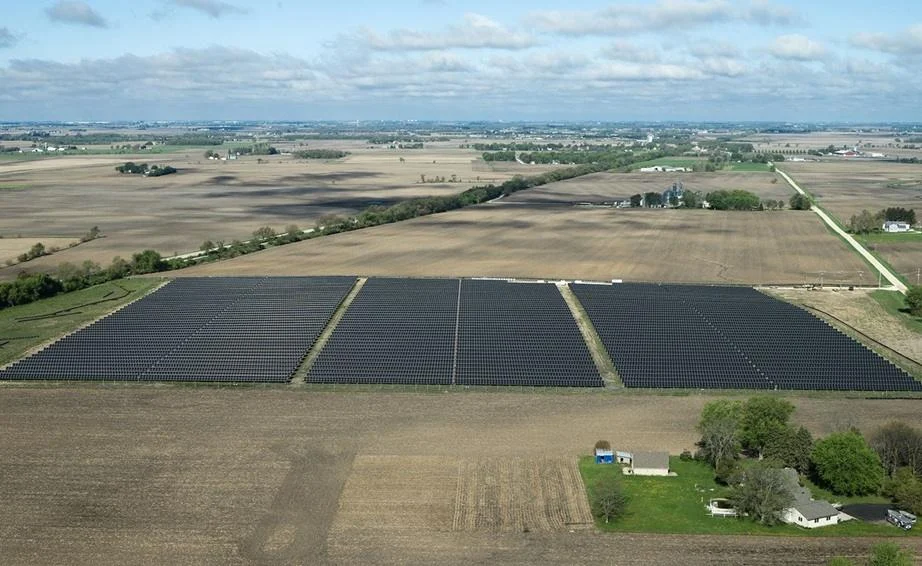
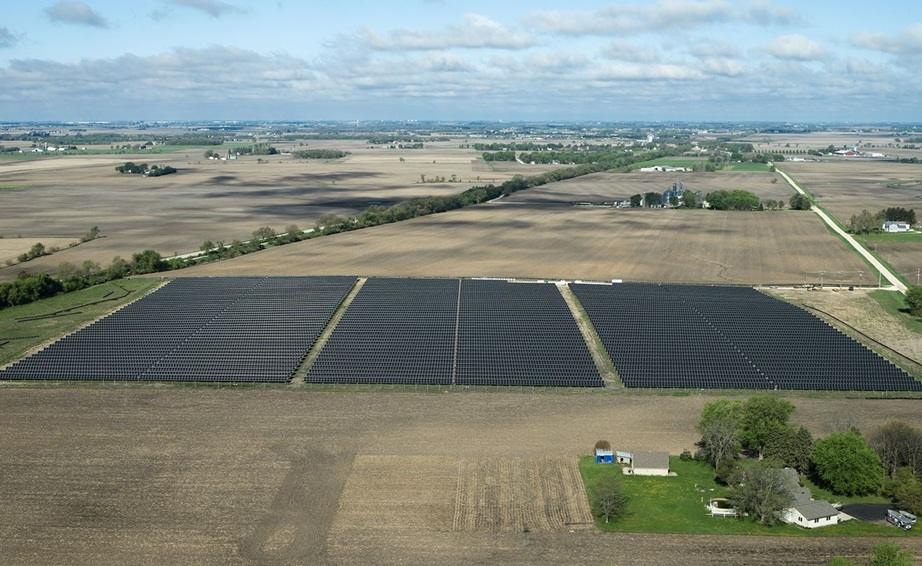
The financing marks a significant vote of confidence in the "distributed" model of renewable energy. Unlike utility-scale solar, which involves massive arrays often located far from urban centers and requiring extensive new transmission lines, distributed solar involves smaller-scale projects located near the point of consumption. These include community solar gardens, commercial rooftop installations, and local ground-mounted arrays.
By generating power closer to where it is used, distributed solar helps mitigate the "interconnection queue" crisis currently plaguing the U.S. power grid. As of 2024, nearly 2 terawatts of generation and storage capacity are waiting in line to connect to the national grid, with delays often stretching beyond five years. Dimension Energy’s focus on distributed assets allows the company to bypass many of these long-haul transmission hurdles, bringing clean energy online faster and more efficiently than many larger-scale competitors.
The company’s CEO and Co-Founder, Rafael Dobrzynski, emphasized that this capital arrival aligns with a period of unprecedented demand. "These new commitments from our financing partners reflect the strength of our platform," Dobrzynski stated. "This capital will enable us to keep scaling with discipline and speed at a moment when demand for distributed power has never been higher."
Breakdown of the Financing Structure and Lead Partners
The complexity of the $857 million package reflects the sophisticated nature of modern renewable energy finance. The $657 million project-specific debt package saw a consortium of major global financial institutions acting as Coordinating Lead Arrangers, including MUFG Bank, First Citizens Bank, ING Capital, and National Bank of Canada. Fifth Third Bank served as a Joint Lead Arranger, while Advantage Capital acted as the tax equity investor.
Tax equity remains a cornerstone of U.S. renewable energy development, particularly following the passage of the Inflation Reduction Act (IRA). Under the IRA, the Investment Tax Credit (ITC) provides significant offsets for the capital costs of solar projects. However, many developers lack the massive tax liabilities required to utilize these credits directly. Tax equity investors like Advantage Capital provide the necessary cash upfront in exchange for the ability to use those credits, effectively lowering the cost of capital for the developer.
Don Dimitrievich, Global Head of Nuveen Energy Infrastructure Credit, highlighted the macroeconomic factors driving their investment. "With power demand accelerating and transmission and distribution costs rising alongside generation costs, distributed solar is well positioned to deliver reliable power closer to load," Dimitrievich noted. He further suggested that the upsizing of the commitment reflects a high level of conviction in Dimension Energy’s ability to execute complex projects at scale.
Regional Expansion: A Deep Dive into the Five-State Portfolio
The 29 projects funded by this latest round are strategically located in states with robust regulatory frameworks for community solar and distributed generation.
- New York: Long a leader in the community solar space, New York has implemented the "Value of Distributed Energy Resources" (VDER) stack, which compensates solar projects based on when and where they provide electricity to the grid. Dimension’s expansion here supports the state’s goal of 10 GW of distributed solar by 2030.
- New Jersey: Following the success of its pilot program, New Jersey has transitioned to a permanent community solar program. The state is focused on "energy equity," ensuring that a significant portion of community solar benefits flow to low-to-moderate-income (LMI) households.
- Illinois: Driven by the Climate and Equitable Jobs Act (CEJA), Illinois has become one of the fastest-growing solar markets in the Midwest. Dimension’s projects in the state will contribute to the "Illinois Shines" program, which provides incentives for new solar development.
- Pennsylvania and Virginia: These states represent emerging frontiers for distributed solar. While traditionally more reliant on fossil fuels, both have seen a surge in legislative support for community solar initiatives as a means of driving rural economic development and grid resilience.
The 149 MW portfolio is expected to provide clean energy to thousands of residential and commercial subscribers, many of whom are unable to install solar panels on their own properties due to shading, structural limitations, or rental status.
Chronology of Growth: From 2018 to the 1 GW Vision
Dimension Energy was founded in 2018 in Atlanta, Georgia. In its early years, the company focused on building a pipeline of high-quality development sites and navigating the intricate local permitting processes required for distributed assets. Unlike utility-scale projects that deal primarily with federal or state-level regulators, distributed solar requires intense coordination with local municipalities, zoning boards, and community stakeholders.
By 2021, the company began to attract significant institutional interest, leading to its acquisition by Partners Group, a leading global private markets firm. This acquisition provided the balance sheet strength necessary to move from being a pure-play developer to an owner-operator. This transition is crucial for long-term value creation, as it allows Dimension to capture the recurring revenue generated by the sale of electricity over the 25-to-30-year lifespan of the assets.
The current trajectory toward 1 GW of operating assets by 2028 represents a quintupling of the company’s current footprint. To reach this goal, Dimension Energy must not only build out its current 29-project portfolio but also continue to replenish its development pipeline with new sites across the United States.

Economic and Environmental Implications
The expansion of Dimension Energy’s portfolio is expected to have a tangible impact on both the economy and the environment. Based on industry averages from the Solar Energy Industries Association (SEIA), the construction and operation of a 1 GW portfolio could support several thousand jobs, ranging from high-tech engineering and project management to local construction and electrical work.
From an environmental perspective, 1 GW of solar capacity can generate enough electricity to power approximately 190,000 average American homes. This displacement of fossil fuel-based generation is equivalent to removing roughly 200,000 gasoline-powered cars from the road annually. Furthermore, because these projects are "distributed," they reduce "line losses"—the energy lost as heat when electricity travels over long distances via high-voltage wires—thereby increasing the overall efficiency of the regional power system.
Analysis: The Broader Market Context
The $857 million financing deal is emblematic of a broader trend in the energy transition: the "institutionalization" of distributed solar. Historically, the distributed sector was fragmented, consisting of hundreds of small local installers. Today, however, large institutional investors and global banks are treating distributed solar as a mature, infrastructure-grade asset class.
This shift is driven by three primary factors:
- Predictable Cash Flows: Community solar programs often involve long-term contracts (15-20 years) with creditworthy subscribers, providing the stable returns that pension funds and insurance companies (like Nuveen’s parent, TIAA) crave.
- Grid Resilience: As extreme weather events increase in frequency, "microgrids" and distributed resources are seen as essential for maintaining power during wider grid failures.
- Policy Tailwinds: The IRA provides a ten-year runway of tax certainty, a luxury the renewable energy industry rarely enjoyed in previous decades when credits were subject to frequent expirations and short-term renewals.
However, challenges remain. High interest rates have increased the cost of debt for all infrastructure projects, and global supply chain volatility continues to impact the pricing of solar modules and transformers. Dimension Energy’s ability to secure nearly a billion dollars in capital in this environment suggests that lenders view their operational model as sufficiently de-risked to withstand these macroeconomic pressures.
Future Outlook
As Dimension Energy moves toward its 2028 goal, the industry will be watching its ability to integrate energy storage into its portfolio. Distributed solar is increasingly paired with battery storage to "firm up" the power supply, allowing locally generated energy to be used during peak evening hours when the sun is not shining.
With $857 million in fresh capital, Dimension Energy is now one of the best-capitalized players in the U.S. distributed energy space. The successful deployment of this capital will not only determine the company’s future but will also serve as a benchmark for the scalability of community-based renewable energy solutions across North America. As the company breaks ground on its 29 new projects, the focus shifts from financial engineering to physical execution, marking the next chapter in the decentralization of the American power grid.
