

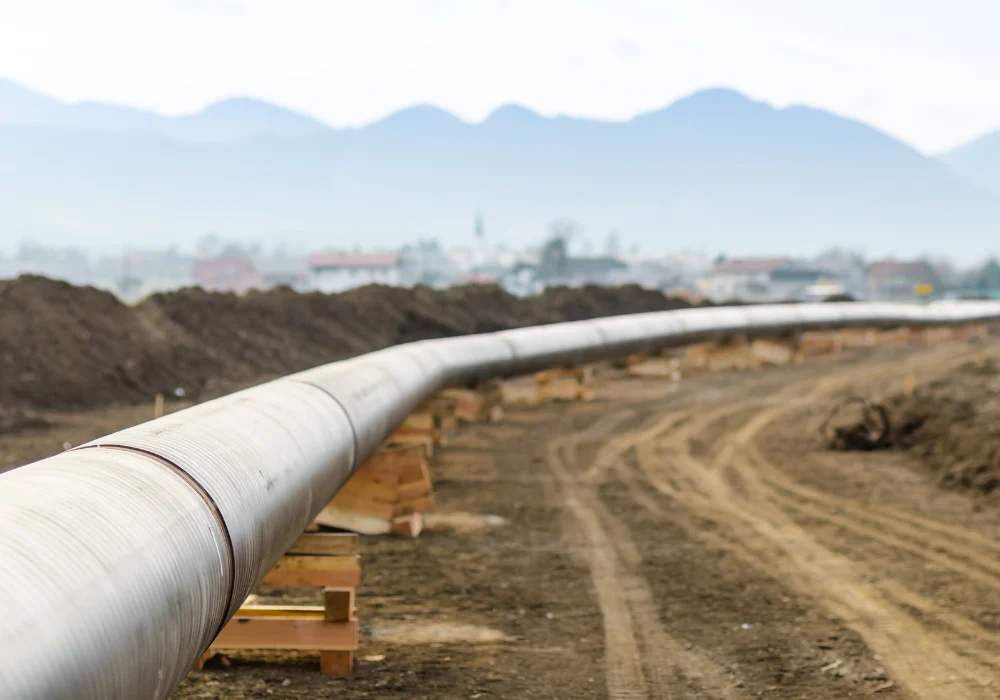
The announcement in July 2026 by Prime Minister Mark Carney and Alberta Premier Danielle Smith regarding the construction of the West Coast pipeline marks a definitive pivot in Canadian economic policy, yet it is defined as much by who is absent from the deal as by who is participating. No major oil company has expressed a willingness to finance the project, leaving the federal and provincial governments to shoulder approximately 90% of the costs. This massive public undertaking, led by the federally owned Trans Mountain Corporation along existing corridors, signals a strategic bet on resource extraction as the primary engine of national development, even as the global energy landscape undergoes a rapid transition.
The project is not an isolated infrastructure decision but the centerpiece of a broader "nation-building" initiative. By designating the pipeline a project of national interest, Ottawa and Edmonton are preparing to absorb financial risks that highly profitable private entities have declined to take. This development raises fundamental questions about the long-term viability of bitumen extraction, the opportunity cost of public funds, and the alignment of Canada’s economic strategy with its international climate commitments.
The Financial Architecture of the West Coast Line
According to official submissions from the Alberta government, the estimated cost of the West Coast pipeline ranges between $35.2 billion and $43.7 billion. These figures, however, are based on several optimistic assumptions, including regulatory savings and the absence of significant financing or escalation costs. The project is slated to be managed by a new entity jointly owned by the Trans Mountain Corporation, Alberta’s Petroleum Marketing Commission, and Pembina Pipeline. Notably, Pembina’s involvement is limited to a non-binding 10% stake, representing the sole vestige of private-sector participation.
The true cost to the Canadian taxpayer likely extends far beyond the pipeline itself. When integrated with the expansion of the Roberts Bank port terminal—estimated at $10 billion—and the associated Pathways carbon-capture initiative, which recent estimates place at over $20 billion, the total public commitment could exceed $100 billion. Market-oriented critics have pointed out that this figure does not account for the type of massive cost overruns that plagued the original Trans Mountain expansion, which eventually cost $34 billion, more than six times its initial estimate.
This fiscal burden comes at a time when Canada’s fiscal capacity is being squeezed by competing priorities. Critics argue that committing hundreds of billions to extractive infrastructure, alongside rising expenditures for nuclear development and military commitments, will inevitably pressure social sectors. Healthcare, affordable housing, and climate adaptation strategies are already facing resource constraints, creating a stark contrast between the capital allocated to the fossil fuel industry and the funding available for the broader "care economy."
A Chronology of Public Intervention and Regulatory Shifts
The road to the July 2026 announcement is paved with a series of legislative and executive actions designed to facilitate large-scale extraction. In 2018, the federal government acquired the Trans Mountain system after private investors withdrew, citing regulatory uncertainty and shifting market dynamics. Since then, the government has increasingly moved toward a model of "state-led" resource development.
On July 2, 2026, the federal government and British Columbia committed billions in public investment toward liquefied natural gas (LNG) and mining. This was followed immediately by the unveiling of the West Coast line. Within a week, a second pipeline proposal emerged from a partnership between Alberta and Ontario, again lacking a private proponent and likely requiring substantial public subsidies.
To make these projects feasible, the regulatory landscape has been significantly altered. Canada and Alberta signed a cooperation agreement to streamline impact assessments, while the federal Major Projects Office is now fast-tracking 23 initiatives worth over $130 billion. Recent legislative reforms have narrowed the scope of environmental assessments and expanded "pre-designated development zones." Furthermore, the federal government has moved to weaken several key climate policies, including the consumer carbon price, the oil and gas emissions cap, and the electric vehicle mandate. These rollbacks are viewed by proponents as necessary for economic "sovereignty," while opponents see them as a dismantling of the environmental safeguards required for a sustainable future.
Industry Sentiment and the Risk of Stranded Assets
The reluctance of the private sector to lead these investments is rooted in the shifting economics of global energy. Bitumen remains one of the highest-cost sources of oil globally, making it highly sensitive to price fluctuations. The International Energy Agency (IEA) has projected that global oil demand will peak by 2030, with supply capacity expected to outstrip demand shortly thereafter.
Given that the West Coast line is unlikely to be operational before the early-to-mid 2030s, there is a significant risk that the project will become a "stranded asset"—an infrastructure investment that fails to provide an economic return as the world moves toward decarbonization. Major oil sands producers appear to share this concern; despite a recent period of record profits, the four largest producers reduced their annual investments from an average of $27.9 billion during the 2011-2014 boom to $15.9 billion between 2021 and 2024. Instead of reinvesting in production, these companies have prioritized dividends and share buybacks, returning capital to shareholders rather than committing it to new long-term projects.
This trend suggests a disconnect between government strategy and market reality. While Ottawa and Alberta argue that the pipeline is essential for prosperity, the industry’s own behavior indicates a lack of confidence in the long-term growth of high-cost oil extraction.
The Human Element: Labor Trends and Indigenous Consultation
The economic case for the pipeline is further complicated by labor data. A report by the Alberta Federation of Labour and Canadians for Tax Fairness highlighted that between 2021 and 2023, the oil and gas industry earned $135.2 billion in operating profits while paying out only $43 billion in wages. This represents a significant shift in the profit-to-wage ratio compared to previous booms. Furthermore, the sector employs roughly 30,000 fewer people than it did in 2014, as automation and efficiency measures allow companies to produce more with a smaller workforce.
The issue of ownership also looms large. The "Big Four" producers are estimated to be 73% foreign-owned, with approximately $58 billion in dividends and buybacks flowing to foreign owners between 2021 and 2024. This raises questions about the extent to which the "sovereign" wealth generated by these projects actually remains within Canada.
Social and legal challenges also persist. While the project includes an Indigenous equity purchase right, the specifics regarding its size and timing remain vague. Many First Nations along the proposed southern route have stated they were not consulted prior to the July announcement. Currently, 14 First Nations are challenging the federal fast-tracking law in court, arguing that the streamlined regulatory process infringes upon their constitutional rights and ignores the necessity of free, prior, and informed consent.
Broader Impact and the "Path Not Taken"
The decision to double down on fossil fuel infrastructure places Canada in a unique position among G7 nations. While jurisdictions across Europe and Asia are focusing their industrial strategies on electrification, renewable energy grids, and low-carbon manufacturing, Canada’s strategy remains anchored in the 20th-century model of extraction.
The environmental mitigation offered by the government—primarily the Pathways carbon-capture project—aims to capture 16 million tonnes of CO2 annually by 2045. However, experts note that approximately 80% of a barrel’s life-cycle emissions occur when the fuel is burned by the end consumer (Scope 3 emissions), which carbon capture at the production site does not address. Even if the pipeline carries "decarbonized oil," the total emissions reduction would be less than 10% of the barrel’s total impact.
As the country faces an increasing frequency of extreme weather events, including wildfires, floods, and droughts, the "lock-in" effect of new pipeline infrastructure becomes a critical concern. Projects built in the 2030s will require decades of operation to break even, potentially tethering the Canadian economy to a declining industry well into the 2060s.
Ultimately, the West Coast pipeline represents a massive allocation of political and fiscal capital. Proponents argue it is a necessary step to ensure Canadian economic independence and provide a bridge to a future energy state. Critics, however, suggest that the same billions could be more effectively spent on a "just transition"—investing in a national electricity grid, building retrofits, and a circular economy that would create more jobs per dollar spent and insulate the country from the volatility of global oil markets. As the project moves forward, the primary challenge for the Carney and Smith governments will be to prove that this investment provides a better return for the future of the country than the green alternatives it is currently displacing.
