

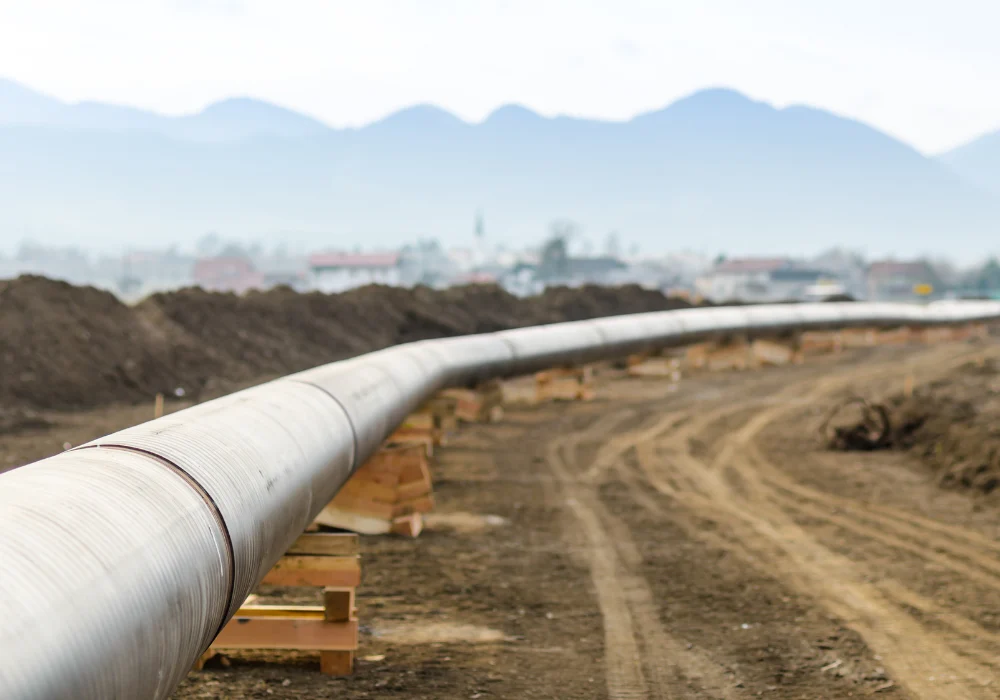
The federal government of Canada and the province of Alberta have moved forward with a landmark agreement to develop a new West Coast oil pipeline, a project that marks a significant shift in the nation’s economic and energy strategy. Announced in early July 2026 by Prime Minister Mark Carney and Alberta Premier Danielle Smith, the initiative is designed to expand Canada’s resource export capacity by utilizing the existing Trans Mountain corridor. However, the project’s financial structure reveals a stark reality: despite the high profitability of the domestic oil sector, no private energy corporation has stepped forward to lead the financing. Instead, the federal and provincial governments are prepared to shoulder approximately 90% of the multibillion-dollar costs, effectively absorbing the long-term economic risks of an industry currently facing global decarbonization pressures.
The Strategic Pivot: Main Facts of the West Coast Line
The proposed West Coast line is the centerpiece of a broader federal-provincial "Cooperative Prosperity Agreement." Under this framework, the project will be managed by the federally owned Trans Mountain Corporation (TMC). The ownership structure is intended to be an equal partnership between the federal government and the government of Alberta, with a small 10% non-binding stake held by Pembina Pipeline, a Calgary-based midstream company.
The pipeline is estimated to cost between $35.2 billion and $43.7 billion. These figures, however, are viewed as conservative by market analysts, as they assume significant regulatory "streamlining" and do not account for debt financing costs or potential inflationary escalations. When combined with associated infrastructure projects—including the $10 billion Roberts Bank port terminal expansion and the $16.5 billion carbon-capture initiative known as the Pathways project—the total public commitment to this extractive corridor could exceed $100 billion.
This massive injection of public capital comes at a time when the "Big Four" oil sands producers have significantly altered their capital allocation strategies. Between 2021 and 2024, these companies reduced their annual internal investments from $27.9 billion to $15.9 billion, opting instead to prioritize share buybacks and dividend payments to shareholders.
Chronology of the 2026 Energy Agreements
The unveiling of the West Coast line was not an isolated event but the culmination of a series of rapid legislative and diplomatic maneuvers during the summer of 2026.
- May 15, 2026: Ottawa and Edmonton sign a memorandum of understanding (MOU) on "Regulatory Certainty and Economic Growth," committing both levels of government to a framework that enables substantial growth in oil sands production.
- July 2, 2026 (Morning): Prime Minister Carney and British Columbia officials announce the "Cooperative Prosperity Agreement," pledging billions toward liquefied natural gas (LNG) development, mining, and the expansion of the Roberts Bank terminal south of Vancouver.
- July 2, 2026 (Afternoon): The specific proposal for the West Coast oil pipeline is officially released, identifying the expanded Roberts Bank terminal as the primary marine terminus for Alberta’s bitumen exports.
- July 9, 2026: Alberta and Ontario propose a secondary pipeline project, dubbed the "Northern Shield," intended to move Western Canadian oil to Eastern refineries. Similar to the West Coast line, this proposal lacks a private sector proponent and assumes heavy government subsidies.
- August 1, 2026: The federal government formally proposes listing the West Coast pipeline as a "Project of National Interest" under the newly amended Bill C-5, a designation that allows for the bypassing of certain provincial and environmental hurdles.
Financial Analysis: A Bet Against Market Trends
The decision for the public to lead the financing of the West Coast line stands in contrast to the historical norms of infrastructure development, where private equity typically drives viable projects. Analysts suggest that the reluctance of the private sector is rooted in the high "breakeven" costs of bitumen compared to American shale or Middle Eastern conventional oil.
Data from the International Energy Agency (IEA) indicates that global oil demand is expected to peak by 2030, with a significant surplus in supply capacity likely to emerge shortly thereafter. Given that the West Coast line is not projected to be fully operational until the mid-2030s, the asset faces a high probability of becoming "stranded"—an infrastructure piece that cannot earn a functional return on investment due to a lack of market demand.
Furthermore, the economic benefits of the current oil boom have not trickled down to the broader workforce in the same manner as previous cycles. A report by the Alberta Federation of Labour highlighted that during the 2021–2023 period, the oil and gas industry generated $3.14 in operating profit for every dollar paid in wages. This is a sharp increase from the $0.92 per wage dollar seen in 2014. Additionally, the sector currently employs approximately 30,000 fewer workers than it did a decade ago, largely due to increased automation and a focus on operational efficiency rather than expansion.
Regulatory Overhaul and Environmental Rollbacks
To facilitate these "nation-building" projects, the federal government has initiated a comprehensive restructuring of Canada’s environmental and regulatory landscape. The Prime Minister’s Office has tasked the Major Projects Office (MPO) with fast-tracking 23 initiatives worth over $130 billion.
This fast-tracking is supported by several policy shifts:
- Bill C-5 Implementation: The law allows the federal cabinet to designate projects as being in the "national interest," thereby narrowing the scope of environmental impact assessments.
- Carbon Pricing Adjustments: Over the past year, Ottawa has weakened the industrial carbon price and scrapped the consumer carbon price, citing the need for "economic competitiveness."
- Mandate Rollbacks: The previous mandates for electric vehicle (EV) sales and clean electricity regulations have been delayed or modified to allow for continued fossil fuel integration into the national grid.
The government’s primary environmental defense for the pipeline expansion is the Pathways carbon-capture project. However, the efficacy of this strategy is under scrutiny. While the project aims to capture 6 million tonnes of CO2 annually by 2035, the West Coast pipeline is designed to carry one million barrels of oil per day. When burned, that volume of oil produces roughly 157 million tonnes of CO2 annually. Thus, even if carbon-capture targets are met, the "decarbonized oil" touted by the administration would only see a reduction in total lifecycle emissions of less than 10%.
Indigenous Consultation and Legal Challenges
The announcement of the West Coast line has been met with immediate resistance from several First Nations along the proposed route. While the federal government has included an "Indigenous equity purchase right" in the project proposal—allowing Nations to buy into the pipeline ownership—many leaders argue that this is a secondary concern to the lack of prior consultation.
Currently, 14 First Nations have filed challenges in federal court against the fast-tracking provisions of Bill C-5. These groups argue that the legislation infringes upon Treaty rights by limiting the ability of communities to participate in comprehensive environmental reviews. "The government is presenting us with a ‘done deal’ and calling it reconciliation," said one spokesperson for the affected Nations. "True partnership requires consent before the project is announced to the press, not a share of the profits after the damage is already authorized."
Broader Impact and Global Context
The Canadian strategy of doubling down on resource extraction stands in stark contrast to the industrial policies of other G7 nations. While Canada commits hundreds of billions to pipelines and nuclear development, jurisdictions like the European Union and China are aggressively subsidizing electrification, renewable energy grids, and circular economy technologies.
Critics of the Carney-Smith plan argue that fiscal capacity is finite. With hundreds of billions committed to extractive infrastructure, military expenditures (to meet NATO’s 2% of GDP target), and nuclear expansion, there is less room in the federal budget for healthcare, affordable housing, and climate adaptation.
The long-term risk for Canada is one of "economic lock-in." Pipelines built in the 2030s require decades of consistent production to pay off their initial capital costs. If the global transition to electric mobility and renewable energy continues at its current pace, Canada may find itself tethered to a declining industry while its international peers dominate the high-growth sectors of the 21st-century economy.
As the federal government prepares to finalize the financing plan for the West Coast line, the debate remains centered on a single question: Is this an investment in a prosperous future, or a massive public subsidy for an industry that has already begun its retreat from the Canadian landscape? For now, the lack of private investment suggests that the market has already made its decision.
