

The prospects for a proposed billionaire tax appearing on California’s November 2026 ballot have dramatically diminished, with its likelihood on prediction markets platform Kalshi plummeting from 88% to a mere 35.5% over the past week. This precipitous decline follows recent reports indicating that Governor Gavin Newsom is actively working to prevent the measure from qualifying for the ballot ahead of a critical June 25 deadline. The unfolding political drama underscores the complex interplay between California’s progressive policy ambitions, its pressing fiscal challenges, and the high-stakes national political landscape in which Governor Newsom is increasingly seen as a significant figure.
The Proposed Billionaire Tax: A Deep Dive into its Rationale and Mechanics
At the heart of this legislative and political skirmish is a ballot initiative championed by the Service Employees International Union – United Healthcare Workers West (SEIU-UHW). The proposal, officially known as the "California Billionaire Tax Act," advocates for a one-time 5% tax on the net worth of individuals residing in California whose wealth exceeds $1 billion. Proponents of the measure argue that this targeted taxation is a crucial mechanism to bolster the state’s healthcare system, which they assert has been severely impacted by substantial federal funding cuts.
SEIU-UHW contends that the financial burden of this tax would fall exclusively on approximately 200 Californians, a select group whose combined net worth is estimated to be a staggering $2 trillion. The union’s public statements emphasize the immense wealth concentrated among this small segment of the population, framing the tax as an equitable solution to address critical public service needs. To demonstrate widespread public support for the initiative, the union successfully gathered and submitted more than 1.5 million signatures from registered California voters, significantly exceeding the 875,000 required to qualify a measure for the state ballot. This robust signature count initially signaled strong momentum for the proposal, making its current faltering trajectory all the more striking.
Governor Newsom’s Reported Opposition and Presidential Ambitions
The dramatic shift in the initiative’s fortunes is directly linked to recent reports from prominent news outlets, including Politico on June 11, 2026, and Bloomberg News on June 15, 2026. These reports detailed Governor Newsom’s concerted efforts behind the scenes to block the billionaire tax from reaching the ballot. While the Governor’s office has not issued an explicit public statement confirming these efforts, the market’s reaction on Kalshi, a platform known for reflecting informed sentiment, suggests the reports carry significant weight.
Newsom’s reported intervention is widely interpreted through the lens of his burgeoning national political profile and his increasingly explicit considerations for a presidential run. Just days after the Bloomberg report, on June 15, 2026, Newsom took to the social media platform X, accusing former President Donald Trump of orchestrating a Department of Justice investigation into him and his wife. In the same post, Newsom directly linked Trump’s alleged targeting to his own contemplation of a presidential campaign, stating, "Trump was driven to target me because of the fact that I am considering running for President." This public assertion of his presidential aspirations provides a compelling backdrop to his current stance on the billionaire tax, suggesting a strategic calculus that extends beyond California’s borders.
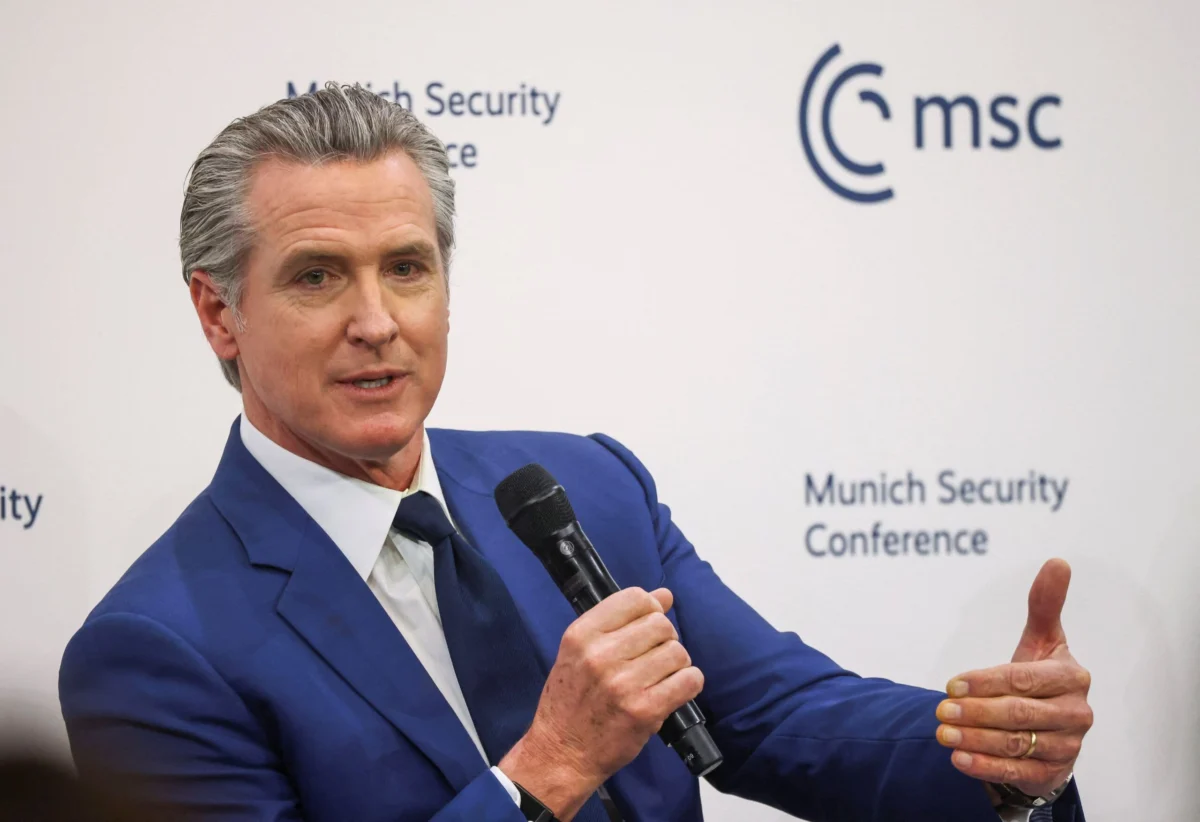
Political analysts speculate that Newsom’s opposition to the wealth tax, despite California’s generally progressive leanings, could be an attempt to cultivate a more centrist image palatable to a broader national electorate. While a wealth tax might appeal to the progressive base, it often faces strong resistance from business interests and more moderate voters, concerns that could be amplified on a national stage. His appearance at the Munich Security Conference (MSC) in Munich, Germany, on February 13, 2026, further underscored his engagement on international issues, an essential facet of a presidential candidate’s resume.
California’s Fiscal Landscape and the Broader Debate on Wealth Taxation
California, often seen as an economic powerhouse, faces persistent fiscal challenges, particularly its reliance on volatile capital gains taxes and the incomes of its wealthiest residents. The state’s budget is highly susceptible to market fluctuations, leading to periods of significant surpluses followed by substantial deficits. In recent years, California has grappled with projected budget shortfalls, prompting intense debates over spending priorities and revenue generation. The SEIU-UHW’s proposal emerged precisely within this context, aiming to provide a stable and substantial revenue stream to address critical needs, particularly in healthcare, which faces the double burden of rising costs and federal funding uncertainties.
The concept of a wealth tax is not unique to California and has been a recurring theme in global economic discourse, particularly in an era of widening income and wealth inequality. Proponents argue that such taxes are essential for redistributing wealth, funding public services, and addressing systemic inequities. They point to countries like France, Norway, and Switzerland, which have implemented various forms of wealth taxation, albeit with mixed results and frequent reforms.
However, wealth taxes are also highly contentious. Critics, including many economists and business leaders, raise concerns about their practical implementation, potential for capital flight, and constitutional challenges. They argue that taxing wealth can disincentivize investment, encourage high-net-worth individuals to relocate, and create complex valuation issues for assets that are not easily liquid. Furthermore, legal scholars often point to potential constitutional hurdles, such as the interpretation of "uniformity of taxation" clauses or the prohibition against direct federal taxes unless apportioned among the states, though state-level wealth taxes face different legal frameworks. These arguments form the likely basis for Governor Newsom’s reported concerns, whether publicly articulated or privately conveyed to the initiative’s proponents.
The California Ballot Initiative Process: A Path Fraught with Political Maneuvers
California’s system of direct democracy, allowing citizens to propose and vote on laws via ballot initiatives, is a powerful tool. However, the process is not immune to political influence and strategic maneuvering. Once proponents gather the requisite signatures and they are verified by the Secretary of State, the measure is typically placed on the ballot. Crucially, before the final ballot is set, there is often a window for negotiation, compromise, or even withdrawal.
This period allows the state legislature, and by extension, the Governor, to engage with initiative proponents. Sometimes, a legislative compromise is reached where the state passes a similar bill, leading the initiative proponents to withdraw their measure. This avoids a potentially costly and divisive ballot fight and allows for greater legislative control over the details of the policy. Governor Newsom’s reported efforts could be aimed at such a negotiation, seeking a less controversial or more fiscally palatable alternative to the one-time 5% wealth tax, or simply attempting to persuade proponents to withdraw it entirely. The June 25 deadline is pivotal, as it represents the final cut-off for measures to be formally certified for the November ballot or to be withdrawn.
A Chronology of Key Events Leading to the Current Standoff
- Early 2025 (Inferred): SEIU-UHW begins planning and drafting the "California Billionaire Tax Act" initiative, citing growing healthcare needs and federal funding cuts.
- Late 2025 – Early 2026: SEIU-UHW launches its signature gathering campaign across California, leveraging its extensive union network and public support for progressive taxation.
- February 13, 2026: Governor Gavin Newsom speaks at the Munich Security Conference in Germany, signaling his engagement on international policy and potentially broadening his political platform.
- Spring 2026: SEIU-UHW successfully collects and submits over 1.5 million signatures, well exceeding the 875,000 required to qualify for the ballot, building strong momentum for the initiative.
- Week of June 3, 2026: Kalshi prediction market shows the likelihood of the billionaire tax appearing on the ballot at a robust 88%.
- June 11, 2026: Politico publishes a report detailing Governor Newsom’s behind-the-scenes efforts to prevent the billionaire tax from reaching the November ballot.
- June 15, 2026: Bloomberg News corroborates the Politico report, further detailing Newsom’s push to sink the measure before the June 25 deadline. On the same day, Governor Newsom posts on X, accusing former President Trump of targeting him due to his presidential considerations.
- June 17, 2026 (Approximately): The likelihood of the tax appearing on the ballot on Kalshi plummets to 35.5%, reflecting market reaction to the news of Newsom’s intervention.
- June 25, 2026: The critical deadline for ballot measure qualification or withdrawal for the November 2026 election.
Implications and Future Outlook
The trajectory of California’s proposed billionaire tax carries significant implications for various stakeholders. For SEIU-UHW, a failure to get the measure on the ballot would represent a substantial setback for their advocacy efforts and a missed opportunity to secure crucial funding for healthcare. It would force them to either pursue alternative legislative avenues, potentially through direct engagement with the Governor and legislature, or to re-evaluate their strategy for future ballot initiatives.
For Governor Newsom, his reported intervention is a calculated political risk. While it might appeal to moderate voters and powerful business interests, potentially burnishing his credentials as a fiscal pragmatist for a national audience, it risks alienating California’s influential progressive base and powerful labor unions, key Democratic constituencies. His ability to navigate this tension will be a significant test of his political acumen as he contemplates a presidential run.
Beyond the immediate political ramifications, the episode highlights the ongoing tension in California between its progressive ideals and the practical challenges of governance, particularly concerning its volatile budget. Should the billionaire tax fail to materialize, the state will continue its search for sustainable revenue streams to address its substantial social and infrastructural needs, including the future of its healthcare system. The debate over wealth taxation, its economic impact, and its role in addressing inequality will undoubtedly persist, not just in California but across the nation, as governments grapple with complex fiscal and social challenges.
This developing story underscores the dynamic nature of California politics, where direct democracy, powerful special interests, and ambitious political figures converge to shape the state’s future. The coming days leading up to the June 25 deadline will be crucial in determining the fate of the billionaire tax and, by extension, offering further insights into Governor Newsom’s strategic vision for both California and his national political future.
Disclosure: CNBC and Kalshi have a commercial relationship that includes customer acquisition and a minority investment.
