

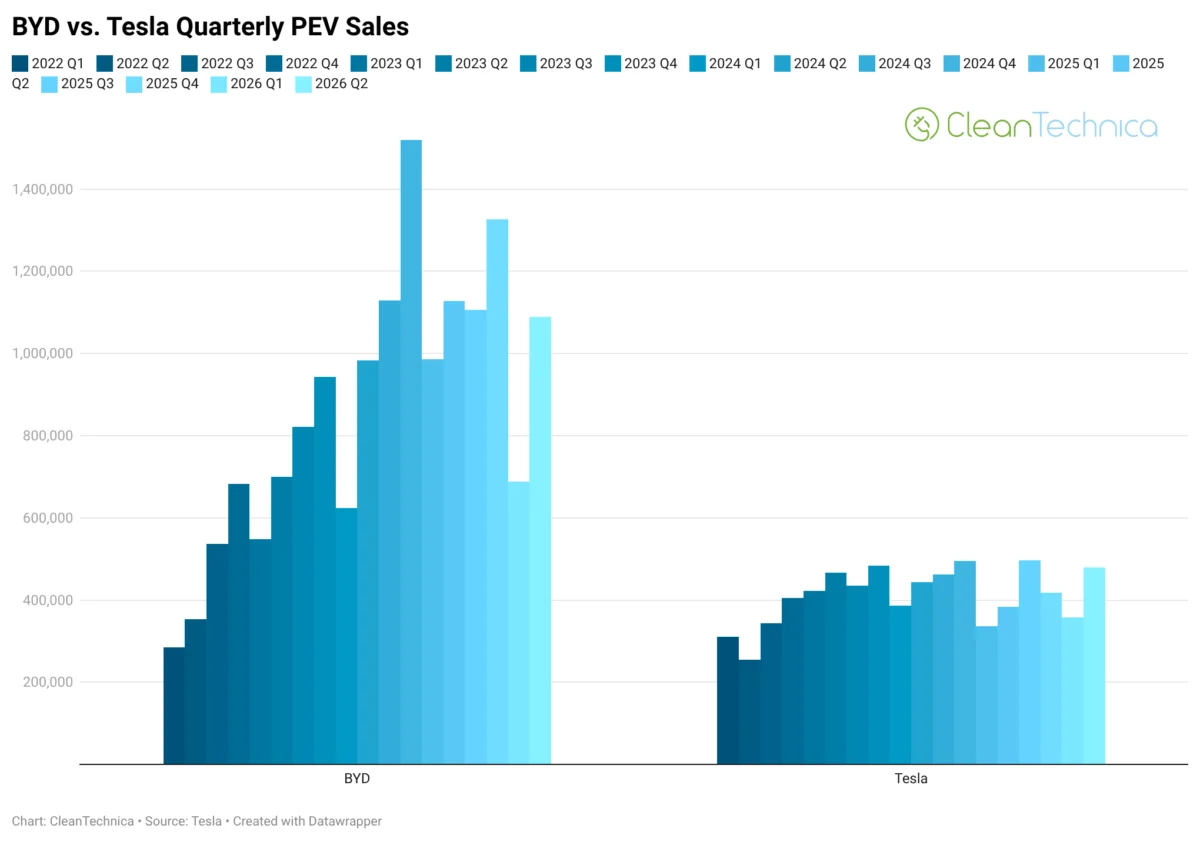
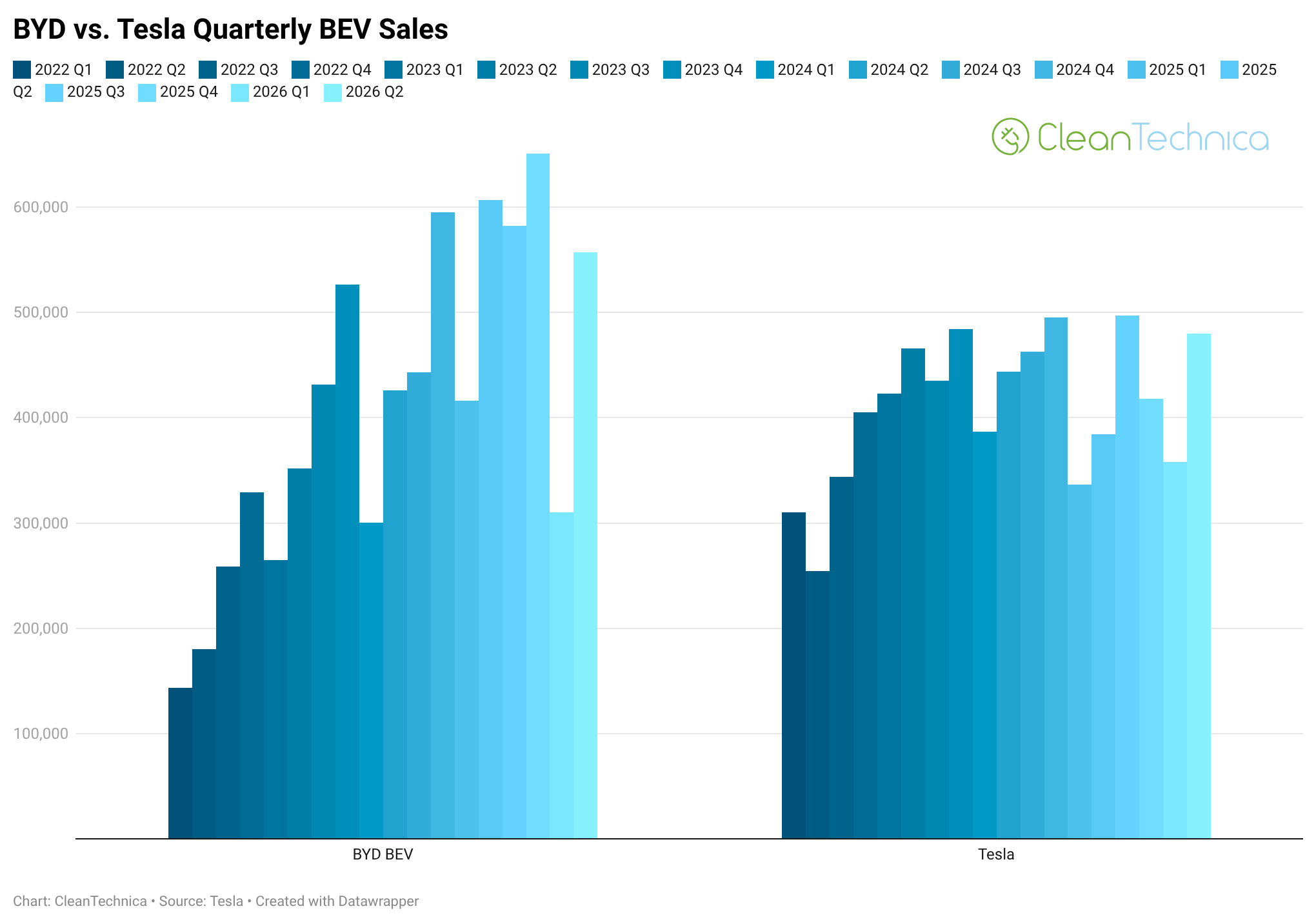
The global automotive landscape reached a significant milestone in the second quarter of 2026 as the Chinese manufacturer BYD reclaimed its position as the world’s leading seller of battery electric vehicles (BEVs), surpassing Tesla despite the latter achieving one of its strongest performance periods to date. According to the latest delivery data, BYD reported 557,090 BEV sales for the quarter, while Tesla followed with 480,126 units. This shift highlights an intensifying rivalry between the two titans of the electric transition, a "tug-of-war" that has seen the title of global leader trade hands multiple times over the past three years.
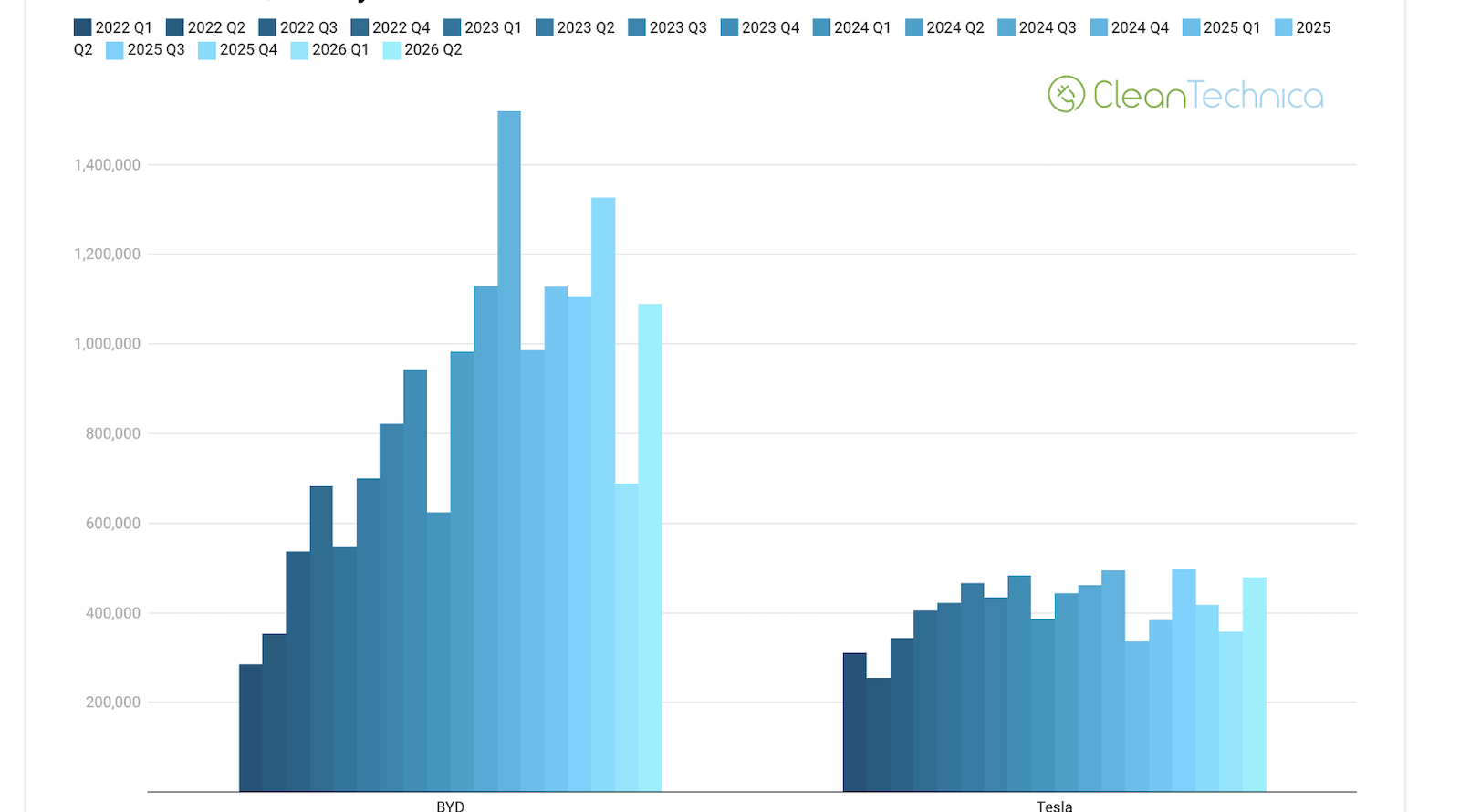
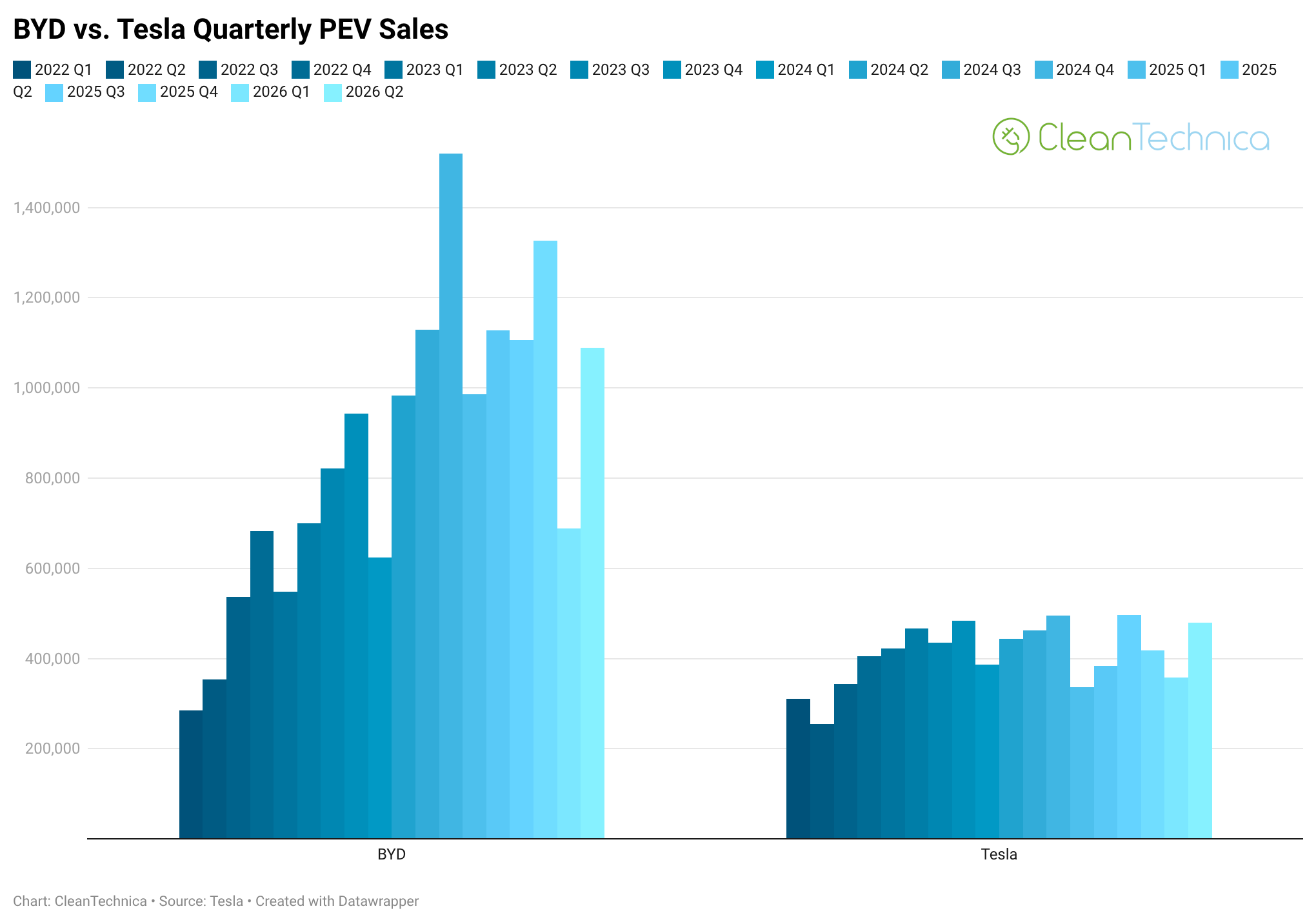
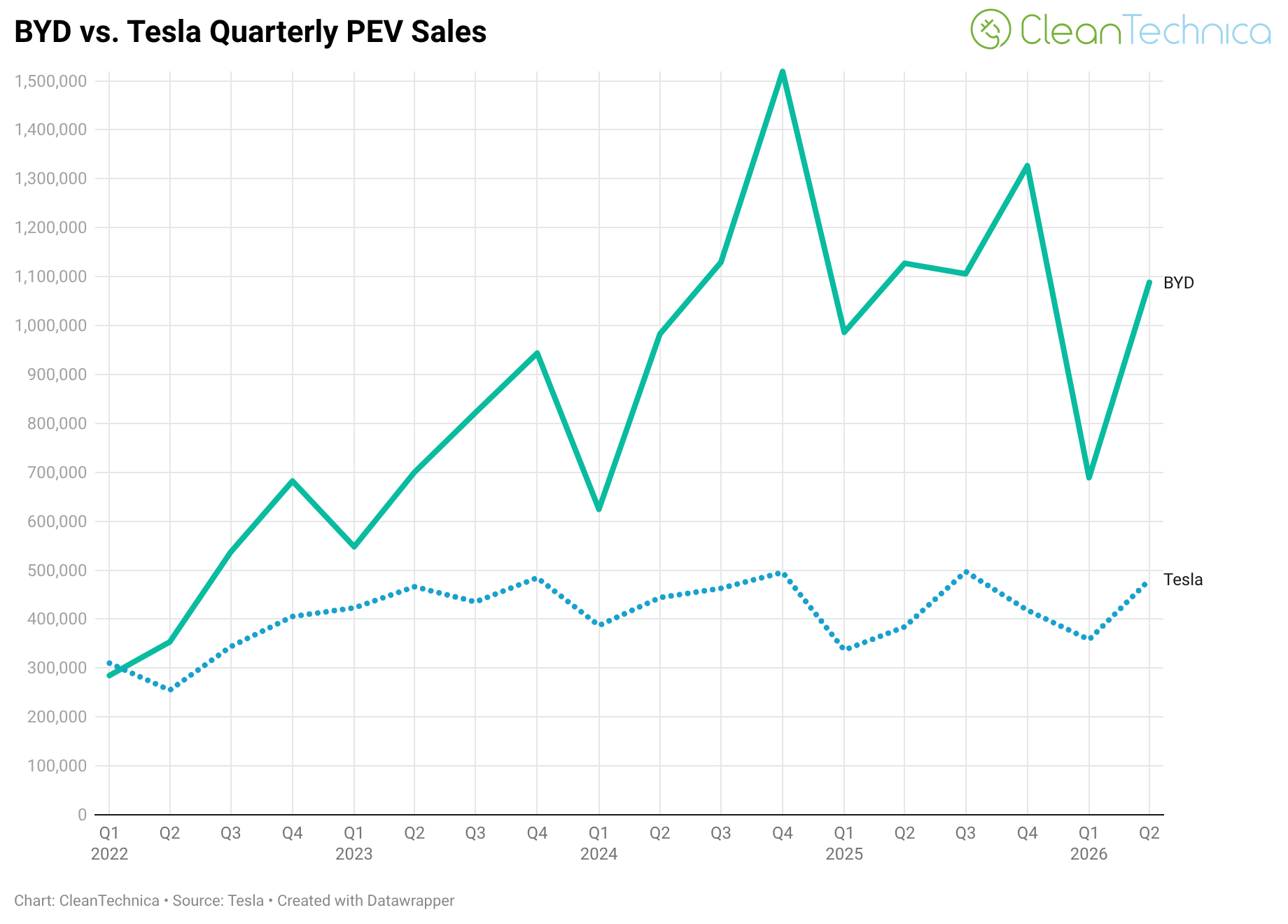
While Tesla’s performance in Q2 2026 represented its fourth-best quarter in company history, it was insufficient to hold off the surging volume of BYD. The results indicate a broader trend in the automotive sector where diversified product portfolios and aggressive international expansion are beginning to reshape market share. BYD’s victory in the BEV segment is complemented by its even more dominant performance in the total passenger vehicle market, where its inclusion of plug-in hybrid electric vehicles (PHEVs) has allowed it to outpace Tesla for 17 consecutive quarters, dating back to the second quarter of 2022.
A Chronology of the Global EV Leadership Struggle
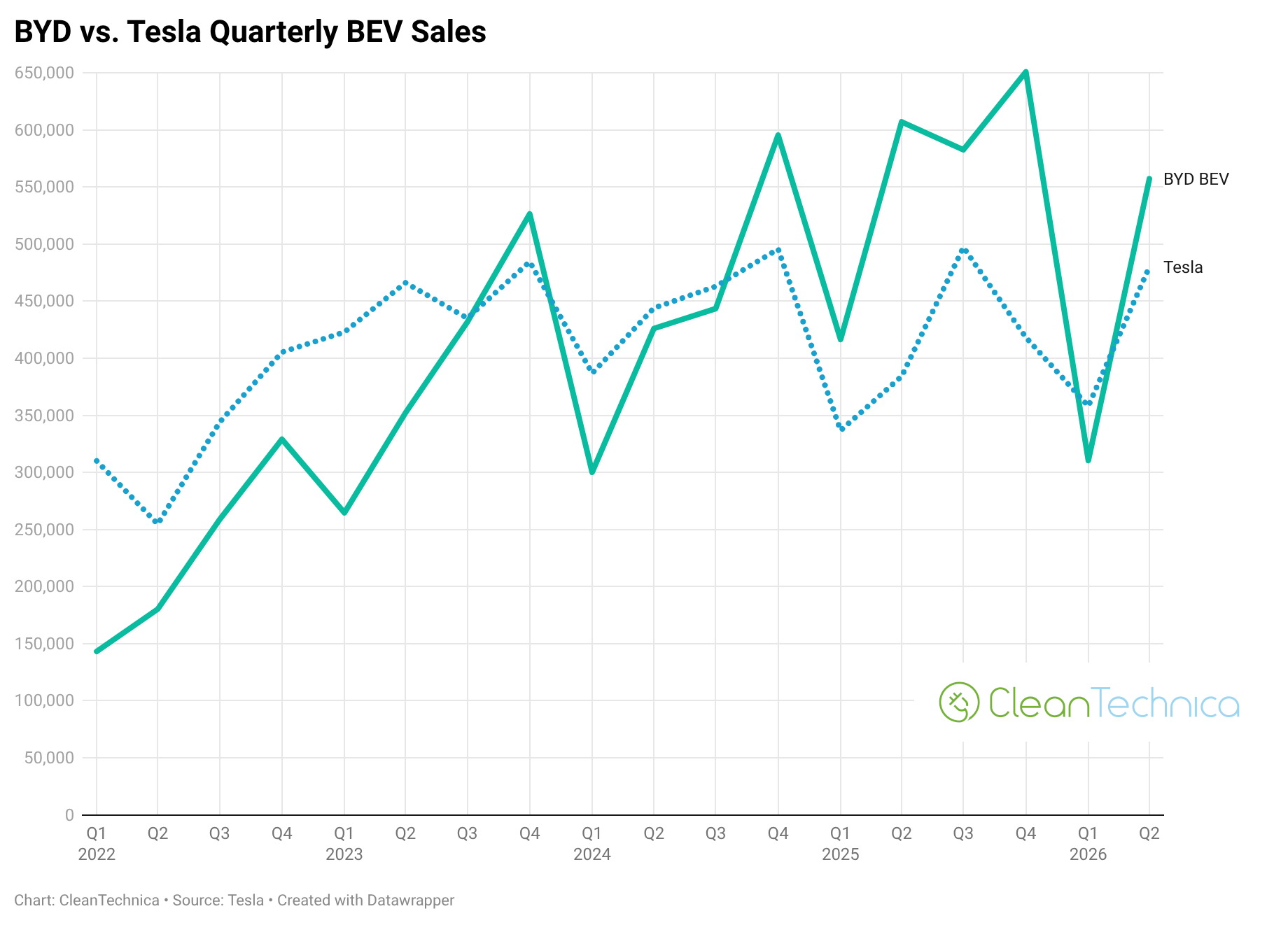
The competition for the top spot in the BEV market has been characterized by seasonal fluctuations, macroeconomic shifts in the Chinese market, and the varying production cycles of both companies. Historically, Tesla held an unchallenged lead in pure electric vehicle sales for nearly a decade. However, the rise of BYD began in earnest during the post-pandemic recovery period.
In the fourth quarter of 2023, BYD famously overtook Tesla for the first time, signaling to the industry that a new era of competition had arrived. Tesla managed to reclaim the title shortly thereafter, but the momentum shifted back to the Shenzhen-based automaker in late 2024. BYD held the top global position for five consecutive quarters throughout 2025.
The first quarter of 2026 saw a temporary reversal of this trend. A significant downturn in the broader Chinese automotive market, combined with the timing of the Lunar New Year and shifting domestic subsidies, resulted in a sharp drop in BYD’s domestic deliveries. During this window, Tesla’s global footprint allowed it to briefly win back the title of world’s largest BEV manufacturer. However, as the Q2 2026 figures demonstrate, that resurgence was short-lived. BYD’s rapid recovery in the second quarter was driven by both a rebound in domestic demand and a record-breaking push into foreign markets.
Comparative Data: BEVs vs. Total Passenger Vehicles
The distinction between BEVs and the broader category of plug-in electric vehicles (PEVs) is crucial for understanding the strategic differences between the two companies. Tesla remains a pure-play BEV manufacturer, focusing its entire production capacity on four main models (Model 3, Model Y, Model S, and Model X) alongside the Cybertruck.
In contrast, BYD employs a dual-track strategy, producing both pure electric cars and plug-in hybrids equipped with large-capacity batteries. In Q2 2026, BYD’s total passenger vehicle deliveries reached 1,088,382 units. This means that BYD is currently selling more than double the volume of Tesla when considering the entire "New Energy Vehicle" (NEV) spectrum.
The data for Q2 2026 reveals the following breakdown:
- BYD BEV Sales: 557,090 units
- Tesla BEV Sales: 480,126 units
- BYD Total Passenger Sales (including PHEVs): 1,088,382 units
- Tesla Total Passenger Sales: 480,126 units
BYD’s ability to scale its PHEV offerings has provided a significant cushion during periods of BEV market cooling. Many consumers, particularly in markets with developing charging infrastructure, have opted for BYD’s "Dual Mode" (DM) hybrid technology as a bridge to full electrification. This has allowed BYD to maintain high factory utilization rates and achieve economies of scale that few other manufacturers can match.
The Role of Exports and Global Expansion
One of the most striking revelations from the Q2 2026 data is the scale of BYD’s international expansion. The company reported 471,091 vehicle exports during the quarter, representing a nearly 95% increase year-over-year. To put this in perspective, BYD’s sales outside of its home market of China are now nearly equal to Tesla’s total global sales for the same period.
This aggressive export strategy is a response to the saturating and highly competitive market within China. BYD has established significant footholds in Southeast Asia, Latin America, and the Middle East. Furthermore, despite regulatory scrutiny and shifting tariff landscapes in Europe and North America, BYD has continued to localize production, with new factories in Hungary, Brazil, and Thailand beginning to contribute to its global delivery totals.
Tesla, while still the dominant player in the North American market, has faced headwinds in Europe and China due to an aging product lineup. While the Model Y remains one of the best-selling vehicles globally, the lack of a diverse range of more affordable models has allowed BYD to capture the entry-level and mid-market segments that Tesla has yet to penetrate effectively.
Strategic Implications and Industry Analysis
Industry analysts point to vertical integration as the primary driver of BYD’s success. Unlike many of its competitors, BYD began as a battery manufacturer. Through its subsidiary, FinDreams Battery, the company produces its own Lithium Iron Phosphate (LFP) "Blade" batteries, which are renowned for their safety and cost-efficiency. By controlling the most expensive component of the electric vehicle, BYD is able to engage in aggressive pricing strategies that put pressure on both traditional legacy automakers and Tesla.
Tesla’s strategy continues to lean heavily on software, autonomous driving capabilities (Full Self-Driving), and manufacturing efficiency through "Giga Presses." However, the Q2 2026 results suggest that in the current market, sheer volume and variety may be trumping high-margin software plays in terms of market share acquisition.
The implications for the rest of the 2026 fiscal year are significant. The "price war" initiated in late 2023 has forced many smaller Chinese EV startups to consolidate or exit the market, leaving BYD in a position of unprecedented domestic strength. For Tesla, the challenge remains the successful ramp-up of new platforms and the potential introduction of a lower-cost model to compete with BYD’s "Ocean" and "Dynasty" series.
Market Reactions and Future Outlook
While neither company has issued a formal joint statement regarding the Q2 results, internal communications and investor relations reports suggest different priorities. Tesla remains focused on long-term value through AI and robotics, often downplaying quarterly delivery fluctuations in favor of "long-term mission" metrics. BYD, conversely, is focused on rapid global decarbonization through mass-market accessibility, aiming to replace internal combustion engine (ICE) vehicles at every price point.
Economists note that the competition between these two firms is beneficial for the broader transition to clean energy. The rivalry has accelerated battery technology improvements, reduced the cost of EVs for the average consumer, and forced traditional automakers in Europe and the United States to accelerate their own electrification timelines.

As the industry looks toward the third quarter of 2026, several variables remain in play. The potential for new trade barriers in the European Union and the United States could impact BYD’s export momentum. Simultaneously, Tesla’s ability to refresh its high-volume models and improve its market share in China will be critical to its hopes of reclaiming the BEV crown.
The data from Q2 2026 confirms that the era of Tesla’s undisputed dominance in the BEV sector has transitioned into a duopoly, with BYD currently holding the upper hand in volume. Whether Tesla can leverage its brand loyalty and technological edge to mount another comeback in Q3 remains the central question for investors and industry observers alike. For now, the numbers tell a clear story: BYD’s scale, vertical integration, and aggressive global push have made it the new benchmark for the electric vehicle industry.
