

Omaha, NE – Warren Buffett, the venerable chairman and CEO of Berkshire Hathaway, has once again captivated financial markets and public discourse, both through his accelerated philanthropic endeavors and the strategic actions of his conglomerate. A recent decision to expedite annual donations from his colossal $140 billion stake in Berkshire Hathaway shares to four family foundations has ignited a torrent of discussion, probing the complex interplay between immense wealth, philanthropy, and taxation. Simultaneously, Berkshire Hathaway, under the burgeoning leadership of CEO Greg Abel, has finalized its significant $6.8 billion acquisition of homebuilder Taylor Morrison, a move widely interpreted as a bullish signal for the U.S. housing market.
Buffett’s Philanthropic Paradox: Generosity Meets Tax Advocacy
The announcement of Buffett’s accelerated donations prompted an unusually high volume of public commentary. Responses ranged from widespread commendation for his profound generosity to critical questions regarding the efficacy of foundation-based giving, particularly concerning its reach to vulnerable populations such as the elderly and impoverished. A vocal segment also leveled accusations of using philanthropy as a mechanism to circumvent estate and capital gains taxes.
Buffett, however, has long been transparent and unwavering in his stance on taxation. He famously asserts that he feels "under-taxed in relation to what society has delivered to me" and often highlights the paradox of his secretary paying a higher effective tax rate than himself, largely due to payroll taxes and the preferential treatment of capital gains income over ordinary income. This long-held conviction is not merely rhetorical; Berkshire Hathaway consistently contributes billions to federal coffers, a fact Buffett takes pride in. He once quipped in 1998, with characteristic dry wit, that he doesn’t send "any voluntary payments to the I.R.S," underscoring his belief that while he pays what is legally required, he also advocates for a system he perceives as more equitable.
His outspoken views on wealth taxation directly influenced a pivotal moment in American fiscal policy. In 2011, then-President Barack Obama proposed the "Buffett Rule," an initiative designed to ensure that wealthy Americans earning over $1 million annually paid a minimum tax rate of 30%. The rule was a direct response to the perceived imbalance Buffett himself articulated, aiming to address the disparity where some high-income earners, primarily deriving income from capital gains, paid a lower effective tax rate than middle-class individuals. Despite its prominent backing, the Buffett Rule faced staunch opposition and was ultimately rejected by the Senate in 2012, highlighting the deep political divisions surrounding wealth redistribution and taxation in the United States.
The Estate Tax Debate: Dynastic Wealth vs. Societal Good

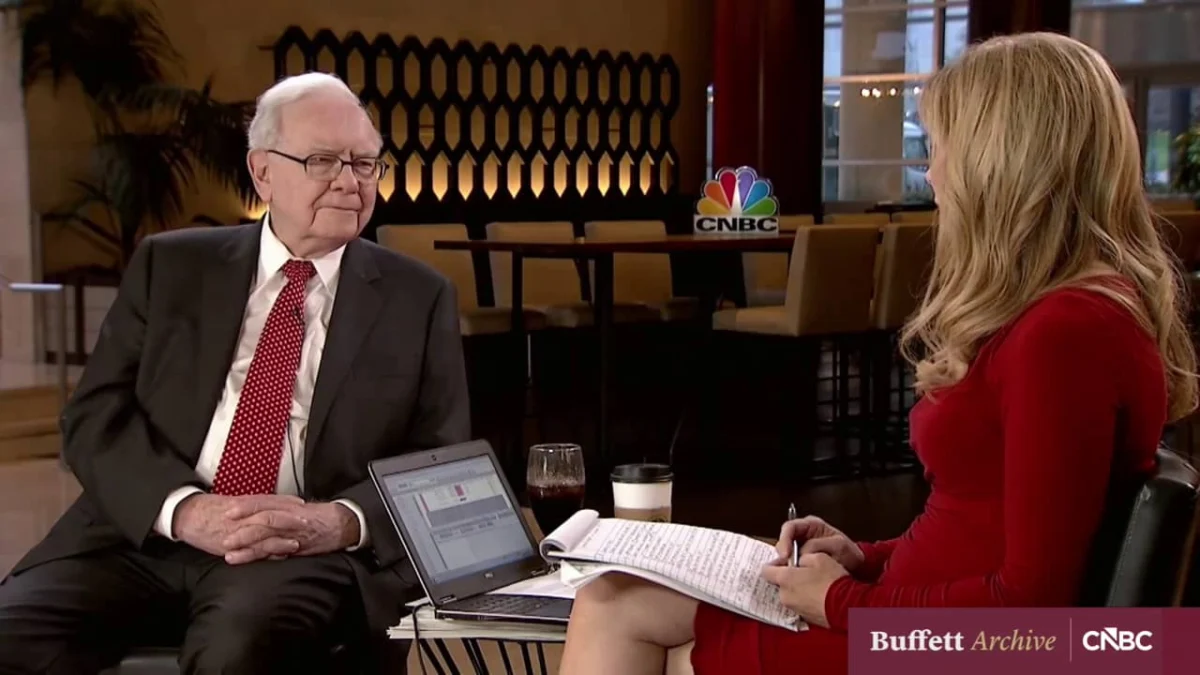
Buffett’s philosophical battle against inherited wealth, particularly unearned dynastic fortunes, was vividly illustrated in a 2017 interview on CNBC’s "Squawk Box" with Becky Quick. The discussion occurred as Congress debated a GOP-sponsored bill that aimed to incrementally eliminate the 40% federal estate tax over several years. This tax, often pejoratively labeled the "death tax," became a focal point for Buffett to articulate his profound concerns about wealth concentration.
During the interview, Buffett meticulously dismantled the "death tax" moniker, clarifying that it affects an infinitesimally small fraction of the population. He pointed out that of the approximately 2.6 million Americans who die annually, only about 5,000 estates typically incur the tax. His argument centered on the fundamental economic principle of resource allocation. He presented a hypothetical scenario: if he were to leave $75 billion to 35 descendants, each would inherit billions, capable of generating $100 million annually at a modest 5% return, purely by virtue of their birthright.
"Is that a great way to allocate resources in the United States?" Buffett questioned, asserting that such a system undermines the very essence of capitalism, which thrives on intelligent allocation of resources based on merit and productivity, not inherited privilege. He dramatically painted a picture of heirs "building tombs for themselves like Egyptians – pharaohs never dreamt of," highlighting the potential for extreme extravagance and unproductive use of capital. He vehemently dismissed the notion that such heirs would simply "blow it all," noting that even wasteful spending represents a misallocation of significant societal resources. More fundamentally, Buffett argued that perpetuating vast unearned wealth exacerbates existing inequalities, which he believes is detrimental to society as a whole.
Quick, playing devil’s advocate, then posed a critical question: "You have three children who have foundations that each of them are running. Do you think that they’re a better allocator of that money than the federal government?" Buffett’s response revealed a nuanced distinction. He affirmed his confidence in his adult children’s ability to allocate resources effectively through their foundations. However, he emphasized that this confidence stemmed from observing their lives, their public education, and their maturity into their 40s before he encouraged the establishment of these philanthropic vehicles. His core objection was not to responsible philanthropy by capable individuals, but to the "dynastic impact of money" – the automatic transfer of immense wealth to potentially unprepared heirs simply by lineage.
He reiterated his belief that a dynastic system, especially given the exponential growth of wealth among the ultra-rich (the top 400 wealthiest Americans, for instance, saw their collective net worth skyrocket from $90 billion to $2.4 trillion in 25 years), goes "totally against what’s built this country, what this country stands for." Such concentrations of wealth, when passed down untaxed, represent a staggering amount of resources in a nearly $20 trillion GDP economy, potentially distorting economic incentives and hindering social mobility. Furthermore, Buffett warned that eliminating the estate tax could paradoxically harm philanthropy, as individuals might opt to leave more to their descendants rather than to charitable causes.
While the specific bill discussed by Buffett and Quick did not pass, the estate tax exemption has indeed seen significant increases over the years, reaching its current level of $15 million per person. This ongoing legislative ebb and flow underscores the persistent tension between individual wealth accumulation, intergenerational transfers, and the broader societal goals of economic fairness and opportunity, themes that Warren Buffett has consistently brought to the forefront of national conversation.
Berkshire Hathaway’s Strategic Bet on Housing: Abel’s First Major Deal

Shifting from philosophical debates to concrete business maneuvers, Berkshire Hathaway recently completed a significant strategic acquisition, signaling a potential turning point for the U.S. housing market. The conglomerate closed its $6.8 billion acquisition of Taylor Morrison, a prominent national homebuilder, marking a pivotal moment as it represents CEO Greg Abel’s first major deal at the helm.
The acquisition’s journey began in late May with its initial announcement, followed by shareholder approval from Taylor Morrison just days before the formal closing. In a press release confirming the deal, Greg Abel articulated Berkshire’s strategic vision: "This best-in-class national homebuilder will lead our vision for a unified site-built homebuilding operation." This statement is particularly noteworthy, as it suggests a departure from Berkshire Hathaway’s traditional hands-off approach, where subsidiaries typically operate with significant autonomy. By integrating Taylor Morrison’s diverse brands into its existing Clayton Properties Group, Berkshire aims to create a more cohesive and comprehensive homebuilding enterprise. This unified operation is designed to cater to a broad spectrum of the housing market, encompassing renters, entry-level buyers, move-up homeowners, and those seeking resort lifestyle properties, thereby maximizing market penetration and synergistic efficiencies.
Warren Buffett himself offered high praise for Abel’s execution of the deal, highlighting the seamless and swift nature of the transaction. Upon the deal’s announcement, Buffett told CNBC’s Becky Quick, "Greg did that faster than I could have done it, smoother than I could have done it, and I never talked to the CEO. He has launched." This endorsement not only underscores Abel’s growing authority and operational prowess but also signifies Buffett’s confidence in his chosen successor to lead Berkshire Hathaway’s future strategic direction. It also subtly indicates a generational shift in deal-making approach, with Abel demonstrating a proactive and efficient style.
The timing and nature of the Taylor Morrison acquisition have prompted considerable analysis within the financial community. Experts, including Margaret Whelan, founder and CEO of Whelan Advisory, interpret Berkshire’s move as a strong indicator that the U.S. housing market has "bottomed out" and is poised for recovery. Whelan observed, "I assume sophisticated buyers would wait and buy later or pay less if they thought the market was still going down." This perspective suggests that Berkshire Hathaway, known for its deep analytical capabilities and long-term investment horizon, sees underlying strength and future growth potential in the residential construction sector. This sentiment is crucial, as the housing market is a significant bellwether for the broader economy, influencing consumer confidence, employment, and interest rate policies. A bet by Berkshire Hathaway on its recovery could inspire greater confidence among other investors and market participants.
The current housing market context, marked by fluctuating interest rates, evolving inventory levels, and shifting demand dynamics, makes Berkshire’s move particularly insightful. By acquiring a diversified homebuilder like Taylor Morrison, with its strong presence across various segments and geographies, Berkshire is positioning itself to capitalize on an anticipated rebound, potentially driven by demographic shifts, easing inflation, and a stabilization of borrowing costs. The integration strategy, fostering a unified approach with Clayton Properties Group, could unlock significant operational efficiencies, supply chain advantages, and enhanced market responsiveness, further solidifying Berkshire’s footprint in a critical sector of the American economy.
Berkshire Hathaway: Financial Snapshot and Portfolio Insights
As of the latest reporting, Berkshire Hathaway continues to demonstrate robust financial health. The company’s Class A shares (BRK.A) closed at $744,999.99, while Class B shares (BRK.B) traded at $494.93. With a trailing twelve-month (TTM) Price/Earnings ratio of 14.73 for BRK.B, the company maintains a valuation that reflects its stable earnings and diverse holdings. Berkshire Hathaway’s market capitalization stands at an impressive $1,068,830,909,412, solidifying its position as one of the world’s most valuable public companies.

The conglomerate’s cash reserves remain substantial, reaching $397.4 billion as of March 31, representing a 6.5% increase from December 31. Excluding rail cash and subtracting T-Bills payable, the adjusted cash balance stood at $380.2 billion, up 3.0% from the previous quarter. Such a colossal cash hoard provides Berkshire Hathaway with unparalleled financial flexibility, enabling future strategic acquisitions, opportunistic investments, and share repurchases. In the first quarter of 2026, Berkshire repurchased $234 million of its own shares, a common practice that signals management’s confidence in the intrinsic value of the company’s stock and returns capital to shareholders.
Berkshire’s top equity holdings, as disclosed in its 13F filing on May 15, 2026 (for holdings as of March 31, 2026), continue to be a subject of intense scrutiny for investors seeking insights into the Oracle of Omaha’s investment philosophy. These publicly traded stocks, primarily in the U.S. and Japan, represent a concentrated portfolio reflecting long-term conviction in established, high-quality businesses. The full, detailed list of these holdings and their current market values are continuously tracked and made available through financial news outlets, providing transparency into one of the world’s most influential investment portfolios.
These developments—Buffett’s accelerated philanthropic giving and his steadfast advocacy for progressive tax policies, alongside Greg Abel’s successful navigation of a significant strategic acquisition in the housing sector—underscore the multifaceted nature of Berkshire Hathaway and its enduring impact on both the financial landscape and broader societal conversations. The confluence of these events paints a vivid picture of a company in transition, guided by an evolving leadership while staying true to its foundational principles of value, long-term thinking, and a keen awareness of its role in the global economy.
For any questions or comments regarding this newsletter, please contact [email protected]. While direct communication with Warren Buffett is not facilitated, feedback is always welcomed. Those not yet subscribed can sign up [here]. Additionally, Warren Buffett’s annual letters to shareholders, renowned for their wisdom and insights, are highly recommended reading and are collected [here] on Berkshire’s official website.
— Alex Crippen, Editor, Warren Buffett Watch
