

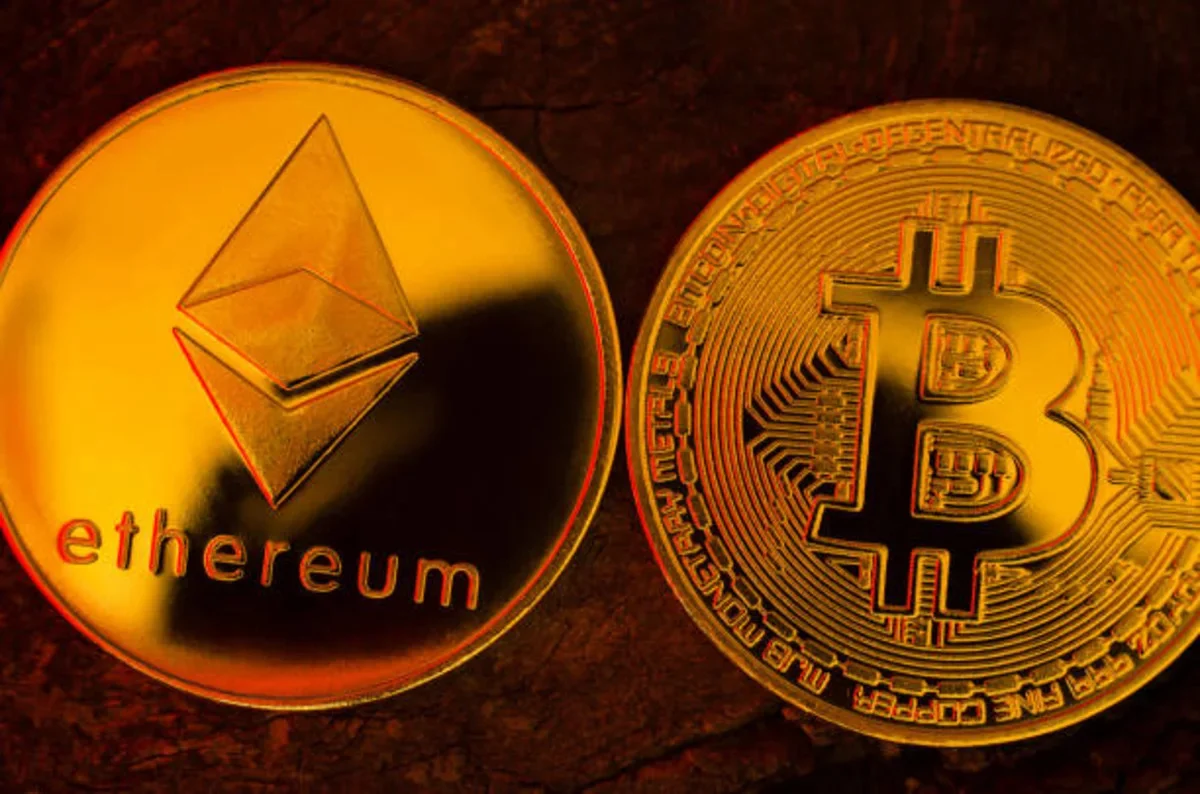
The cryptocurrency market demonstrated robust performance on Tuesday, August 25, 2026, with Bitcoin (BTC-USD) leading the charge by breaching the significant $80,000 threshold. Opening at $78,982.27, a notable 1.6% increase from Monday’s opening price, Bitcoin quickly escalated, hitting an intraday high of $81,023.41 before a slight pullback. As of 8:17 a.m. ET, the flagship digital asset was trading at $79,038.31, reflecting strong upward momentum that has characterized the market for the past few weeks.
Ethereum (ETH-USD), the second-largest cryptocurrency by market capitalization, also exhibited resilience, opening at $2,482.37. This represented a 0.8% gain over Monday’s opening price. While Bitcoin saw a sustained climb in early trading, Ethereum experienced a minor consolidation, edging slightly lower to $2,475.53 by 8:17 a.m. ET. Despite this minor dip, Ethereum maintained a positive outlook, mirroring the broader market’s renewed optimism. The current rally has drawn parallels to traditional safe-haven assets like gold, with investors increasingly viewing digital assets as a hedge against prevailing economic uncertainties.
Chronology of a Resurgent Market
The recent bullish sentiment in the cryptocurrency market has not been an overnight phenomenon but rather the culmination of a multi-week rally that began in late July. Following a period of consolidation and some profit-taking in June and early July, Bitcoin embarked on a steady ascent. The week leading up to August 25 saw particularly aggressive buying, with BTC-USD wiping out three months of prior losses in a single week, a feat highlighted by market analysts as indicative of strong underlying demand.
On Monday, August 24, 2026, Bitcoin had closed at $77,734.50, setting the stage for Tuesday’s upward gap. Ethereum followed a similar trajectory, recovering from a mid-August dip to consolidate above the $2,400 mark. The momentum gained traction as key resistance levels were overcome, sparking a cascade of short liquidations and triggering buy signals across various technical indicators. The market narrative shifted from cautious optimism to outright bullish enthusiasm, with trading volumes surging across major exchanges.
Key Drivers Behind the Current Rally
The sustained upward trajectory of Bitcoin and Ethereum can be attributed to several interconnected factors that have converged to create a potent bullish environment:
-
Macroeconomic Environment and Inflation Concerns: Global economic conditions in mid-2026 have played a significant role. Persistent inflation pressures in major economies, coupled with concerns over potential currency debasement by central banks, have driven investors towards alternative assets. Bitcoin, often dubbed "digital gold," has increasingly been adopted as a store of value, drawing capital from traditional markets seeking inflation hedges. Central bank policies, particularly the prolonged period of accommodative monetary policy, have diminished the real returns on fixed-income assets, making riskier, high-growth assets like cryptocurrencies more appealing.
-
Increased Institutional Adoption and Regulatory Clarity: The past year has seen a marked acceleration in institutional interest and participation in the crypto space. The approval of more spot Bitcoin and Ethereum Exchange-Traded Funds (ETFs) in various jurisdictions throughout late 2025 and early 2026 has opened new avenues for mainstream investors to gain exposure. Major financial institutions, sovereign wealth funds, and corporate treasuries have either directly invested in digital assets or provided custody solutions, lending legitimacy and liquidity to the market. Furthermore, a clearer regulatory framework emerging from key global financial centers has reduced uncertainty, making it safer for larger entities to allocate capital to cryptocurrencies.
-
Technological Advancements and Ecosystem Growth: For Ethereum, ongoing network upgrades and the robust growth of its decentralized finance (DeFi) and non-fungible token (NFT) ecosystems continue to attract developers and users. The successful implementation of further scaling solutions beyond the initial "Merge" has significantly reduced transaction costs and increased network throughput, enhancing Ethereum’s utility. For Bitcoin, developments in the Lightning Network and other Layer 2 solutions have improved its functionality for micro-transactions, broadening its practical applications beyond just a store of value. These fundamental improvements underscore the long-term viability and growth potential of these networks.
-
Positive Market Sentiment and Technical Breakouts: The breaking of key technical resistance levels, particularly Bitcoin’s move past $75,000 and then $80,000, has generated a strong wave of positive sentiment. Technical analysts point to bullish chart patterns and momentum indicators, suggesting further upside potential. The "fear of missing out" (FOMO) among retail investors has also resurfaced, amplifying buying pressure and contributing to the rapid price appreciation.
Supporting Data and Historical Context
To fully appreciate the current market movements, it is essential to examine the historical performance of Bitcoin and Ethereum:
Bitcoin (BTC-USD):
- Opening Price Tuesday, Aug 25, 2026: $78,982.27
- Price as of 8:17 a.m. ET: $79,038.31
- Intraday High (Tuesday): $81,023.41
- Comparison to Monday’s Open: +1.6%
- Opening Price Last Week (Approx. Aug 18, 2026): $71,200 (estimated, reflecting a 10.9% gain over the week)
- Opening Price Last Month (Approx. July 25, 2026): $64,800 (estimated, reflecting a 21.9% gain over the month)
- Opening Price Last Year (Approx. Aug 25, 2025): $48,500 (estimated, reflecting a 62.8% gain over the year)
- All-time high: $128,198.07 on Oct. 6, 2025. This figure remains a significant target for the current bull run, representing a potential 62% increase from current levels.
- All-time low: $0.04865 on July 14, 2010, illustrating Bitcoin’s incredible long-term growth trajectory.
Ethereum (ETH-USD):
- Opening Price Tuesday, Aug 25, 2026: $2,482.37
- Price as of 8:17 a.m. ET: $2,475.53
- Comparison to Monday’s Open: +0.8%
- Opening Price Last Week (Approx. Aug 18, 2026): $2,290 (estimated, reflecting an 8.4% gain over the week)
- Opening Price Last Month (Approx. July 25, 2026): $2,050 (estimated, reflecting a 21.1% gain over the month)
- Opening Price Last Year (Approx. Aug 25, 2025): $1,600 (estimated, reflecting a 55.1% gain over the year)
- All-time high: $4,953.73 on Aug. 24, 2025. This peak, achieved just over a year prior, suggests Ethereum has considerable room for growth to reclaim its previous glory.
- All-time low: $0.4209 on Oct. 21, 2015, similarly highlighting its profound long-term appreciation.
Market capitalization figures also underscore the current rally’s significance. As of late Tuesday morning, Bitcoin’s market cap stood well over $1.5 trillion, while Ethereum’s hovered around $300 billion, collectively pushing the total cryptocurrency market capitalization closer to the $2 trillion mark. Daily trading volumes for both assets have also surged, indicating heightened investor activity and liquidity.
Analyst Reactions and Broader Implications
The recent price action has garnered significant attention from market analysts and financial experts. "The momentum we’re seeing in Bitcoin is not just speculative fervor; it’s backed by increasing institutional flows and a clearer regulatory landscape," stated Dr. Evelyn Reed, a senior cryptocurrency strategist at Quantum Insights. "Breaking past $80,000 is a psychological milestone that could trigger the next leg of this bull run, potentially pushing Bitcoin towards its all-time high by the end of the year if macroeconomic conditions remain supportive."
Similarly, for Ethereum, analysts emphasize its fundamental strengths. "Ethereum’s consistent innovation, particularly in scaling and its pivotal role in DeFi and Web3, provides a robust foundation for its value," commented Marcus Thorne, a blockchain research lead at Decentralized Capital Group. "While it hasn’t reached its previous all-time high yet, the ecosystem growth suggests that any future rally could be more sustainable and less volatile than previous cycles."
The broader implications of this rally are manifold. For institutional investors, it validates their earlier bets on digital assets and encourages further allocation. For retail investors, it represents a resurgence of confidence after periods of volatility and provides opportunities for significant gains. For regulators, the increasing stability and maturity of the market may prompt further engagement and the development of more comprehensive regulatory frameworks. The correlation with gold’s performance further cements the narrative of cryptocurrencies as legitimate alternative investments, shifting them from fringe assets to an integral part of diversified portfolios.
Understanding Ethereum: Beyond the Price Chart
While the price of Ether (ETH) is often the focus, it is crucial to understand its underlying technology. Ethereum is more than just a cryptocurrency; it is a decentralized global software platform powered by a blockchain. Ether (ETH) is the native cryptocurrency of the Ethereum blockchain, serving as the fuel for transactions and smart contract executions on the network. When investors refer to "buying Ethereum," they are typically acquiring ETH, which can be used for various purposes:
- Payment for Transactions: ETH is used to pay "gas fees" to execute transactions or run decentralized applications (dApps) on the Ethereum network.
- Store of Value: Like Bitcoin, ETH is increasingly seen as a digital store of value, particularly given its scarcity and the network’s importance.
- Staking: A significant aspect of Ethereum’s design is staking. With the transition to a Proof-of-Stake (PoS) consensus mechanism, ETH holders can "stake" their ETH by locking it up to help secure the network and validate transactions. In return, stakers earn rewards in ETH, providing a yield on their holdings. This mechanism enhances network security and energy efficiency while incentivizing long-term holding.
- Collateral in DeFi: ETH is a primary collateral asset in numerous decentralized finance protocols, enabling users to borrow, lend, and trade without traditional intermediaries.
How to Acquire Ethereum (ETH)
For those looking to participate in the Ethereum ecosystem, investing in Ether has become increasingly straightforward. While ETH remains more volatile than traditional assets like the S&P 500, its foundational role in the digital economy positions it as a key component of a modern digital portfolio. Here’s a general guide:
- Choose a Reputable Cryptocurrency Exchange: Select an exchange that supports ETH trading, offers strong security measures, competitive fees, and is regulated in your jurisdiction. Popular options include Coinbase, Binance, Kraken, and Gemini, among others.
- Complete Account Verification (KYC): Due to regulatory requirements, you will need to provide personal identification to verify your identity. This typically involves submitting a government-issued ID and proof of address.
- Fund Your Account: Link your bank account, debit card, or other payment methods to deposit fiat currency (e.g., USD, EUR) into your exchange account.
- Place an Order: Once your account is funded, navigate to the ETH trading pair (e.g., ETH/USD) and place a buy order. You can choose a market order (to buy immediately at the current market price) or a limit order (to buy at a specific price).
- Secure Your Holdings: After purchasing ETH, it is advisable to transfer it from the exchange to a personal cryptocurrency wallet for enhanced security. Wallets can be software-based (e.g., MetaMask) or hardware-based (e.g., Ledger, Trezor), offering different levels of security and control.
The cryptocurrency market, particularly Bitcoin and Ethereum, continues its rapid evolution. As institutional interest grows, regulatory frameworks mature, and technological advancements continue, these digital assets are cementing their place in the global financial landscape. Investors are advised to conduct thorough research and understand the inherent risks associated with cryptocurrency investments.
