

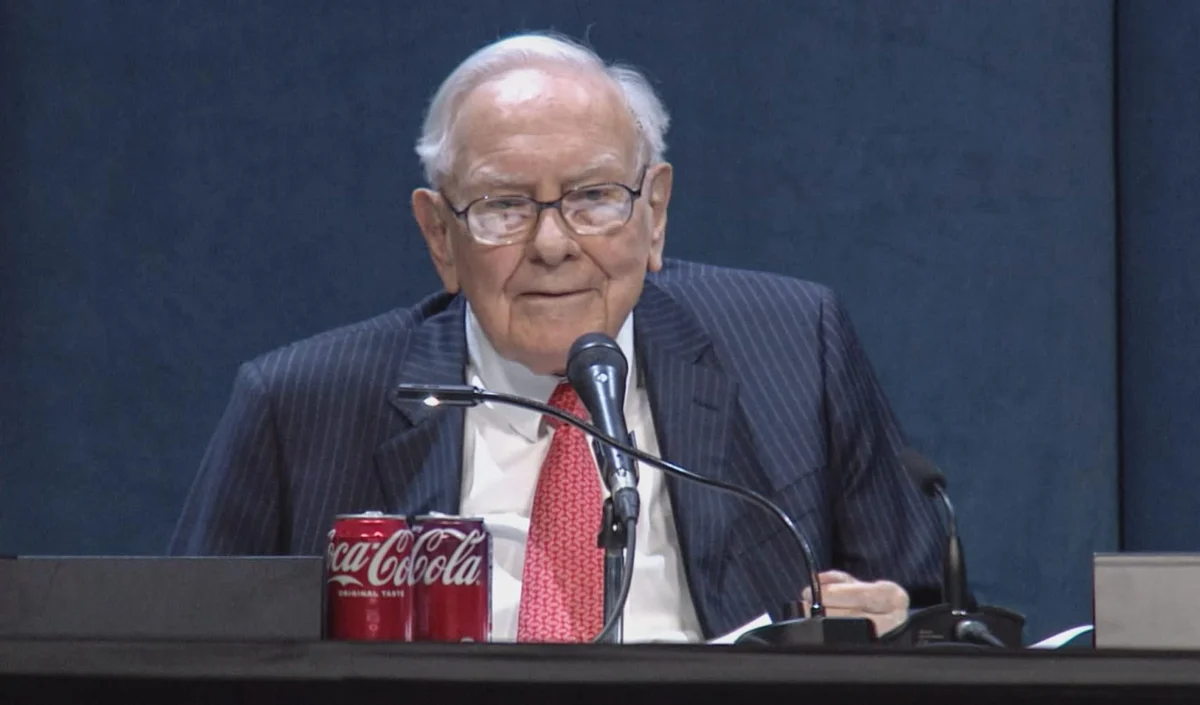
Omaha, NE – Berkshire Hathaway, the multinational conglomerate helmed by legendary investor Warren Buffett and his successor Greg Abel, significantly reconfigured its vast investment portfolio during the second quarter of 2026, making a formidable $17 billion wager on Alphabet shares and a substantial re-investment in Delta Air Lines. These strategic shifts, revealed in the company’s 13F filing on August 14, 2026, represent a decisive deployment of capital, though they have simultaneously drawn sharp criticism from "Big Short" investor Michael Burry, who expressed concerns about a potential deviation from Buffett’s hallmark patient investment philosophy.
A Deep Dive into Berkshire’s Q2 Investment Strategy
The second quarter saw Berkshire Hathaway execute several high-profile transactions, indicating a nuanced approach to market opportunities and a continued reshaping of its holdings. The most prominent move was the substantial accumulation of Alphabet (GOOGL) shares, totaling an estimated $17 billion. This massive investment was not entirely conducted through open market purchases; approximately 60% of the 48.1 million shares added were acquired directly from Alphabet via a $10 billion private placement sale announced by both companies in early June. This suggests that Berkshire still actively bought around $7 billion worth of Alphabet shares on the open market, showcasing a strong conviction in the tech giant’s future.
Alphabet, the parent company of Google, YouTube, and numerous other ventures, represents a significant commitment for Berkshire. While Berkshire has famously held a massive stake in Apple for years, its broader exposure to the technology sector has historically been selective. This substantial investment in Alphabet signals a potential strategic embrace of the digital advertising powerhouse and its diverse ecosystem, including its burgeoning artificial intelligence capabilities and cloud computing division (Google Cloud). The move could reflect a belief in Alphabet’s enduring competitive moat, its ability to generate significant free cash flow, and its long-term growth prospects in an increasingly digital world. For a company often perceived as old-economy focused, a $17 billion bet on one of the world’s leading technology companies underscores a pragmatic adaptation to modern market realities, albeit through a value-oriented lens.
Delta Air Lines: A Phoenix from the Pandemic Ashes?
Beyond Alphabet, Berkshire Hathaway made another striking move by dramatically increasing its stake in Delta Air Lines (DAL). The conglomerate boosted its position by a remarkable 44%, adding roughly $1.6 billion to its existing holdings. This pushed Berkshire’s total ownership to 57.3 million shares, valued at approximately $5.1 billion as of June 30, 2026. This re-entry and subsequent expansion into the airline sector is particularly noteworthy given Warren Buffett’s storied history of skepticism towards the industry.
Buffett famously liquidated Berkshire’s entire airline portfolio – which included Delta, American Airlines, Southwest Airlines, and United Airlines – in the first quarter of 2020 at a significant loss. This divestment occurred amid the unprecedented collapse in air travel triggered by the burgeoning COVID-19 pandemic. At the time, Buffett acknowledged the error in his investment, echoing his long-held sentiment from his 2007 letter to shareholders where he quipped that a "farsighted capitalist had been present at Kitty Hawk, he would have done his successors a huge favor by shooting Orville down," highlighting the industry’s historical challenges with profitability and capital intensity.
The return to Delta’s portfolio in Q1 2026, followed by this aggressive Q2 expansion, suggests a profound shift in Berkshire’s outlook on the airline industry, or at least on Delta specifically. This could be interpreted as a strong vote of confidence in the sector’s post-pandemic recovery, robust travel demand, and Delta’s specific operational strengths, management, and market positioning. Factors such as a more rational competitive environment, effective cost management, and a strong balance sheet could be attracting Berkshire back to the skies. However, the airline industry remains highly susceptible to external shocks, including fuel price volatility, economic downturns, and geopolitical events, representing a calculated risk for Berkshire.
Other Notable Additions: Retail and Homebuilding
While Alphabet and Delta commanded the largest capital allocations, Berkshire also made smaller, yet significant, additions to its portfolio. Its holdings in Macy’s (M) jumped by a substantial 142%, though due to the relatively small initial size of the position, this translated to an increase of only around $100 million. This move into the department store chain could signal a belief in the resilience of traditional retail, a potential turnaround story for Macy’s, or an opportunistic play on its real estate assets.
In the homebuilding sector, Berkshire added approximately $280 million to its stake in Lennar (LEN). This increase came in the same quarter that Berkshire announced its $6.8 billion acquisition of homebuilder Taylor Morrison Home. These combined actions underscore Berkshire’s strategic interest in the housing market, potentially reflecting a positive long-term outlook on housing demand, demographic trends, and the fundamental need for shelter. The acquisitions and increased stakes in homebuilders suggest Berkshire sees value in companies that construct homes, perhaps anticipating a rebound or sustained strength in residential construction despite fluctuating interest rates and economic uncertainties.
The Continuing Trend: Divestment from Financials
In contrast to its aggressive buying in certain sectors, Berkshire Hathaway continued its multi-quarter trend of reducing its exposure to the financial sector. This divestment has been a consistent theme, indicating a strategic re-evaluation of its long-standing positions in banks and other financial institutions.
During Q2 2026, Berkshire trimmed its Ally Financial (ALLY) stake by 7% and significantly cut its Capital One (COF) holding by a substantial 58%. The most impactful reduction, however, was in Bank of America (BAC), a long-time core holding. While the percentage reduction was a modest 5.9%, the sheer size of Berkshire’s investment meant this translated to a reduction in stake value of approximately $1.7 billion, making it the biggest dollar cut of the quarter. Cumulatively, Berkshire has now reduced its Bank of America stake by 53% after eight consecutive quarters of selling.
This systematic reduction in financial holdings could be driven by several factors: regulatory pressures on banks, evolving competitive landscapes from fintech, concerns about potential economic downturns impacting loan portfolios, or simply a reallocation of capital to sectors perceived to offer better risk-adjusted returns. Berkshire’s shift away from financials, a sector it once heavily favored, marks a significant strategic pivot that merits close observation.
Michael Burry’s "Big Short" Warning: A Successor’s Patience Tested?

While Berkshire Hathaway’s Q2 moves showcased decisive capital deployment, they did not escape the scrutiny of renowned investor Michael Burry, famous for his prescient bet against the housing market before the 2008 subprime mortgage crisis, as immortalized in Michael Lewis’s book and subsequent film, "The Big Short." In a Substack post on Sunday following the 13F filing, Burry expressed profound apprehension regarding Berkshire’s recent spending, particularly under the stewardship of Greg Abel, Warren Buffett’s designated successor.
Burry articulated his "biggest fear" as the possibility that Buffett’s successor would lack the legendary investor’s "patience for the fat pitch." He then declared, "I believe this fear has come true." Consequently, Burry stated, "I do not find Berkshire an attractive investment going forward." While acknowledging that "not too much of the cash pile has been spent" and that a massive $360 billion still remains, Burry voiced concern that Abel’s "first steps look to be more framing moves than investment moves." He later clarified that he was not recommending shorting Berkshire shares but rather expressing a lack of conviction in its future investment appeal.
Burry’s critique centers on the core tenet of Buffett’s investment philosophy: the disciplined patience to wait for truly exceptional, undervalued opportunities – what Buffett famously refers to as a "fat pitch," borrowing from baseball legend Ted Williams’s strategy of only swinging at pitches he could hit perfectly. Buffett has often emphasized that unlike baseball, investing allows one to "wait for the pitch you want" without being called out. This unwavering discipline has been a cornerstone of Berkshire’s extraordinary long-term success. Burry’s comments suggest he perceives Abel’s Q2 actions, particularly the rapid deployment of capital, as potentially less opportunistic and more driven by the pressure to reduce the conglomerate’s substantial cash reserves, possibly compromising the "fat pitch" discipline.
The "Fat Pitch" Philosophy: Buffett and Munger’s Enduring Wisdom
The concept of the "fat pitch" is not merely a metaphor for Warren Buffett and his long-time partner Charlie Munger; it is the bedrock of their investment discipline. In a 2003 CNBC archive clip, both discussed the profound advantages of their unconstrained approach to money management.
"We have this simple, old-fashioned discipline, which Warren likens to Ted Williams waiting for a fat pitch," Charlie Munger explained. He further elaborated on his disdain for conventional money management, where managers are "measured against indexes and you got consultants choosing consultants that are reviewing you to committees." Munger described such a system as being "put into shackles," preventing managers from truly delivering value. "I would regard it as being put into shackles. And shackles where the very system was preventing me from delivering value," he stated, highlighting the inherent conflict between short-term performance pressures and long-term, patient investing.
Warren Buffett unequivocally agreed with Munger, asserting, "We wouldn’t do it. We wouldn’t do it. We never did do it, as a matter of fact." He recalled the "ground rules" he established with his initial limited partners in 1956, emphasizing what he could and could not do. "The idea of setting out to do something that you know you can’t do, that can’t be — you know, that’s got to lead to problems," Buffett added, illustrating with a humorous analogy about being forced to high-jump seven feet.
Munger concluded by summarizing the pervasive issue in the financial industry: "Yeah, the general system for money management requires people to pretend that they can do something that they can’t do, and to pretend to like it when they really don’t. And I think that’s a terrible way to spend your life, but it’s very well paid." This enduring philosophy underscores the deep-seated belief at Berkshire Hathaway that patience and the freedom to wait for truly exceptional opportunities are paramount, a principle that Michael Burry fears might be eroding under new leadership.
Berkshire’s Cash Pile, Buybacks, and Market Response
Berkshire Hathaway’s massive cash pile, a constant topic of discussion among investors, saw a notable reduction in Q2 2026. As of June 30, the company’s cash reserves stood at $365.5 billion, down 8.0% from March 31. Excluding rail cash and subtracting T-Bills payable, the adjusted figure was $359.2 billion, a 3.8% decrease from the previous quarter. This reduction reflects the significant capital deployed in the aforementioned investments and the resumption of substantial share repurchases.
In a move that typically signals management’s belief that its stock is undervalued, Berkshire repurchased $4.5 billion of its own shares during Q2 2026. This marked the first significant buyback activity in two years, indicating a renewed commitment to returning capital to shareholders through this method. Share buybacks reduce the number of outstanding shares, thereby increasing earnings per share and often boosting the stock price.
Despite these significant investments and the resumption of buybacks, Berkshire’s shares experienced a downturn. Both classes of Berkshire Hathaway stock (BRK.A and BRK.B) dropped more than 3% this week in the wake of the company’s second-quarter spending disclosures. This negative market reaction could suggest that some investors on Wall Street may indeed share Michael Burry’s concerns about the nature and timing of the investments, or perhaps that the market viewed the deployment of capital as less efficient or opportunistic than hoped, especially given the sheer size of the cash reserves.
Outlook and Implications for Investors
Berkshire Hathaway’s Q2 2026 activity represents a pivotal moment as Greg Abel increasingly takes the reins of investment decision-making. The aggressive bets on Alphabet and Delta Air Lines signal a willingness to engage with both cutting-edge technology and a historically challenging industry, potentially reflecting a more active approach to capital allocation compared to periods when the cash pile grew unchecked. The continued shedding of financial holdings further underscores a strategic repositioning of the portfolio.
Michael Burry’s critique, while sharp, provides a crucial counter-narrative, challenging investors to consider whether the legendary discipline of "waiting for the fat pitch" can truly be maintained under a new generation of leadership and amid immense pressure to deploy capital. The market’s immediate negative reaction, despite significant buybacks, suggests that a segment of investors is scrutinizing these moves closely, weighing the potential for growth against the perceived adherence to the long-term, value-oriented principles that have defined Berkshire Hathaway for decades.
As of the latest data, Berkshire Hathaway’s market capitalization stands at an impressive $1,078,750,128,699. BRK.A stock closed at $755,570.01 and BRK.B at $504.03, with a trailing twelve-month P/E ratio of 12.67. The coming quarters will be critical in assessing the long-term efficacy of these Q2 investments and whether Greg Abel can successfully navigate the complexities of deploying Berkshire’s immense capital while upholding the enduring investment philosophy instilled by Warren Buffett and Charlie Munger.
